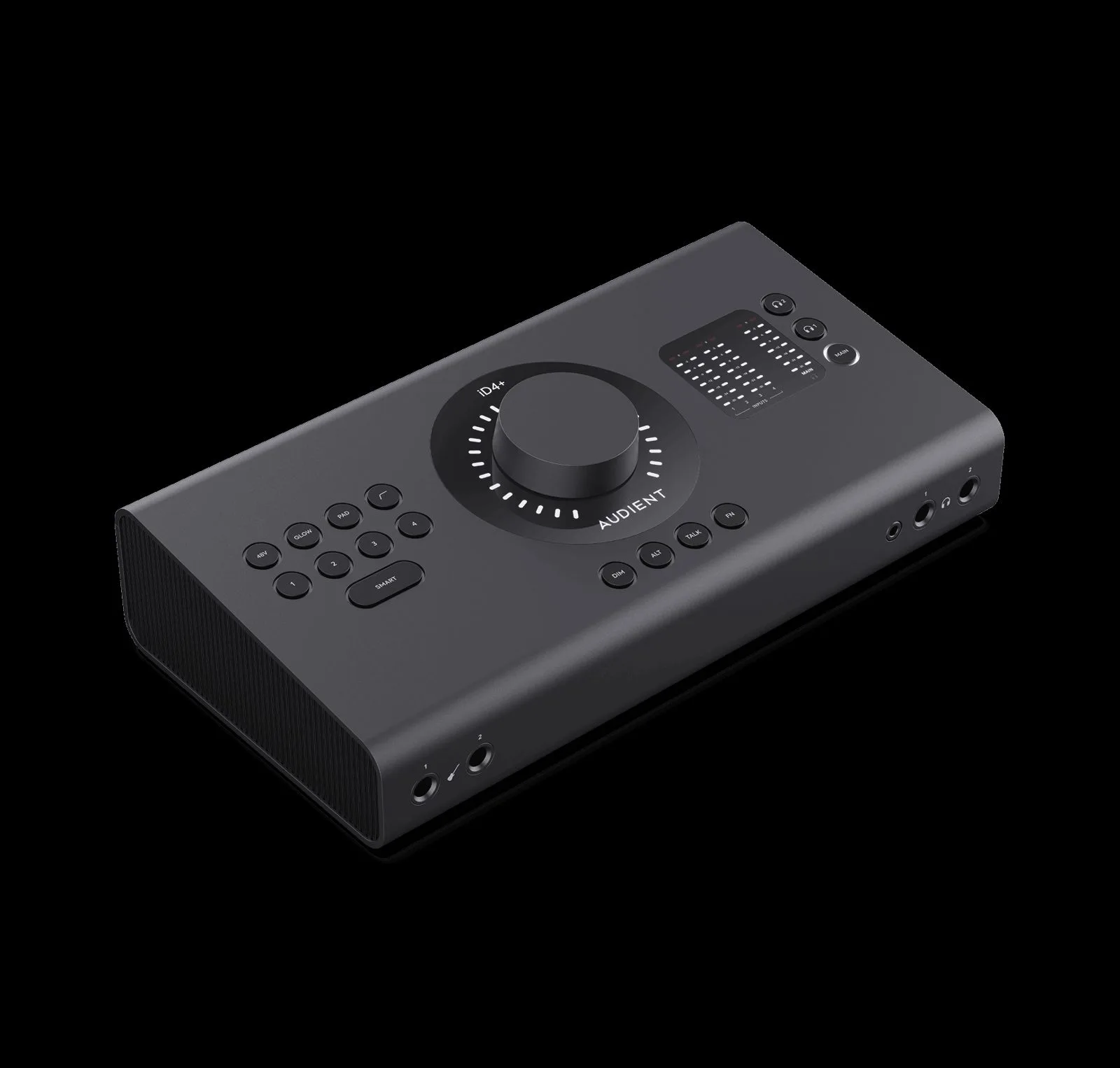
Audient is turning a page. The British maker, known for its affordable console-grade mic preamps, replaces its entire desktop interface line in one move with a third generation called iD MK3. Four models make up the range, from the iD1 aimed at the solo musician to the iD4+ built for high track-count sessions. They share one simple promise: put studio processing straight into the box, with no load on the computer’s processor.
Andrew Allen, the company’s chief product officer, warns that this goes further than a cosmetic refresh. “This isn’t a spec refresh. iD is a completely new technology platform built on our Analogue Intelligence Platform,” he says. Behind the phrase sits an architecture rebuilt around an in-house DSP that handles effects and monitor correction.
House preamps and 32-bit conversion across the board
All four interfaces share the same core. You get the Audient Console mic preamps, billed as the brand’s flagship, paired with 32-bit conversion. The accelerated DSP hosts an effects suite called the Analogue Tone Suite, with EQ, compression and reverb, all computed in hardware and therefore free of DAW latency and processor load. Audient stresses the point: all four models sound the same, and only connectivity and I/O count set them apart.
RoomTune brings room correction into the box
The real headline has a name, RoomTune. It is acoustic correction that measures the room’s response and adjusts your monitoring, but it runs on the interface’s DSP rather than in a plugin. The correction therefore applies system-wide, not just in your DAW, at no CPU cost. The tool stores up to thirty-two profiles and switches between main and alt monitoring at a press. At launch, RoomTune corrects speaker outputs in stereo. Headphone correction and extra target profiles are promised in a free later update.
One detail matters for the budget. RoomTune needs Audient’s RM1 measurement mic, included with the iD2+ and iD4+, but sold separately for the iD1 and iD2. The logic echoes dedicated units like IK Multimedia’s ARC Studio+ or Audient’s own ORIA Mini, except the correction here lives inside the interface, not in a separate box.
Four models, from home studio to serious tracking
The range spans a wide set of needs. Here are the differences that count when you choose.
| Model | In / Out | Preamps | Highlights | Availability |
|---|---|---|---|---|
| iD1 | 2 / 2 | 1 | JFET instrument input, RM1 mic optional | Early 2027 |
| iD2 | 10 / 6 | 2 | ADAT expansion, two-pair monitor control | Now |
| iD2+ | 10 / 14 | 2 | Two hardware inserts, 8 ADAT channels, RM1 included | Now |
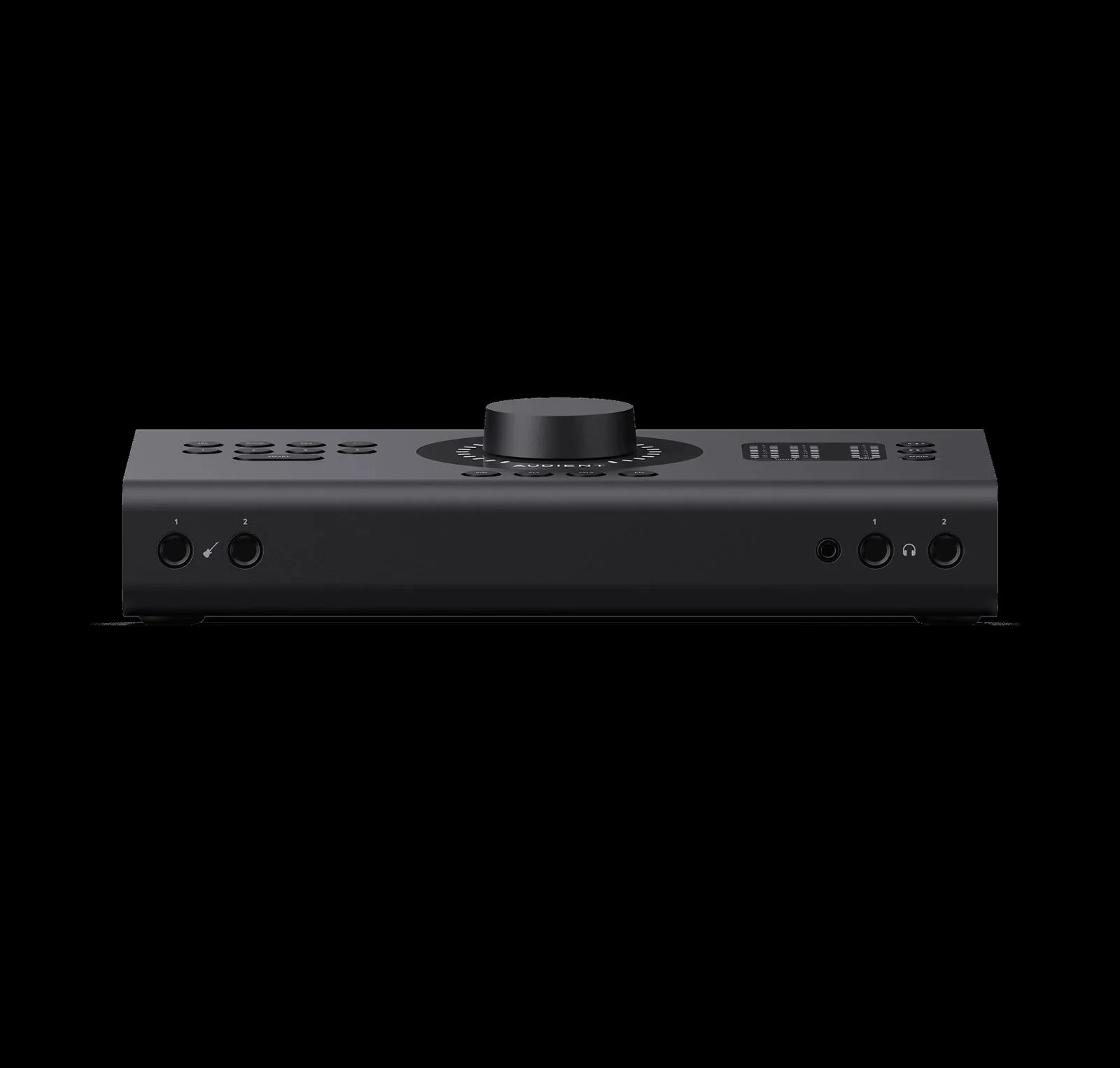
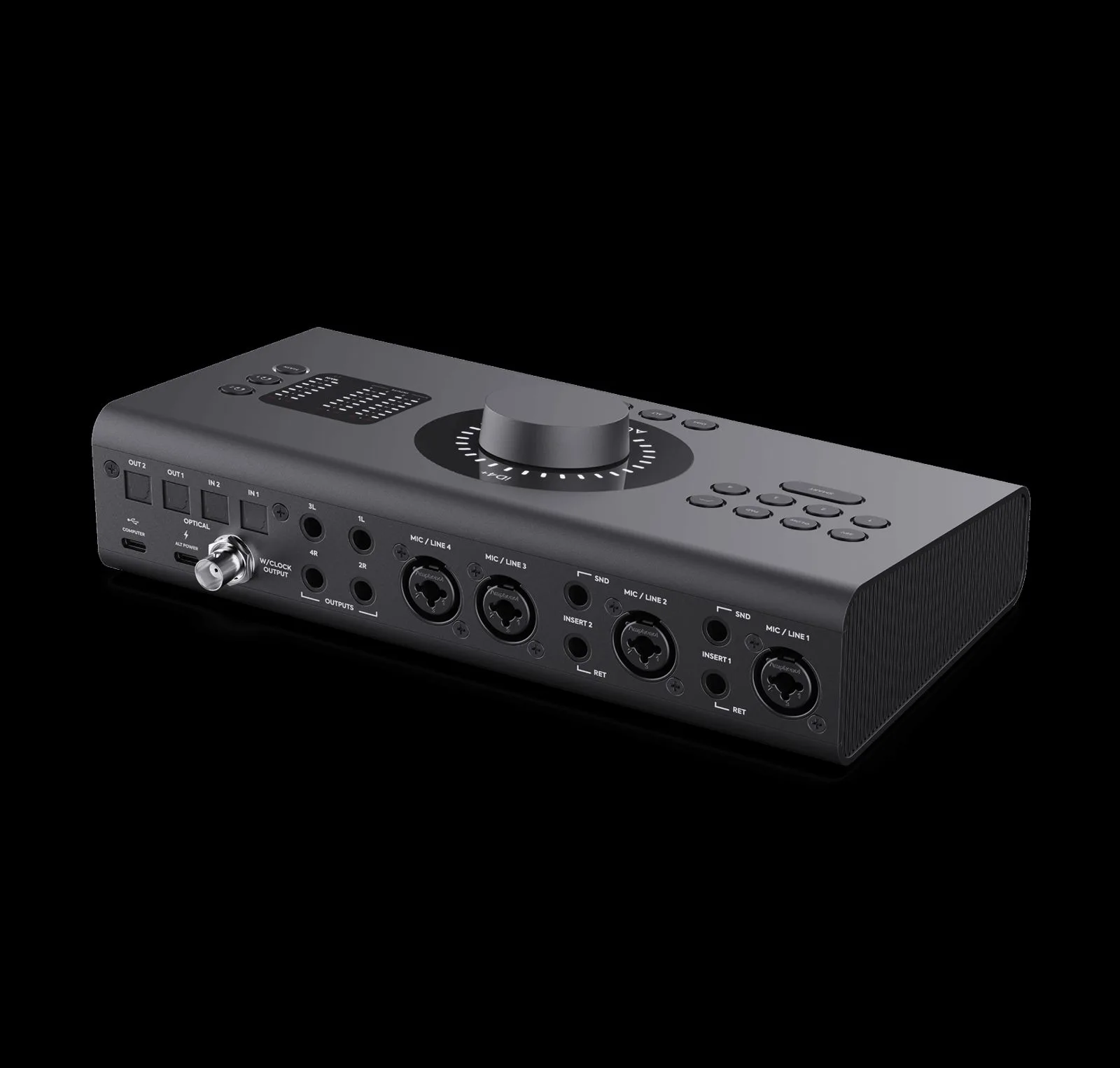
| iD4+ | 20 / 24 | 4 | Two instrument inputs, 16 ADAT channels, two headphone amps and up to four artist mixes, RM1 included | Now |
The iD4+ clearly stands out for anyone recording a band. Its four preamps, two independent headphone amps and sixteen ADAT channels push it close to a small recording station, a long way from a plain two-input box. Anyone aiming bigger should look at the Audient Horizon 32 and its fifty Thunderbolt I/O.
Availability and price
The iD2, iD2+ and iD4+ are available immediately through dealers. The iD1 is slated for early 2027. Audient gave no official pricing at announcement, nor the price of the RM1 mic sold separately.
My take
Running room correction inside the interface instead of a plugin is the idea that changes daily life. The calibration follows your sound everywhere, from the browser to the DAW, and asks nothing of the processor. Audient stays true to its recipe, good preamps at a fair price, and adds a layer of processing this format was missing. The silence on pricing stings a little when it comes to comparing, but on paper the iD4+ ticks plenty of boxes for a home studio that wants to track several sources at once.
Product page on Audient’s site.