Steve Duda and Xfer Records are best known for Serum, now the reference wavetable synth in studios and on stage. The company has just opened an unexpected door with Shrub, a smaller sibling given away for free on macOS, Windows and Linux. The name tells the story: if Serum grew into a tree in its users’ minds, Shrub is the bush, a trimmed-down version built for one specific job.
Shrub is not a demo toy. It grows out of a hardware project, the alternative firmware for the M-VAVE FM-1, a pocket synth sold at a very low price. Flash that firmware and the little box becomes a wavetable instrument, with Shrub acting as the design studio where you build sounds on a full-size screen before sending them to the unit.
A wavetable engine carved out of Serum 2
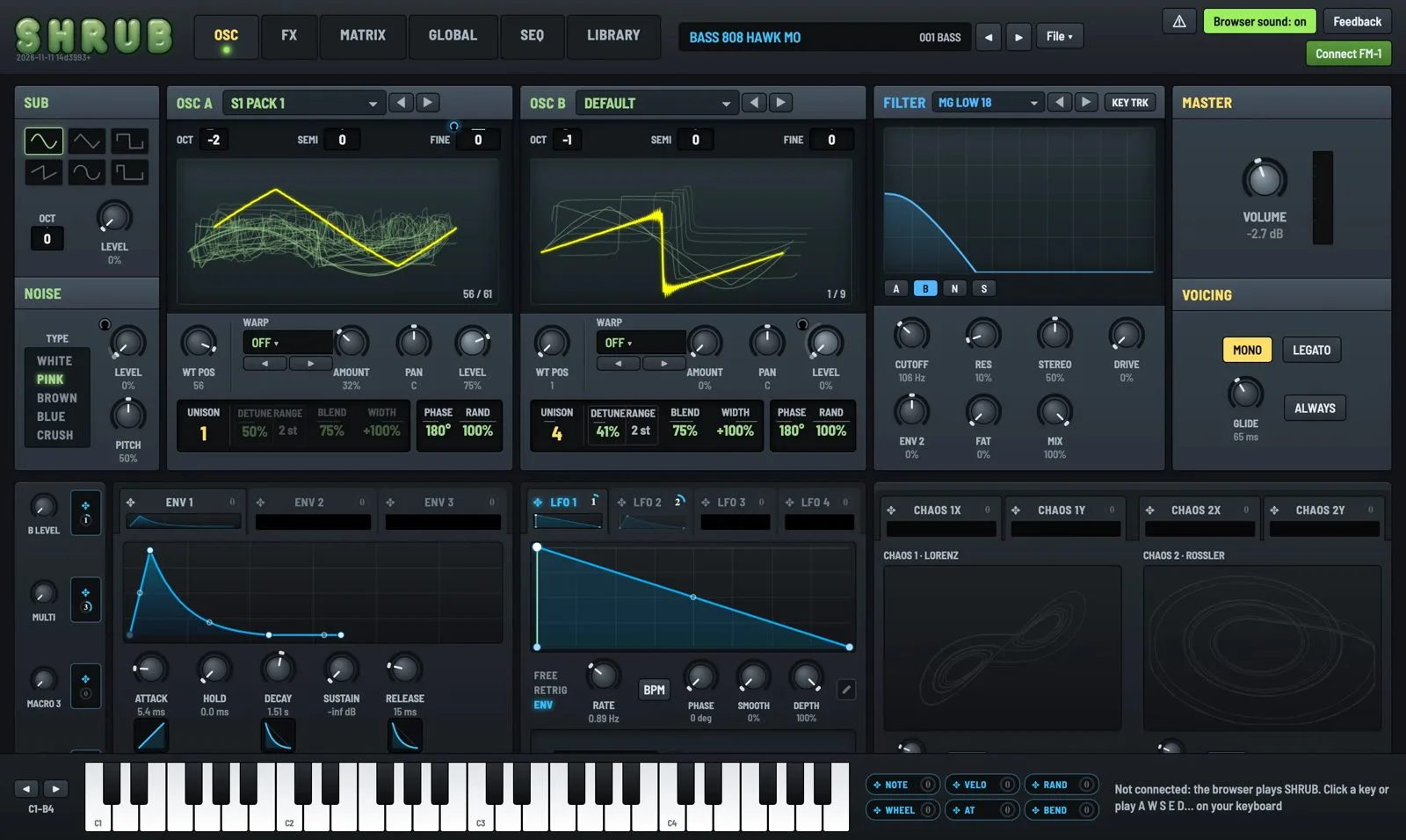
Under the hood sits a slice of Serum 2’s DNA. Shrub offers two wavetable oscillators, complete with the familiar 3D view of waveforms scrolling through the table. The filter section reuses Serum 2’s multimode engine, so you can move from a warm low-pass to sharper resonances without switching tools. Three ADSR envelopes and four LFOs feed a sixteen-slot modulation matrix, enough to animate a patch without getting lost in endless routings.
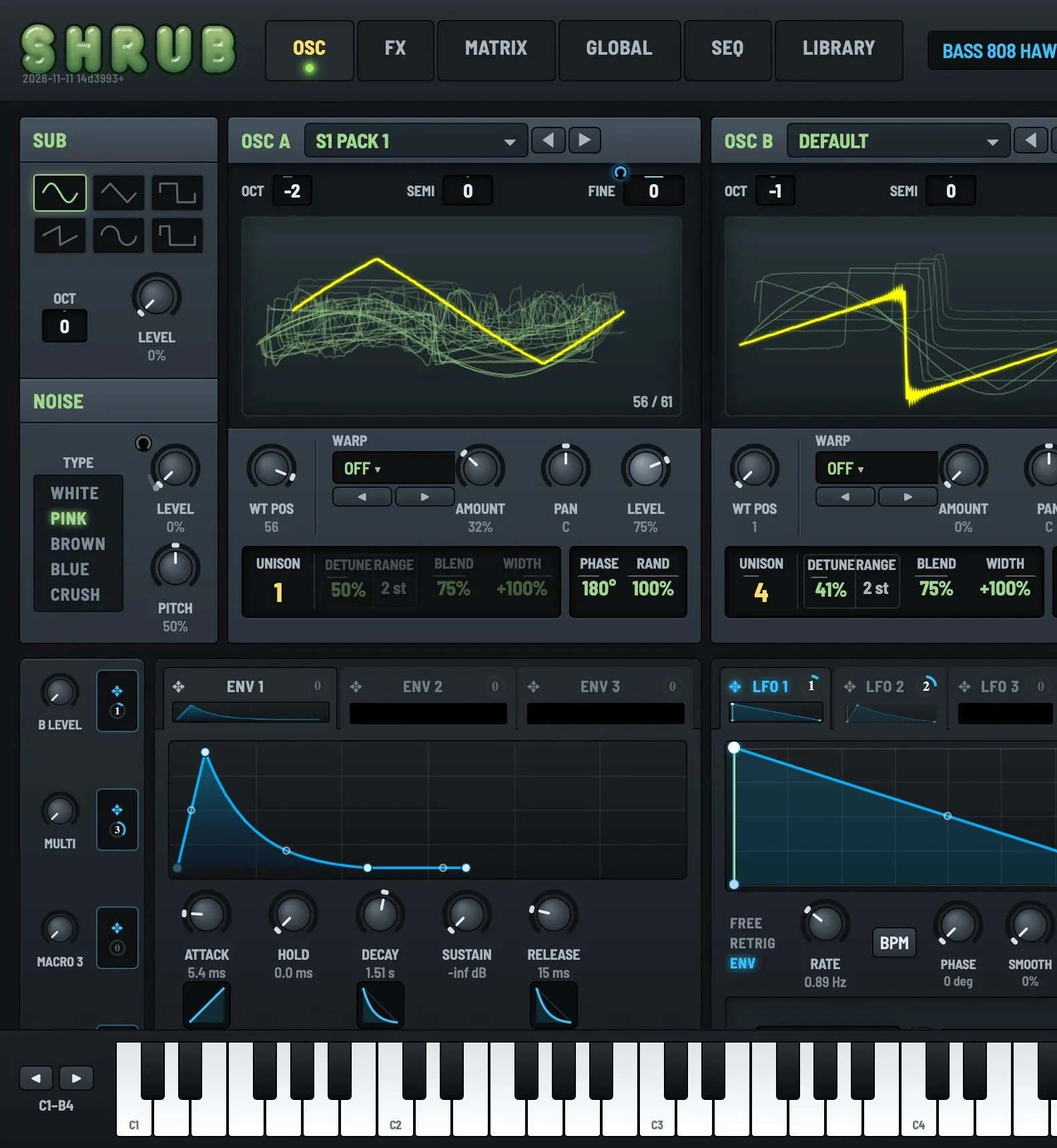
Polyphony reaches eight voices, a figure in step with the instrument’s purpose and with the hardware it drives. Shrub can also import presets from the first Serum, a handy bridge for anyone who has built a sound library over the years.
Modulation and an arpeggiator the hardware lacks
The software version adds a few treats missing from the embedded firmware. There is an algorithmic arpeggiator, a motion sequencer to drive parameters over time, and a scales feature to stay in key even when playing at random. These additions turn Shrub into a real sound-design station rather than a simple settings window.
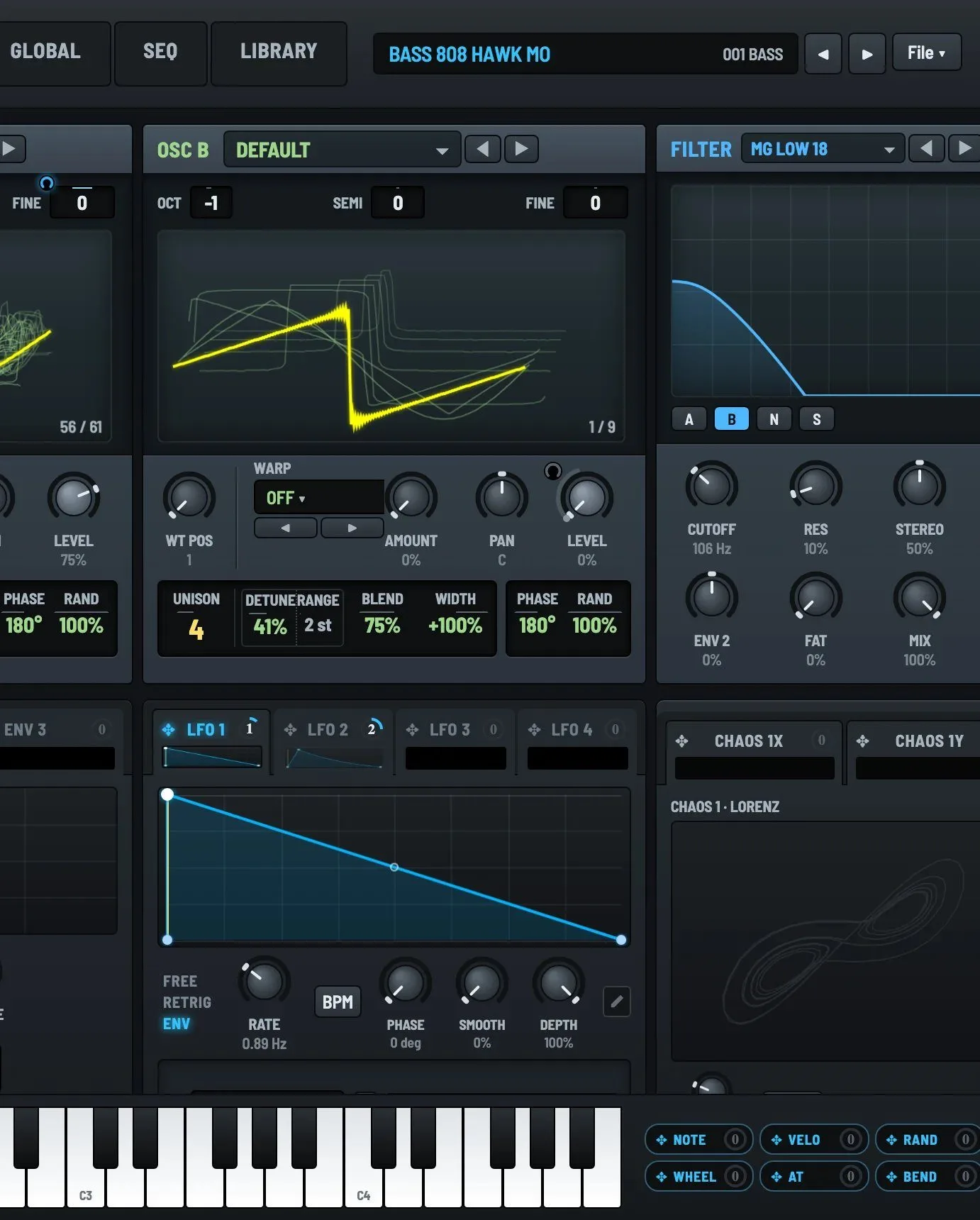
The effects rack follows the same idea of contained generosity. Ten modules are on board, from reverb to delay, chorus, distortion, a compressor and an EQ. That is enough to finish a sound without opening three extra plugins, which matters when the goal is to transfer a standalone patch to a pocket machine.
Free, cross-platform and no detours
Shrub downloads from the official site as a VST3, usable in any compatible host, and it also runs standalone. The Linux builds ship in ARM and x64 with no registration, a rare touch that fits the project’s open spirit. Steve Duda warns that the plugin can look light inside a DAW, because it runs the device’s bytecode rather than code optimised for the computer’s processor. In short, Shrub faithfully mirrors the hardware’s behaviour instead of chasing raw performance.
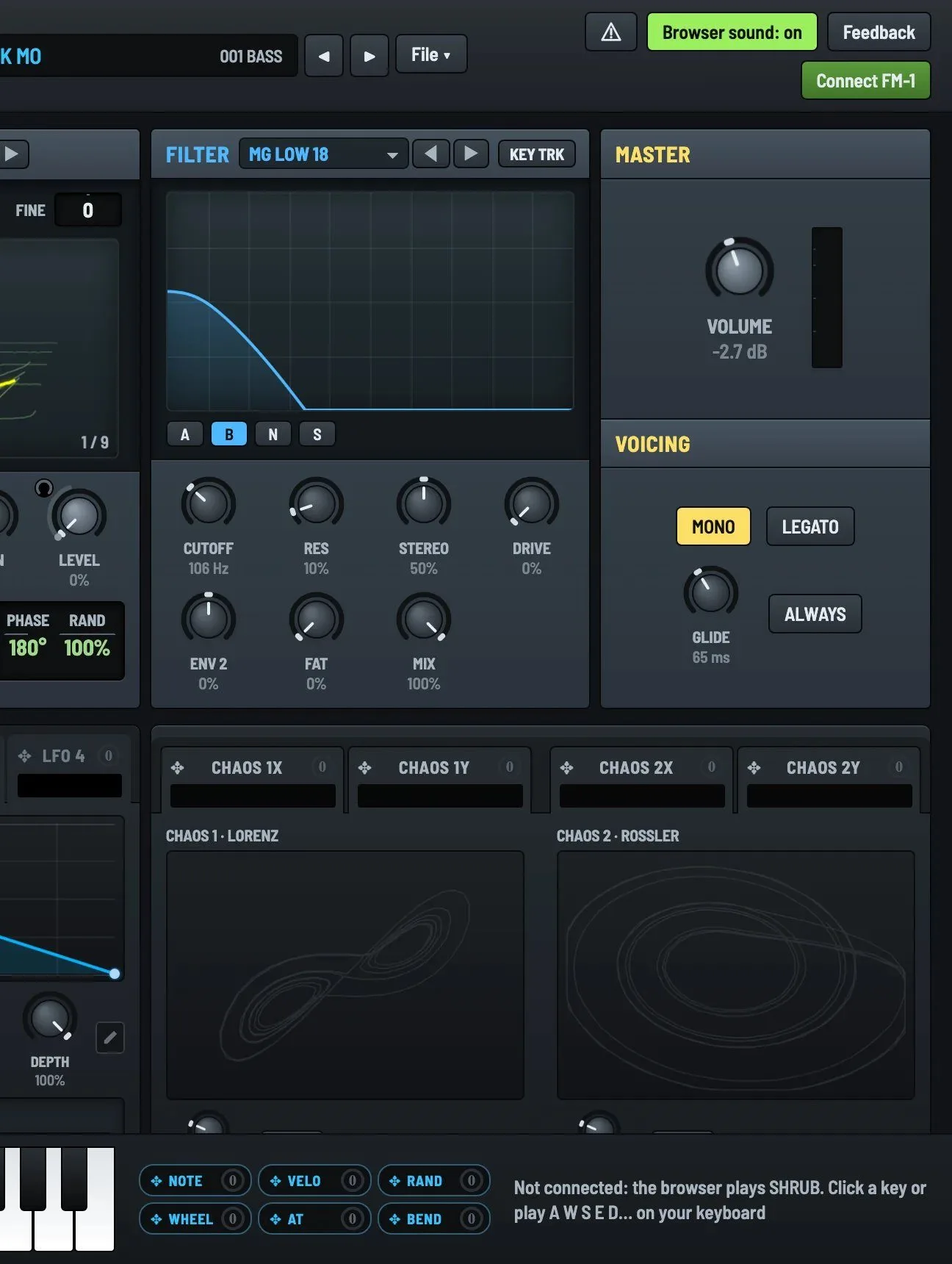
That stance makes it an unusual object. Most free synths try to stand alone, like Native Instruments’ Massive XL. Shrub instead links a desktop plugin to an affordable physical instrument, a bridge you mostly saw from the big manufacturers. To grasp the sonic logic behind it, our guide to wavetable synthesis lays the groundwork, and regulars will find familiar landmarks in our coverage of the Serum 2 Linux beta.
My take
Xfer releasing a free synth is already a small event. The real spice is the marriage with a machine that costs a handful of euros: you shape your wavetables in comfort on a big screen, then play the result on something pocket-sized. The editor does not aim to dethrone Serum 2, it stretches its world toward affordable hardware, where demand runs high. The FM-1 firmware’s longevity is an open question, but to taste wavetable synthesis without spending a cent, little else is this tempting.
The software is available on the official Shrub site.