It looks minor on paper, but it carries real weight in the production world: Xfer Records has opened a public Linux beta of Serum 2. The most widely used wavetable synth on the planet is now installable, for the first time, on a platform the plugin industry almost systematically ignores. Nothing changes for macOS and Windows users, but the port sends a message — a piece of software that has become a de facto standard no longer gets to leave an entire community on the sidelines.
A Linux beta, and why it matters
In practice, Xfer is shipping a beta build in VST3 format for Linux. The requirements are clear and a touch demanding: a 64-bit x86 CPU with AVX2, a distribution running GLIBC 2.38 or later (Ubuntu 24.04 is the reference), and a DAW that supports X11 and the VST3 SDK’s IPluginFactory3::setHostContext call. It isn’t a no-strings public release yet, but it’s a solid foundation for the studios and tinkerers who work on Linux.
The real story is elsewhere. You can count the flagship commercial synths that make it onto Linux on one hand: the vast majority of developers stick to macOS and Windows for lack of an obvious return. That a title as central as Serum is willing to spend development time here is an acknowledgement that a serious slice of producers — often the most technical ones — has moved to that environment.
Serum 2: five engines behind one face
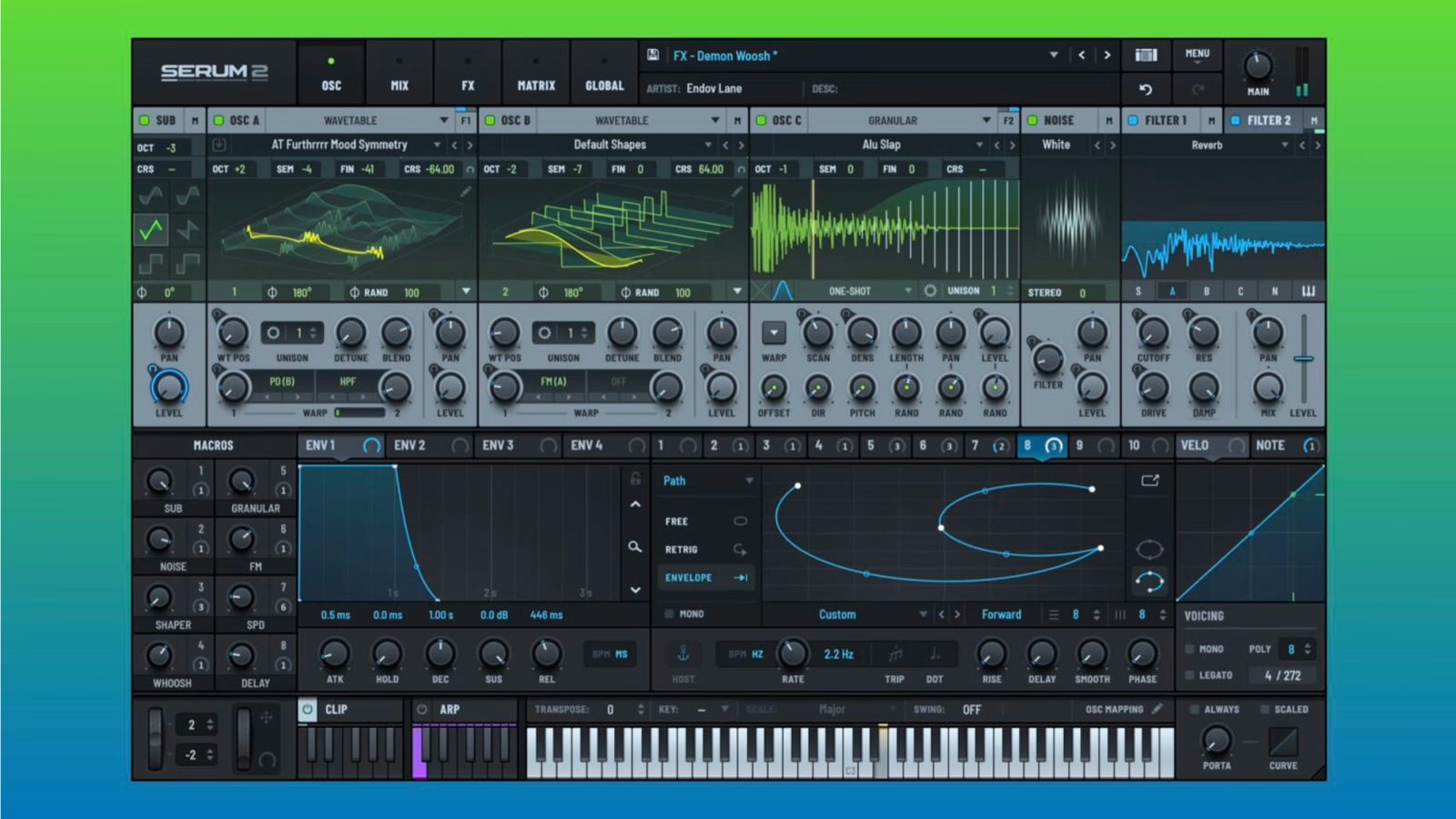
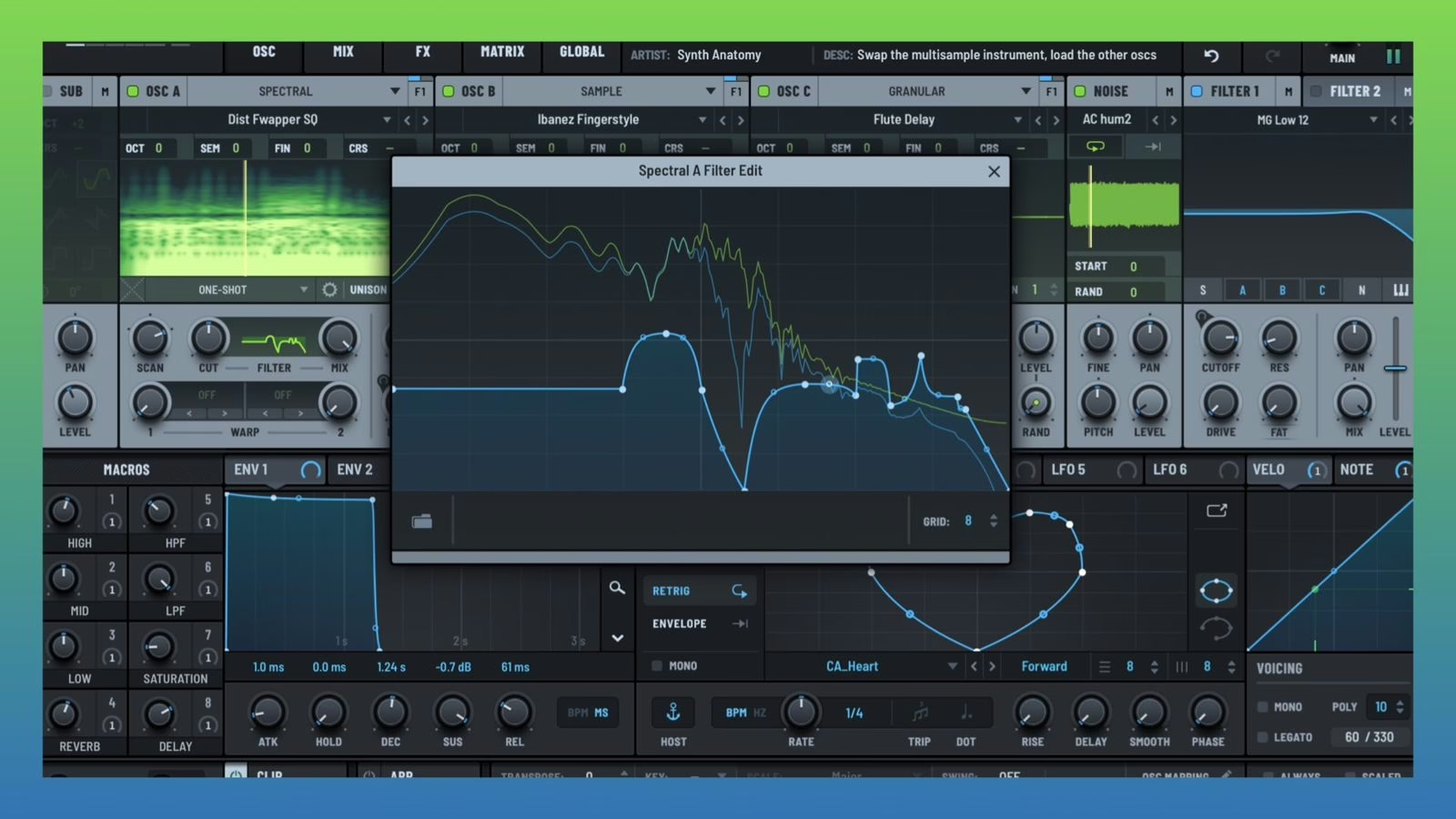
For anyone who stayed on the first Serum, a reminder is in order: version 2 is not a cosmetic facelift. Where the original built its whole character around a single wavetable oscillator, Serum 2 opens up to five synthesis types that can be combined inside one architecture. You keep the visual clarity that made the plugin famous — that wavetable morphing in real time — but you gain a versatility that pushes it toward a full-blown sound-design station.
| Oscillator type | What it brings |
|---|---|
| Wavetable | Serum’s original engine, with improved interpolation, new warp modes, FM, phase distortion and ring modulation |
| Granular | Time-stretching and grain manipulation independent of pitch |
| Spectral | Harmonic resynthesis from a sample, a wavetable… or even a PNG image |
| Sample | Sample playback with looping, FM and distortion |
| Multisample | SFZ support for multisampled instruments |
That shift to multi-engine is no small thing: it moves Serum 2 onto the turf of FM synthesis and granular synthesis, two areas that weren’t its original playground. Grain, spectral and wavetable now coexist, modulate one another, and can be stacked without ever leaving the instrument.
Real composition tools, built in
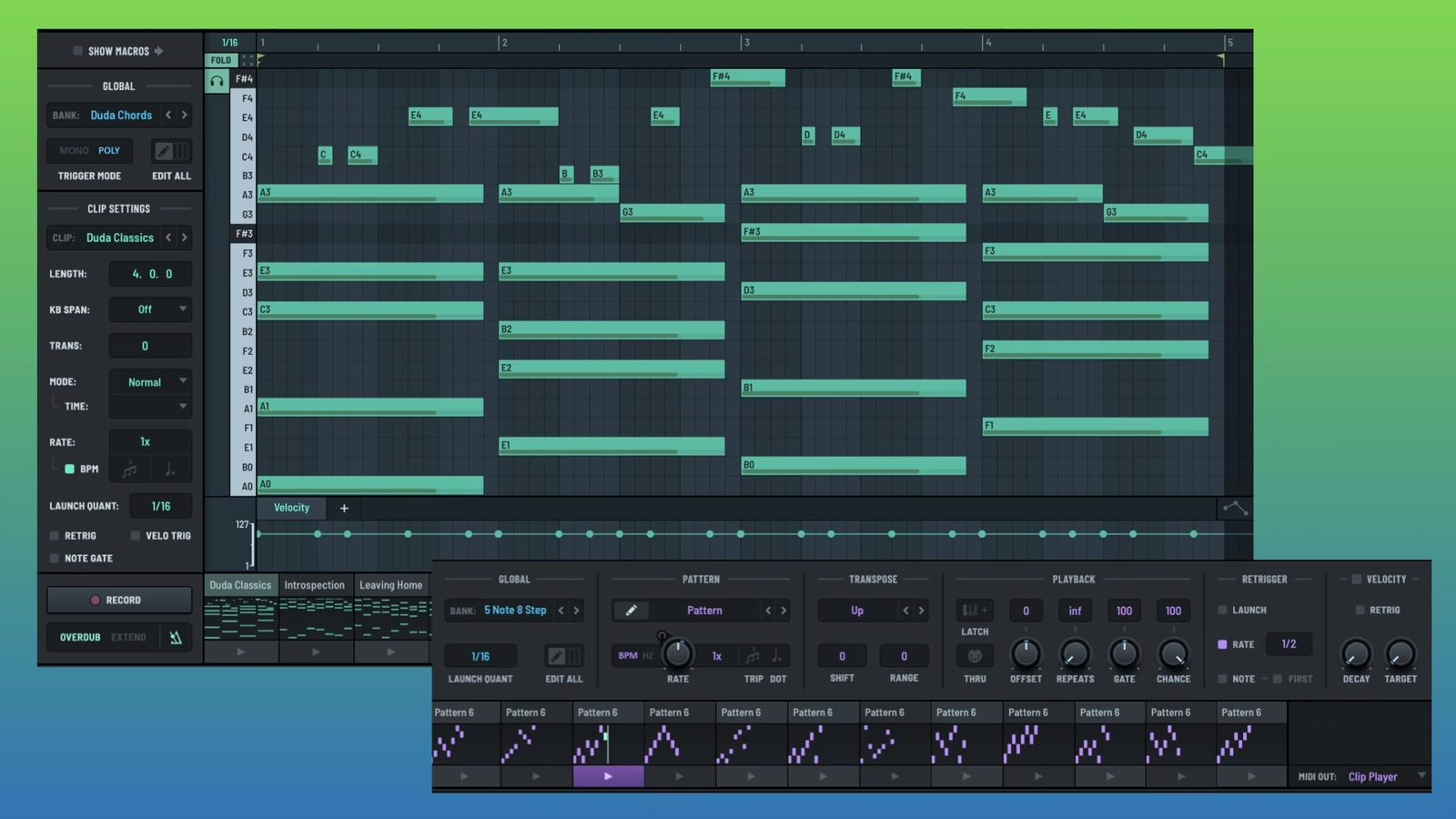
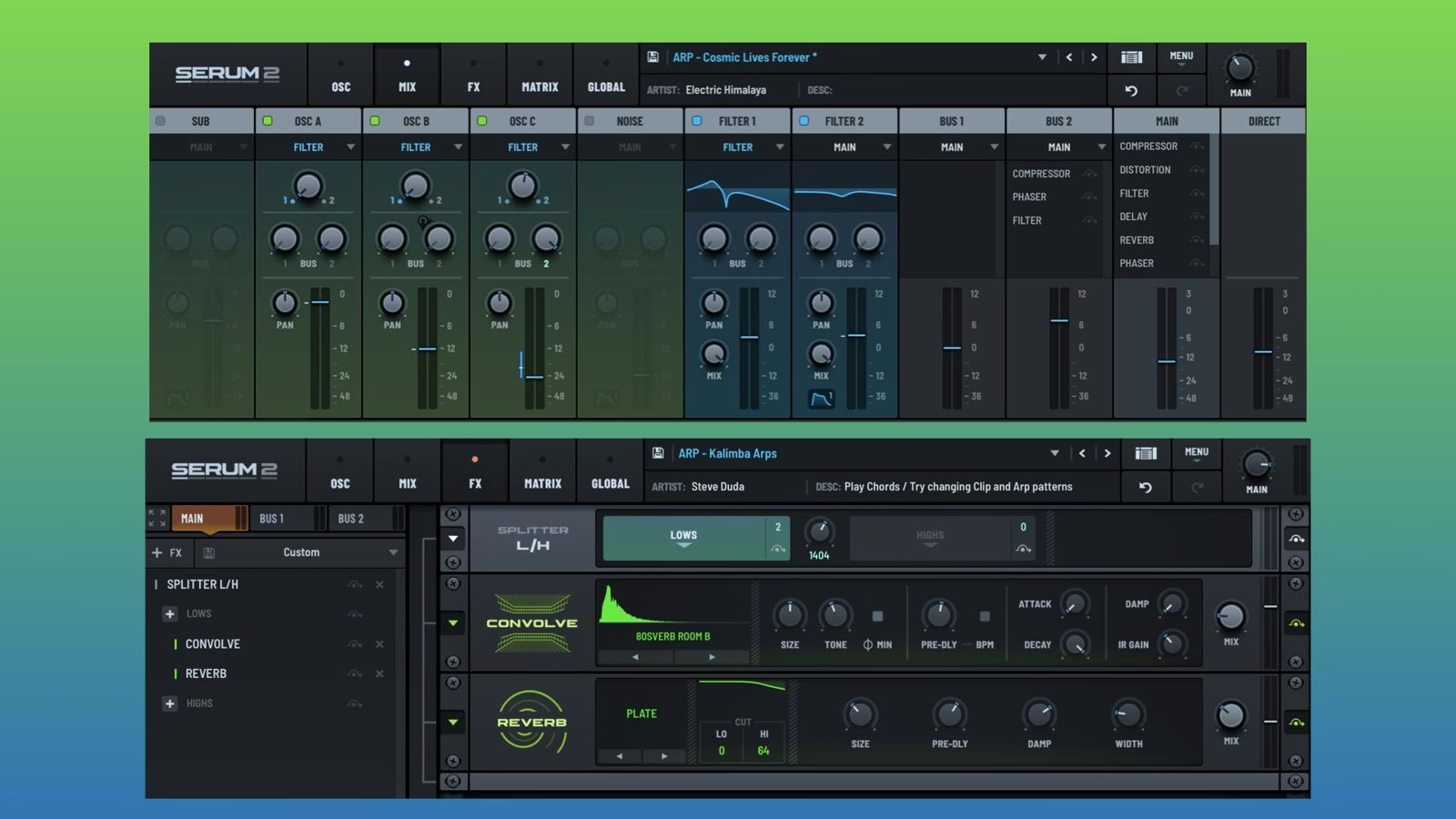
Serum 2 no longer just shapes a sound: it helps you write. A built-in arpeggiator and sequencer with twelve pattern slots bring it closer in spirit to a plugin like Audio Damage’s software take on the Roland MC-202. The mixer has been redesigned with dedicated channels per oscillator, the LFOs gain a “path” drawing mode and chaos generators, a convolution reverb accepts your own impulse responses, and the macro count goes from four to eight.
My take
I moved to in-the-box production early, back when defending an all-digital rig still counted as a provocation. So watching a reference like Serum open up to Linux speaks to me: it isn’t a marketing stunt, it’s an admission that music computing has spilled beyond the Mac/PC pair and that Linux-driven studios are no longer a curiosity. On the substance, Serum 2 pulled off the hardest trick — growing without betraying itself. You still get the readability that built its name, but with a depth that finally earns the word “instrument”. The one caveat is the risk of scatter: five engines are five ways to get lost. It’s on each of us to keep our hand on the essentials rather than piling everything on just because we can.
Price and availability
Serum 2 comes in VST3, AU and AAX formats (64-bit only), with more than 626 factory presets and 288 wavetables. For newcomers, the introductory price is $189 (rising to $249), and the update stays free for Serum 1 owners — true to Xfer Records’ long-standing lifetime-updates promise. The Linux beta itself is public and free for anyone who wants to put it through its paces. To place Serum 2 among today’s virtual synths, see our piece on discoDSP Corona 7.