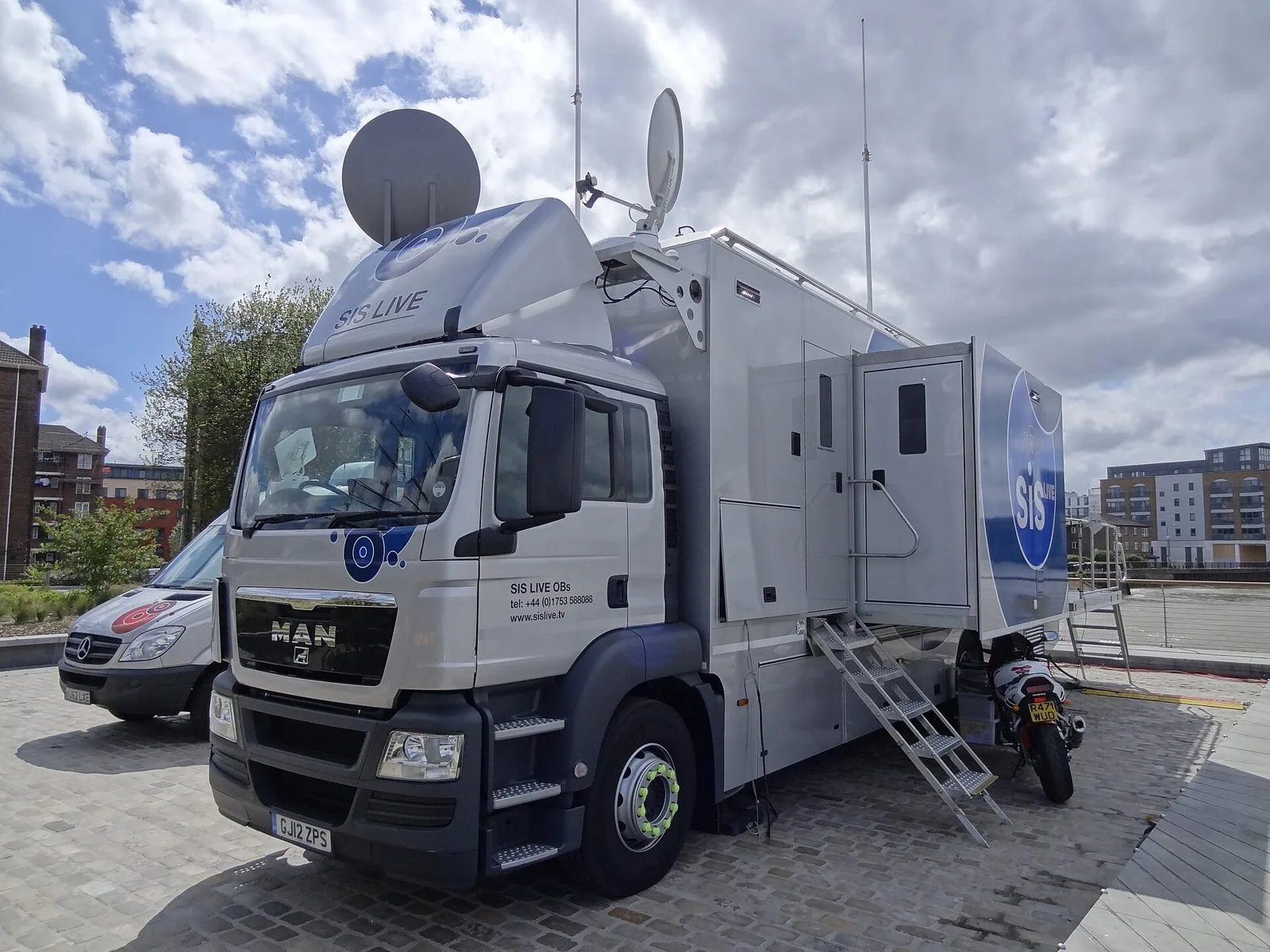
A football match, a concert, a show on location: the moment production leaves the studio, the sound control room climbs aboard a truck. We call it an OB truck, for outside broadcast, or a mobile control room. Inside, a sound engineer mixes dozens of sources live to the same standard as in a studio, but with no safety net and on a worktop that fits in a few square metres. Here is how this studio on wheels produces the sound of a live show.
A studio on wheels
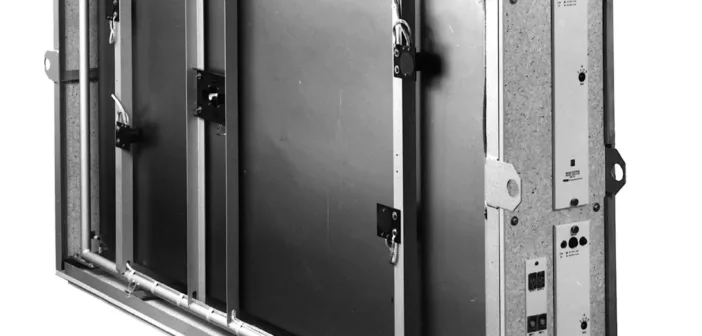
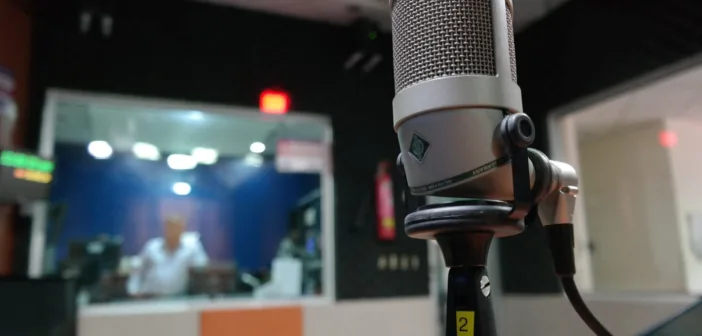
An OB truck packs several control rooms into one trailer: video and camera switching, slow motion, graphics, and a dedicated sound booth. That booth holds the mixing console, the monitors and the position of the sound engineer, often called the A1 in international usage. Separating audio from video is not just organisational: it protects critical listening from the noise of the other positions. Along the side of the truck, once the hatches open, a striking patch bay appears, where the site’s hundreds of lines come in.
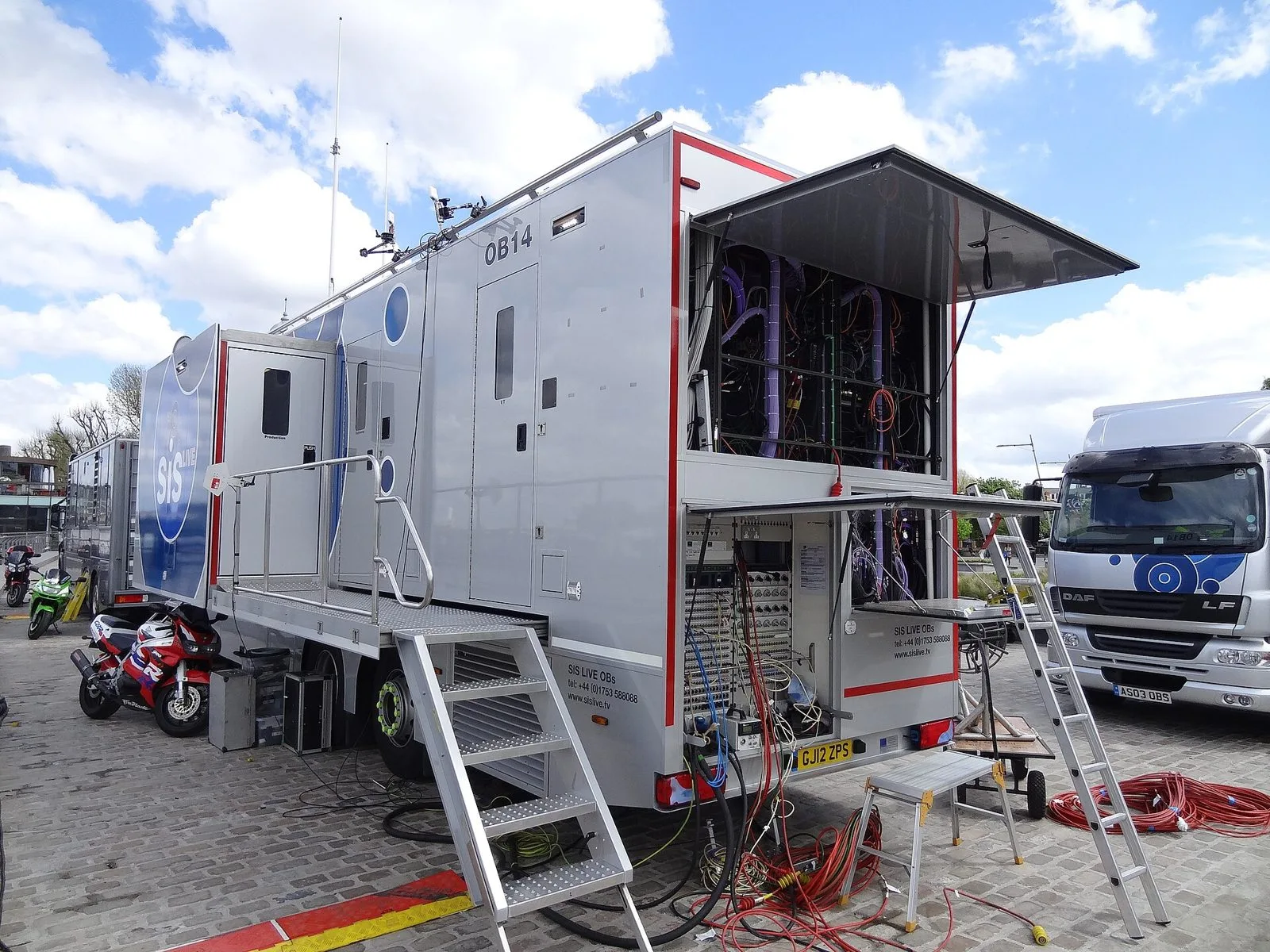
The logic mirrors a fixed television gallery, except that everything is demountable and has to be re-cabled at each venue. Our piece on TV studio audio describes that chain in its fixed form, from the lavalier to the sound mixer.
From the field to the control room
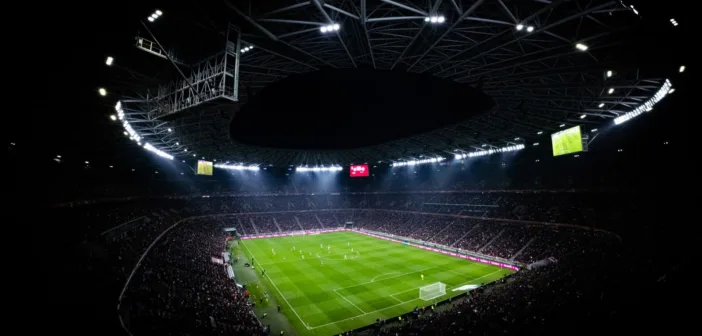
It all starts with the mic plan, specific to each kind of event. At a stadium, you capture crowd ambience, ball impacts at the edge of the pitch, commentators and sometimes referees. At a concert, you pick up the stage as in live sound, with a split that sends the same mics to front of house and to the truck. These sources reach stageboxes placed on site, which gather the signals and carry them to the truck. There, the mixing console, often a large broadcast surface from Calrec, Lawo or SSL, builds sub-mixes and the program mix that goes to air.
Sport sound shows this balance of ambience, precision and reaction well. We told it in detail with the capture of a football match, where the mic tracking the ball carries the life of the broadcast.
Audio-over-IP replaced the copper multicore
For decades, linking the field to the truck meant pulling kilometres of copper and heavy multicore. Modern OB trucks now run over fibre and audio-over-IP. Signals travel as packets on a network, to the AES67 standard or within the wider SMPTE ST 2110 framework, which separates video, audio and data streams. The gain is weight and flexibility alike: one link carries hundreds of channels, and a patch is redone in software. The trade-off is that the network becomes the link to protect, with redundancy to hold the live show. The ST 2022-7 redundancy scheme, which sends the same stream over two paths and switches with no dropout, has become a reflex on live productions.
Intercom, mix-minus and loudness
A live capture rests on communications as much as on the mix. Intercom links the director, the camera operators, the floor and the commentators, over party lines and matrices. Each commentator gets a tailored feed: the program minus their own voice, so they hear themselves without echo or delay. That clean feed has a name, mix-minus, and it also serves remote two-ways. Before it leaves the truck, the mix passes a loudness check against the EBU R128 standard, so perceived level stays consistent from one program to the next. In surround, the truck often produces a 5.1 mix and its stereo fold-down, as we detailed with surround sound for broadcast.
Live, with no second take
The difference from the studio comes down to one word: live. No second take, no fixing it later. The sound engineer anticipates, prepares console scenes in advance, names sources cleanly and doubles up whatever can be doubled. A concert and a match call for different reflexes: one follows a rehearsed musical running order, the other reacts to unpredictable action. In both cases, the preparation done calmly, before the on-air cue, decides the night.
My take
The OB truck is one of the most demanding jobs in the trade, and one of the quietest. Nobody notices good match sound; everybody hears a commentator in echo or ambience that vanishes. The move to IP lightened the rig and opened patching options that were unthinkable in the copper era, at the cost of new network vigilance. For anyone who wants to learn broadcast by doing, watching an A1 work in a truck beats any diagram: the real skill is preparation, not the live gesture.