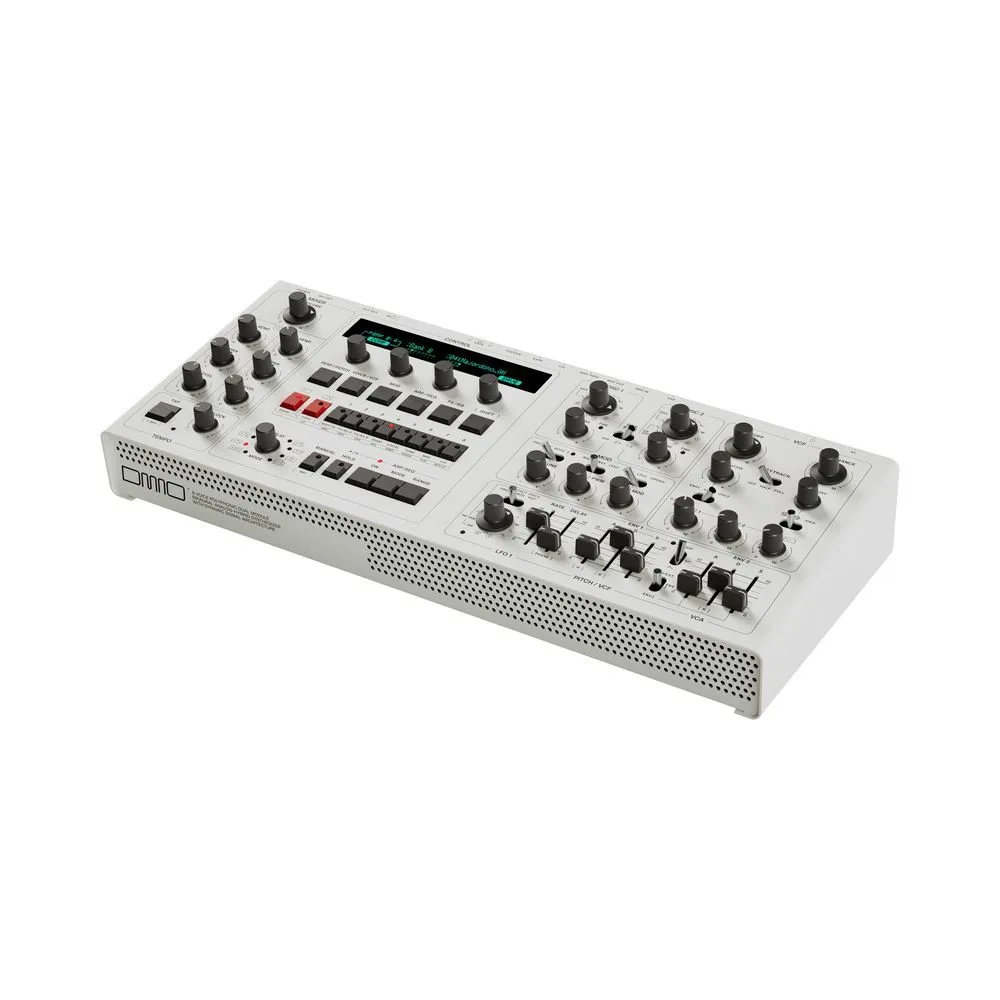
UDO Audio, the British maker based in Bristol, has turned its DMNO synthesizer into a keyboard-less version. The DMNO ON keeps the full engine, eight voices, two parts, but swaps the keyboard for a desktop box that you build out with control modules as needed.
The DMNO engine, without the keyboard
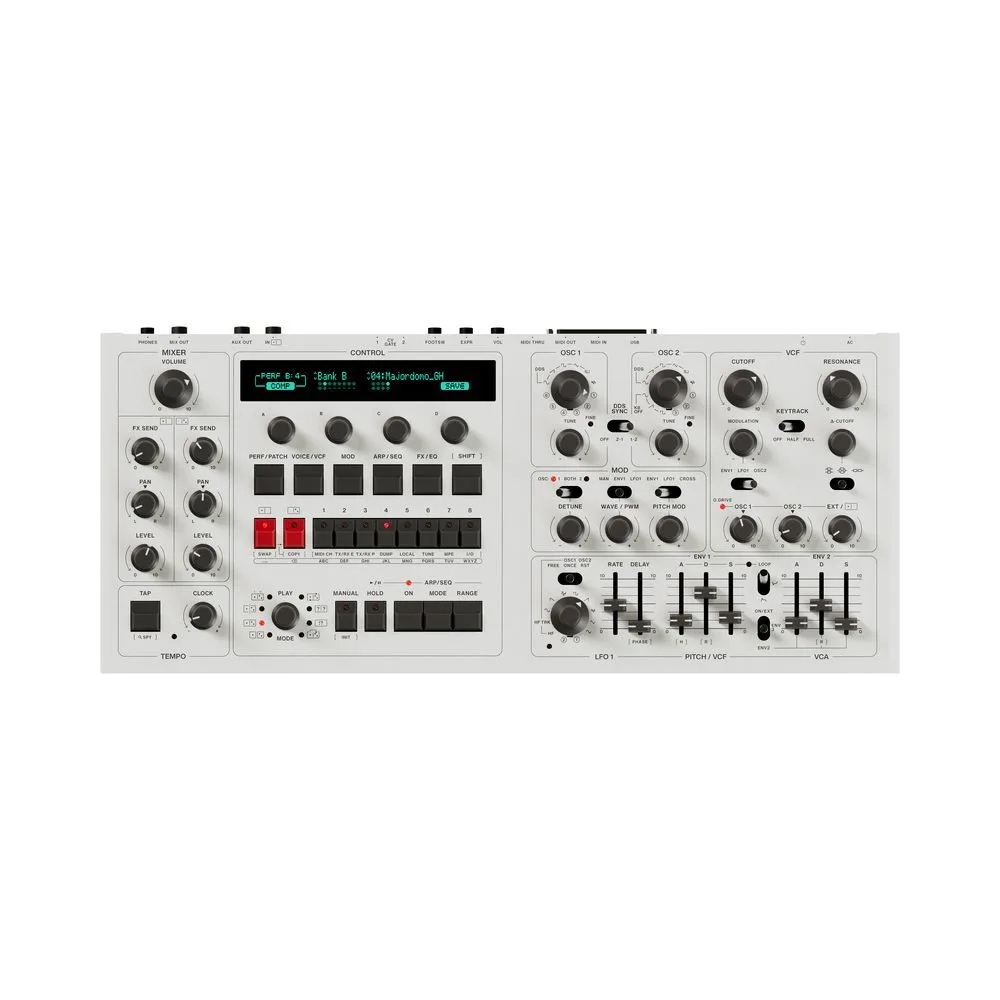
The DMNO is an eight-voice, two-part multitimbral hybrid: two independent synth engines you play layered, bi-timbral or split. Each voice pairs two FPGA-driven digital oscillators with a stereo analog filter, the architecture UDO developed on its high-end synths and that gives the wide stereo image inherited from the Super 6 and Super Gemini.
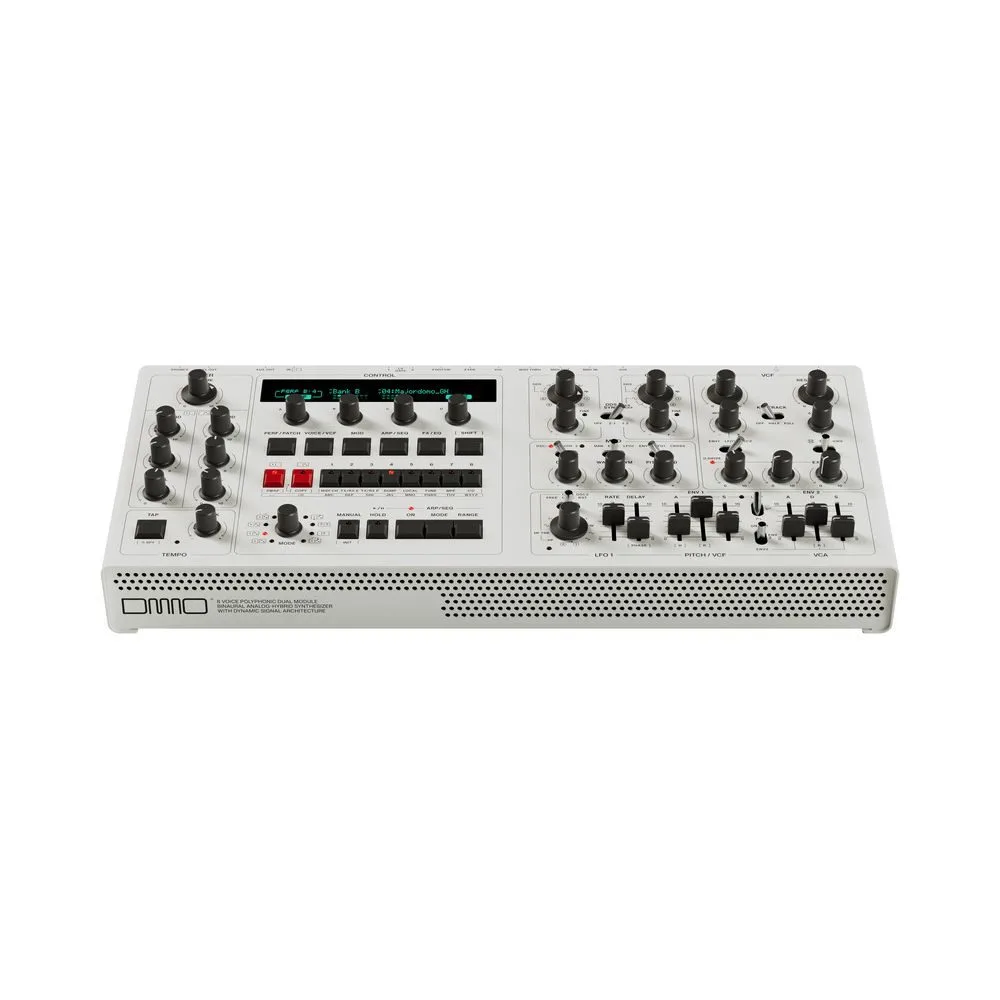
The difference from the keyboard DMNO comes down to ergonomics. The keyboard carried two identical control panels, one per part. The DMNO ON shows a single synthesis panel in its base configuration, while keeping all eight voices and both parts reachable from the same surface.
ONM, control you add in modules
The new idea in this format is the ONM system. The DMNO ON accepts control modules that clip on alongside it: the ONM-1 Synth Control, available at launch for $725 (about €769, £664), gives the second part its own physical controls, bringing back the immediacy of the two-panel keyboard. An ONM-2 Effects Control is announced to drive the built-in effects. You add one, the other, or both, depending on space and budget.
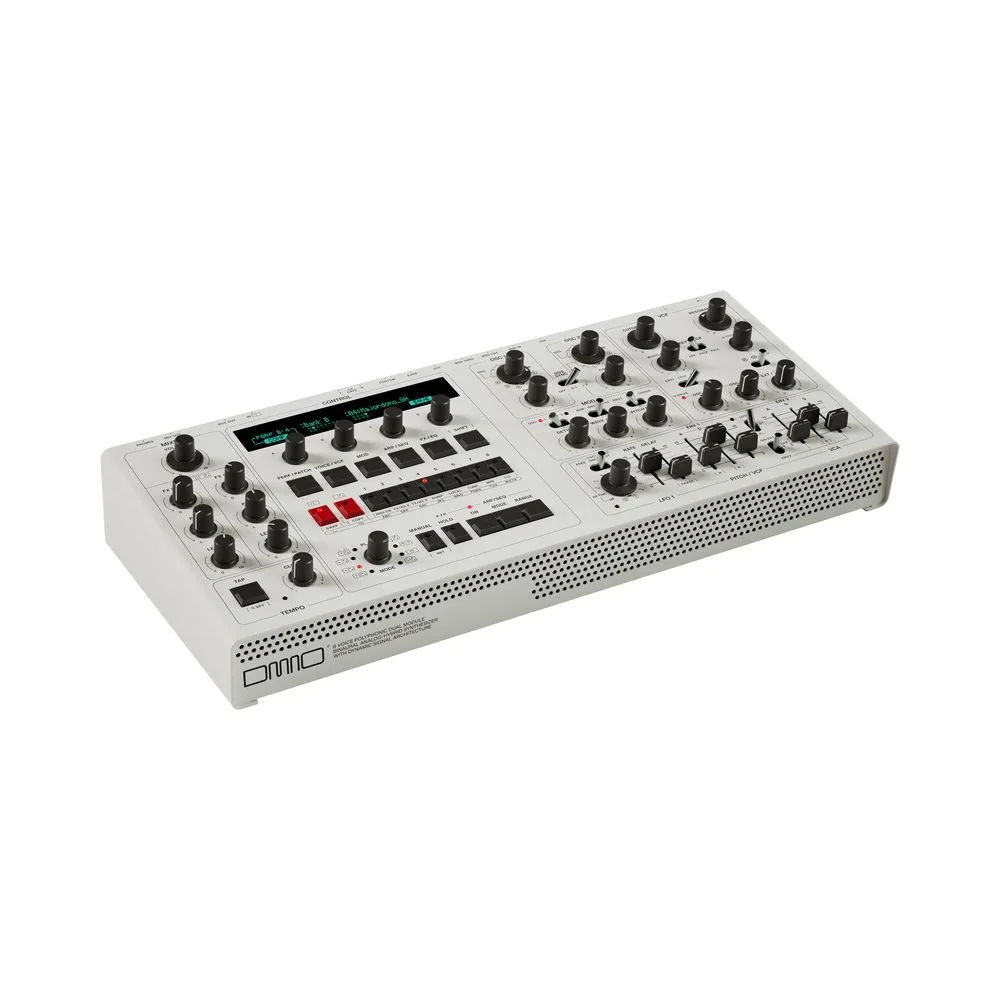
That modular logic suits anyone who wants to start compact and expand the playing surface later, rather than pay up front for controls they will not use. It moves the DMNO ON closer to the spirit of a rack you first drive from the screen, then add knobs to over time.
Play modes and effects
The DMNO name points to the domino: the eight play modes are drawn as domino tiles and describe how the two parts interact, from simple stacking to trickier voice sharing. A digital effects section is built in, and the DMNO also works as a computer audio interface, so you can record straight into a DAW without a desk in between. To place this engine against the analog competition, our round-up of analog polysynth clones and the look back at the Oberheim Matrix-12 give useful reference points.
Price and availability
The DMNO ON is listed at $2,299 (about €2,449, £2,111), with the ONM-1 module at $725 (about €769, £664). UDO is taking pre-orders, with shipping quoted at about 8 to 10 weeks. This stays a high-end instrument, in line with the pricing of other UDO gear, but the desktop version lowers the entry point a little compared with the keyboard model.
My take
The ONM module idea is clever. Rather than fixing one surface, UDO lets the buyer decide how many controls they want under their fingers, and spread the spend. The sound is still the real argument: that wide, lively analog stereo image has few rivals at eight voices. The price keeps the DMNO ON for players who want precisely this colour and this desktop format. For a studio already working on screen, starting compact and adding an ONM-1 later lands well.