Some units have a spec sheet that fits in two curves and yet never left the studios. The Pultec EQ is one of them. Designed in the early 1950s, it rests on a handful of inductors, capacitors and resistors, followed by a tube stage. No active electronics draw the curve: it comes from the passive filter, and that is exactly where its longevity comes from.
A passive filter followed by a tube
Pulse Techniques, founded in 1951 by Eugene Shenk and Ollie Summerland, launched the EQP-1, whose EQP-1A variant became the reference. The principle is unusual. The equalising circuit is entirely passive, so it can only attenuate the signal, never amplify it. The insertion loss, around fifteen decibels, is made up by a tube amplifier and an output transformer. The signal passes through passive parts that shape the spectrum, then a tube stage that restores the level while adding its own harmonic signature.
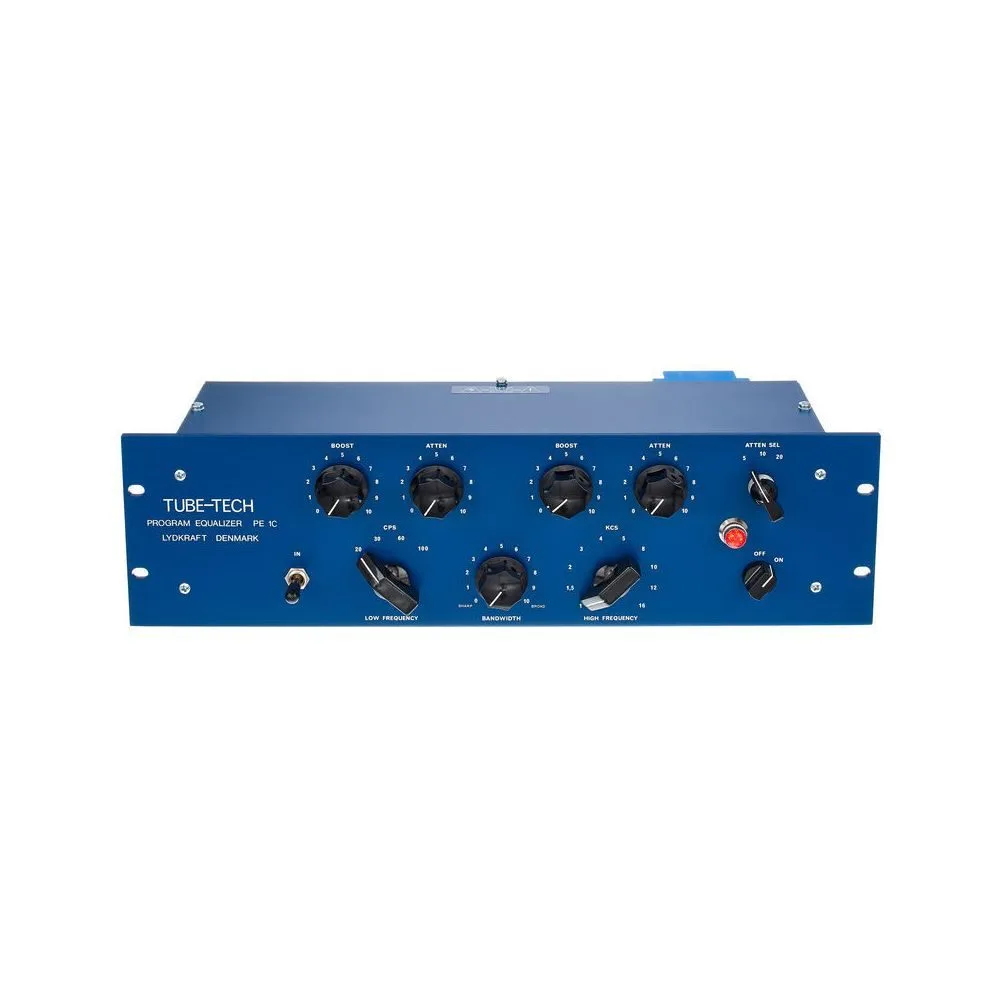
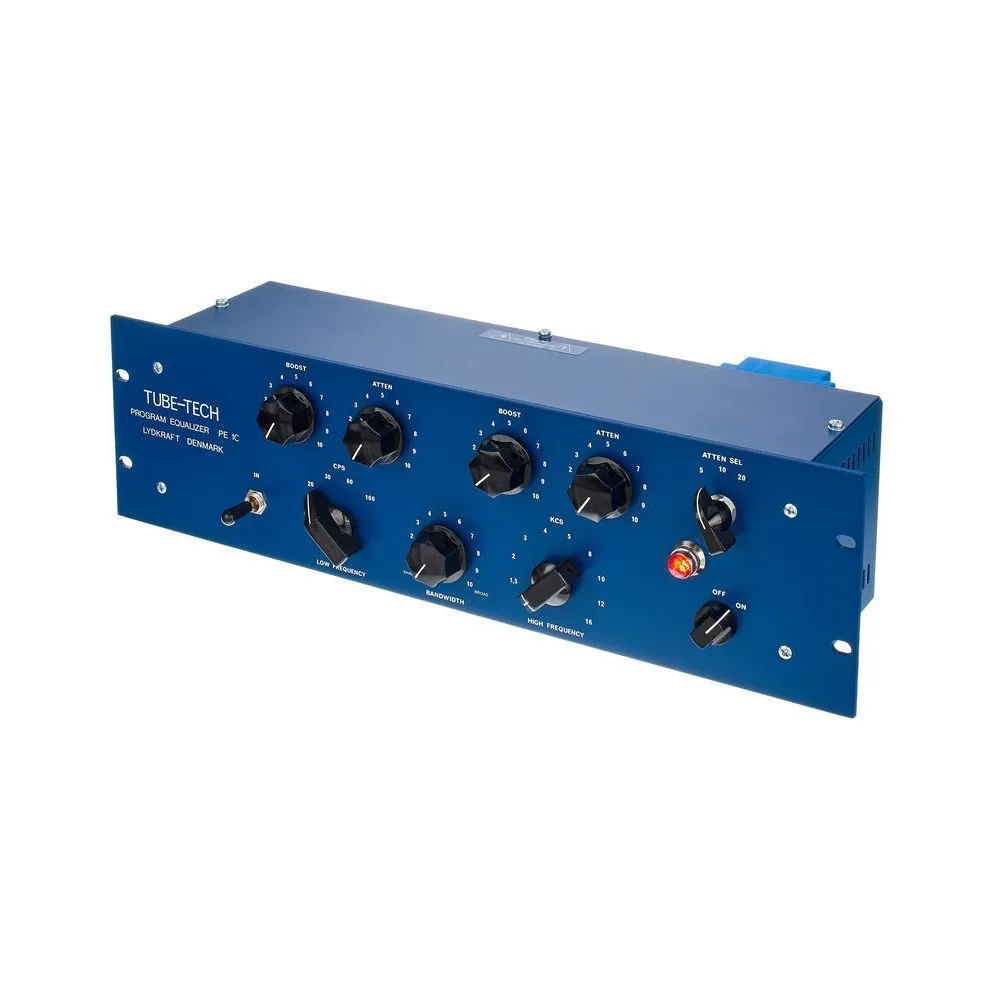
The curves are broad, gentle and minimum-phase. The low end is set as a shelf at 20, 30, 60 or 100 Hz, with up to a dozen decibels of boost or cut. The highs boost as a bell around 3, 4, 5, 8, 10, 12 or 16 kHz, with a bandwidth control, and cut as a shelf at 5, 10 or 20 kHz. Two companion units complete the family, the MEQ-5 for mids and the HLF-3C high and low filter.
The low-end trick, the signature move
The move that made the unit famous comes from a quirk of its design. On the low band, boost and cut share the same frequency selector, and nothing stops you pushing both at once. Because the boost curve peaks a little lower than the cut, the result is not a return to flat: you get a bump at the very bottom of the spectrum, followed by a slight dip just above. The low end gains weight without the upper bass turning muddy.
On a kick drum or a bass, this setting gives a low end that moves air without masking the mids. It is a form of subtractive EQ disguised as a boost, and it remains one of the most copied moves in mixing. It points to an idea you find elsewhere, for instance in tape emulation: the colour comes as much from the processing as from the parts that carry it.
Discontinued, then revived
Original production stopped in the early 1980s. The unit could have ended up in collectors’ cabinets, but demand never dried up. Pulse Techniques came back in the 2010s and once again builds the EQP-1A, in the balanced EQP-1A3 version, alongside other models from the original range. In the meantime, the architecture spread far beyond the brand.
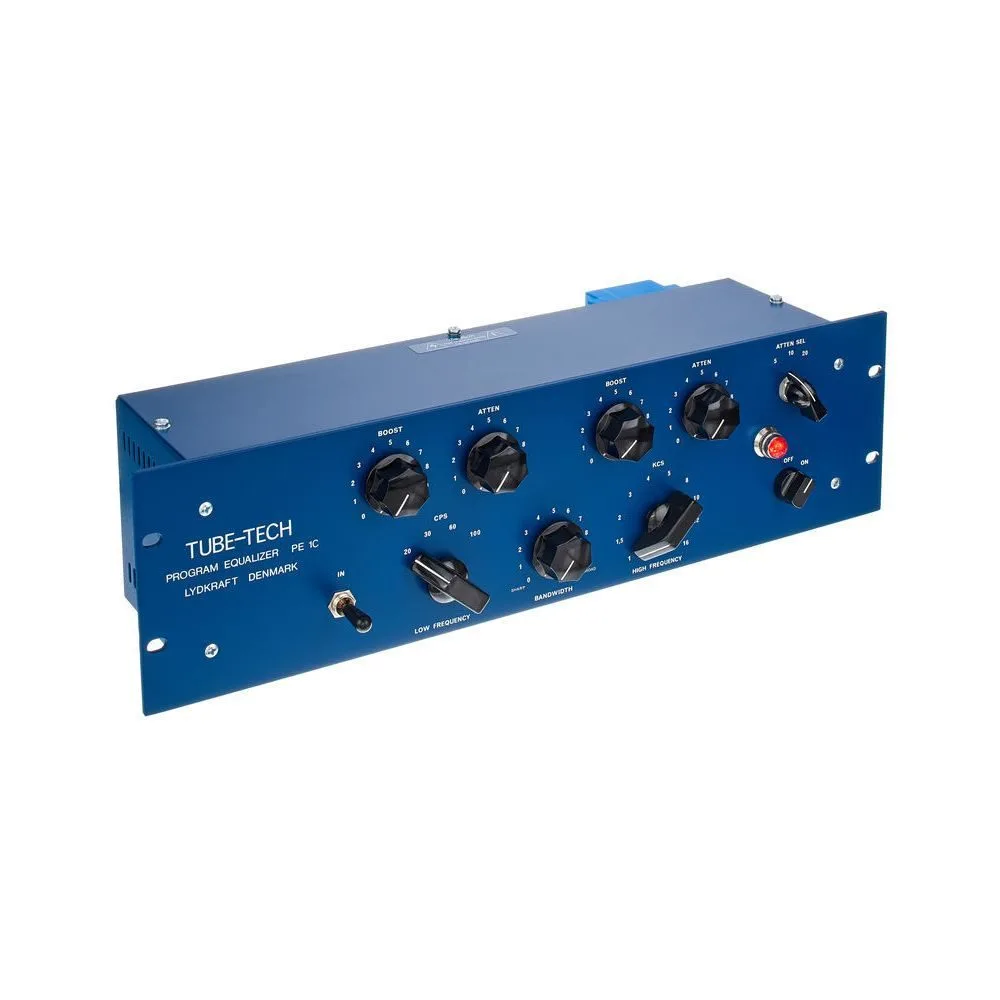
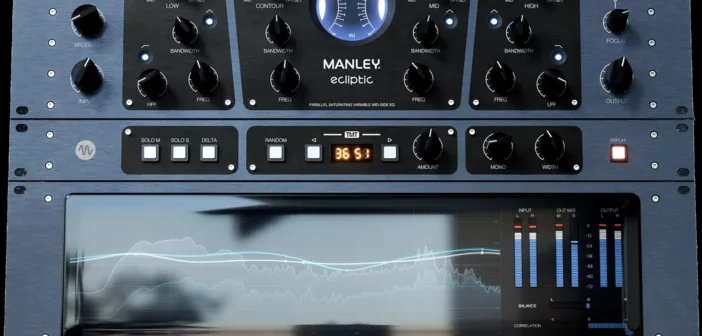
Denmark’s Tube-Tech, through John Petersen, has offered its PE 1C since the 1980s, a tube passive from the same school, pictured here. Warm Audio, Universal Audio, Manley and IGS all build their own hardware versions, and software emulations number in the dozens. All share the same skeleton: passive filter, tube make-up, transformers. That lineage joins other studio cornerstones, from the LA-2A optical compressor to the Neve and API preamps, and up to the recent Manley EQ plugin.
Why it lasts
The reason fits in an engineer’s line: it is hard to make it sound bad. The passive curves are so broad they never dig a narrow hole, the tube and transformers add a pleasant density at high levels, and the small set of controls forces clear decisions. A Pultec does not fix a problem surgically, it lays down a tint. That economy of means, hard to catch out, explains why a 1951 design still sits in mastering racks in 2026.
My take
The Pultec is the perfect example of a tool that wins by staying simple. Four low frequencies, a handful of highs, and one move, the low-end trick, worth the price of entry on its own. In hardware it brings the tube and transformers; in plugin form it keeps the core curves and the setting logic. The real trap would be to treat it as a relic: it is an everyday EQ, for anchoring a low end or opening a top without overthinking. Few units age this well.