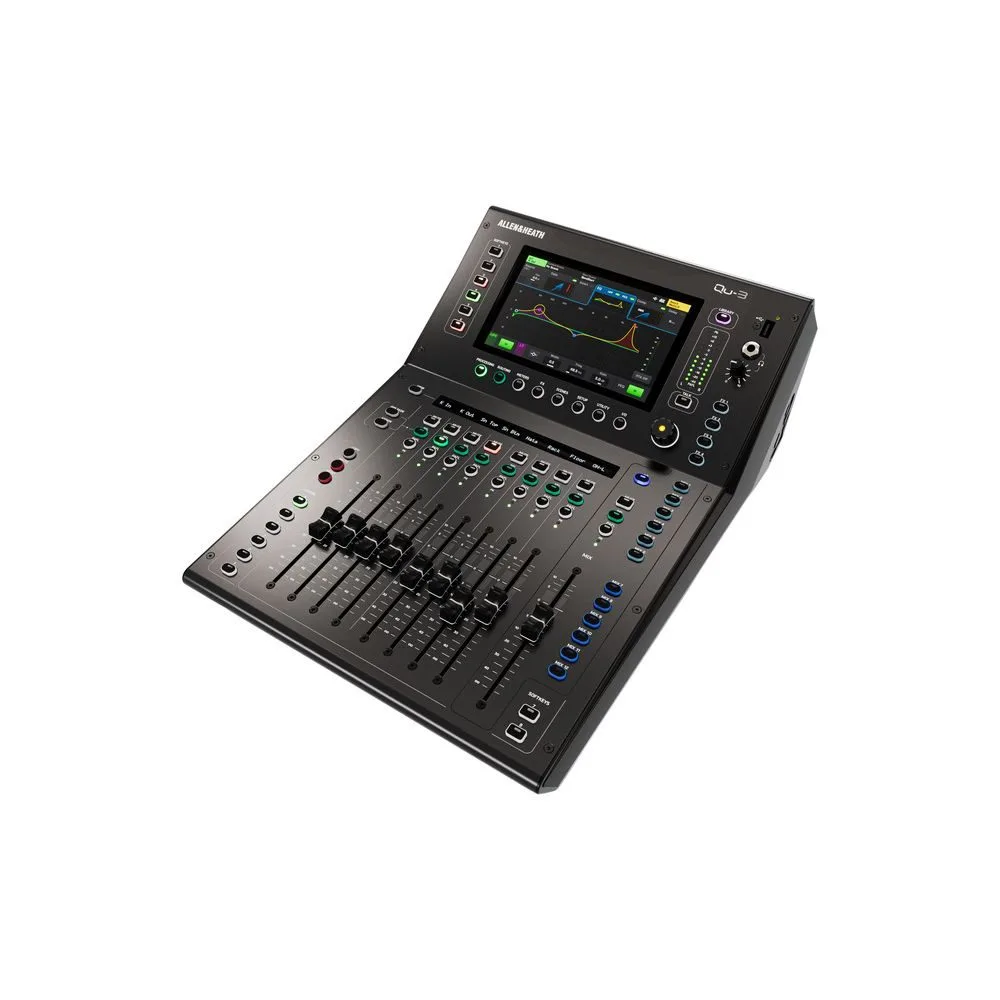
Allen & Heath has extended its Qu range downwards with two desktop consoles, the Qu-3 and its networked sibling, the Qu-3D. The company’s line, “same core, smaller footprint,” sums up the idea: take the processing engine from the recent Qu desks and fit it into a chassis you can carry under one arm.
The smallest Qu to date
The Qu-3 sits below the Qu-5, until now the most compact of the series. It carries nine 100mm motorised faders, a 7-inch capacitive touchscreen and a roughly 7kg desktop footprint that drops onto a tight control position or racks into 19 inches with the optional ear kit. The target is clear: small rooms, houses of worship, AV install, monitor positions and flypack work where a Qu-7 or an SQ takes up too much space.
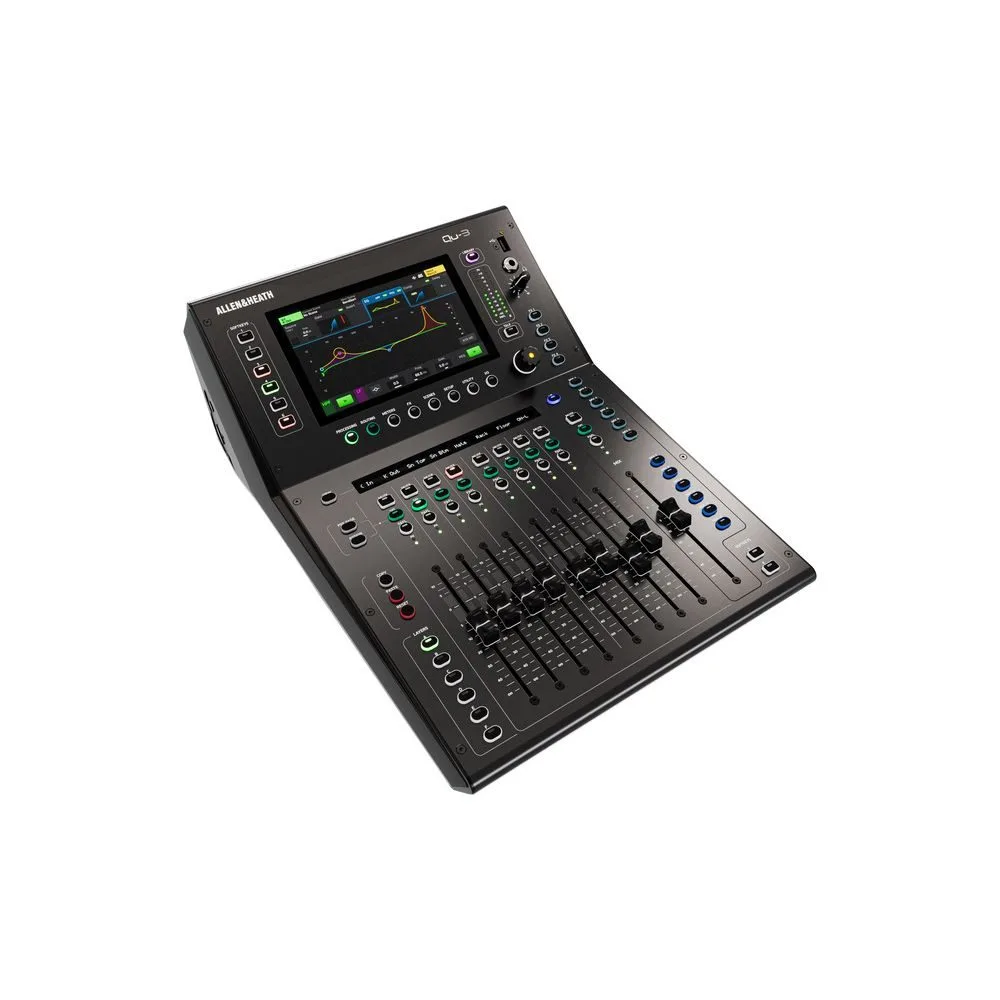
The desk handles 32 input channels at 96kHz. You get the familiar Qu allocation of twelve mix buses and four matrices, six FX engines with dedicated stereo returns, parametric EQ, and gates and compressors on every channel. The Feedback and Gain Assistants, first seen on the CQ series, help rough out a frequency plan or a starting gain without an external probe.
A 96kHz engine from the larger Qu desks
The processing heart is still XCVI, the FPGA architecture the Qu range adopted in its overhaul. The promise is low latency and identical processing across models: a scene built on a Qu-7 reloads on the Qu-3, give or take the I/O. Allen & Heath also keeps DEEP compatibility, its plugin-style processing models that drop straight into channels, with branded preamps and compressors reproduced closely.
On the computer side, the Qu-3 carries a 32×32 USB-C audio interface for multitrack recording and playback in a DAW, and direct recording to an SD card remains on board. Enough to capture a show as it happens, or to replay a multitrack soundcheck the next day.
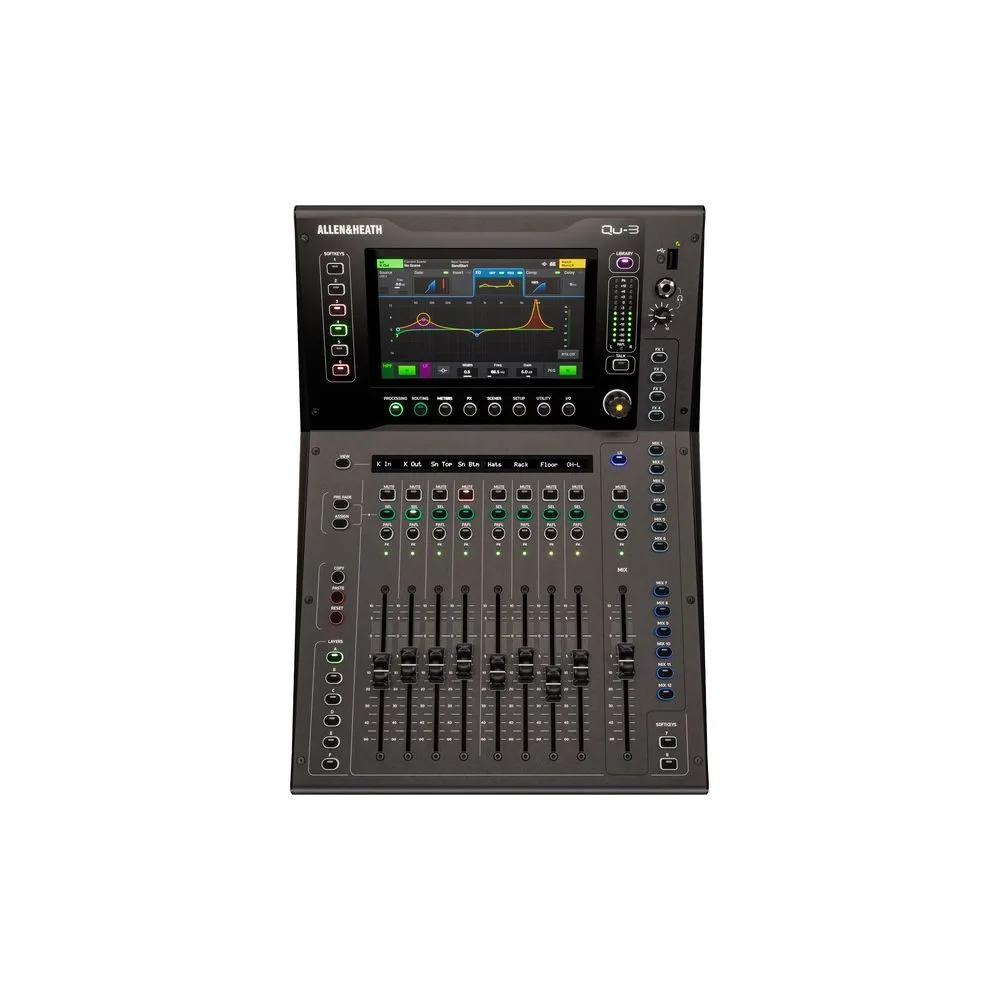
Qu-3D, the Dante model
The difference between the two versions comes down to one word: Dante. The Qu-3D adds a 16×16 network card at 48 and 96kHz, enough to tie it into a stage audio-over-IP system, a Dante recorder or a broadcast control room without analogue tie-lines. The Qu-3 leans on USB and SLink instead. The choice is simple: if your system runs Dante, the Qu-3D; if not, the Qu-3 covers the rest.
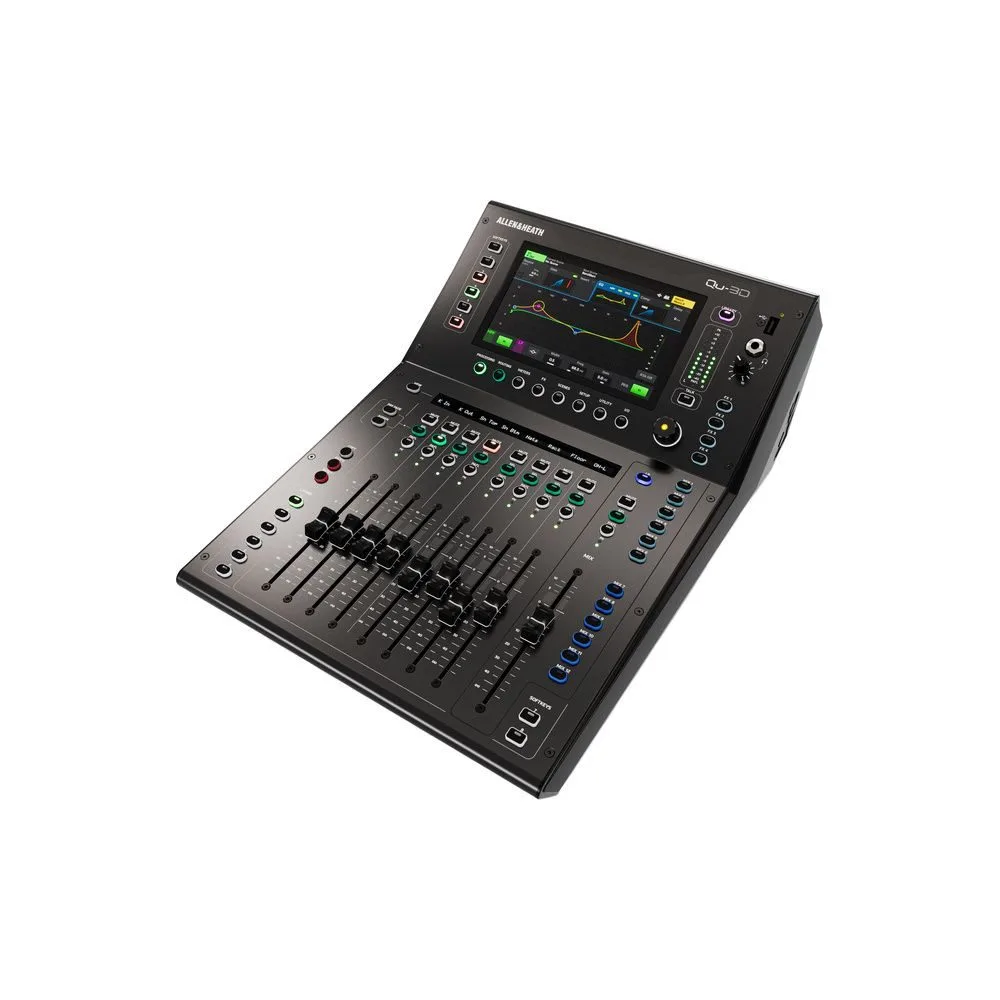
Inputs, outputs and SLink expansion
The SLink port opens the desk to Allen & Heath’s own Everything I/O stageboxes. Depending on the protocol connected, the link scales up to 128 inputs and 128 outputs at 96kHz, enough to push the preamps close to the mics and keep the cabling between stage and FOH light. That remote-patch logic suits both the provider splitting mics between FOH, monitors and broadcast and the monitor engineer building in-ear mixes from a stage position.
Price and availability
The Qu-3 is listed at £1,499 and the Qu-3D at £1,739, both shipping since 15 November 2026. At that price, Allen & Heath is going after the versatile small-format digital desk, where one chassis works front of house one night, as a monitor desk the next, and as a recording interface the rest of the time.
My take
The Qu-3 lands in the right gap. A small digital desk that genuinely holds a stage was missing from Allen & Heath, stuck between the ultra-compact CQ and the rackmount Qu. Carrying over the engine from the larger desks, rather than crippling a cheaper core, is the right call: a desktop board that reloads a session built elsewhere without complaint is a real help on a multi-date run. The Dante version, £240 more, settles the networking question for a lot of stages. The screen’s responsiveness in daily use is the real test on this format, and worth watching.