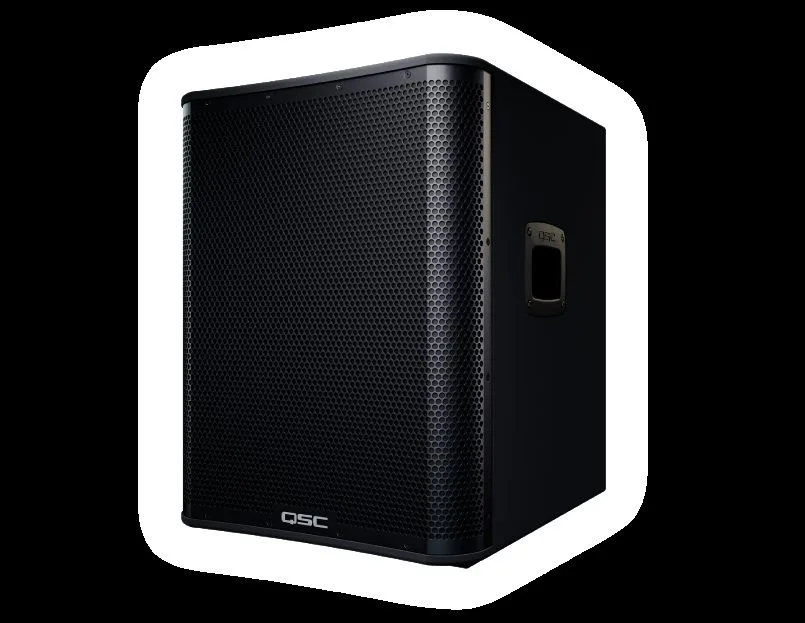
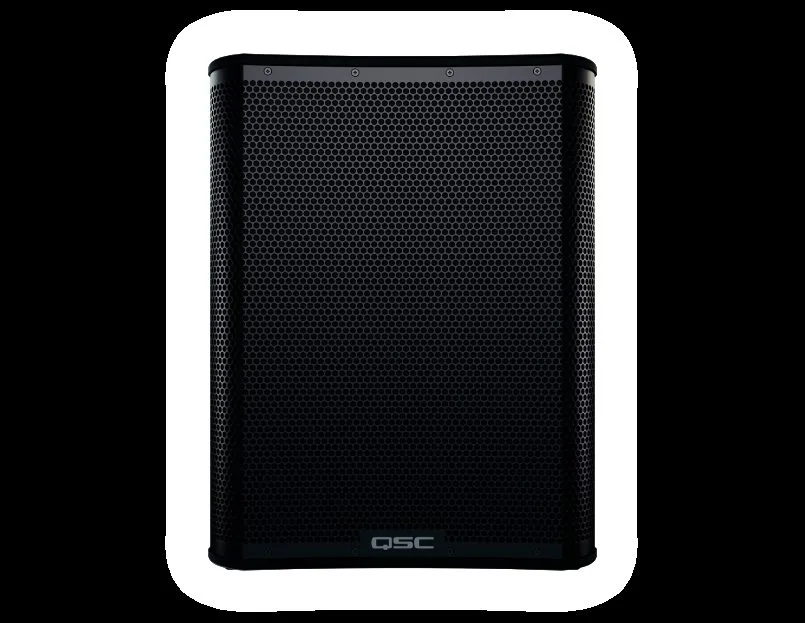
QSC rounds out its portable PA range with two powered subwoofers, the CS15 and CS18. Same electronics, two cone sizes, and onboard processing that reaches low and sets up as a cardioid array without an outboard box. QSC is aiming at mobile operators, bands and compact installs that want tight low end without hauling a rack of amps and processors.
Two formats, one 2,600 W engine
The CS15 and CS18 share the same 2,600 W peak Class D amplifier and the same processing platform. The difference is the driver and the low-frequency reach. The 15-inch CS15 is the easier one to move; the 18-inch CS18 gains a few hertz at the bottom and a decibel of maximum level. Here are the manufacturer figures.
| Model | Driver | Peak power | Max SPL | DEEP mode reach (-10 dB) | Weight |
|---|---|---|---|---|---|
| CS15 | 15-inch | 2,600 W Class D | 133 dB | 39 Hz | 58.7 lb |
| CS18 | 18-inch | 2,600 W Class D | 134 dB | 35 Hz | 82.9 lb |
DEEP is a preset that extends the low end at the cost of a little level, handy indoors or when the material needs weight below 40 Hz. The cabinet is painted birch plywood with a steel grille and an M20 threaded insert on top for a full-range top on a pole.
Cardioid, presets and polarity, right on the box
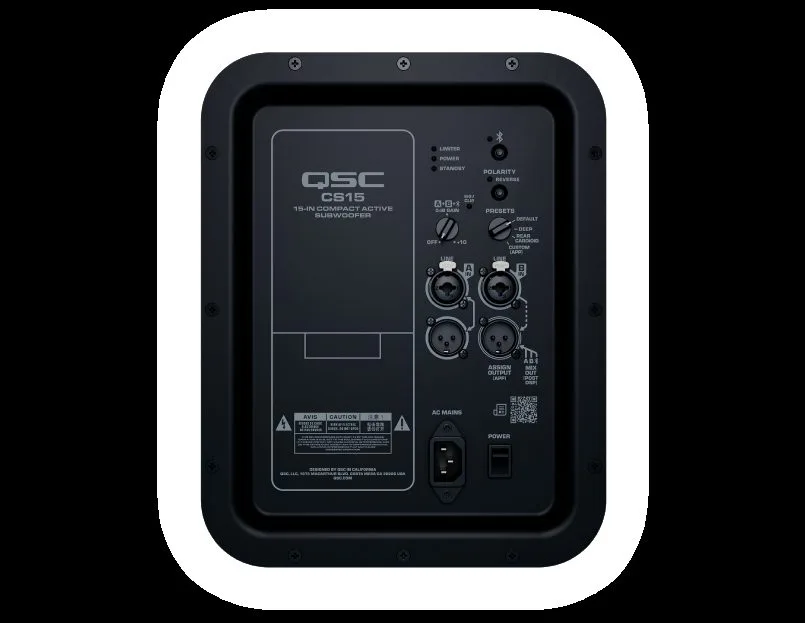
The headline feature is the Quick Cardioid preset. Place several subs, switch it on, and the system cuts the low-frequency energy radiated to the rear, where the stage and the players sit. A classic cardioid array is built with extra subs and a delay matrix; here, part of that work is set at the factory. The rear panel also offers DEFAULT, DEEP and REAR presets, a CUSTOM mode driven by the app, a polarity switch and a crossover gain to match the sub with the tops.
For the principle and its limits, our guide to cardioid subwoofer arrays covers end-fire and gradient setups. For the rest of the alignment, placement still decides everything, as our piece on subwoofer placement for live sound explains.
Connections, app and integration
Each sub takes two combo XLR and jack inputs, with a signal loop-through and post-processing outputs to feed the tops without going back through the console. Setup happens on the panel or wirelessly through the QSC Loudspeaker Control app, which unlocks the CUSTOM mode and fine preset tuning. Bluetooth audio with true wireless stereo pairing rounds it out, useful for background playback or a quick check. The warranty runs to six years when registered within thirty days.
This idea of a powered sub with built-in processing works like a loudspeaker management processor baked into the cabinet: crossover, delays and limiters live inside the box. Matching sub and top cleanly is the next step, close to the topic of bi-amplification and crossovers.
Where it lands
QSC already owns the premium powered-sub space with its KS line. The CS15 and CS18 sit a notch below on price, built to team up with the brand’s C, K and CP tops while staying open to other rigs. At $999.99 for the CS15, the pair goes up against mid-range compact subs, with the preset cardioid mode and the app as extra arguments. Both are available now through authorised dealers.
My take
The preset cardioid mode is the real draw. On a small gig, getting clean low end off the stage without reaching for a delay calculator saves time and worry. The 2,600 watts and the 35 Hz reach on the CS18 put the bar in the right place for bands or a club DJ set. Whether the preset holds up against a hand-tuned end-fire array is worth checking in the field, but for the target user the trade-off makes sense. One thing to confirm on site: how the Bluetooth detection behaves at a festival, where the RF spectrum is packed.