IK Multimedia is bringing back the speaker that kicked off the desktop-monitor trend in 2016. The first iLoud Micro Monitor fit in one hand and aimed at mobile producers, editors and cramped home studios. Ten years on, version 2 keeps the footprint but rebuilds almost everything inside, with one goal: to move a pocket-sized reference closer to a real nearfield monitor.
A pocket-sized reference, rebuilt
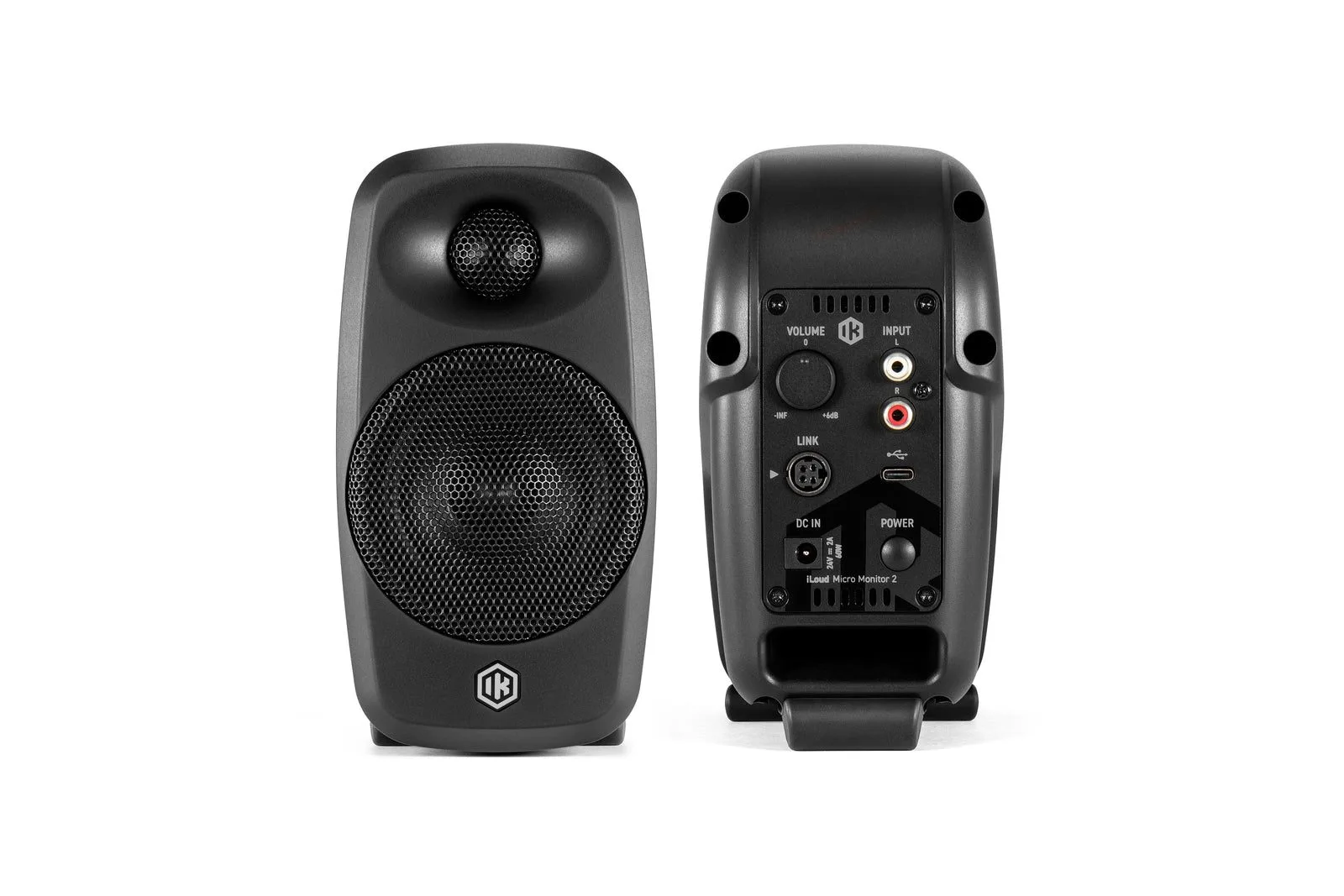
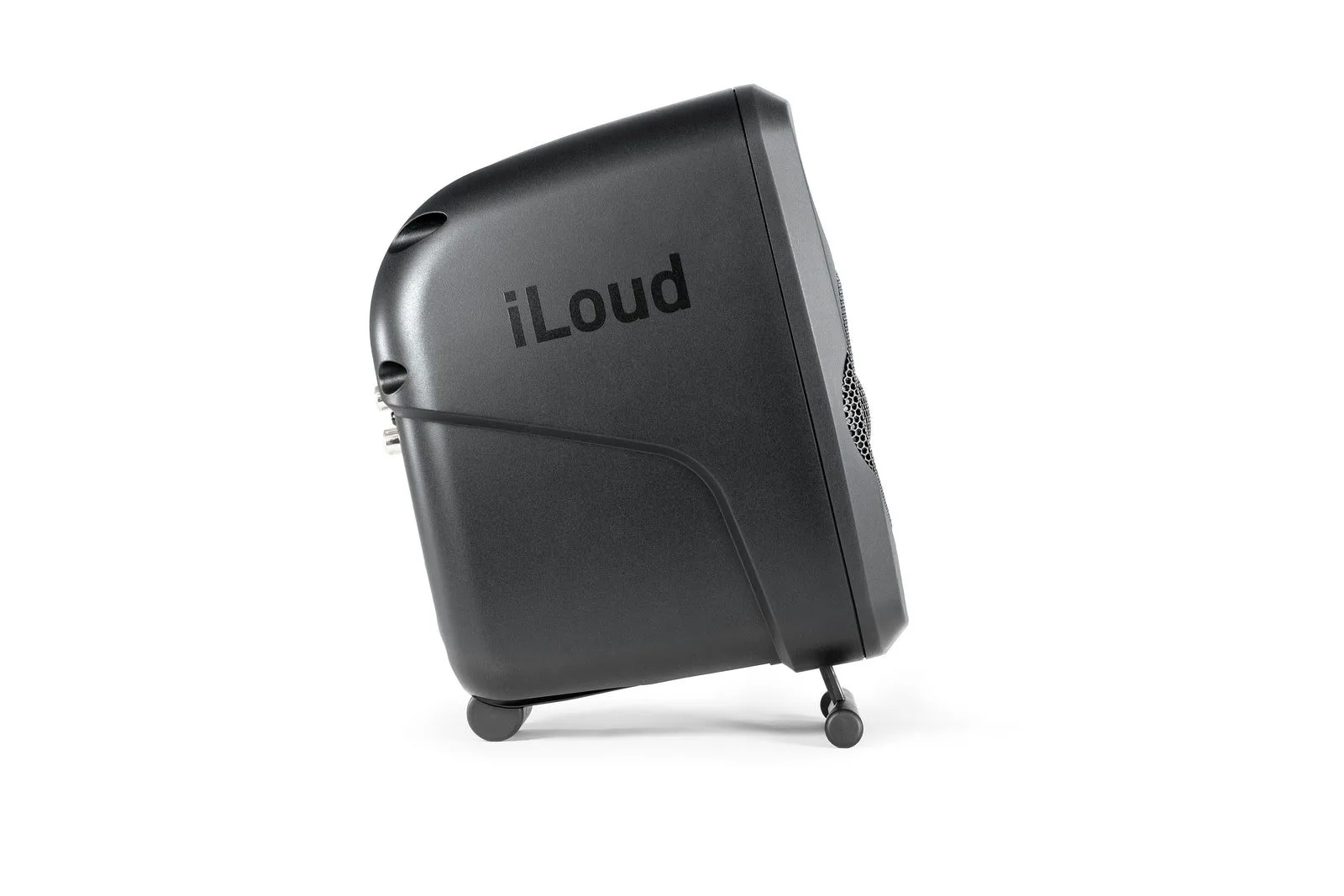
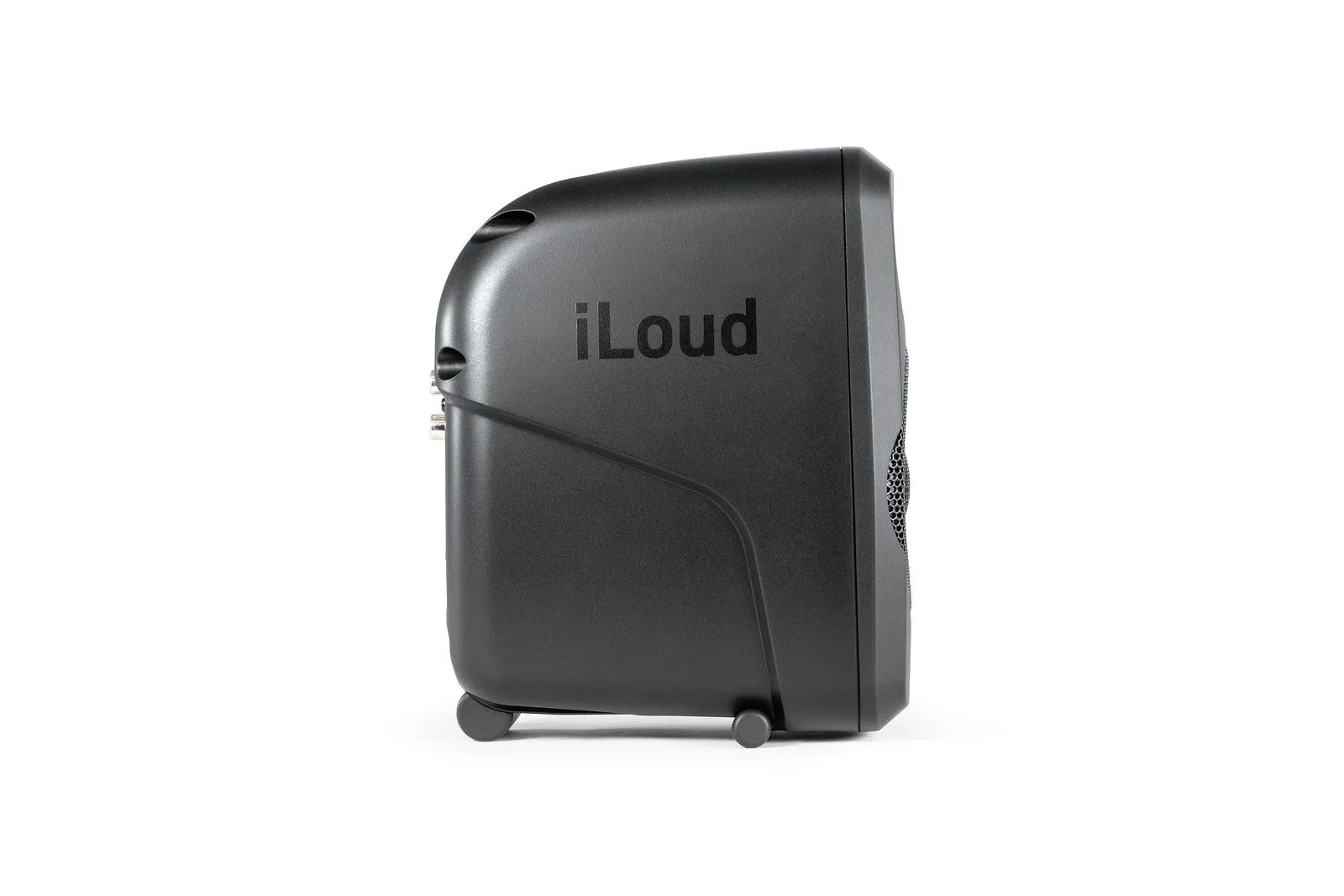
The layout is still an active plus a passive cabinet. One speaker holds the amplification and processing, the other connects through the supplied four-pin mini-DIN cable. The box measures 98 x 182 x 140 mm and the pair weighs 2.06 kg, light enough for a desk or a backpack. IK keeps the tilting foot that angles the cabinet toward your ears, handy when the table sits low.
Where the original simply sounded good for its size, version 2 goes after accuracy. IK quotes a response of 49 Hz to 28 kHz within plus or minus 2 dB, low-end reach down to 40 Hz at -10 dB, and a maximum level of 94 dB SPL continuous, 105 dB peak for the pair measured at one metre. For such a small format, those figures place it above a plain secondary monitor.
New drivers and a linear-phase crossover
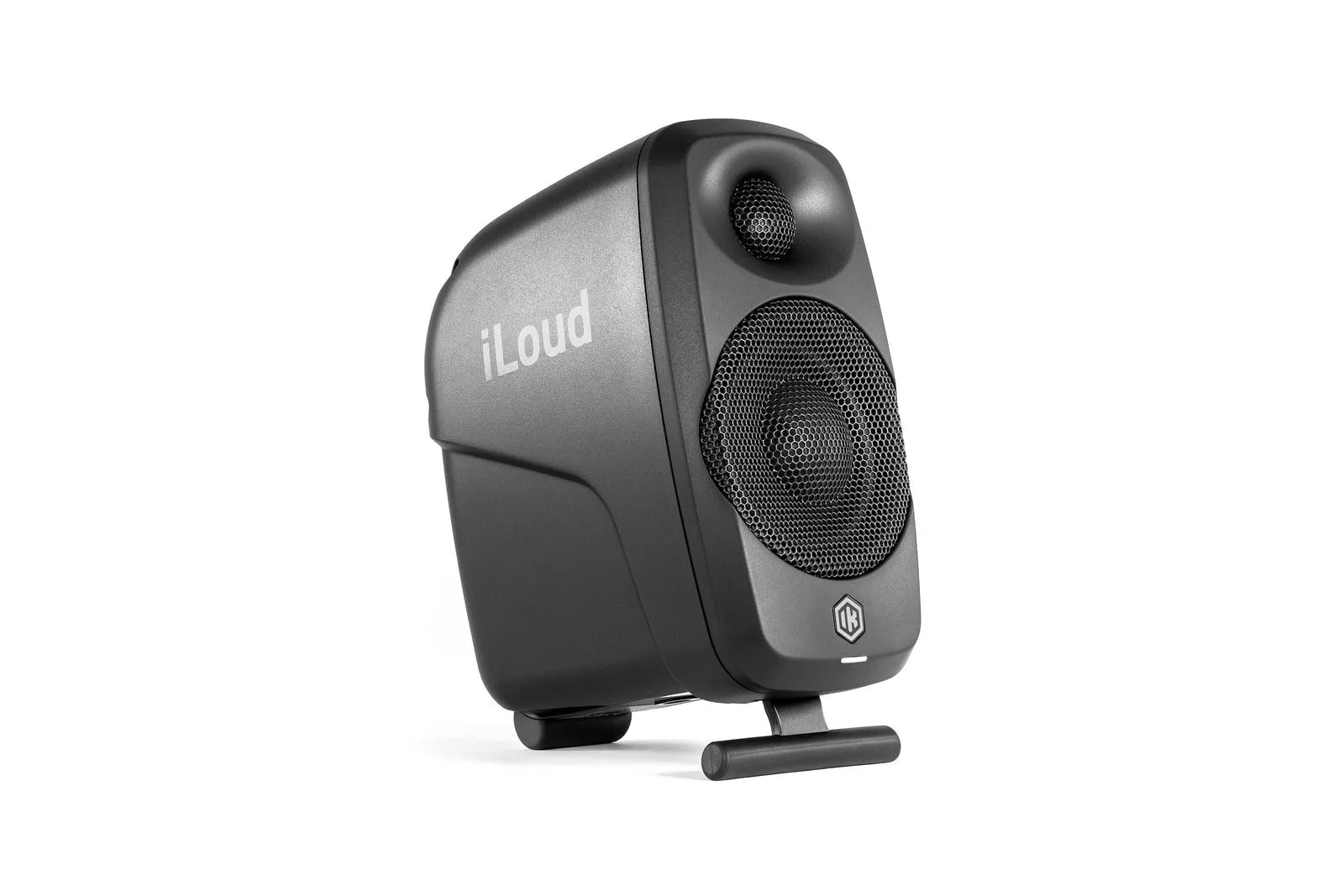
The mid-woofer moves to a 3-inch composite-fibre cone in a rear-ported enclosure. The tweeter is a 3/4-inch silk dome set in a precision waveguide. Four Class-D amplifiers share 50 W RMS continuous, 70 W peak, split across the two ways of each speaker.
The clearest change is the crossover. IK swaps the analogue filter for a digital, linear-phase crossover set at 2.75 kHz with a sixth-order slope. A linear-phase crossover avoids timing offsets between lows and highs through the crossover region, which helps stereo imaging and transient clarity. IK claims phase coherence within plus or minus 20 degrees from 220 Hz to 23 kHz.
ARC room correction, stored in the speaker
The real pitch of this generation is the onboard processing. The iLoud Micro Monitor 2 includes IK’s ARC room correction, driven by the ARC X software, and it keeps the calibration inside the speaker. Once you measure the room with the bundled mic, the correction stays active with no computer connected: the monitor runs on its own. It carries over the logic of the ARC Studio, IK’s standalone correction box, brought inside the speaker.
An iLoud Control app, on iOS and Android, tweaks EQ and voicing profiles from a phone, also stored in the cabinet. For an editing station or a home studio with awkward walls, that correction often matters more than a few extra decibels of output. The open question is how fine the measurement really is, often the weak point of automatic systems. If the topic interests you, our guide to choosing studio monitors covers placement and loading.
Connections and availability
On the back, the main speaker offers an analogue RCA input at -10 dBV, a USB-C digital input that takes a computer’s stream directly, and Bluetooth in AAC and SBC for casual listening. The external supply delivers 24 V at 2.5 A. The whole thing aims to be plug and play, from a computer desk to a small mix room.
| Spec | iLoud Micro Monitor 2 |
|---|---|
| Mid-woofer | 3-inch composite fibre, rear port |
| Tweeter | 3/4-inch silk dome, waveguide |
| Amplification | 4 x Class-D, 50 W RMS / 70 W peak |
| Crossover | digital, linear-phase, 2.75 kHz, 6th order |
| Response | 49 Hz to 28 kHz (±2 dB), 40 Hz at -10 dB |
| Max SPL | 94 dB continuous, 105 dB peak (pair, 1 m) |
| Correction | ARC via ARC X, stored in the speaker |
| Inputs | analogue RCA, USB-C, Bluetooth AAC/SBC |
| Format | 98 x 182 x 140 mm, 2.06 kg per pair |
| Price | $299.99 per pair ($349.99 with ARC mic) |
IK Multimedia lists $299.99 per pair, $349.99 with the ARC measurement mic, before tax. Pre-orders are open and first shipments target December 2026. A 2.1 bundle with the iLoud Sub and ARC mic is also planned. Once the speakers are in place, calibrate your listening with good reference tracks. Full details are on IK Multimedia’s site.
My take
The smart move is putting room correction into a monitor this small and keeping it active with no computer in the chain. On a crowded desk or in a room with a lumpy low end, that often counts for more than one extra driver. The linear-phase crossover pulls the same way, toward clarity. The real question is how much low end a 3-inch cone gives near 40 Hz, worth hearing before you decide. At this price, for a second reference or a travel rig, it earns a listen.