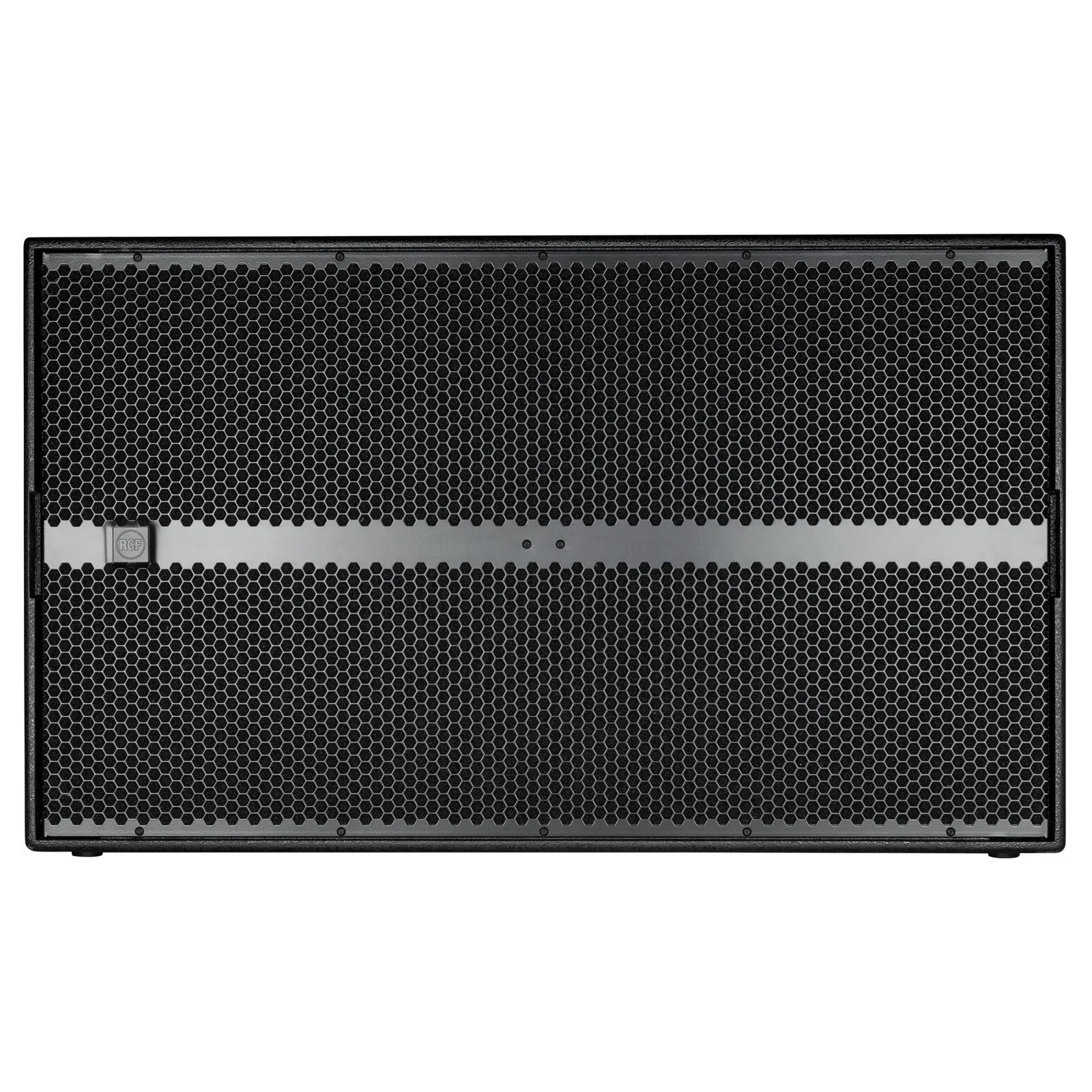
Two shows, the same rig, the same subwoofers — and yet, from one night to the next, the low end can be round and present everywhere in the room, or fat in the centre and gone at the sides. The difference rarely comes down to gear: it comes down to where you put the subs and how you group them. Subwoofer placement is one of the most rewarding settings in live sound, and one of the most neglected.
Why placement is everything in the low end
Low frequencies radiate in every direction and their wavelengths are measured in metres. As a result, a subwoofer does not “light up” an area the way a top does; it fills the whole volume, interacts with walls and floor, and combines with every other sub present. That combination is what you have to control: depending on the distances, two subs can add up and gain several decibels, or cancel in places and scoop the low end right where the audience stands.
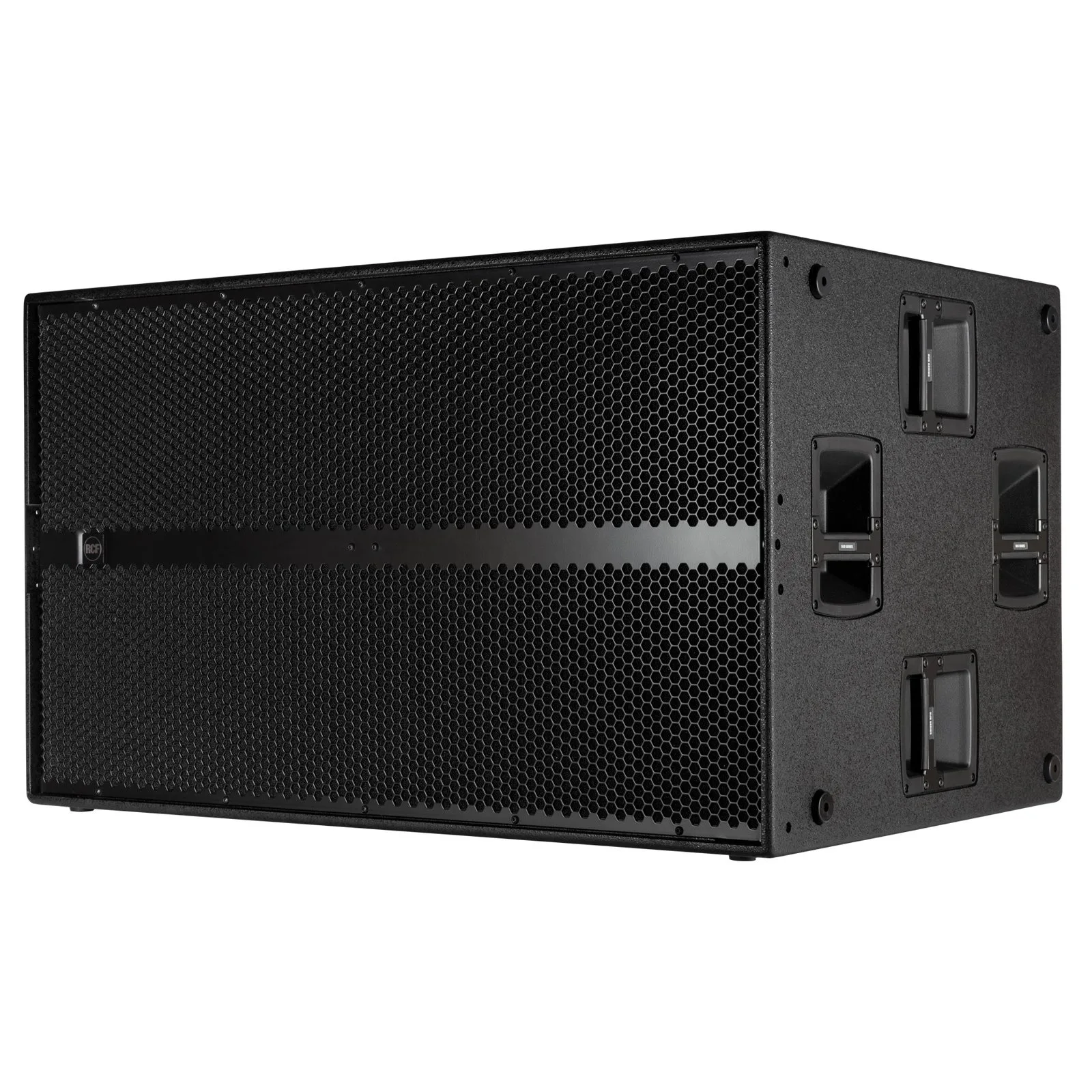
Mono centred subs or left/right?
This is the first decision, and the most defining. Sending the subs in mono, from a dedicated bus, and grouping them at centre stage gives a coherent, powerful low end: the subs couple, the level rises, and there is no interference between two distant sources.
Spreading the subs in stereo, left and right of the stage, looks tidy but is treacherous: the two packs of bass cover the same room at different distances and create, right in the middle of the audience, a zone of reinforcement (the infamous “power alley”) flanked by cancellations at the sides. In plain terms, the low end becomes uneven from seat to seat. For the vast majority of shows, a mono centred sub bus is the safe choice. Stereo bass is only justified on specific programmes and with careful alignment.
On the floor, stacked, or flown
Placed on the floor, subs benefit from coupling with the ground and naturally gain output. Stacking them vertically raises the level and tightens vertical directivity a little. Flying them under the line arrays, by contrast, changes coverage dramatically and forces you to manage the time offset with the tops and with the floor: that is a large-venue solution, not one to improvise. To understand how a main system behaves in the vertical plane, see our guide to how a line array works.
Boundary gain, corners and coupling
A sub against a wall gains several decibels in the low end, because the surface sends energy back to the front; in a corner the gain is stronger still, but often uneven and hard to control. This “boundary effect” is neither good nor bad in itself: you simply have to plan for it, and sometimes compensate in alignment. Likewise, grouping subs makes them couple: four subs side by side produce more than four scattered ones, and more evenly.
Giving the low end a direction
When the bass spills onto the stage (and into the mics) or bothers the neighbours, you can make it directional. Cardioid and end-fire arrays reduce rear energy by playing on the layout and the delay between subs. In the same spirit, feeding the subs from an auxiliary send rather than the main bus — the aux-fed method — stops sending everything that has no business down there into the subs and clears up the bottom of the spectrum.
Aligning the subs to the tops
Once the subs are placed, you still have to make them “speak” at the same time as the main system: that is the job of alignment. At the crossover region between subs and tops, poor time alignment scoops the upper bass precisely through comb filtering. Setting that overlap — delay, polarity, gain — is exactly what system alignment is about, and it complements the zone management covered in our piece on delay speakers and fills.
Think about the crossover point between subs and tops too: often set between 80 and 100 Hz, it fixes the portion of the spectrum each one reproduces and the region where the two overlap. The higher the crossover, the more the ear localises the low end towards the subs — one more argument, if you needed it, for a mono sub bus placed at centre rather than spread to the edges of the stage.
A quick checklist
- By default: subs in mono, grouped at centre or in one or two coupled packs.
- Avoid spreading left/right without reason: you build a power alley and cancellations.
- Put them on the floor when you can, use the coupling, plan for boundary gain.
- Make the low end directional (cardioid/end-fire) if the stage or the neighbours demand it.
- Always finish with a time alignment to the tops.
My take
The most dramatic adjustment on a PA often happens before you touch the console: moving the subs closer together, grouping them, pulling them out of a corner. You gain impact and evenness without adding a single decibel of excess. Stereo bass is tempting on paper, but it punishes the audience sitting at the sides — and they paid for their seats too. A clean, well-aligned mono sub bus remains the foundation you never tire of.