You have flown a great line array, tuned the mains to a tee, and yet the front rows get sound at their feet while the back of the balcony begs for presence. That is normal: no main system covers a whole room on its own. Fill speakers — front fills, out fills and delays — exist for exactly that. But they have to be delayed and levelled, or they cause more trouble than they cure.
Why one system is never enough
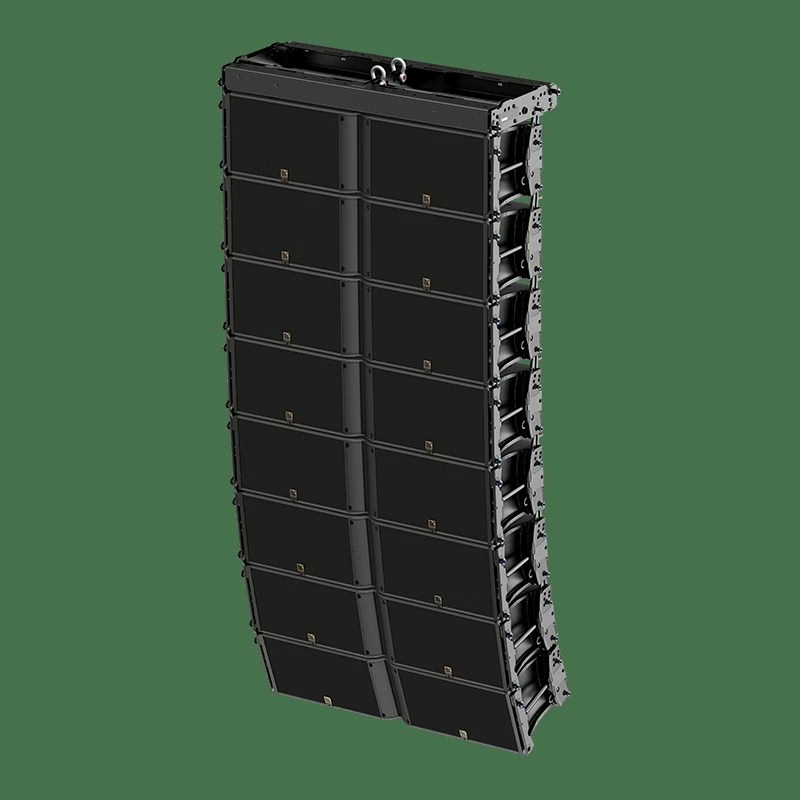
Two laws force the issue. First the inverse-square law: level drops about 6 dB per doubling of distance, so a system set for the back crushes the front, and the reverse leaves the back muddy. Then geometry: mains flown high shoot over the front rows, and their coverage angles leave dead zones on the sides and under balconies. A well-placed fill restores even level and, above all, speech intelligibility where the direct sound never arrives cleanly.
Front fills: saving the front rows
Set along the stage lip, facing the closest audience, front fills treat the zone the mains fly over. They are usually small point-source boxes, spaced every two to three metres to smooth coverage. Their job is not to “play loud”: they restore presence and anchor the sonic image to the stage rather than up in the air. Two habits: wire them cleanly (see our guide to connecting powered speakers) and give them a dedicated bus so you can level them independently from the mains.
Out fills and side fills: widening coverage
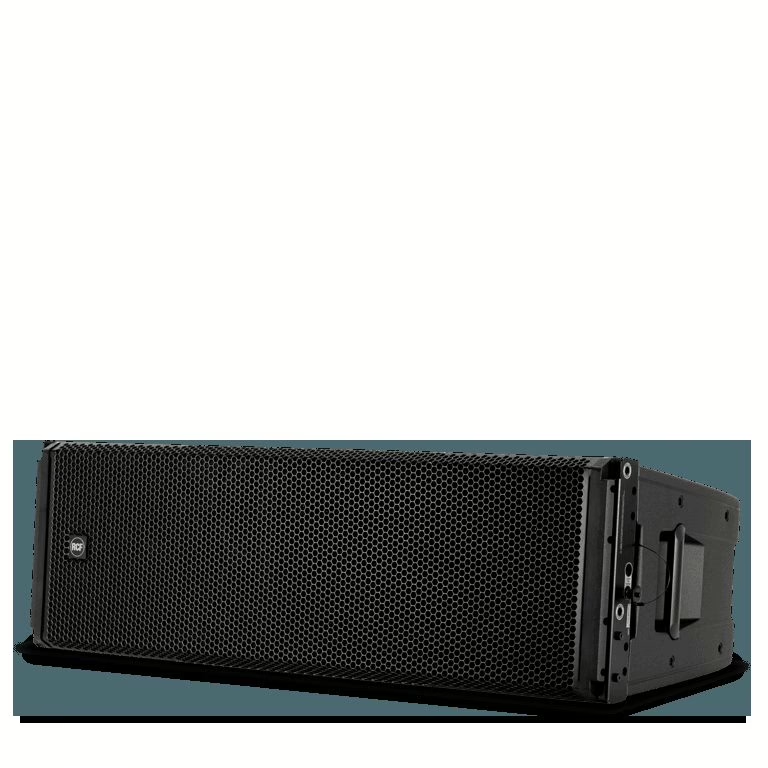
When the room is wider than the mains’ angle, or where balconies and corners intrude, you add out fills to the sides and delays under balconies. The goal stays the same: bring coherent level where the main system falls off, without stepping on the zone already well served. Every fill is one more source: badly spread, it creates overlaps and cancellations. Well planned, it becomes invisible — you only hear it when you mute it.
The crux: delay
This is where it all happens. A fill is closer to the listener than the mains, so its sound arrives before the main system’s, wrecking the image and blurring speech. The fix leans on the precedence (Haas) effect: you delay the fill so its signal lands just after the mains’. The ear then localises the source on stage, even if the fill is closer and sometimes louder.
The maths is simple: sound travels about 343 m/s, roughly 2.9 ms per metre. Measure the distance between the main system and the fill, multiply by 2.9, and you have the base delay. Many engineers then add 5 to 15 ms more: that small extra lag strengthens the precedence effect and locks the image to the stage. Final tuning is by ear, hunting for the point where the fill perceptually vanishes into the mains.
Level, EQ and alignment
Once delay is set, dial level tight: a fill should complete, not dominate. A gentle EQ helps it melt into the mains’ tone, often by softening the upper mids. For distant delays, mind the overall time alignment of the system, which we cover in our guide to system tuning. And do not forget the low end: cardioid subwoofer arrays and their own alignment are part of the same coverage thinking.
The recurring mistakes
The most common: forgetting the delay and getting an image that “jumps” to the fill. Then the fill that is too loud and unbalances the zone, and the delay that is calculated but never checked by ear. Finally, feeding every fill from the same send as the mains: each zone deserves its own level, ideally driven from a solid patch and stagebox plan.
My take
Fills are the detail that separates a decent PA from a room that sounds right everywhere. The winning reflex fits in one line: measure the distance, apply 2.9 ms per metre, then fine-tune by ear until the fill disappears. A front fill you notice is a front fill set wrong. The good news is that modern processors make delay trivial to apply — the real work is spending thirty seconds to check each zone instead of firing everything from one send. That is where intelligibility is won, the kind that lets the back row still make out the words.