Two shows with the same line array and the same console can sound radically different. The variable that most often explains the gap is neither the brand of the boxes nor the FOH engineer’s talent: it is system tuning. Tuning means making the PA reproduce faithfully what you send it, the same way across the whole audience. Without it, you mix blind on a response distorted by the room and by interaction between loudspeakers; with a good tune, you mix on a neutral, repeatable base. It is the foundation everything else is built on.
This guide is for the house or touring engineer who wants to structure their approach. We are not talking “EQ recipes that work everywhere” — they do not exist — but a method of measurement and decision. The end goal fits in one sentence: make the room sound like your reference monitoring, at every seat where there is a listener.
Why measure rather than trust your ears
The ear is an extraordinary instrument for judging a mix, but a poor judge of a system’s response. It adapts within seconds, it merges room reflections with the direct sound, and it cannot separate a phase problem from a level problem. Measurement separates what the ear confuses. A calibrated omnidirectional measurement microphone, placed in the listening area, captures the real response; analysis software compares it to the source signal.
The central tool is the transfer function: the software (SMAART, Systune, Open Sound Meter and the like) continuously compares the signal sent to the system with the signal captured by the mic, and derives the difference in amplitude and phase, frequency by frequency. You work with pink noise or, better, with the music itself as the measurement signal. What appears on screen is not an opinion: it is what the room actually does to your sound.
Step 1: time alignment
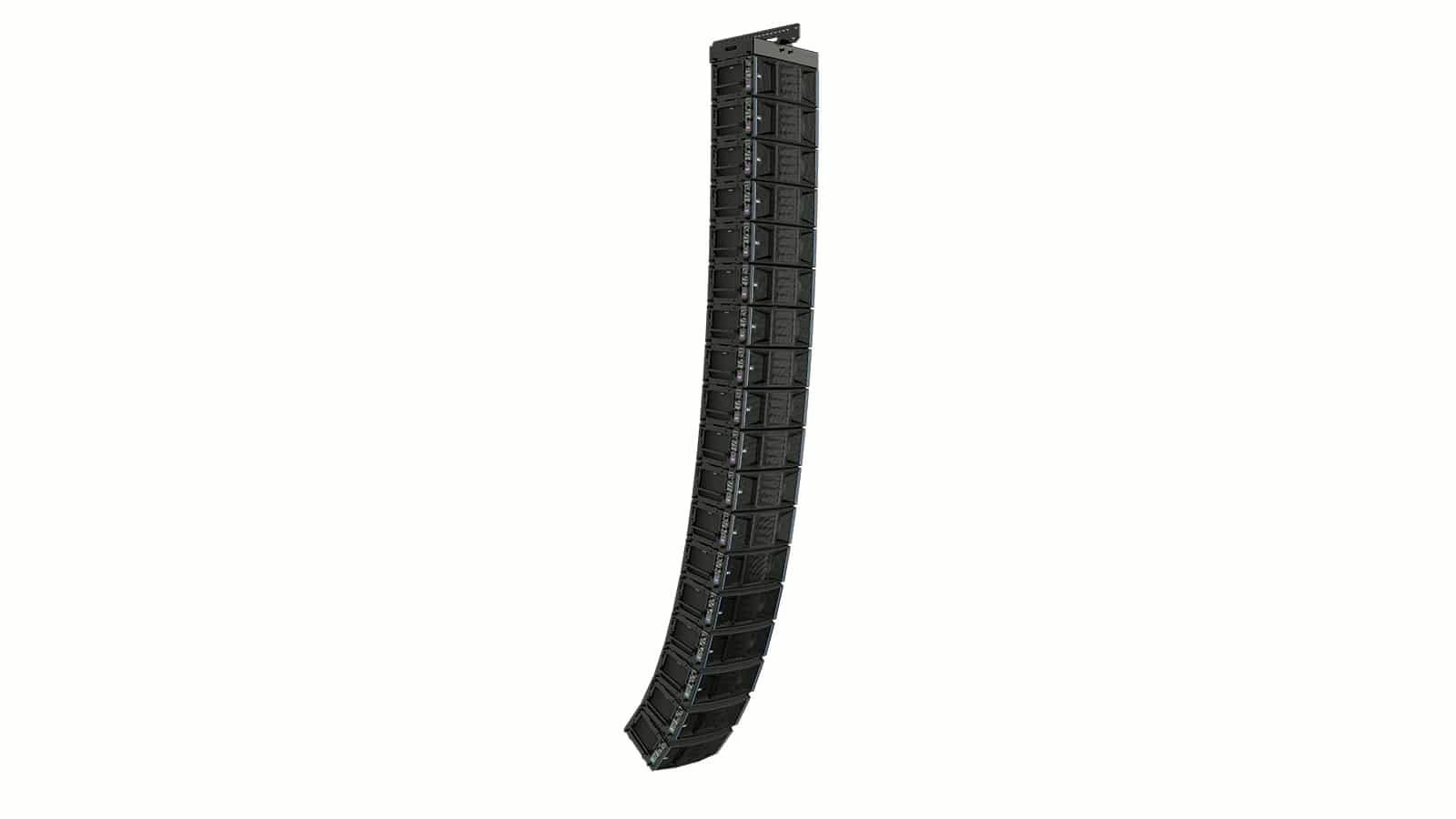
Before any EQ, align in time. A PA is almost always made of several sources: the line array heads, the subs on the ground or flown, the delay speakers at the back of the room, the front-fills at the stage lip. Each is a different distance from the listener, so each sound arrives at a different instant. If subs and tops are not aligned, their overlap in the low mids becomes a bump or a dip depending on position — not the “punchy” bass you imagined.
So you measure the arrival time of each source at a reference point and delay the closer sources so everything arrives together. The textbook case: align the sub to the tops by watching the crossover overlap region, then delay the fill/rear speakers by the distance separating them from the stage — typically a few tens of milliseconds — so the main and the delay overlap instead of creating an echo. A badly delayed rear fill guarantees a smeared back of house.
Step 2: phase and overlaps
Two sources covering the same frequency band only sum cleanly if they are in phase in their crossover region. That is the heart of sub/top alignment, but also of coherence between the boxes of a single array. A phase difference in the overlap region creates cancellations: you lose energy exactly where you thought you were gaining it. The phase trace of the transfer function is there for this — you adjust delay and polarity so the two sources pull the same way where they meet.
This is also where coverage is decided: the angle between each box of a line array (the splay) determines who gets what. Too tight an array hoses the front row and leaves the back wanting; too open, it scatters energy and loses throw. Manufacturers’ prediction software helps set a starting geometry, but it is measurement across several positions that validates reality.
Step 3: the target curve and system EQ
Once the system is aligned in time and phase, and only then, you shape the frequency response. You aim for a target curve: not a flat response, which often sounds thin and harsh in a room, but a gentle slope tilting down toward the highs, with a present but not overbearing low end. That target is a starting point to adjust for the musical style, the room and taste — a DJ set does not call for the same slope as a string quartet.
The golden rule: the system EQ corrects the system and the room, not the mix. You cut room resonances, correct the overall tilt, clean up wide, repeatable anomalies seen across several measurement positions. You do not go there for the colour of a voice or the snap of a snare: that is the console’s job, channel by channel. Confuse the two and you end up with a system EQ compensating for a mix problem — and a mix that becomes untransportable from room to room. And always prefer cutting a bump to adding gain where it lacks: adding eats headroom before feedback and amplifier power.
The pitfalls that come up most
- Tuning at a single position. The ideal measurement spot lies about the rest of the room. Multiply positions, look for what is common to all rather than perfecting one seat.
- EQ before alignment. Correcting a dip that is really a phase cancellation pours gain into a hole that will fill back in elsewhere. The order — time, phase, then EQ — is not negotiable.
- Over-correcting. A system EQ stuffed with narrow filters sounds tortured. Stay wide, stay sober: the room changes with the audience, and a surgical empty-room correction will be wrong once it is full.
- Forgetting level. Bass aligns at a given level; change the master volume and the perceived balance shifts. Tune at a level close to real operation.
Tuning is not the mix, but it makes it possible
A well-tuned system cannot be heard: it disappears. You do not notice that it is neutral, you only notice that your mix finally “works” the same way everywhere, that the bass is firm without being muddy, that the vocal stays intelligible in the back row. It is thankless work, often done to an empty room before doors, but it is what separates a clean show from a rough approximation that tires the audience without them knowing why.
After years at the desk, I have come to see tuning as the most profitable part of my day: an hour of serious measurement saves two hours of fighting the mix. The rest of the chain prepares for it: a clean patch and a well-thought-out stagebox avoid surprises, correct levels and balance between console and PA condition the tune, and once the system is in place, RF frequency coordination and the choice of vocal mics finish securing the stage. On the surface side, a modern touring console like the SSL System T now bakes in all the delay and EQ tools tuning needs. But the tool never replaces the method: measure, align, then and only then EQ.