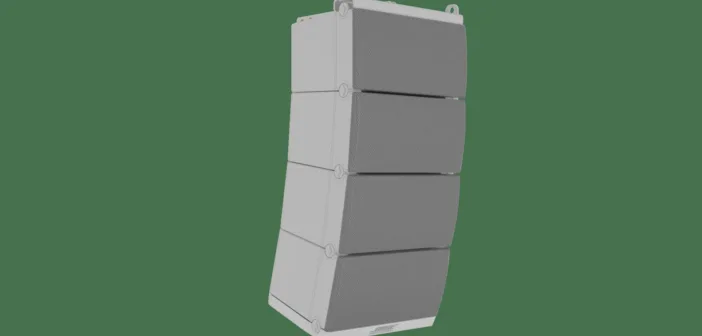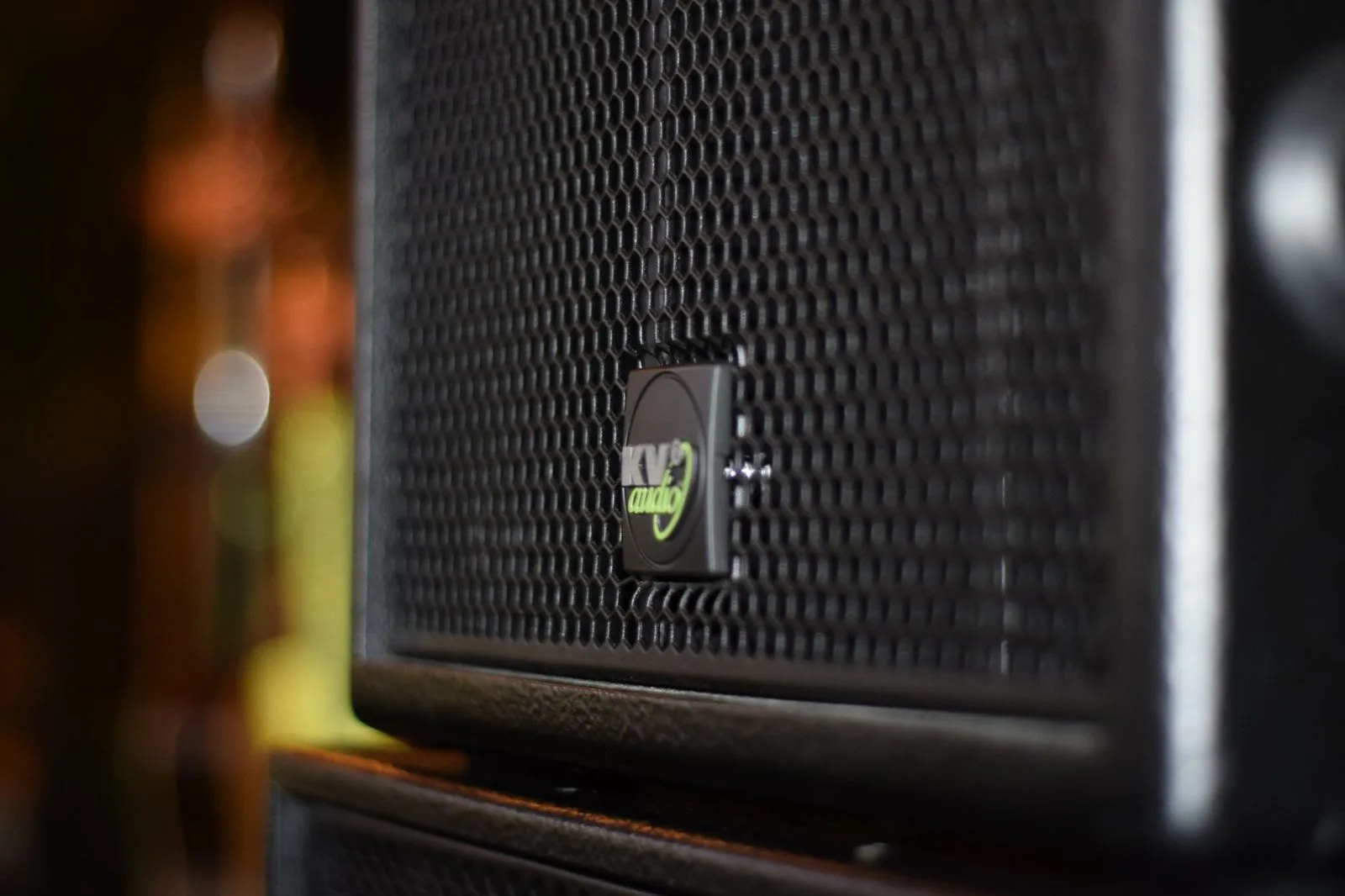
Take any serious live loudspeaker, a two-way monitor, a line-array element, a flown top. Lows and mids come from a conventional cone driver, but the highs come from a compression driver screwed onto a horn. That stage explains much of a system’s efficiency, throw and coverage consistency. It is worth a closer look, because understanding it well helps you choose gear and tune a rig without getting it wrong.
Why compress the air rather than push it
A conventional cone driver moves a lot of air with a large surface and low efficiency. In the treble, that approach wastes energy and scatters sound in every direction. The compression driver flips the logic: a light diaphragm, often 1 to 4 inches across, works behind a small chamber whose exit is far narrower than the diaphragm itself. That compression ratio, typically around five to ten to one, loads the diaphragm the way a lever loads an arm. The result is efficiency well above a conventional dome, enough to deliver high levels from little power.
Between the diaphragm and the exit throat, a machined part called the phase plug channels the flow through several concentric slots. Its job is to stop the different zones of the diaphragm arriving out of phase at the throat, pushing comb filtering up and out of the usable band. Without it, the treble would be full of cancellation notches. It is a high-precision part, and often where the gap between two drivers at very different prices shows up.
The horn, impedance matcher and traffic director
At the throat exit, the air is under high pressure over a tiny surface. Releasing it abruptly into the room would waste energy and sound harsh. The horn bridges the gap: its flare opens the passage area gradually, matching the acoustic impedance of the narrow throat to that of free air. In plain terms, it transmits energy instead of reflecting it. But the horn does a second job at least as important, it steers the sound. Its shape sets the coverage angle, horizontal and vertical, and so decides where the highs land and where they do not.
Constant-directivity horns aim to keep the same coverage angle across a wide frequency range, at the cost of a slight top-end rise you dial back with EQ. That control of angle is exactly what lets you cover the audience without splashing walls and ceiling. The topic ties straight into speaker directivity and dispersion, worth reading to pick the right angle for the room.
Diaphragms, materials and what they change
The diaphragm material shapes the character and the durability. The main choices boil down to this:
| Material | Character and use |
|---|---|
| Polymer (phenolic, PET) | Smooth, forgiving, less top extension, common on budget gear |
| Aluminium | Good balance of efficiency and extension, a resonance to tame at the top |
| Titanium | Bright, energetic treble, widespread in live sound, needs careful filtering |
| Beryllium | Very light and stiff, superior extension and detail, high cost |
Throat size, 1 inch, 1.4 inch or 2 inch, points to the use. A 1-inch throat reaches high and suits small formats and monitors, a 2-inch handles more low-mid and power for big tops. Among makers, the names that recur inside loudspeaker brands are B&C, BMS, Faital, 18 Sound, Radian, Celestion or JBL’s in-house transducers. Nothing stops you replacing a tired diaphragm, most drivers take a recone or diaphragm kit, which extends the life of an inventory.
In practice, tuning and protecting the HF stage
The driver never works alone. A crossover splits it from the low driver, most often between 800 Hz and 1.6 kHz, to keep it away from low frequencies that would destroy it. That split, along with delays and protection limiters, is set in the system’s loudspeaker management processor. To align a horn with the subs and the other elements, you go through measurement, a job detailed in our guide to system tuning. Finally, the HF stage needs less power than the lows but demands cleanliness, a topic covered in our piece on amplifier classes.
My take
The compression driver is one of the few places where 1930s technology stays unbeaten on efficiency. You judge a good driver-and-horn pairing less by its spec sheet than by its off-axis consistency: if the treble stays clean as you step off centre, the horn is doing its job. Beryllium is the dream, but a well-loaded, well-tuned titanium covers the vast majority of shows without wrecking the budget. The real thing to watch stays the protection crossover, because a blown diaphragm can be fixed, a disappointed audience less easily.