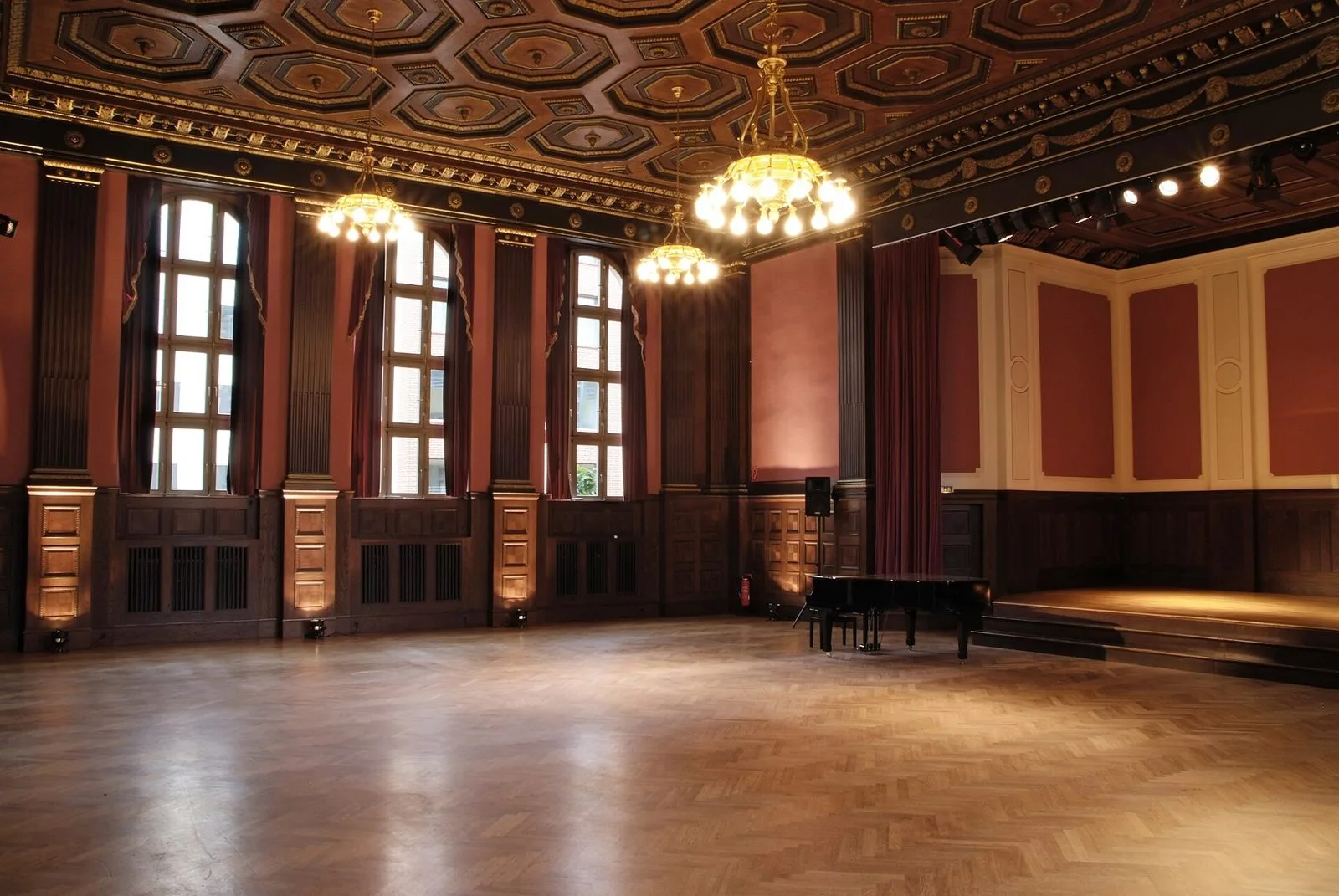
Some records owe as much to a room as to an artist. Heroes, the second part of David Bowie’s Berlin trilogy, was recorded in the summer of 1977 at Hansa Studios, nicknamed “Hansa by the Wall” because it looked out, some twenty metres away, onto the Berlin Wall. The building’s centrepiece is the Meistersaal, a chamber-music hall built in 1910, known today as Hansa Studio 2. Bowie made it the album’s main room, and that is where the most talked-about vocal take of his career happened.
Running the session was producer Tony Visconti, backed by house engineer Eduard Meyer and by Colin Thurston. In the room, Brian Eno laid down pads on the EMS Synthi AKS and drew his “Oblique Strategies” cards to unlock the sessions. Robert Fripp flew in for a single visit and cut the title track’s guitar in a few hours, built on controlled feedback whose pitch depended on his distance from the amp. But the real feat was on the vocal.
Three mics, three distances, two noise gates
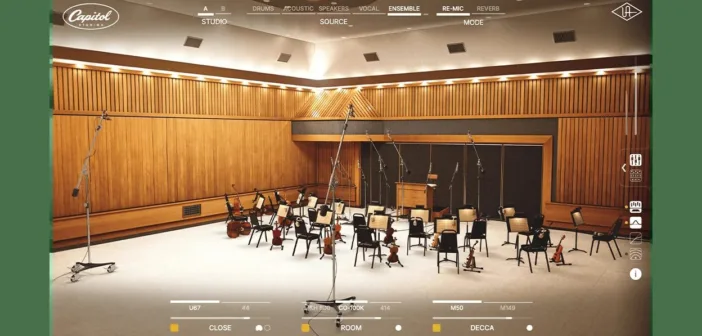
Rather than chase proximity and add artificial reverb at the mix, Visconti wanted to capture the room itself. He placed one mic right next to Bowie, a second a few metres back, and a third at the far end of the Meistersaal. The two distant mics ran through noise gates with progressively higher thresholds: when Bowie sang softly, only the close mic worked. As he pushed, the second gate opened and let the room ambience in. On the chorus swells, the third mic opened too, and the full natural reverberation of the Meistersaal flooded into the voice.
The result lands as a simple impression: the voice seems to grow with the song, moving from intimate to huge without anyone touching a fader. It is not an effect, it is acoustics staged on purpose. One telling technical detail: Visconti had only one spare track for the vocal. The three mics were therefore mixed and sent to that single track, the noise gates sorting it all out in real time during the take.
That threshold logic now lives in every studio, except we mostly use it to clean up rather than to open a room. Our pieces on the noise gate and expander and on building a vocal chain cover the modern settings of that same family of tools.
Why the Meistersaal sounds the way it does
The hall is nothing like a studio in the usual sense. It is a large chamber-music volume, high ceiling, hard walls, a long warm reverberation few booths can fake. The studios of the 1970s mostly chased dead, controlled rooms; Bowie and Visconti did the opposite and used the flaw as raw material. The choice of microphone matters, of course, but it is the distance and the sheer size of the room that carry the sound, not a reverb box.
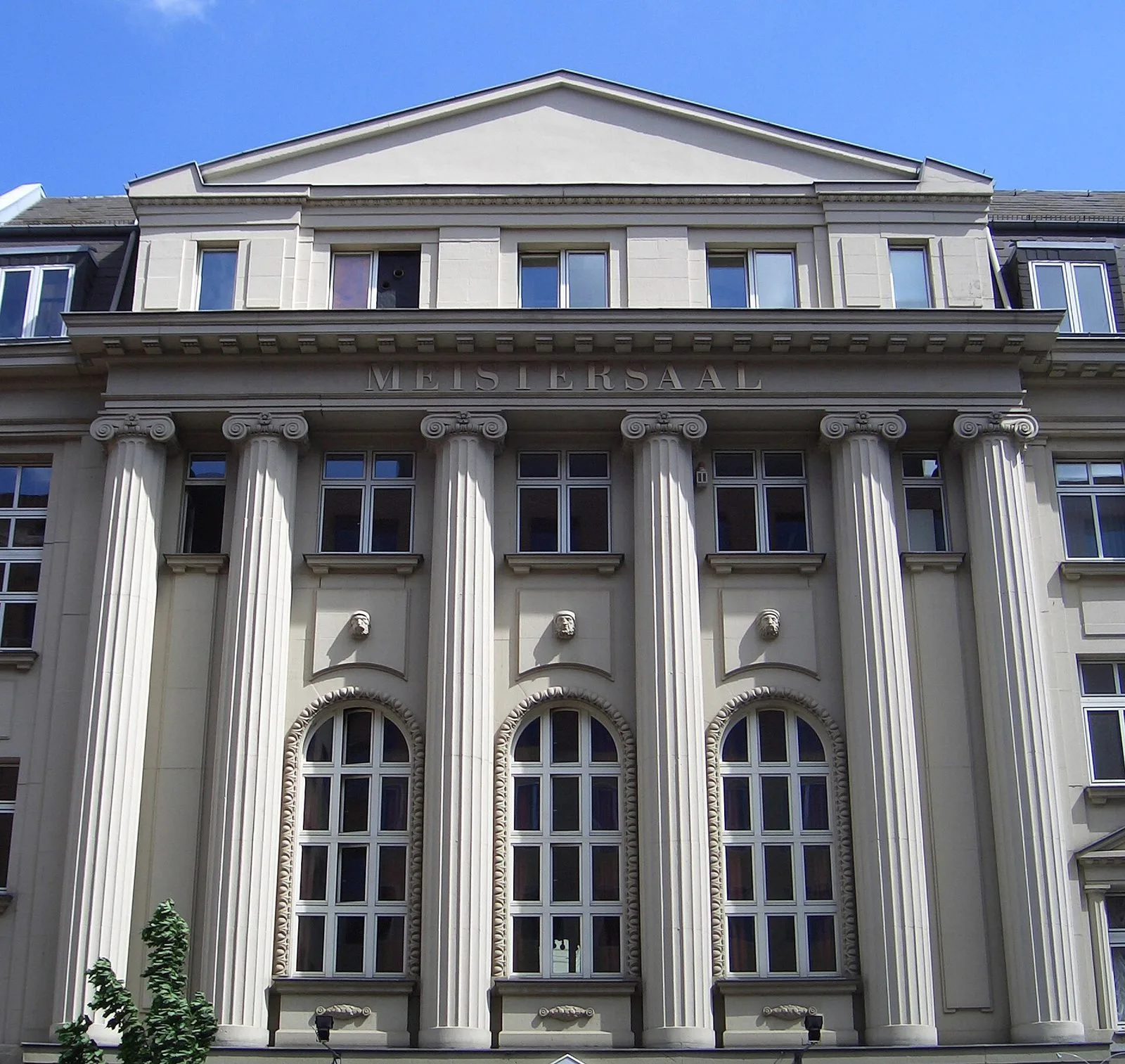
Hansa did not just serve Bowie. Iggy Pop, Depeche Mode, Nick Cave and U2 all recorded there, each coming for a little of that big-hall grain. The approach recalls other places treated as instruments in their own right, such as the BBC Radiophonic Workshop at Maida Vale. The common thread is a room you learn to play rather than neutralise.
For anyone keen to understand the rest of the chain, the choice of capture mic is laid out in our guide to microphone types in the studio. Visconti’s technique has been told in detail by the producer himself, notably in the Classic Tracks column of Mix.
My take
The lesson of Heroes has not aged: before reaching for a reverb plugin, look at the room you are recording in. Three mics, two noise gates, one big hall, and a voice that breathes with the song. You can replay the idea today in a modest home studio, a hallway, a stairwell, a neighbourhood church, as long as you let the space take part. It is free, it is alive, and no convolution quite replaces the air moving between a singer and a wall.