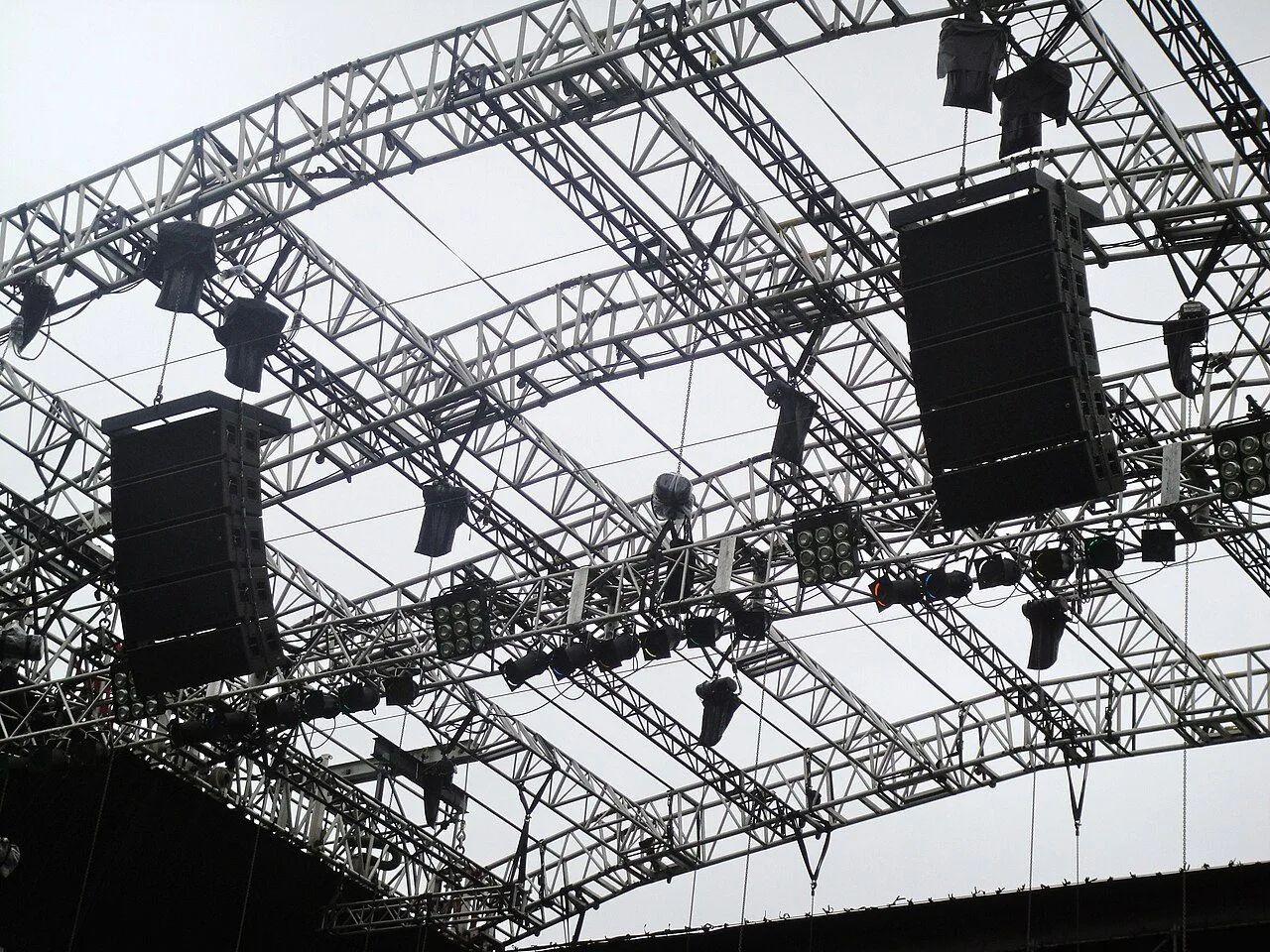
On a lot of small and mid-size systems, the subwoofers get exactly the same signal as the mains: the left/right output feeds the tops and the subs through a crossover. It works, but it pushes a crowd of sources into the low end that have no business being there: vocals, cymbals, guitars, the hiss of a synth. The result is a cluttered bottom that “smears” and masks the kick and bass. Aux-fed subs — feeding the subwoofers from an auxiliary — fixes the problem at the source by letting you choose, source by source, what goes down low.
The principle: subs are no longer slaved to the mains
Instead of deriving the subs from the main bus, you create a dedicated auxiliary bus for them. The tops keep receiving the full front-of-house mix; the subs only get what you deliberately send to that aux. In practice, you route only the sources that genuinely live in the low end: kick, bass, low toms, certain keys or pads, an electronic kick. Everything else — vocals, hi-hats, cymbals, strings, overheads — stays out of the subs, where it only added clutter anyway.
The difference is immediate: the low end tightens, the kick regains impact because it is no longer drowned under the stray resonances of other channels, and the whole system gains definition without touching the overall level. It is one of the best effort-to-result moves in live sound.
Setting it up, step by step
- Create a mono auxiliary (low frequencies are non-directional) and name it “Subs”.
- Set the send to post-fader: that way, when you move a source’s front-of-house fader, its share in the subs follows, and mutes also act on the subs.
- Route that aux to the physical output that feeds your subs (and only them).
- Send only the low-end sources to the aux: kick, bass, and case by case toms, synths, drum-machine kick.
- Make sure the subs no longer receive anything from the L/R bus: they should be fed by the aux alone.
- Set the aux level and the time alignment between subs and tops, exactly as you would on any system.
One point deserves attention: aux-fed does not replace the rest of the system work. Tuning, phase at the crossover frequency and sub placement remain essential — aux-fed decides what goes into the subs, not how they cover the room. It also pairs very well with a cardioid subwoofer setup: one handles the content, the other the directivity.
What you gain (and the traps)
The main benefit is control: you set the amount of low end in the front-of-house mix and the actual sub level in the room separately, and you decide note by note what goes down. Second, you remove the useless sub-frequencies produced by mics that pick up low end for no reason (a vocal mic catching the kick off-axis, for instance). Third, on a large system, you manage the low end independently from the main array and its fills.
The traps are few but real. The most common: forgetting to send a source to the aux, and ending up with a bass that has vanished from the subs. Then, a send accidentally left pre-fader: the subs keep sounding even when you mute the source at front of house. Finally, assuming aux-fed replaces the crossover setting or the choice of system: these are complementary steps, not interchangeable ones. Take thirty seconds at the end of soundcheck to listen to the subs alone and confirm that only the useful low end is in there.
When to adopt it
As soon as your digital console has a spare auxiliary, aux-fed subs makes sense — in a club, a venue or a festival. On music where the low end is structural (electronic, hip-hop, heavy rock), the gain in clarity is dramatic. On a quiet acoustic show the benefit is smaller, but the principle still holds. It is a technique that takes five minutes to set up while building your system, and it durably changes how clean your bottom end sounds.
My take
Aux-fed subs is one of those settings that take a system from “fine” to “tight” without spending a cent on gear. Deciding for yourself what goes into the subs, rather than letting the whole front-of-house mix pour in, is taking back control of the part of the spectrum that forgives sloppiness least. Reserve it for music where the low end really matters, and sign it off with a quick listen to the subs alone at the end of soundcheck. Once the habit sticks, it is hard to go back: your kick will thank you.