On television, good sound is the sound you don’t notice. While the gallery cuts between shots, an audio team works silently so every contributor is intelligible, at the right level, with no dropout and no lip-sync drift. From capture to transmission, a studio’s audio chain follows a precise logic, very different from a music studio or a concert PA.
Capturing speech: the RF lavalier, king of the studio
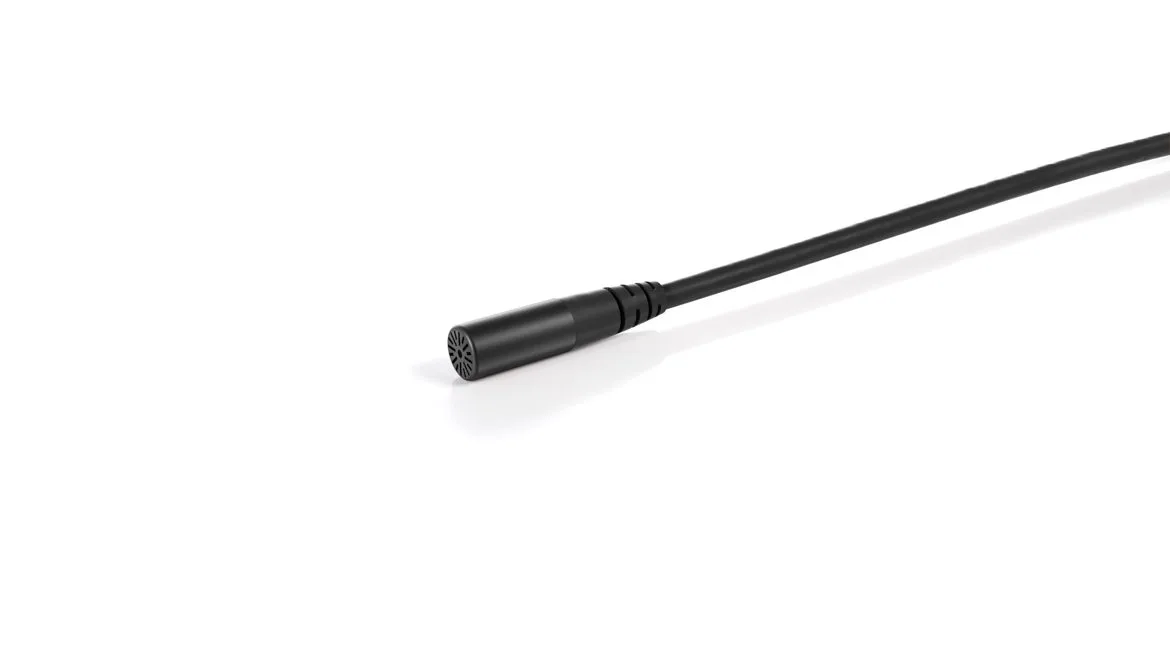
The vast majority of voices on a set are captured by subminiature lavalier mics, wired to RF transmitters tucked into a pocket or under clothing. The brief is brutal: the mic must be discreet, even invisible, yet stay intelligible despite its fixed spot on the chest, far from the mouth. You offset that distance with careful placement and, often, two mics on key contributors — a spare, ready to take over if the first fails on air.
The real challenge on a set isn’t the mic but RF frequency management. Running many wireless links in one place demands a rigorous frequency plan to avoid interference, all the more so as the available spectrum shrinks year after year. A serious set scans its environment, coordinates its channels and keeps backup frequencies. On big shows, that work is a job in its own right.
Alongside the lavaliers you find boom mics for some drama, desk mics for debates, and ambience mics to capture the audience. The choice of transducer and its placement follow the same grid as everywhere else: our pointers on voice mics and their processing chain apply to a studio too.
The mixer: balancing live, without a net
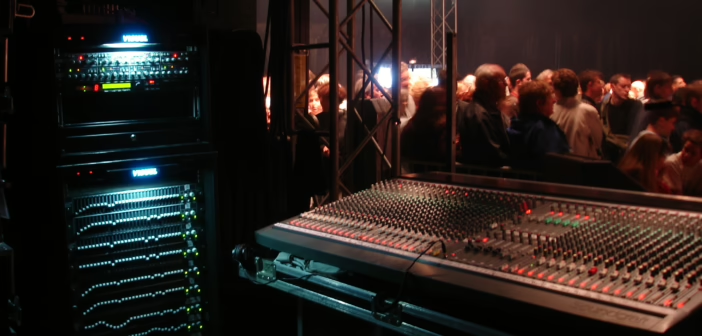
At the heart of it, a sound engineer (the “broadcast mixer”) runs the console. Their live job is to open and close mics at the right moment, to balance levels between contributors with very different voices, and to bring in external sources: packages, music beds, remotes, stings. All of it with no second take: on air, a mistake goes out live.
To hold that role, the console applies a systematic processing chain to voices: a high-pass filter to remove rumble, EQ for clarity, compression to tame the level swings between a guest who whispers and one who shouts, often a de-esser and a safety limiter. The goal isn’t the sonic beauty of a record, but constant intelligibility whatever the viewer’s listening context, from home cinema to smartphone.
Cues and foldback: how the presenter hears the gallery
A presenter never works alone: in an earpiece they hear a particular mix, the IFB (interruptible foldback), which sends them the programme and, above all, the gallery’s voice that can interrupt to feed a cue, announce a package or correct course. Building that feed is exactly the logic of mix-minus: you send each person the whole programme except their own voice, to avoid echo and feedback. A remote guest gets the same kind of clean feed, the non-negotiable condition of a smooth exchange at a distance.
Around this on-air foldback sits a whole intercom network linking director, camera operators, gallery and floor. It is the show’s nervous system: discreet, but vital. The day it fails, everyone notices.
From audio to picture: embedding in the stream
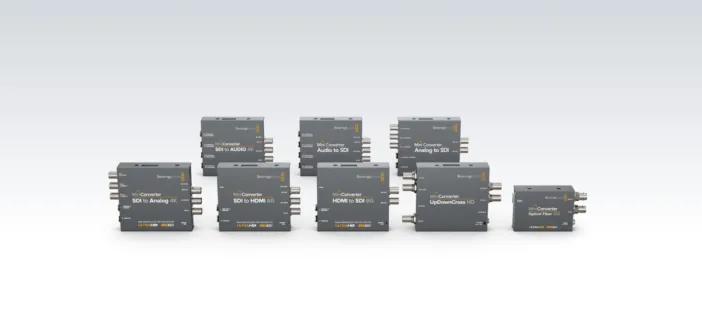
Once mixed, the sound doesn’t travel alone: it is embedded in the video signal to stay in sync with the picture at every stage. Understanding how audio is inserted into and extracted from streams has become a basic skill in TV production — that is the whole point of SDI embedded audio. On modern productions, audio also travels over IP, and more and more shows are made remotely, the gallery sometimes hundreds of kilometres from the set: that is the logic of remote production (REMI).
The final judge: loudness
The whole chain converges on one non-negotiable constraint: a normalised delivery level. A TV programme must meet a loudness target (in Europe, the EBU R128 standard, around -23 LUFS), so a viewer doesn’t jump when moving from a show to an advert. The broadcast mixer keeps a constant eye on the loudness meter, not just the peaks. That framework, detailed in our guide to broadcast loudness, shapes the entire tail of the chain.
One last invisible but decisive detail: the set’s electrical supply. Lights, cameras, computing and audio share the same mains, and poor distribution quickly shows up as hum and ground loops in the sound. The good practices described for stage power apply as much on TV as at a concert.
My take
TV sound is an art of the invisible: its excellence is measured by what you don’t hear — no RF dropout, no buried voice, no level jump at the ad break. It is a craft of discipline more than flash, where preparation and redundancy matter more than the latest fashionable plugin. What strikes you is how much the shift to IP and remote production has reshuffled the deck: we now mix sets we never see. For anyone wanting to get into TV production, the timing is good: the chain has never been this flexible, as long as you master the network as well as the mic.