It is a classic scene in radio and podcast production: you have a guest on the phone or on video, everything works, except the person complains about hearing themselves come back with a slight delay. Sometimes it is worse: the line starts to whistle and ring until it is unusable. In almost every case the cause is the same, and the fix has a name: the mix-minus, also called N-1. It is one of those techniques nobody teaches, and without which nothing works the moment a remote source joins the mix. Let us take the time to understand it properly.
What is a mix-minus (N-1)?
A mix-minus is an audio mix from which one source has been removed: the one meant to receive it. The name “N-1” says it literally: out of N sources, you send N minus one. You build a mix of everything happening in the show — hosts, studio mics, music beds, stings, playouts — except the remote guest’s voice, and that is the mix you send back to that guest.
The logic is simple once stated: the guest has no need to hear themselves, they already hear their own voice in their own room. What they need is to hear everything else: the questions, the other contributors, the played-out elements. If you send them the full mix, their own voice returns with the round-trip delay of the link, and that delay turns their voice into an echo — annoying at best, a self-sustaining howl at worst.
Why it is essential
It all comes down to loop latency. Between the moment the guest speaks and the moment their signal comes back to you, then heads out to them again if they are included in their own feed, there is a delay: a few tens to a few hundred milliseconds depending on the medium (phone, IP link, video call). A delay of that order sits precisely in the zone where the ear no longer merges the direct sound with its echo: the person hears themselves twice, offset, and becomes unable to speak normally. It is the same unpleasant mechanism as hearing your own voice in a badly set headphone mix, amplified by distance.
Add to that the risk of howl-round. If the feed sent to the guest contains their own voice, and on your side that feed gets picked up again (by an open mic, by some re-injection), you create a gain loop. It rises, rings and whistles: it is feedback at a distance, with no speaker or mic facing each other, purely electronic. The mix-minus breaks the loop at the root by making sure the remote source never ends up in its own return path.
How to build it on a console
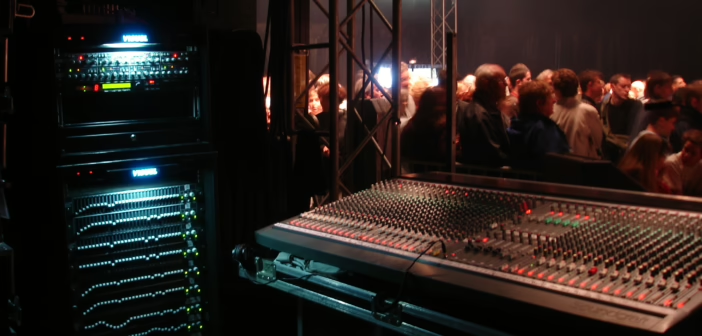
On a mixing desk, a mix-minus is built with a dedicated auxiliary send (aux) or bus. The principle:
- Create an aux send that will act as the return for the remote guest. That send goes out to the link (phone hybrid, video interface, codec).
- Bring up on that aux every source the guest needs to hear: studio mics, players, beds, other contributors.
- On the channel carrying the remote guest — the one where their voice comes in — leave that same aux send at zero. This is the key move: the guest does not feed the bus that returns to them.
The result: the bus contains “everything but them.” One detail that matters: use a pre-fader send for the guest’s return, so your on-air fader moves (pulling their voice down on air, for instance) do not change what they hear in their own headphones. Pre-fader makes the return independent of the main fader position.
Modern broadcast consoles often automate this N-1 creation: each remote source gets an automatically generated mix-minus bus. It is a design reflex you find in recent surfaces, including those moving into the browser or onto audio over IP, like the Wheatstone VMX. But whether the routing is automatic or manual, the concept is identical.
Remotes and the double mix-minus
The difficulty steps up as soon as you have two remote sources — say two guests on two different lines — who must hear each other and the studio. Each needs their own mix-minus: guest A must receive “everything but A” (so studio + B), guest B must receive “everything but B” (so studio + A). You cannot send them the same bus, or you send each of them their own voice.
You then need as many mix-minus buses as remote sources. This is where small consoles show their limits — the number of available auxes becomes the limiting factor — and where broadcast desks, built for this, come into their own. The rule of thumb is simple: one remote source equals one dedicated N-1 bus.
On a small podcast mixer or interface
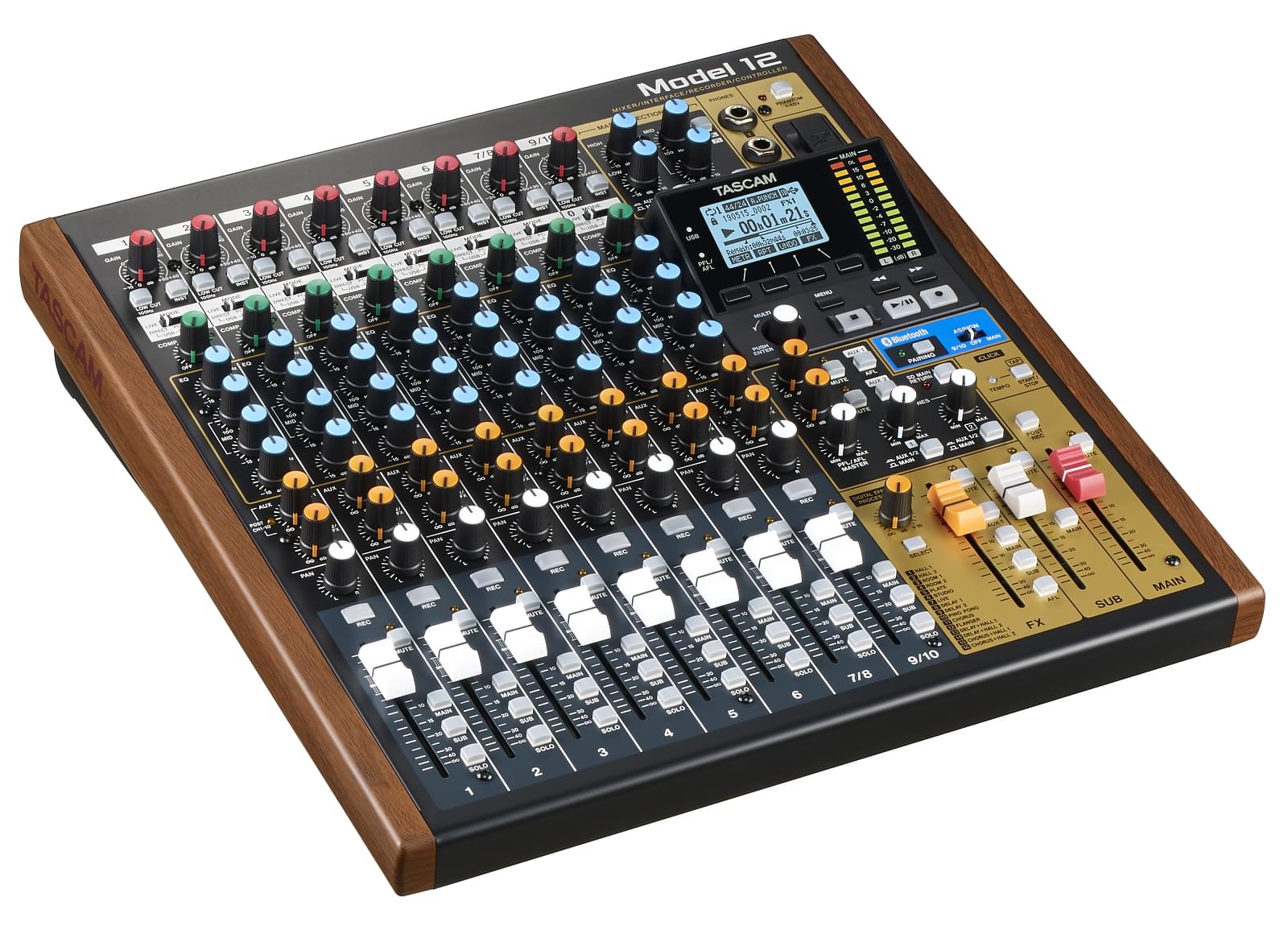
Good news: mix-minus is not reserved for big control rooms. Many recent podcast mixers include a dedicated function, often called mix-minus, or a “clean feed” mode on a headphone socket or USB output. Some hybrid interfaces handle the send to a video app by automatically removing that app’s own return. We walk through this kind of routing step by step in our complete guide to the Tascam Model 12 and in our Behringer Flow 8 guide, two affordable mixers that can produce a clean feed for a remote guest.
If your gear has no dedicated function, the manual principle still holds: create an aux send, feed it all the local sources, do not send the guest’s return to it, and route that aux to the link. It is exactly the same reasoning as on a big console, at the scale of your little box.
Pitfalls to avoid
- Leaving a source off the bus. If the guest cannot hear one of the contributors, they will answer out of step. Check that all the useful sources, except themselves, are present in their mix-minus.
- Leaving their own voice in the bus. The symptom is immediate: the guest complains of an echo. The culprit is almost always the send left open on their own channel.
- Using a post-fader send by mistake. The guest’s return then varies whenever you move their on-air fader, which throws them off. Prefer pre-fader for the clean feed.
- Confusing a local headphone mix with a remote mix-minus. Your in-studio hosts can hear themselves without any problem in their headphones: latency is zero. Mix-minus only concerns remote sources, the ones subject to the link delay.
The takeaway
Mix-minus is not one more trick: it is the baseline condition for a clean remote. The moment a voice arrives from afar — phone, codec, video — it needs to hear everything else but itself. Remember the rule and the gesture: one bus per remote source, and that source’s send to its own bus always at zero. The rest — pre-fader, level management, coexistence with the broadcast loudness chain — is just fine-tuning around that principle. Once you have grasped it, you never design a show with remote guests any other way.