The Behringer BCR32 put an obvious truth back on the table: nothing beats a row of encoders under your fingers for shaping a sound. Bring back the cult BCR2000, add a Zaquencer step sequencer and CV/Gate outputs, price it around $269, and suddenly a whole category feels desirable again, the rotary encoder controllers.
The BCR32’s job is easy to state, harder to match: a dense bank of endless encoders you freely assign to the parameters of a synth, a plugin or a DAW, with LED feedback and the ability to run without a computer. Here are seven machines that work the same ground. Some are direct heirs, some do the job differently, and one only does part of it. We say it plainly each time: none reproduces the BCR32’s full encoders + sequencer + CV trio, but several beat it on ergonomics, resolution or software integration.
The direct heirs: dense banks of endless, freely assignable encoders
These three share the BCR32’s DNA: detent-free encoders, LED feedback, open MIDI assignment and, for two of them, standalone use with outboard gear. This is where you find the exact feel of the BCR2000.
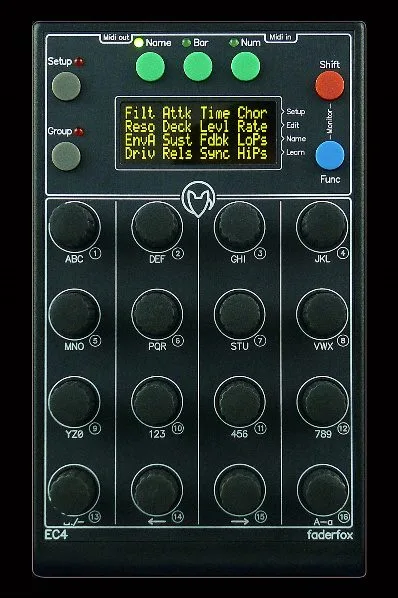
Faderfox EC4
If any product deserves the title of spiritual heir, it is the EC4. Sixteen push encoders, a resolution of 36 pulses per revolution, a 14-bit high-resolution mode and, above all, a 4 x 20 character OLED screen that shows each parameter’s name: no more stickers or memorizing. Hand-built in Germany, class-compliant over USB, it also talks MIDI DIN (through the supplied TRS type B minijacks), so it can drive a drum machine or synth with no computer attached.
Against the BCR32 it drops the sequencer and CV, but gains the label screen and formidable control density in a tiny box. It is the tool for people who map seriously and want to know, at a glance, what each knob does.
At a glance: Faderfox · around EUR 299 · USB class-compliant + MIDI DIN via adapters, macOS/Windows/iPad
DJ TechTools Midi Fighter Twister
A cult favourite in electronic music and DJing, the Twister lines up sixteen endless push encoders, each ringed with an RGB LED, with three virtual layers taking the total to forty-eight parameters. The colourful Chroma Caps and the smoothness of the encoders make it one of the most playable controllers around, built for fast moves and the stage.
It is the BCR32’s closest cousin on feel, with a Traktor-oriented step sequencer as a bonus. The honest difference: it stays tied to a computer (USB only, no MIDI DIN or CV), and configuration runs through the in-house utility. For riding effects and filters live, hard to do better.
At a glance: DJ TechTools · around $259 · USB, macOS/Windows, configured via Midi Fighter Utility
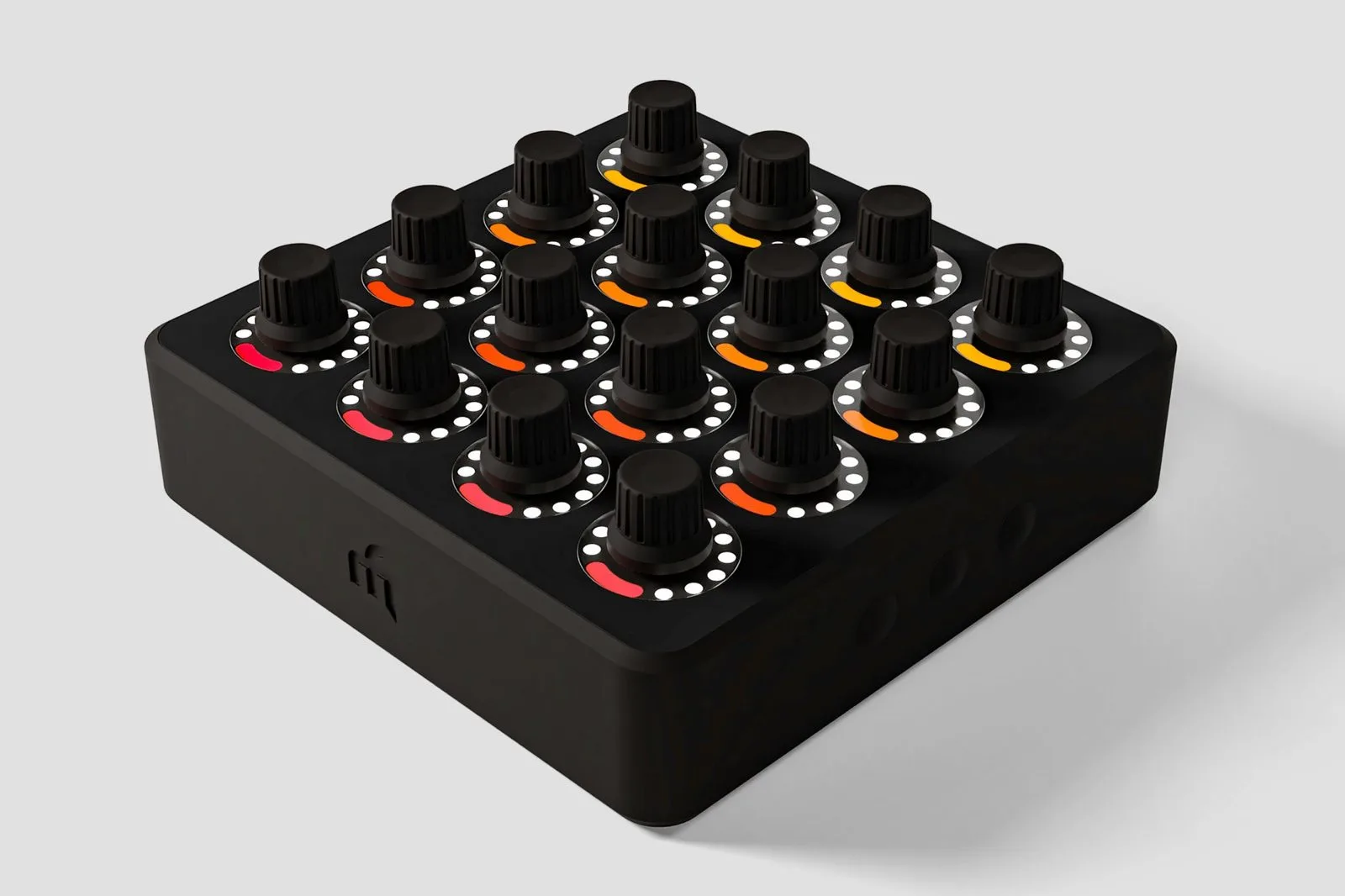
Intech Studio Grid EN16
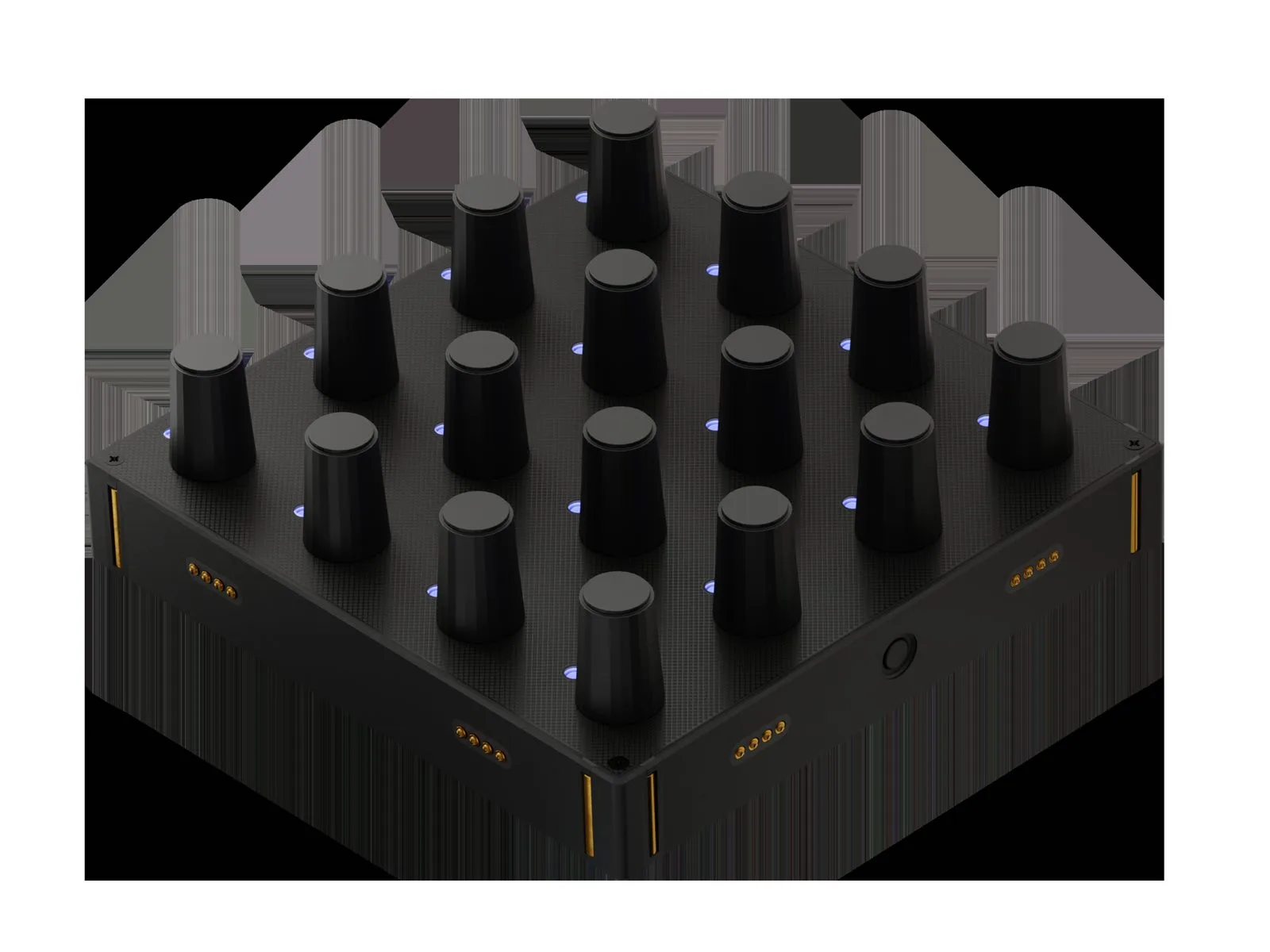
The most modern approach of the bunch. The EN16 is a module of sixteen velocity-sensitive endless encoders, with push action, lit by multicolour LEDs. But its real idea is the Grid system: modules snap together magnetically (pads, faders, buttons) to build the exact surface you need, and everything is configured in the open-source Grid Editor. Square, Eurorack-style footprint, 106 mm per side.
Against the BCR32, no sequencer or CV out of the box, but expandability nobody else offers and far more flexible programming. If the idea of a modular controller appeals, also take a look at the Intech Studio ZONA XY pad, from the same family.
At a glance: Intech Studio · around $189 · USB MIDI, macOS/Windows, open-source editor, modular system
DAW surfaces: encoders and faders for mixing by hand
Here the job broadens. These three surfaces add faders to the encoders and aim first at driving a DAW and its plugins. They do the BCR32’s job on the rotary side, with volume faders on top, but they are built around the computer rather than around standalone use.
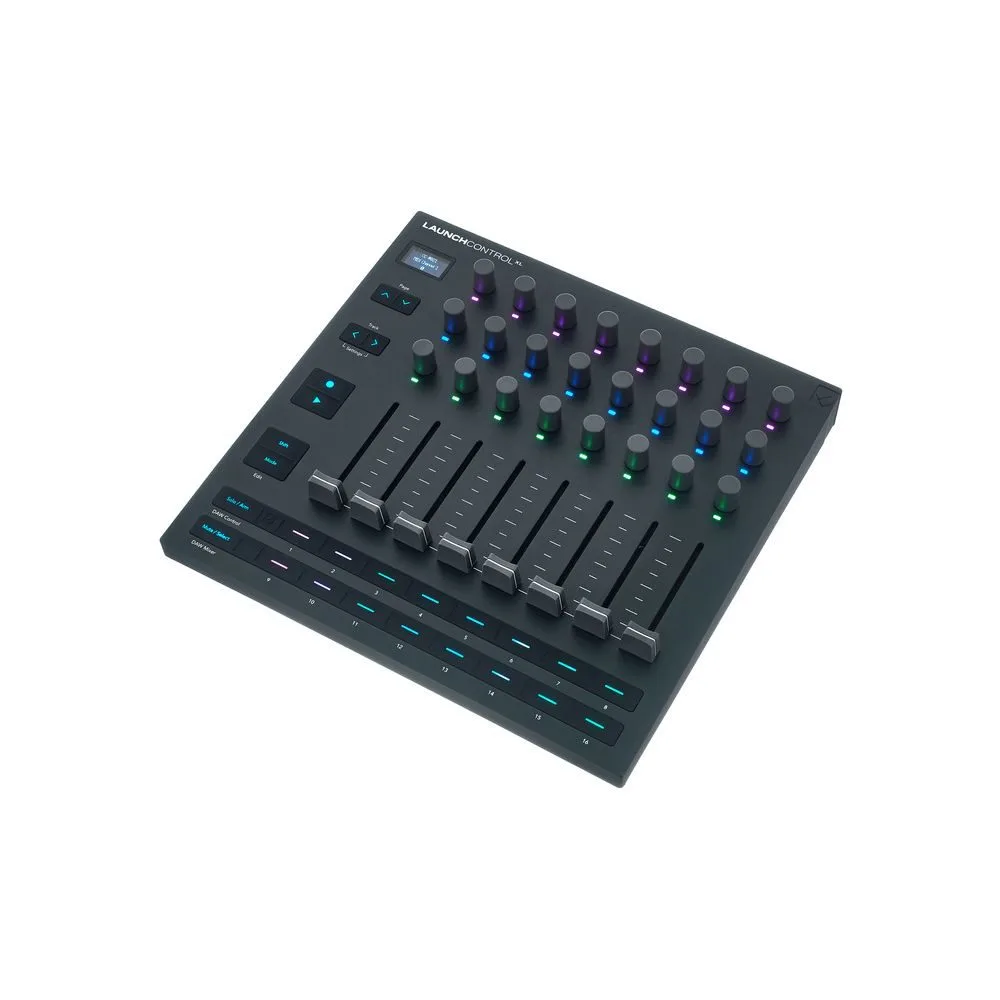
Novation Launch Control XL 3
The most complete of the lot. Twenty-four endless encoders with RGB LEDs, eight 60 mm faders, sixteen assignable buttons, dedicated transport and, new to this version 3, an OLED display. It runs over USB-C but also has MIDI DIN (in, out and out/thru), so it can control hardware with no computer. Fifteen custom modes store on the device via the Components software, and a firmware update added the HUI protocol for Pro Tools.
It is the obvious pick for anyone who wants encoders AND faders without breaking the bank. We already rated it well at launch: the features-per-dollar ratio stays unbeatable in a hybrid home studio. Less specialised than the BCR32 on the synth side, but far more versatile for mixing.
At a glance: Novation · around $249 / GBP 189 / EUR 229 · USB-C + MIDI DIN, 24 encoders + 8 faders, Ableton Live Lite included
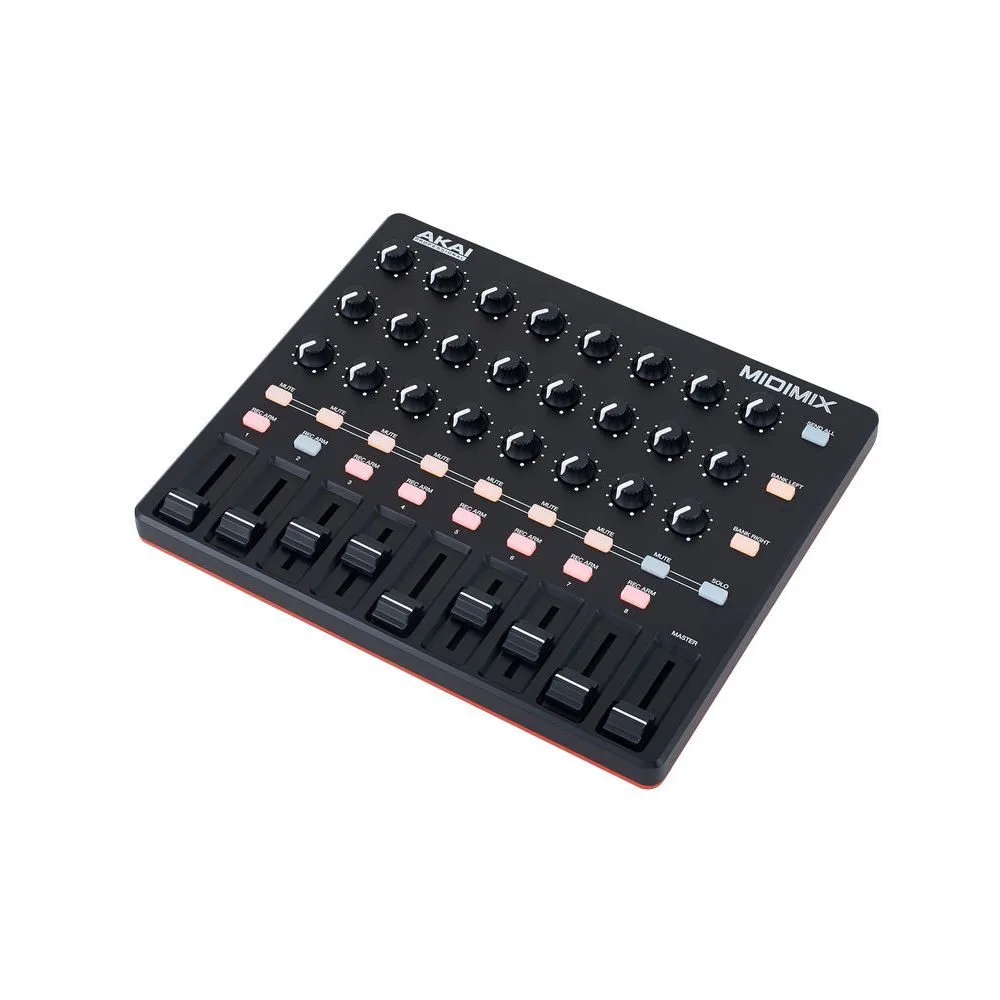
Akai MIDIMix
The entry ticket. Eight channel faders plus a master, twenty-four knobs (three per channel), sixteen mute/solo/rec buttons, one-to-one mapping with Ableton Live and a button that pushes all your settings to the DAW in one go. USB-powered, for about a hundred dollars.
Let us be honest about the gap: its knobs are plain potentiometers, not endless encoders, so no LED feedback and no absolute value when you open a project. A long way from the BCR32’s refinement. But for getting your hands on eight mixing channels at this price, nothing comes close.
At a glance: Akai Professional · around $109 · USB, 8 faders + 24 knobs, Ableton mapping included
Behringer X-Touch Mini
The pocket format, from the same house as the BCR32. Eight rotary encoders with LED collars, a 60 mm fader, sixteen illuminated buttons, two control layers and Mackie Control emulation. USB-powered, driverless, around $69: it is the cheapest way to add eight encoders with visual feedback to a setup.
Against its big brother, everything is scaled down: eight encoders instead of thirty-two, Mackie emulation (so no Pro Tools, which needs HUI), no CV. But as a sidecar controller sitting next to your master keyboard, the value is unbeatable.
At a glance: Behringer · around $69 · USB, 8 LED encoders + 1 fader, Mackie Control emulation, free editor
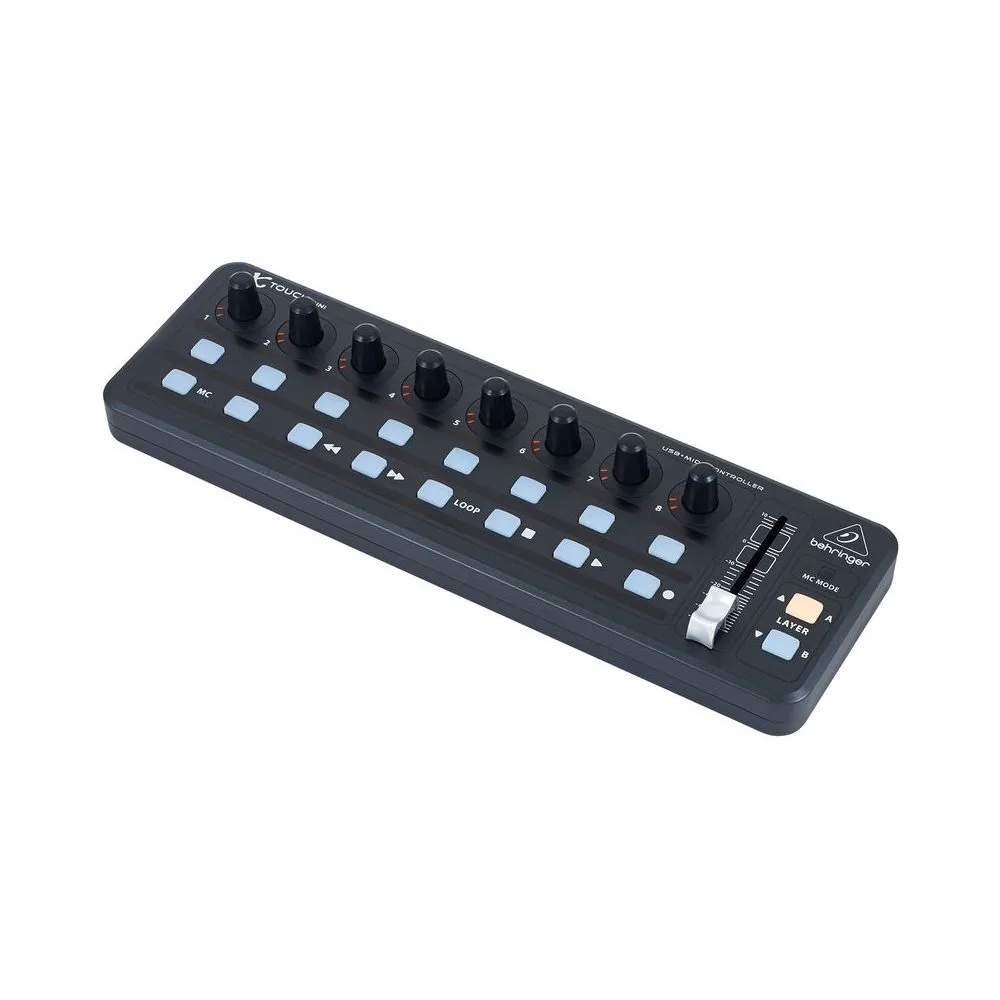
Behringer X-Touch Mini product page
The cousin: a dedicated mixing surface
One last product sits on neighbouring ground without really doing the same job. We mention it because the question keeps coming up, and it pays to be clear about what sets it apart.
Softube Console 1 Channel Mk III
The Console 1 lines up twenty-seven touch-sensitive rotary controls and two high-resolution screens, with a knob-per-function layout: one knob per function, gain, EQ, dynamics. A gorgeous mixing tool that also drives faders, mutes and sends across several DAWs.
But it only does the BCR32’s job in part. It is not a freely assignable MIDI controller: its controls drive Softube’s own software ecosystem first (its channel strips and console plugins). You do not map the Console 1 onto a hardware synth the way you do with an EC4 or a BCR32. It is a specialised mixing surface, not a universal bank of encoders, and its price (around EUR 799 for the Channel unit) reflects that.
At a glance: Softube · around EUR 799 (Channel unit) · VST3/AU/AAX + hardware, macOS/Windows, Softube ecosystem
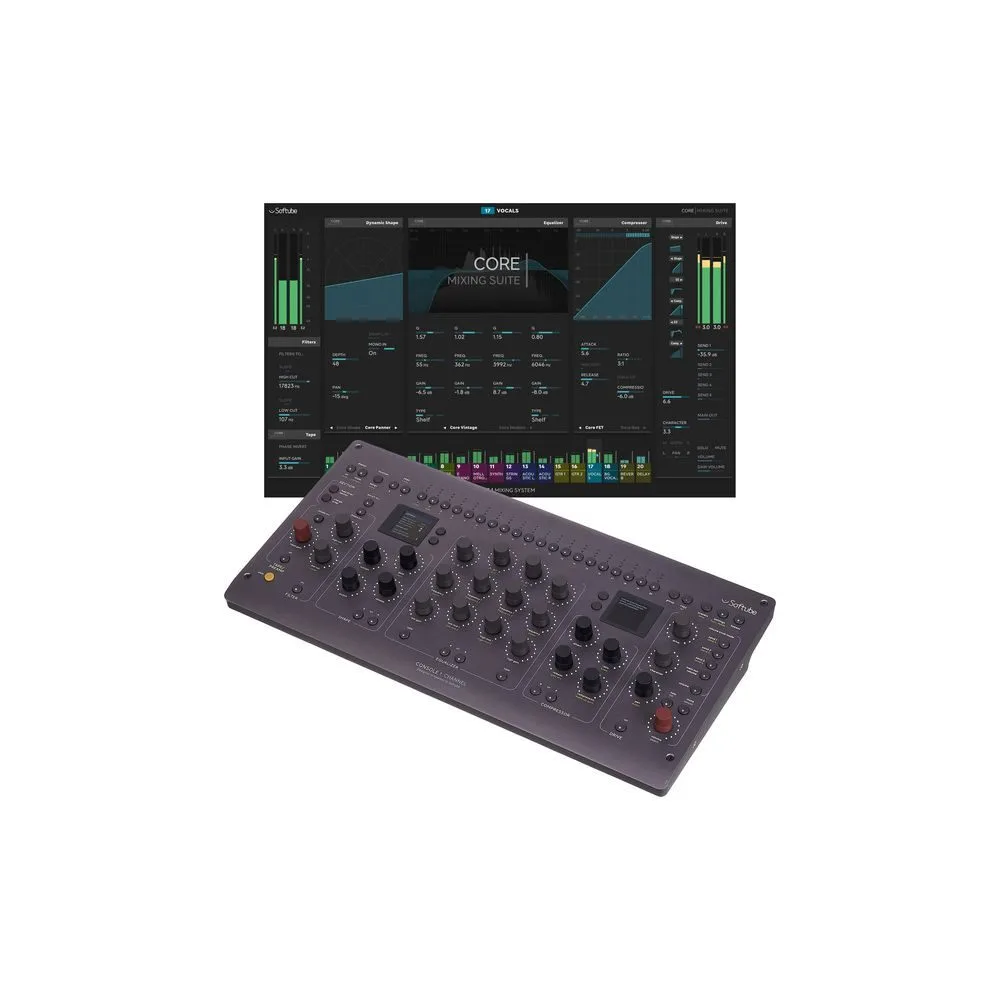
Softube Console 1 product page
The quick comparison
| Product | Brand | Street price | The job in a word |
|---|---|---|---|
| EC4 | Faderfox | ~EUR 299 | Heir |
| Midi Fighter Twister | DJ TechTools | ~$259 | Performance |
| Grid EN16 | Intech Studio | ~$189 | Modular |
| Launch Control XL 3 | Novation | ~$249 | Versatile |
| MIDIMix | Akai Professional | ~$109 | Budget |
| X-Touch Mini | Behringer | ~$69 | Sidecar |
| Console 1 Channel Mk III | Softube | ~EUR 799 | Dedicated mixing |
Which one should you choose?
If you want exactly the BCR32’s spirit (a bank of encoders to assign, resolution, a screen that tells you where you stand), the Faderfox EC4 is the most serious pick, and the Midi Fighter Twister the most fun to play live. Both chase the same gesture as the BCR2000, better on ergonomics.
For a hybrid studio where you want encoders AND faders without blowing the budget, the Novation Launch Control XL 3 is the best compromise, and the MIDIMix the hundred-dollar stopgap, as long as you accept its feedback-free pots. The X-Touch Mini slips in anywhere as a sidecar controller. As for the Intech EN16, it is for people who like building their surface module by module.
The Console 1 stands apart: it is a gorgeous mixing surface, but if your need is to drive a hardware synth or any plugin over MIDI, it is not the one. And if what started all this was precisely the standalone use and the sequencer of the Behringer BCR32, keep in mind that none of these alternatives carries CV outputs: to tie this little world to modular, our MIDI and CV/Gate guide explains how to go about it.