Some products keep you waiting. Announced back in early 2021, the Behringer BCR32 has finally opened pre-orders at €169. Five years, then, to complete the modernised reissue of the BCR2000, the rotary-encoder box that became a studio staple in the 2000s. Was it worth the wait? On paper, the homework has been done.
A wall of encoders, 2026 edition
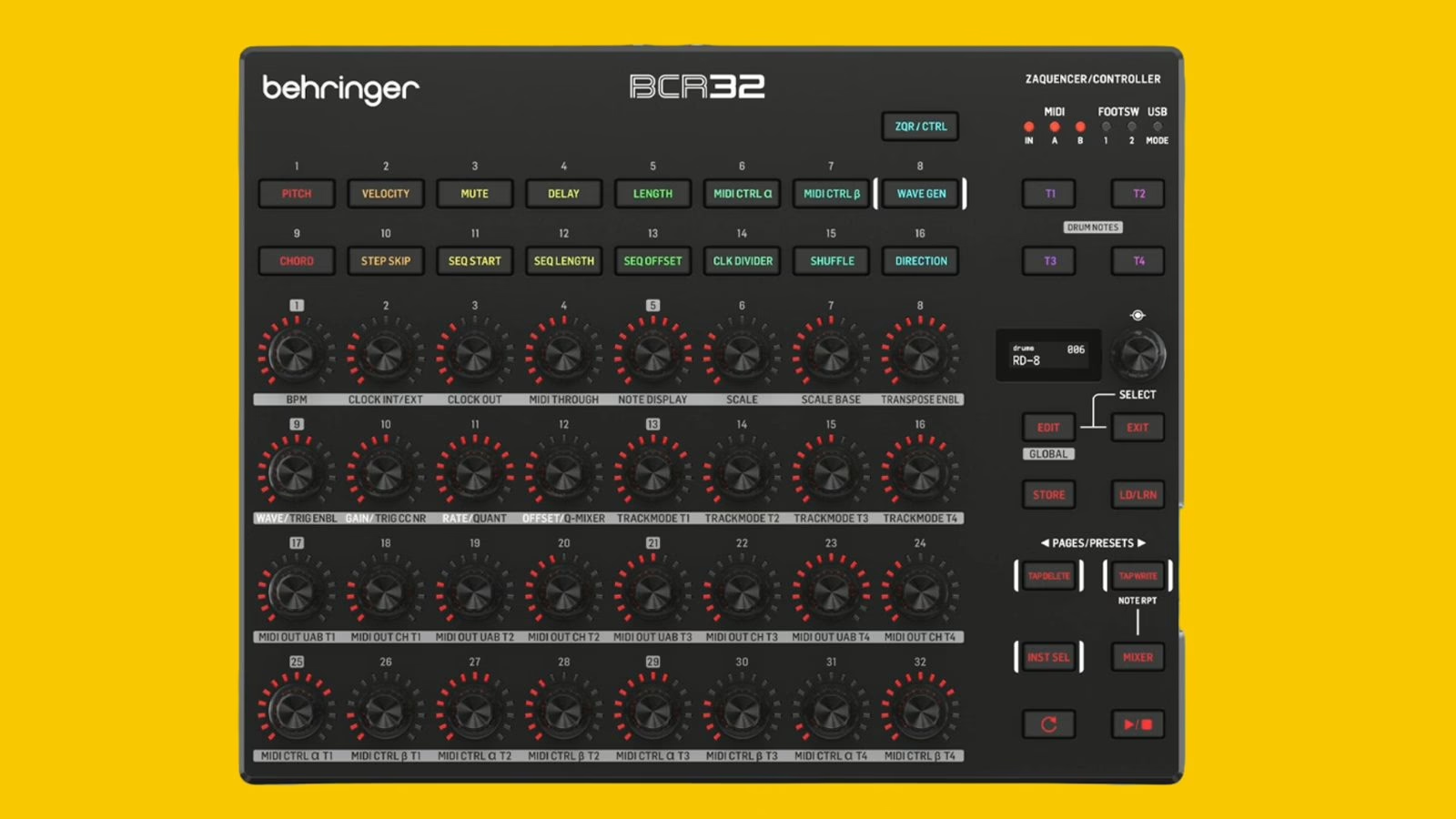
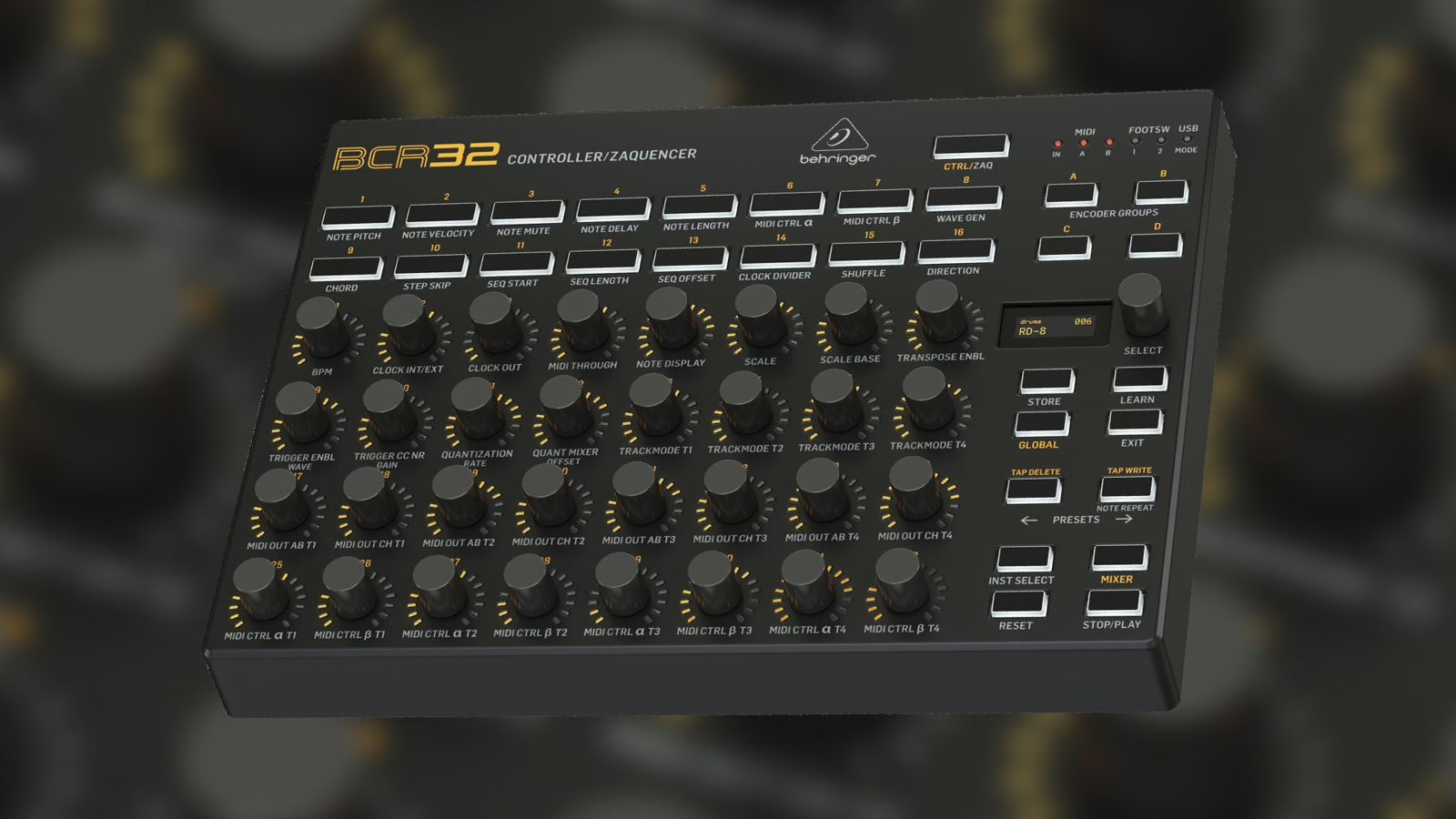
The BCR32 keeps the formula that made its ancestor a hit: 32 endless encoders with LED rings, laid out in four rows. One ergonomic tweak: the top row has been dropped down to join the other three, making sequencer work more intuitive. Add 16 freely assignable buttons — set up for pitch, velocity, mute, shuffle — plus four track-select keys. The original plastic buttons give way to rubberised ones, nicer under the finger and more reliable over time.
A small OLED display, backed by a select encoder and function keys, shows the essentials. Nothing flashy, but the whole thing feels like a workhorse built for the hand rather than the eye.
The real draw: Zaquencer in the firmware
This is the game-changer. Back in the day, the BCR2000 became a standalone sequencer thanks to third-party firmware, the Zaquencer, which you had to flash yourself. This time Behringer has baked that 4-track sequencer straight into the unit, working with its original developer. You flip between controller and sequencer modes at the press of a button, no reflashing required. The sequencer runs 32 steps across four tracks and stores up to 192 patterns.
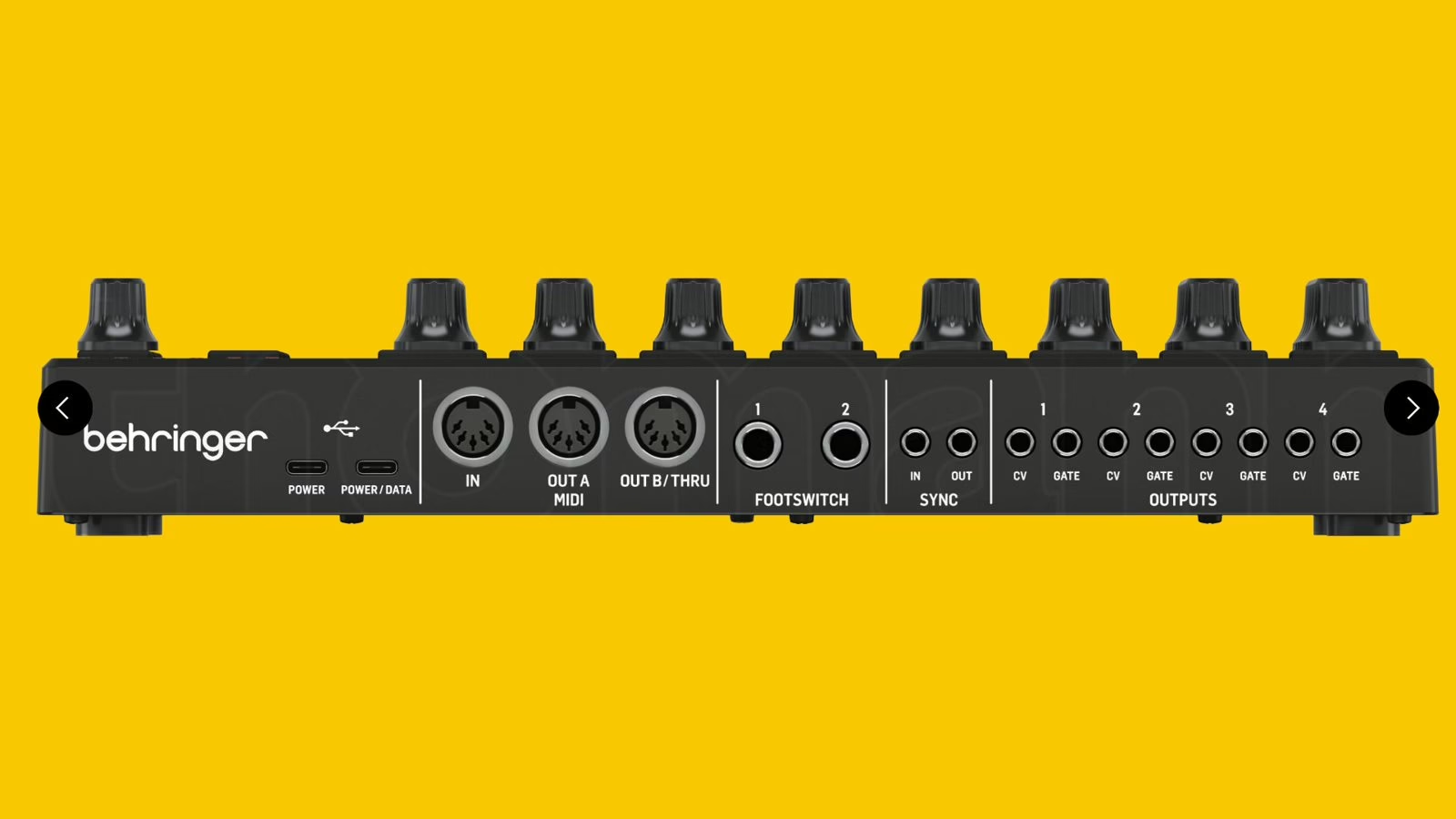
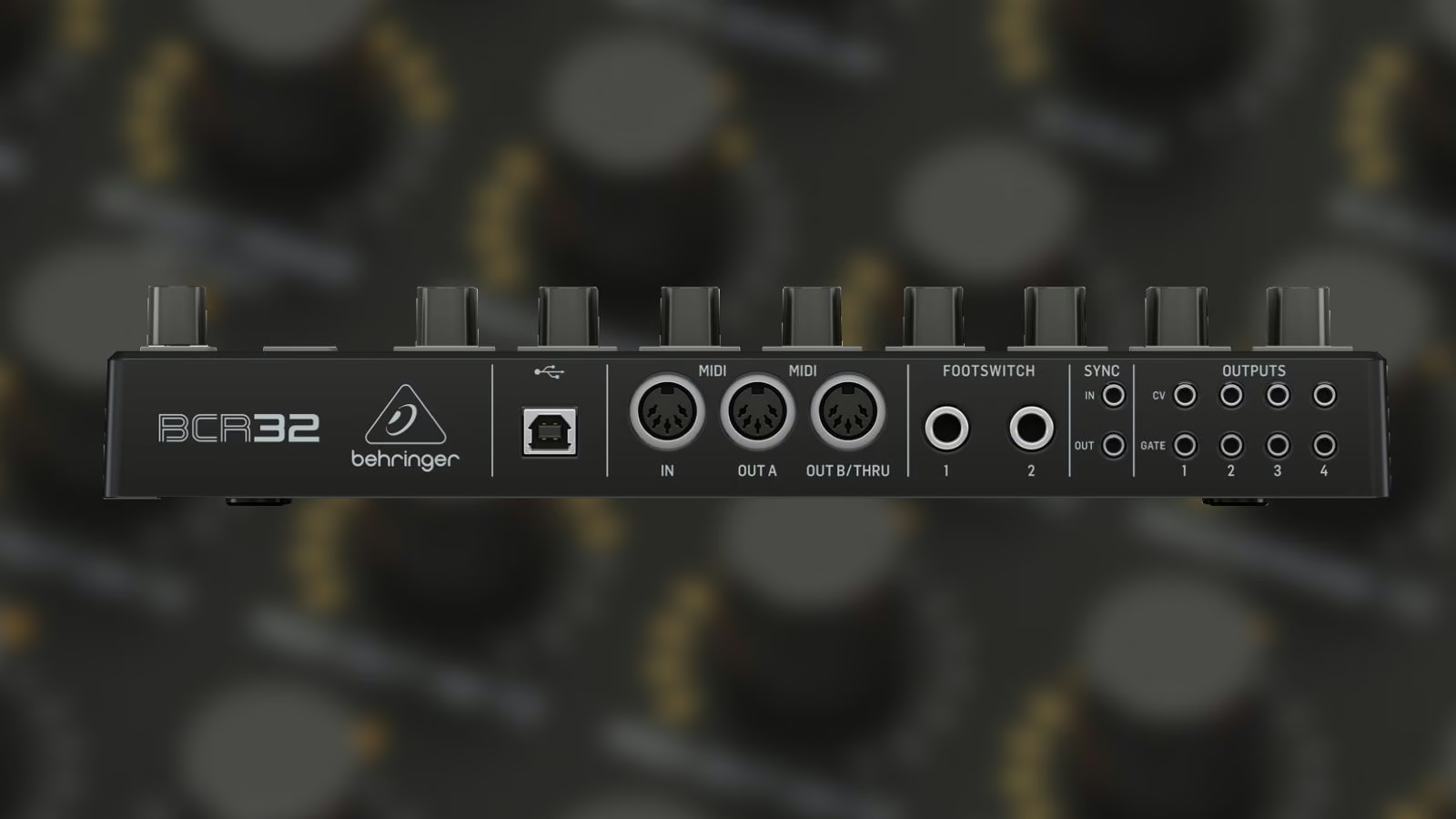
Above all, the BCR32 breaks out of the purely MIDI world. Four CV/Gate outputs, plus a sync in and out, make it a genuine brain for a modular rig or a rack of analogue machines. It’s the bridge the original never had.
| Spec | Detail |
|---|---|
| Encoders | 32 endless, LED rings, 4 rows |
| Buttons | 16 assignable + 4 track select, rubberised |
| Sequencer | 4-track Zaquencer, 32 steps, up to 192 patterns |
| USB | 2x USB-C |
| MIDI | 5-pin DIN: IN, OUT A, OUT B/THRU |
| CV / Sync | 4x CV/Gate, sync in/out, 2 footswitch inputs |
| Price | €169 (pre-order) |
Behringer and the useful-reissue playbook
The brand has built much of its recent reputation on clones and reissues, from the AKS Mini pocket synth to the Mini Pops 7 drum machine. The BCR32 follows a different, and to my mind more interesting, logic: it doesn’t copy a mythical instrument, it modernises a tool that had vanished from the catalogue and that nobody had truly replaced. Against pad controllers like the recent Fender Motion, the BCR32 defends another school: the physical knob, one per parameter, for anyone hands-on with synths or a semi-modular.
At €169, a sturdy endless-encoder controller paired with a hardware sequencer and CV/Gate is hard to fault on value — and that’s exactly where Behringer is at its most convincing. My only reservation is those five years of waiting: build quality and real-world availability remain to be confirmed once the first units ship. But the idea is sound. The product page is live.