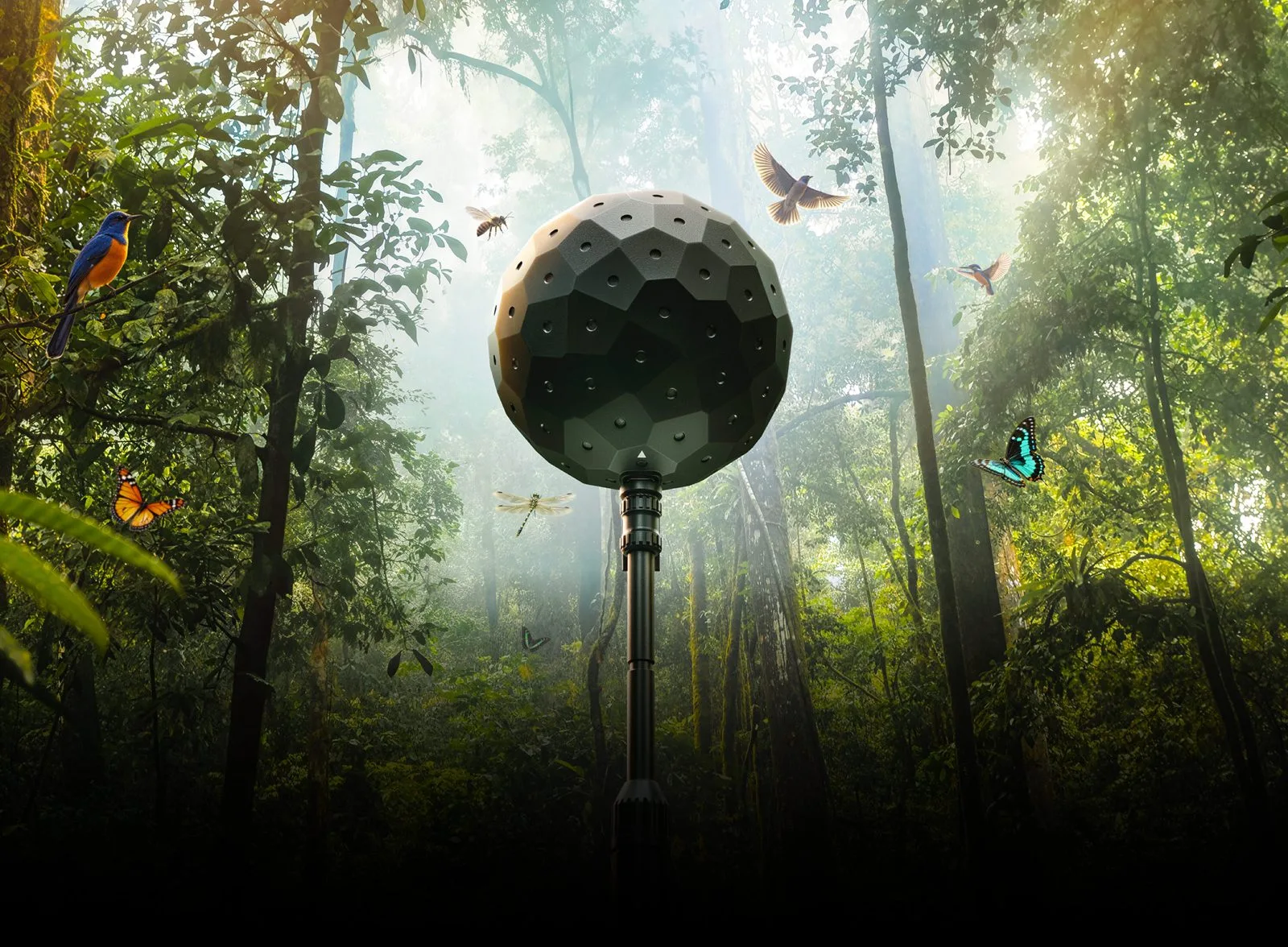
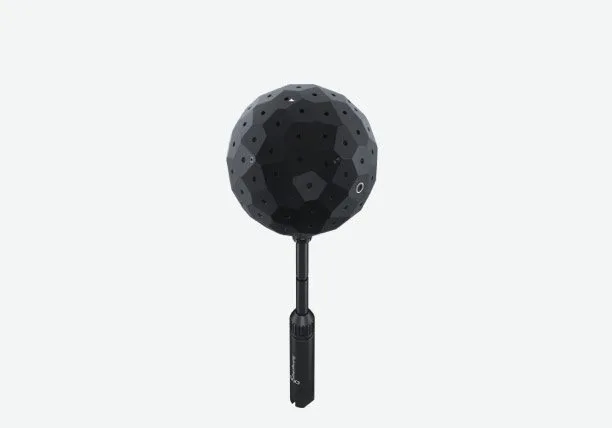
You expected Blackmagic Design on the imaging side, not necessarily behind a microphone. Yet with the Blackmagic Ambisonic Microphone, the Australian company walks straight into immersive sound capture: a sphere bristling with 108 MEMS capsules, a built-in spatial encoder, and the promise of carrying the whole sound field over a single USB-C cable. Blackmagic bills it as the first 7th-order ambisonic microphone, a level of spatial resolution well beyond the usual ambisonic spheres.
What is 7th order for?
An ambisonic microphone captures the sound field in every direction, then describes it as components whose count grows with the order. The higher the order, the more precisely sources are localized once the sound is played back over headphones or an immersive system. Where entry-level ambisonic mics stop at 1st order and the most ambitious spheres on the market reach 3rd order, Blackmagic claims 7th order. In practice that means 64 channels of 32-bit audio generated by the 108 capsules, enough to rebuild a spherical sound image of unprecedented detail for immersive video, 360-degree and mixed-reality production.
A workflow down to a single cable
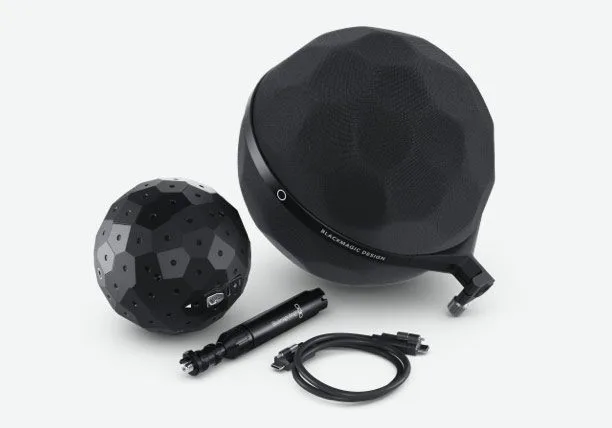
The real trick is not the capsule count: all the processing happens inside the mic. The spatial encoder is on board, so the sphere outputs a usable ambisonic stream over one USB-C cable, with no multichannel interface or external preamps to align. The body is aluminum, the windshield clips on magnetically, and a mount is included. Blackmagic slots the whole thing into its own ecosystem: the stream edits in DaVinci Resolve Studio and mixes in Fairlight, notably alongside the URSA Cine Immersive camera built for Apple Immersive Video and the Apple Vision Pro headset.
Two versions, one clear target
The microphone alone is listed at 1,909 dollars with its mount. A 2,405-dollar kit adds the windshield for outdoor shoots and a locking USB-C cable to secure the connection on location. European pricing has not been announced yet, and availability is set for December 2026. At that price, Blackmagic is clearly aiming at studios already producing immersive video and looking for matching spatial capture, without building a multichannel maze.
| Spec | Blackmagic Ambisonic Microphone |
|---|---|
| Capsules | 108 MEMS microphones |
| Ambisonic order | 7th order |
| Output | 64 channels, 32-bit, single USB-C |
| Spatial encoder | built into the mic |
| Price | $1,909 (mic) / $2,405 (kit) |
| Availability | December 2026 |
Frequently asked questions
Do you need a separate audio interface?
No. The spatial encoder is built into the microphone, which delivers its ambisonic stream straight over a single USB-C cable. There is no multichannel interface or external preamp to align, which radically simplifies the chain compared with an array of discrete mics.
What is 7th order actually good for?
The higher the ambisonic order, the more precisely source positions are reproduced over headphones or an immersive system. 7th order targets the most demanding localization: immersive video, 360-degree and mixed reality. Many current deliveries do not yet exploit that resolution, but the mic leaves headroom for the future.
Which software does it work with?
Blackmagic folds it into its own ecosystem: the stream edits in DaVinci Resolve Studio and mixes in Fairlight. The mic is designed to pair with the URSA Cine Immersive camera and Apple Vision Pro content production, but the ambisonic format itself remains an open standard.
When does it ship and how much is it?
Availability is set for December 2026. The microphone alone with its mount is listed at 1,909 dollars, the kit with windshield and locking cable at 2,405 dollars. European pricing has not been confirmed yet.
My take
Blackmagic walking into sound capture is the company’s usual script: a spectacular object, a spec sheet built to dazzle, and a price that shakes up the sector. 7th order across 108 capsules is as much a show of force as a real need, since few deliveries truly exploit that spatial resolution today. The bet is still smart: by boiling everything down to a single USB-C cable and wiring the sphere into DaVinci and Fairlight, Blackmagic speaks to studios already building immersive video who want sound to match the picture. What remains is to hear what these MEMS actually deliver.
To compare with the other ambisonic sphere of the moment, read our piece on the Zylia ZM-2, and for playback, our guide to Dolby Atmos mixing.