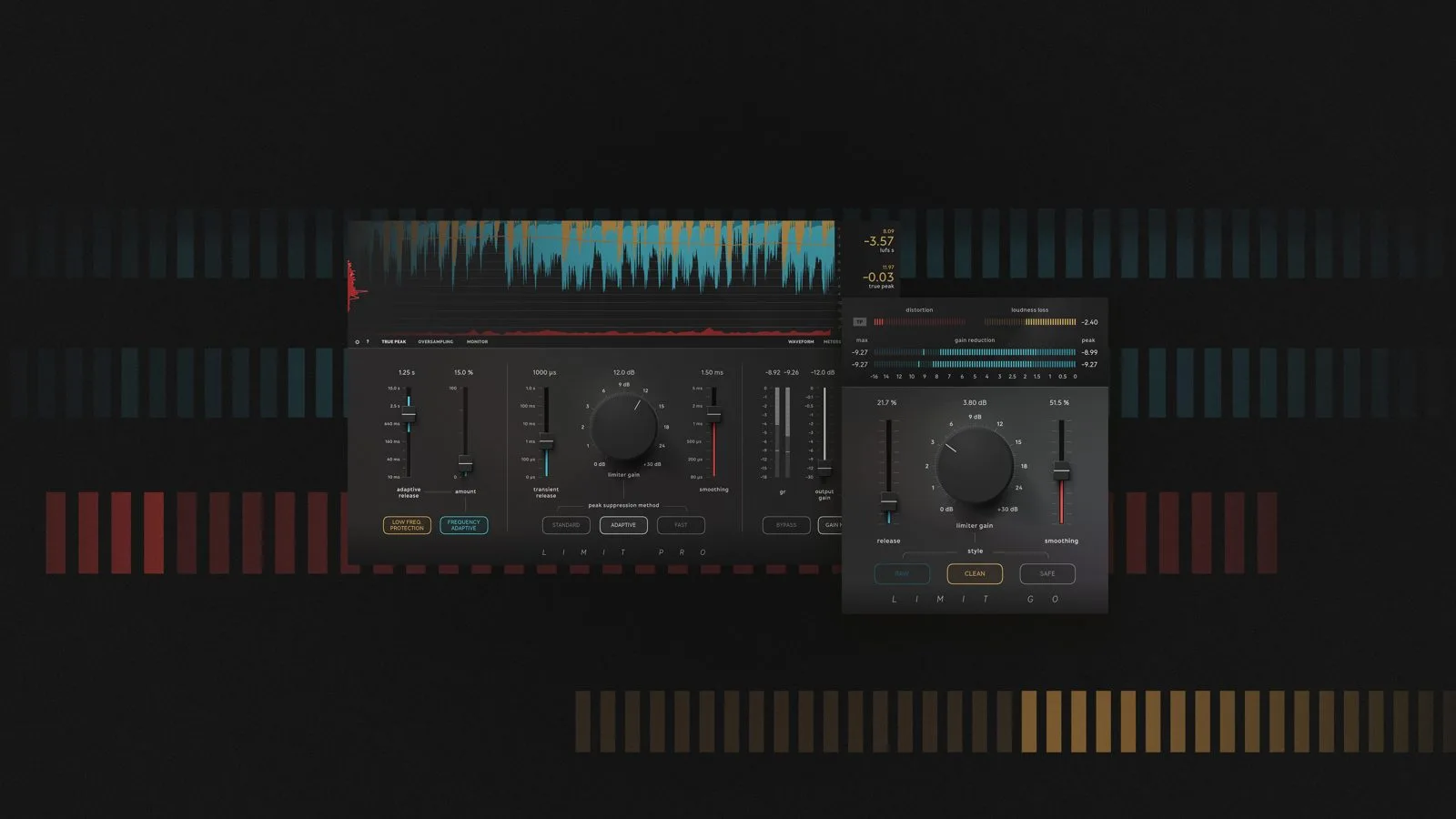
Softube made its name on emulations of legendary hardware — Tube-Tech, Weiss, Chandler, Drawmer. With Limit Pro and Limit Go, the Swedish company switches gears: these are two original digital limiters, designed from scratch, aimed squarely at the modern brickwall market. One for mastering, one for everyday mixing, with the same limiting engine at the core.
Limit Pro, the finishing limiter
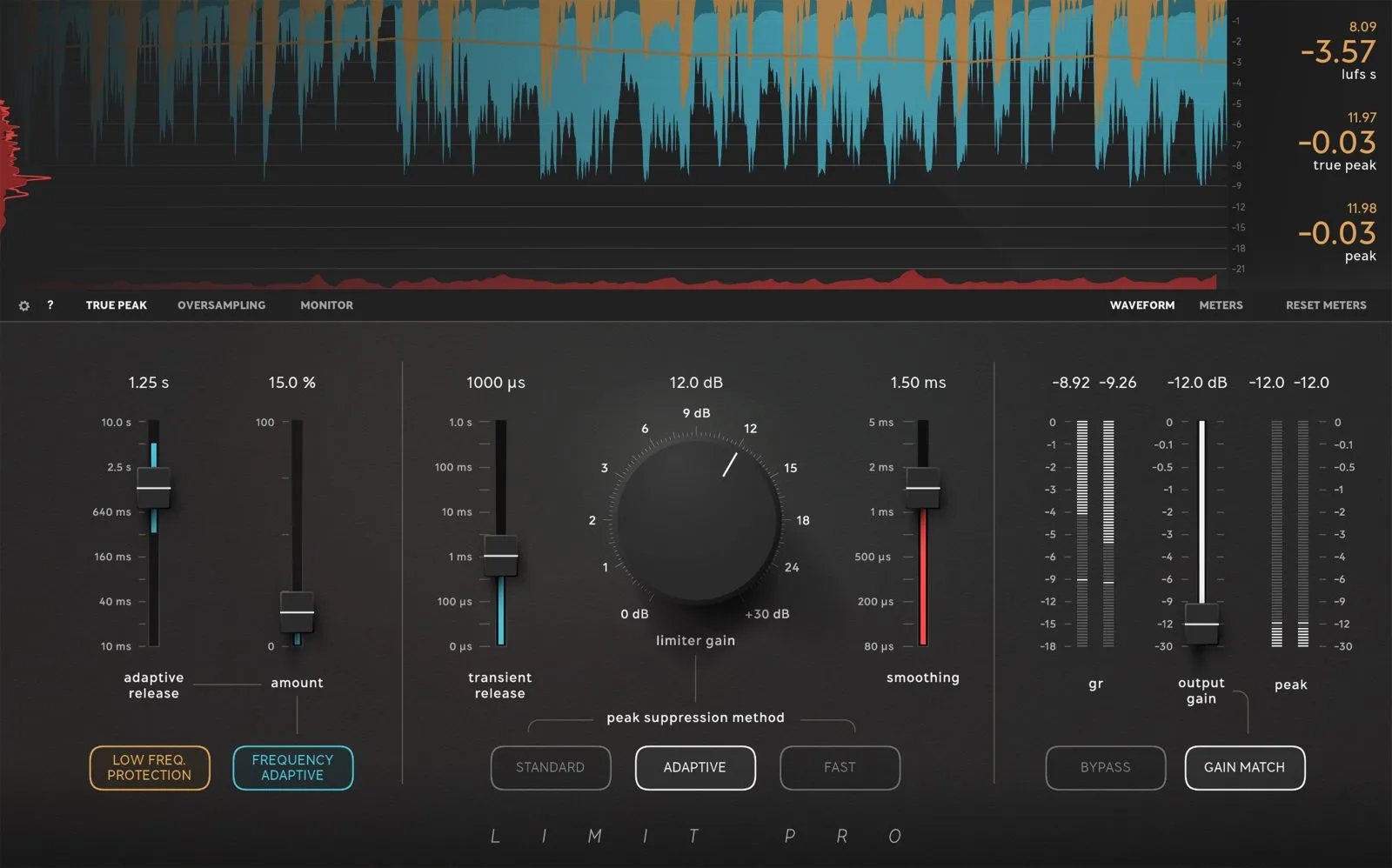
Limit Pro is the full model: dynamics control, loudness gain and clip protection. It offers three peak-suppression modes — Standard, Adaptive and Fast — and lets you set the transient release and smoothing times to shape the limiter’s onset to the material. An Adaptive Release stage with a Frequency Adaptive mode tracks the spectral content of the signal, while Low-Frequency Protection preserves the bass when the limiter is working hard. Add an automatic Gain Match, which keeps input and output levels aligned for honest A/B comparison, and Delta monitoring, which lets you hear exactly what’s being processed. Its extended metering (LUFS, true peak, gain reduction) is built for deliverables tied to precise loudness targets.
Limit Go, the same engine in fast form
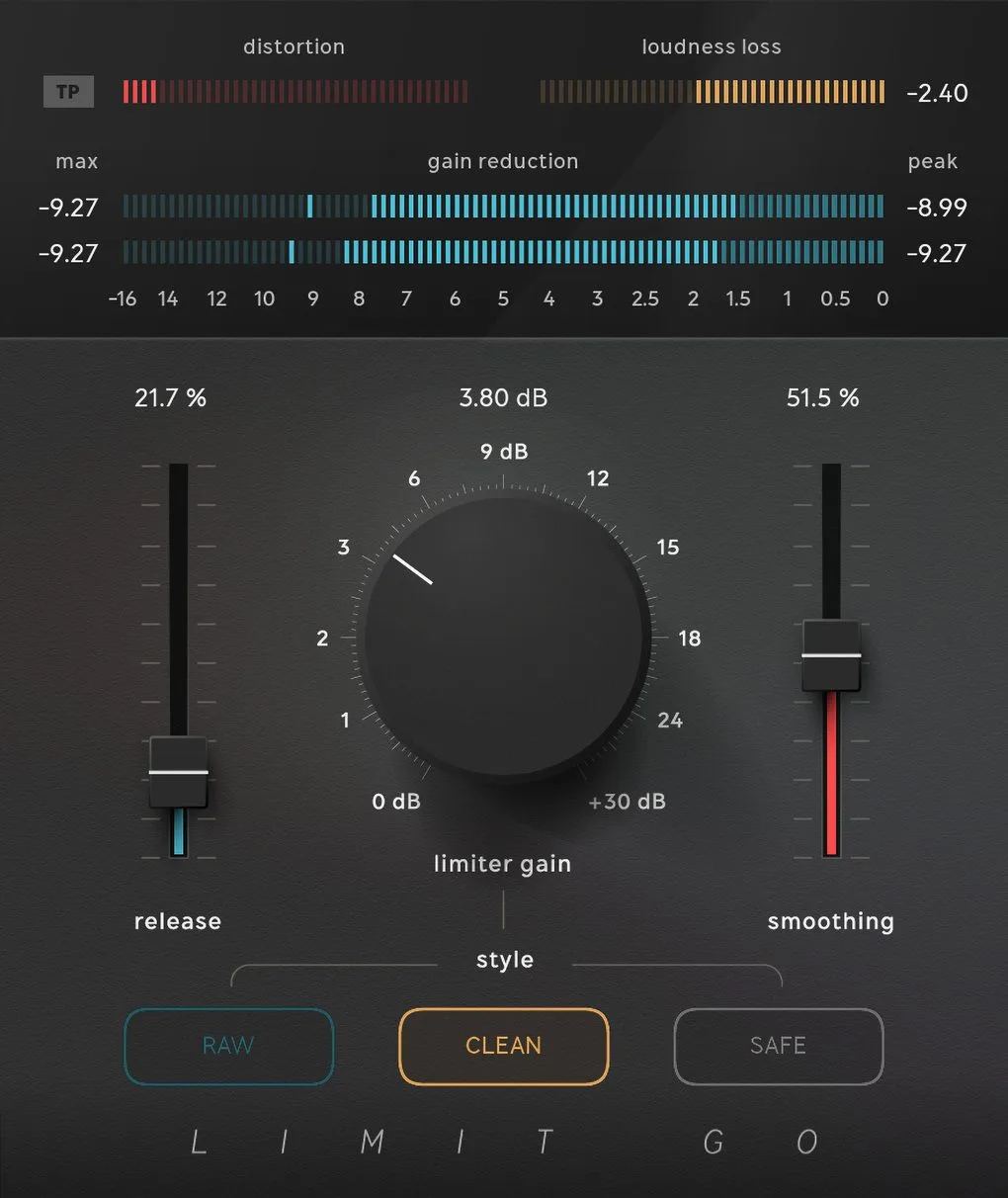
Limit Go takes that limiting and condenses it into a stripped-back interface built around three modes — Raw, Clean and Safe — for different mixing situations. You drop it at the end of a track or channel group to keep levels within a controlled window, whatever the number of sources routed to the bus. Faster workflow, lighter CPU footprint: Limit Go is made to run in many instances across a session, where you’d reserve one or two instances of Limit Pro for the drum bus and the master bus.
Two tools, one logic
The split is clear. Limit Pro brings the metering and fine control that finishing demands: a master, a mix bus pushed toward a streaming target, a calibrated delivery. Limit Go brings the same limiting reliability everywhere else, without weighing down the session or the decision-making. The point — and what sets this pair apart from a simple limiter split in two — is that the limiting quality doesn’t change between the plugins: only the ergonomics and the level of detail move.
Price and availability
Both plugins are available now, in the usual DAW formats. An introductory price runs until 7 November: around $99 for Limit Pro and $89 for Limit Go during that window. After that, list prices return to their regular level.
My take
Seeing Softube ship limiters built from scratch, rather than yet another vintage emulation, is the real news here. The brickwall market is ruled by a handful of entrenched names, and taking them on means bringing a genuine idea: Limit Pro’s per-band adaptive release and low-frequency protection do that, and so does Delta monitoring — too rare, yet essential for hearing what you’re damaging. The Pro/Go logic fits daily work: a light tool you multiply, a full tool you reserve for finishing. The open question is how these modes hold up on demanding material — but the approach is the right one.
Frequently asked questions
Do Limit Pro and Limit Go share the same limiting engine?
Yes. Limit Go takes Limit Pro’s limiting and presents it in a simplified interface. The difference is in ergonomics, the modes on offer and the extent of the metering — not in the quality of the limiting itself.
Which one should I use for mastering?
Limit Pro. Its extended metering (LUFS, true peak, gain reduction), its peak-suppression modes and its Gain Match are built to hit precise loudness targets. Limit Go is better suited to limiting tracks and buses while mixing.
What does Limit Pro’s Frequency Adaptive mode do?
It adapts the limiter’s release to the spectral content of the signal rather than applying a fixed time. Combined with Low-Frequency Protection, it helps you limit hard without crushing the low end or generating distortion on transients.
Can I run many instances without taxing the CPU?
That’s exactly Limit Go’s role: its lighter CPU footprint makes it suited to multiple instances across tracks and groups. Limit Pro, heavier on metering, is better reserved for strategic buses.
Further reading: our guide to what a limiter is (brickwall, true peak) and mastering chain order.