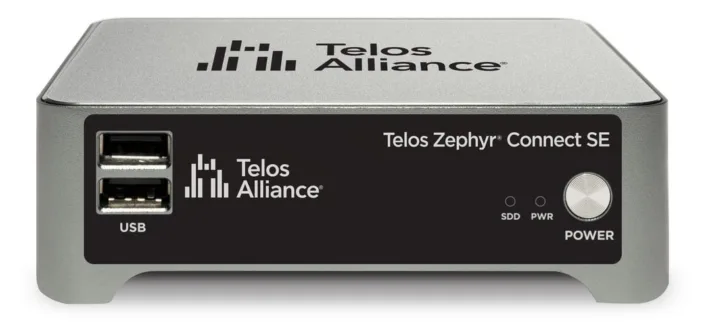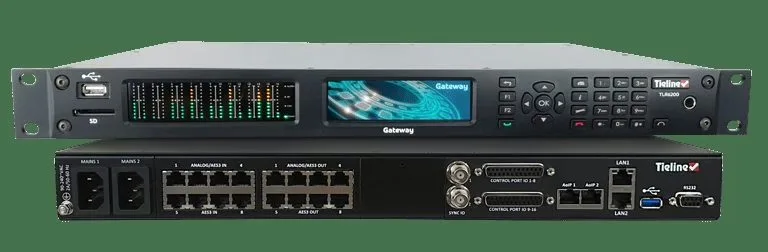
We talk a lot about the console, the on-air processing and the transmitter, and almost never about the link that joins the two. Yet that’s what carries your finished program from the studio to the tower, often over several kilometres: the studio-to-transmitter link, or STL. Invisible when all is well, it becomes the only topic the day the station falls silent. Here’s what it does, the main families of STL, and the habits that keep it reliable.
What an STL is for
In a station, the transmitter is rarely in the same building as the studio: it’s on high ground, a hilltop, a rooftop, sometimes tens of kilometres away. The STL is the one-way link (often paired with a return path for telemetry) that carries the on-air signal from studio to transmitter. It has to be continuous, stable and low-latency: unlike a one-off contribution link, it runs 24/7, all year round.
One question shapes everything else: what exactly do you carry? The baseband signal (left/right audio, or mono) to be processed at the transmitter, or the already-processed composite — the MPX with its pilot and RDS — pushed straight to the exciter? That choice depends on where the broadcast processor sits in the chain.
Microwave: the classic STL
The classic form is the microwave link: a point-to-point radio path in a dedicated band (in the US, the 950 MHz aural STL band; elsewhere, other licensed bands). It needs line of sight between the two antennas and a licence, but offers a proprietary, very low-latency link independent of any third-party operator. It comes in a composite version (carrying the full MPX) or a digital version carrying several discrete channels.
Its weak spot is physical: an obstacle in the path, extreme weather, interference. Which is why today it pays to back it up with a different kind of link rather than a second microwave hop exposed to the same hazards.
IP STL: the most common today
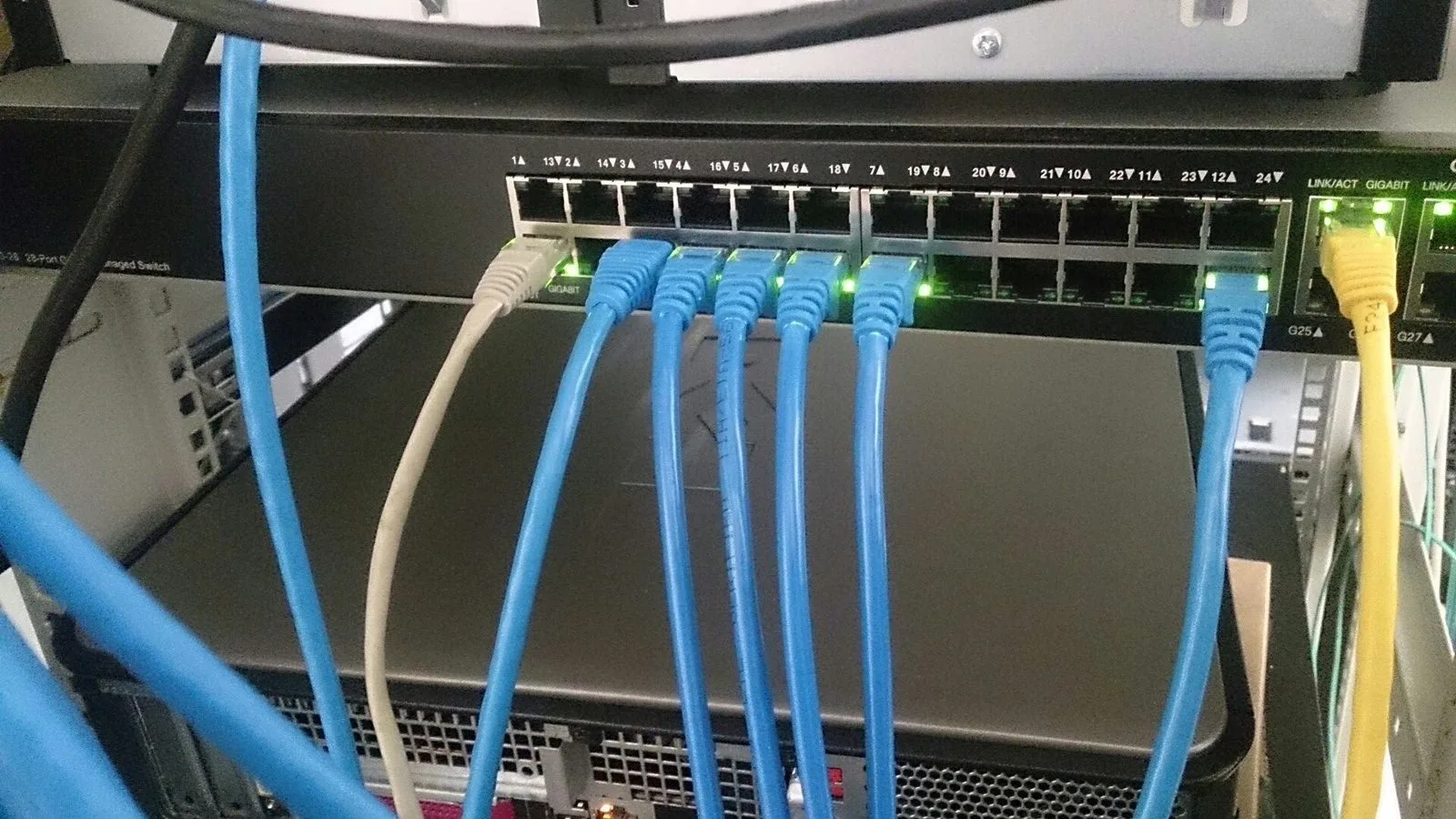
The modern STL increasingly runs over an IP link: the internet, a managed network, fibre, or a dedicated line. A codec encodes the audio at the sending end, another decodes it at the far end — exactly the logic we detail in our guide to broadcast contribution codecs, applied here to a permanent feed. The codec choice (Opus, AAC, aptX, or uncompressed linear when bandwidth allows) trades off bandwidth, latency and quality; for an on-air STL, you favour robustness and consistency over aggressive compression.
On IP, three parameters govern reliability: the jitter buffer, which smooths delay variation at the cost of a little latency; the quality of service on the network you use; and redundancy. Best practice is to double the path (two links of different natures, say fibre plus bonded 4G/5G), with automatic failover if one drops. Large infrastructures lean on the same networks as audio-over-IP (AES67, Dante, ST 2110), and so benefit from rigorous network timing.
Where to put the broadcast processor
The sensitive point of a digital STL is its interaction with on-air processing. Compressing the audio before the link and then processing it at the transmitter can undo the processor’s work; hence a tendency to place the broadcast processor at the studio and carry the composite to the exciter, or to use a low-compression STL. Some recent broadcast processors even build in composite generation and link management, to own the whole chain end to end.
Reliability, monitoring and latency
An STL is judged on its availability. Serious units include silence detection, automatic failover to a backup (a second link, even an emergency on-site playout), and remote monitoring (SNMP, alerts) to warn you before the listener hears the problem. Latency, finally, matters most when several broadcasts must stay aligned — FM, HD Radio, DAB, web radio — to avoid echoes between vectors; you then work to equalise the delay of each path.
How to choose
The right STL depends on the terrain. Distance and available line of sight, the ability to get a microwave licence, the quality and cost of IP links locally, your availability requirements, your operating budget: all sliders to set before deciding. In practice, many stations adopt a hybrid architecture — a main link (microwave or IP) backed up by a different kind of link — because real robustness never comes from a single path.
My take
The STL is a station’s life insurance: you mostly notice it when it’s gone. IP has made links flexible and affordable, but it has also shifted the risk onto the network — and a network can be looked after. The golden rule fits in one word: redundancy, with two paths that won’t fail for the same reason. Mind where the broadcast processor sits in the chain, too, because that’s where on-air work is lost or preserved. A well-designed STL is invisible; that’s exactly the point.