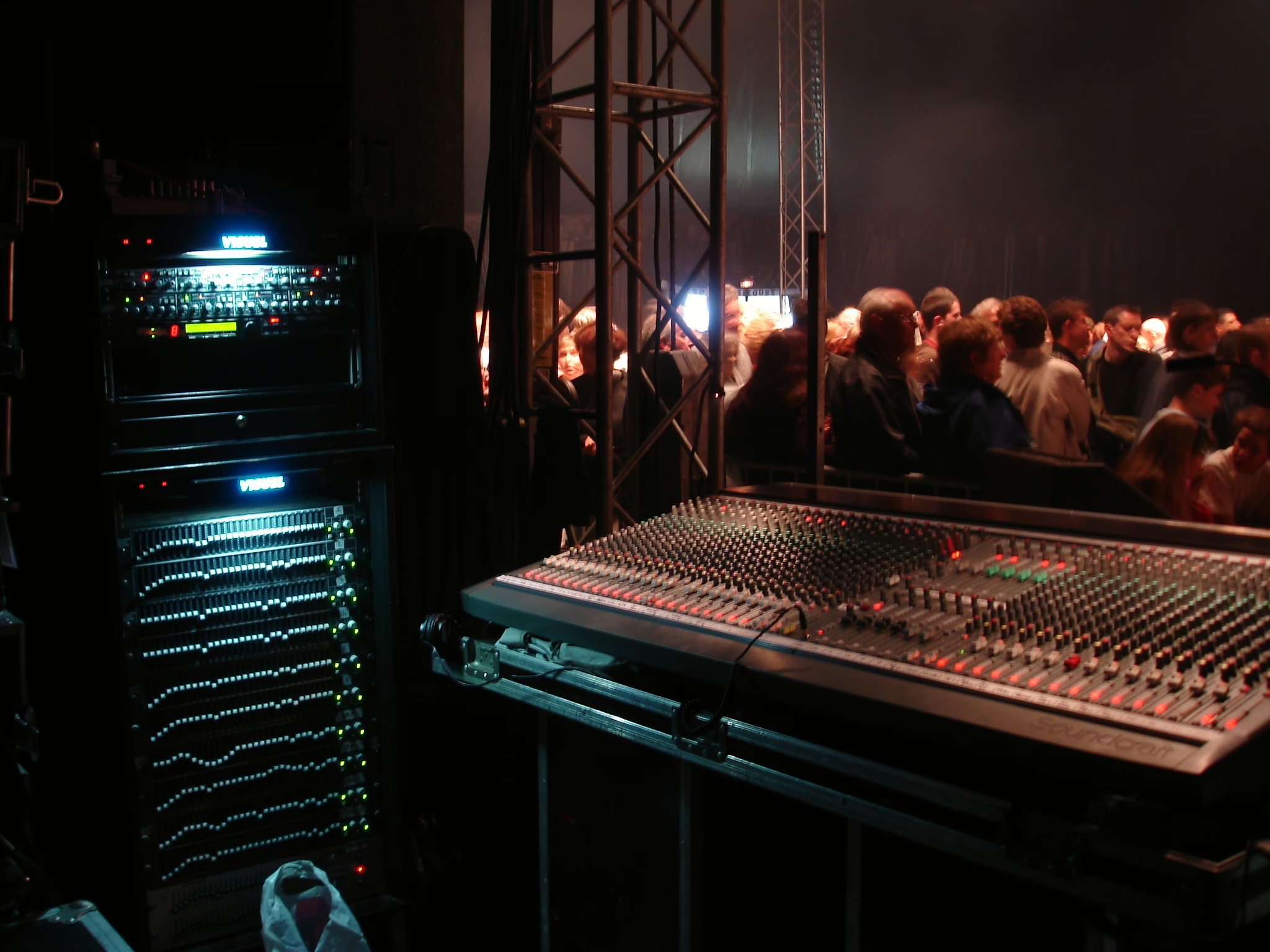
Behind a front-of-house console, the beginner adds; the pro takes away. That is the whole difference. A good live mix isn’t measured by the number of processors stacked but by the clarity of what leaves the speakers, in a room that changes with every song. This method works in a bar as much as at a festival, on a small digital desk as much as on a large console: only the scale and the comfort change.
Before you touch a fader: lay the foundations
A good mix starts far from the faders. It starts with input gain set cleanly on every channel, neither too low nor in the red, so you keep comfortable headroom without clipping the converters. That is the matter of gain before feedback and, more broadly, gain structure: if it is shaky, nothing downstream will rescue the mess. While you are at it, roll off the low end firmly on sources that don’t need it — vocals, guitars, cymbals — with the high-pass filter. You instantly free up room for the kick and the bass, the only two sources truly entitled to the low end.
Ideally this prep is won before the show. A scene file built in advance, channel templates, a checked patch list: all that work of preparing the console offline frees you for the only thing that matters on the night: listening.
The order of priority: where to start
A mix is built like a foundation, not filled in channel by channel like a form. The order that almost always works:
- The rhythm section first. Kick, then snare, then the rest of the kit, then bass. Lock the kick/bass couple: it is the band’s foundation, and if it is blurry, everything else will be too.
- The harmonic instruments next. Guitars, keys, pads. They fill the space left free without crushing the rhythm.
- The lead vocal last, but on top. It is what the audience came to hear. It must sit effortlessly above everything, without floating detached from the rest.
This sequence avoids the classic trap: raising each source in isolation until it “sounds good” alone, then finding that, added together, they clip and mask each other. You mix an ensemble, not a collection of solos.
Build the mix: subtract before you add
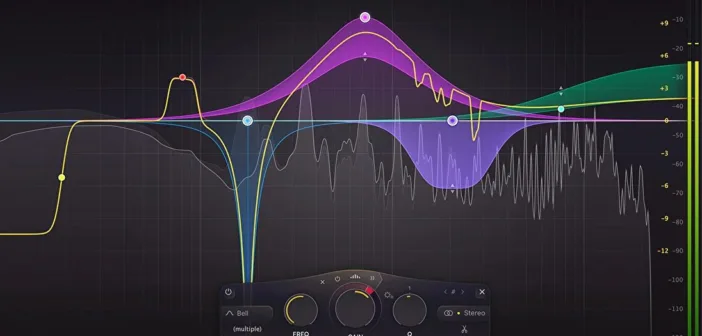
When two sources collide — a guitar and a vocal in the mids, say — the reflex to raise the one you can no longer hear is the wrong one. The right move is to gently dip the competitor in the conflict zone. EQ in live sound is there first to make room, not to beautify: a scalpel cut on a resonance, a dip to clear a crowded register. Keep a light hand, because a full room and an empty room don’t sound the same.
Panning is your best free ally: spreading guitars, keys and overheads across the stereo field instantly declutters the centre, where the vocal, kick, snare and bass live. But spare a thought for those on the sides of the room: an extreme pan will lose them half the band. At FOH, stay reasonable.
To stay in control of a busy stage, organise your surface into groups and VCAs: a drum VCA, a vocal VCA, an instrument VCA. You drive subsets with a single move, which changes everything when a chorus lands and you need to push the vocal and backing vocals in one second.
Dynamics and effects, in service of the song
Compression, live, serves a precise goal: to hold a source that runs all over the place. A lead vocal that swings from whisper to scream needs a compressor to stay intelligible without hammering the system when it pushes. The bass benefits from being tightened to anchor the mix. Everywhere else, beware: too much compression squashes the energy of the live show, which is exactly what people came for. Gates clean up drum mics and calm a noisy stage, but set too tight they chop natural resonances. When in doubt, use less.
Effects — reverb, delay — add depth and cohesion. A short reverb on the snare, a tempo-synced delay on the vocal: a few well-measured sends are enough. The mistake is drowning the band in a long reverb that turns a concert into soup. The effect should be noticed when you cut it, not when it is there.
The room is the real judge
A mix doesn’t exist in the console: it exists in the air of the room. A badly tuned system, misaligned subs, a PA that covers the back poorly: no channel setting will make up for a rig that doesn’t hold up. System tuning is the invisible prerequisite of any good FOH mix. And once the show is running, move: what you hear at the desk is not what the audience hears in the front row or at the bar. A few steps into the room beat ten minutes with your eyes glued to the screen.
Finally, keep in mind that overall level is a responsibility, not a performance. Finding the point where the band is present and exciting without being aggressive is the real craft. A loud mix impresses no one after three songs; a right mix holds the whole night.
Hold the show
The mix is never frozen. From one song to the next, the vocal steps forward, a solo rises, a quiet number drops back. On a digital desk, snapshots let you prepare those shifts — provided you master exactly what each recall changes, a topic we detail in our guide to running a digital live console. And never forget that FOH starts with the monitors: a musician who can’t hear themselves will play badly, and no mix will save a struggling stage. Looking after stage monitoring is part of the FOH job, even when another engineer handles it.
My take
The best advice fits in one word: listen. The technique boils down to simple moves — set the gain, filter, subtract, prioritise — and the rest is decided by ear, in the room, not on the screen. Digital consoles have made all of this more accessible, and that is a good thing: less time patching, more time mixing. What remains is the part you can’t automate, the part that makes the same band sound ordinary one night and devastating the next: knowing what you want to hear before you go looking for it. It takes a long time to acquire, and that is exactly what keeps the craft worth doing.