If Cherry Audio has a signature, it’s this one: rather than recreating the most famous synths in history for the umpteenth time, the American developer goes after the hidden gems, the unsung heroes and the downright oddball instruments. The Pentaphonic ticks every one of those boxes at once.
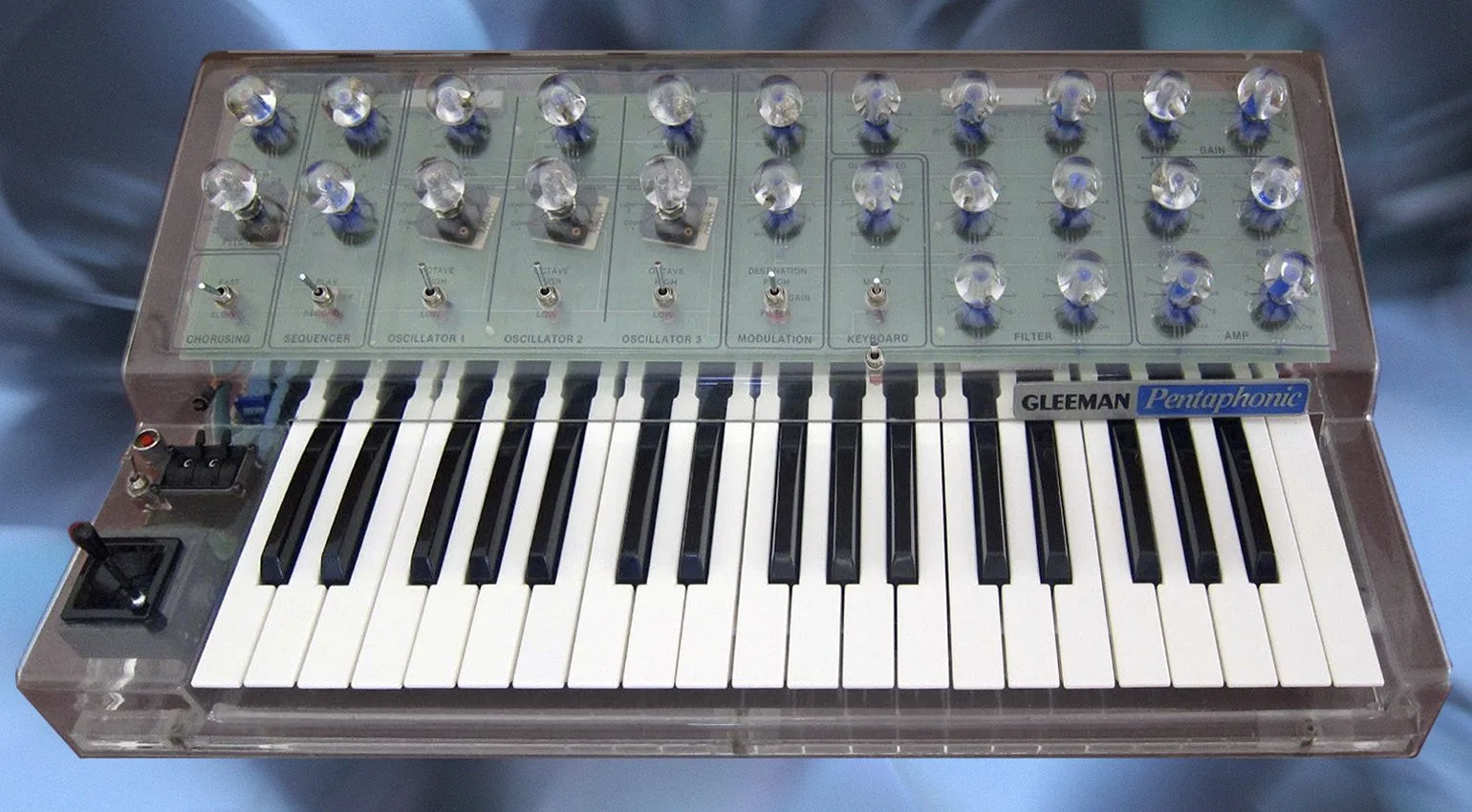
The Gleeman Pentaphonic, an early-80s oddity
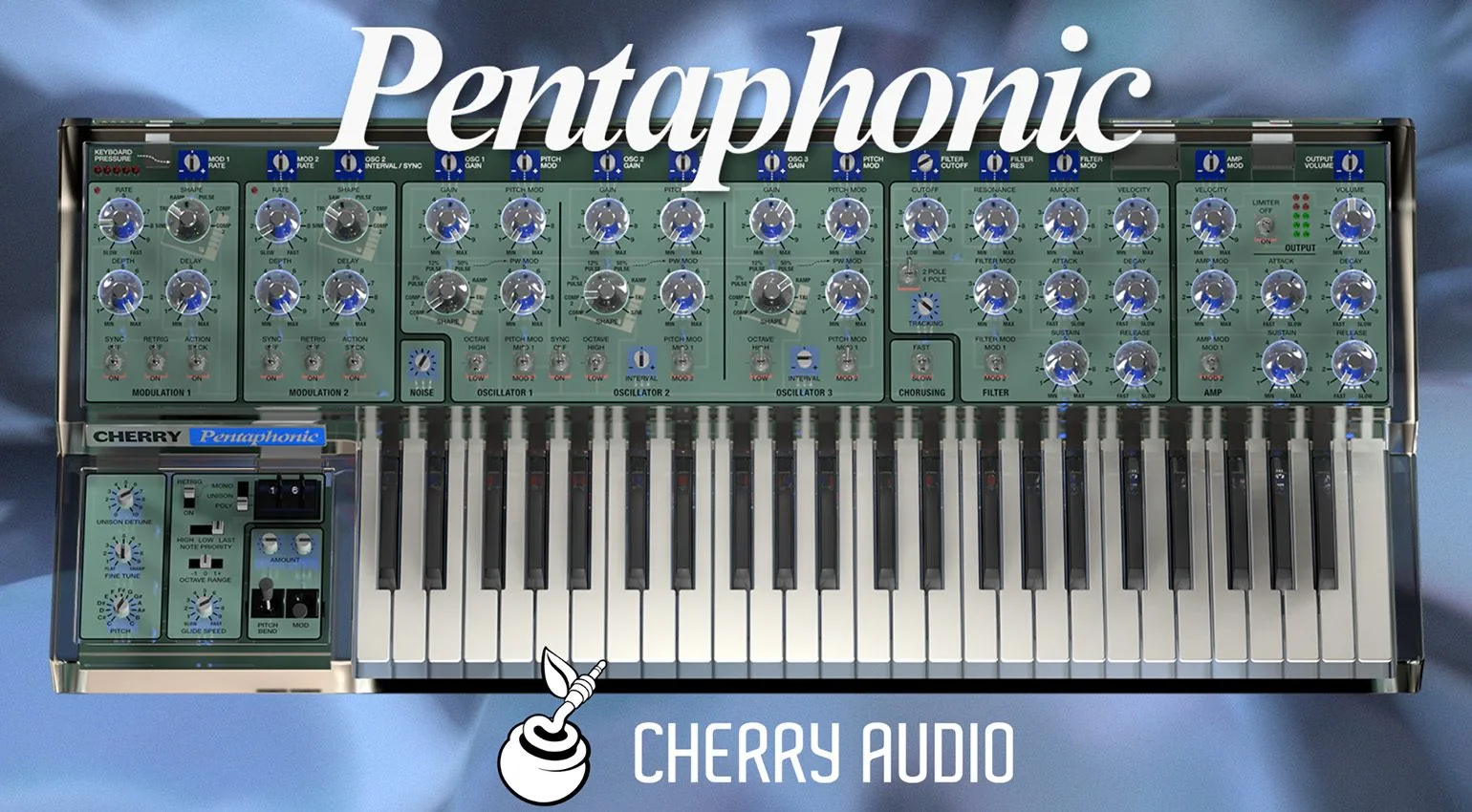
As the 70s gave way to the 80s, brothers Al and Bob Gleeman set themselves a goal many chased in vain at the time: a synth that stayed in tune. To get there, they handed a pair of Intel 80186 microprocessors the job of keeping fifteen DCOs in tune, dodging the inevitable drift of VCOs — especially under the glare of stage lighting. The instrument is a five-voice, with three oscillators per voice, each offering eight waveforms, all routed through Curtis 3320 4-pole filters (24 dB/octave) and dual Curtis 3360 VCAs. Add a 300-note polyphonic sequencer, a chorus and a pitch joystick, housed in a 37-key keyboard with a built-in speaker and a carrying handle — for a period price of just under $3,000.
But the Pentaphonic most people picture is the other one: the clear perspex version, internal lighting and translucent knobs included, built in fewer than twenty units. In total, production is estimated at between fifty and seventy units, most in the classic black case. A genuine collector’s rarity, in other words.
What Cherry Audio makes of it
With the Pentaphonic, you get all those variants on your desktop. Cherry Audio faithfully recreated the original — UI themes for the clear and solid cases included — then, as usual, greatly expanded the capabilities for modern use. Polyphony goes from five voices to a free setting between two and sixteen, with a unison mode with detune and a monophonic mode. The oscillators gain pulse-width modulation (PWM), sync and a noise generator, and a second LFO joins in, offering the same waveform shapes as the oscillators themselves.
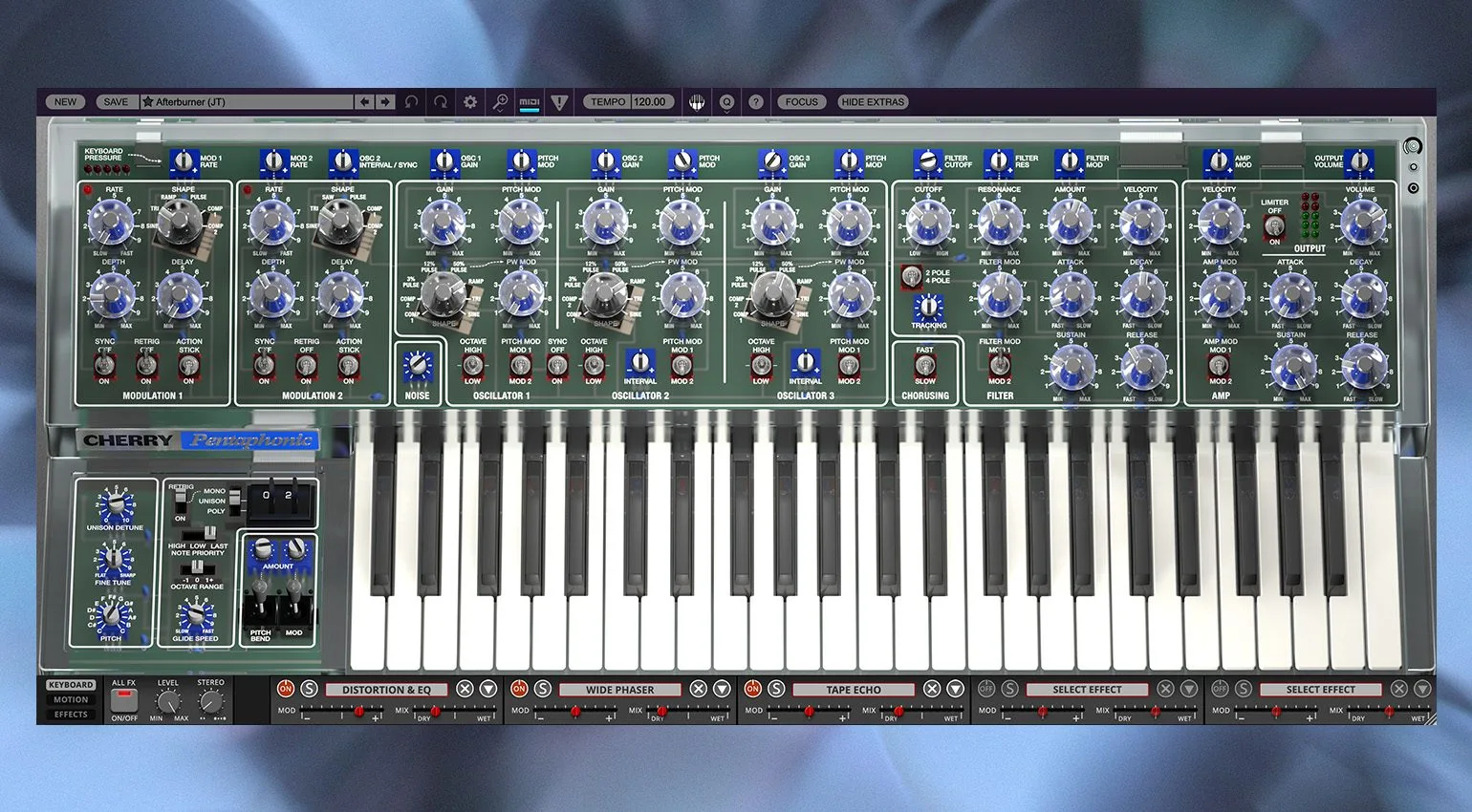
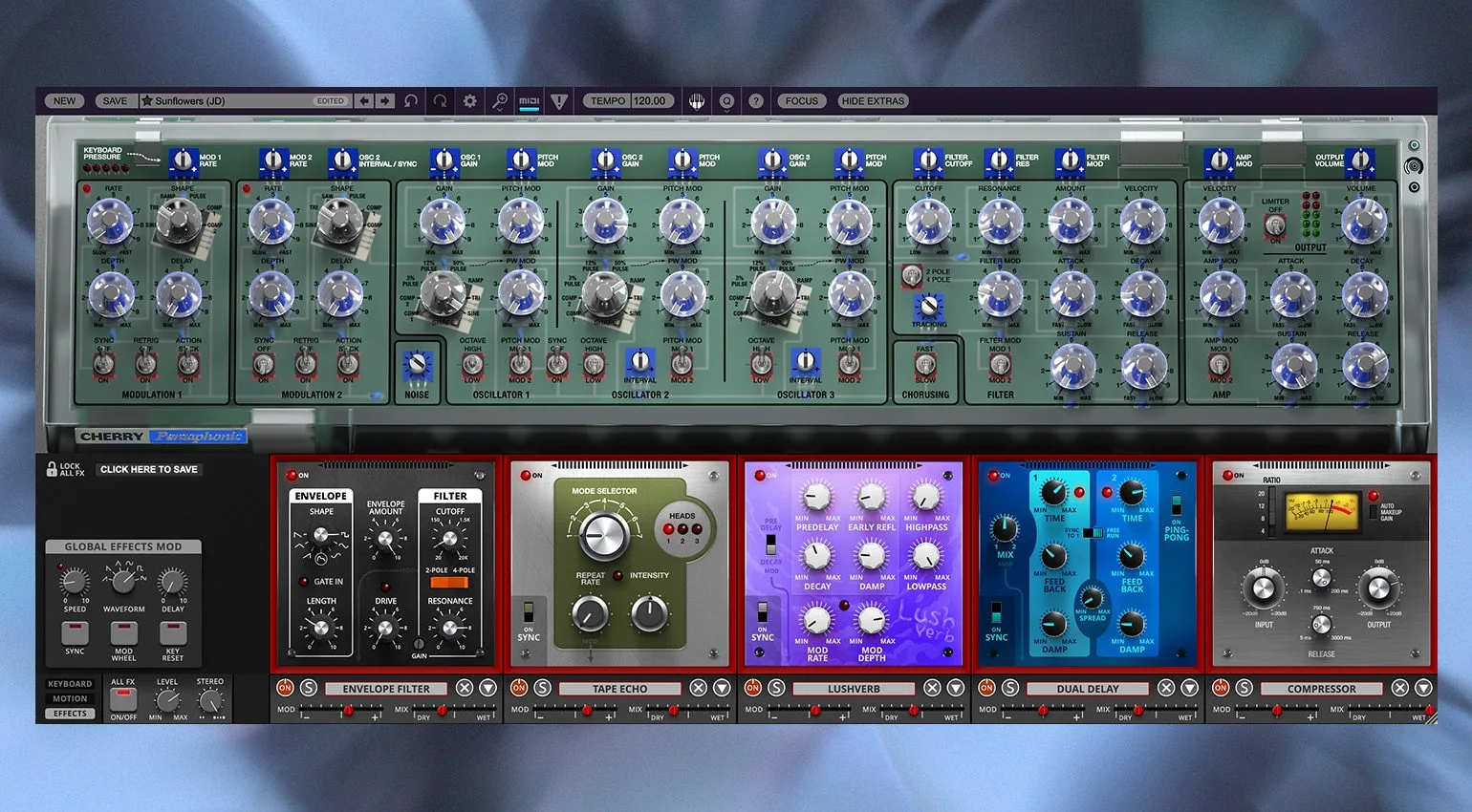
The filter adds a 2-pole mode (12 dB/octave) with keyboard tracking, and playability takes a leap: the Pentaphonic now supports velocity as well as mono and poly aftertouch, and carries a polyphonic sequencer paired with a parameter animator that can be routed to certain filter and oscillator parameters. And, as on all of the brand’s latest instruments, a full effects section closes out the chain.
Price and availability
The Cherry Audio Pentaphonic is available now for macOS and Windows, as a standalone and in VST2, VST3, AU and AAX formats, priced at $55 (£51 / €59). A 30-day demo is offered, along with an additional 100-preset pack by James Dyson called ‘Translucent’ for around ten dollars.
My take
Digging up an instrument that survives in a handful of units and making it playable for everyone is exactly what a good soft-synth developer should do — and Cherry Audio does it with a historian’s care. The choice of the Pentaphonic is shrewd: its three-oscillator-per-voice architecture and Curtis filters have real voice, and the decision to keep the spirit while lifting the era’s limits (polyphony, aftertouch, PWM, effects) is the right one. At this price, it’s above all an invitation to explore a colour you’d have had almost no chance of meeting in the flesh. The real question now is which forgotten treasure gets the treatment next.
Frequently asked questions
Do I need to know the original Gleeman to use it?
No. The Pentaphonic plays like any modern subtractive synth: three oscillators, a filter, modulation and effects. Knowing the original only adds the pleasure of the context.
How many voices of polyphony does the Cherry Audio version offer?
From two to sixteen voices, freely adjustable, where the original offered five. A unison mode with detune and a monophonic mode round out the playing options.
What’s new compared with the 1980 hardware?
Cherry Audio added PWM, oscillator sync, a noise generator, a second LFO, a 2-pole filter mode with keyboard tracking, velocity and aftertouch support, a parameter animator and a full effects section.
Which formats and systems does it run on?
On macOS and Windows, as a standalone app and in VST2, VST3, AU and AAX. A 30-day demo lets you try it before buying.
Related reading: XILS-lab MemoryTone, the 16-voice Memorymoog soft synth and Spitfire Audio Phoenix, the six-engine hybrid synth.