On a news set, the anchor keeps a discreet earpiece. It is not for listening to music: it brings them the program and, above all, the voice of the director slipping in “we go to package two” or “you have thirty seconds”. This line is called IFB, for interruptible foldback. It permanently links the gallery to the ear of the person on air, and its reliability holds the live show together.
The feed that links the gallery to the air
IFB does two jobs at once. In normal running it sends the presenter the program sound, or a chosen part of it: the return of a remote, the voice of a guest on a link, the start of a package. The moment the director or producer needs to step in, they take over and speak straight into the ear, cutting or ducking the program for the length of the instruction. The presenter hears it, nods, and the program returns.
The term comes from American television, where the function took hold as soon as live shows demanded second-by-second coordination. The physical form varies: a moulded earpiece for a studio anchor, a discreet kit for a field reporter, a mono headphone for a sports commentator. The principle stays the same, a one-way feed to the person on air that the gallery can interrupt.
Why the program must be a mix-minus
A trap lurks the moment the presenter hears themselves in the ear. If the returned program contains their own voice, the slightest latency in the chain brings it back delayed, and speaking becomes torture. The fix is mix-minus: you send the presenter the whole program except their own microphone. They hear their interlocutors, the remotes and the cues, never their own echo.
This rule becomes unavoidable as soon as a distant link is involved, because the latency of a satellite or a network amplifies the problem. We detailed how to build this clean feed in our article on mix-minus, which applies to guests and presenters alike. IFB is, at heart, a mix-minus with the added option of interruption from the gallery.
Interruptible, the director takes over
The key word in the acronym is interruptible. Technically, the IFB mixer receives two sources: the mix-minus program bus and the gallery talkback mic. At rest, only the program passes. When the director presses their talkback key, the system strongly ducks the program, sometimes cuts it, and lets the gallery voice through. On release, the program comes back up. This quick fade keeps the instruction from drowning in the on-air sound.
Professional systems often manage several independent IFB destinations, one per presenter or reporter, each with its own mix-minus and its own interrupt key. On large productions, these feeds are run from the intercom matrix, which routes programs and talkback to each earpiece. The boundary between IFB and intercom then blurs inside a single system, as shown by recent IP matrices such as the Pliant CrewCom Flex.
IFB, intercom and monitors, three lines not to confuse
Three audio networks share a production and look alike enough to be mixed up by mistake. Intercom is two-way: it links technicians to each other, in party-line or matrix, and we described it in our guide to intercom in broadcast production. IFB goes one way, from the gallery to the person on air, with interruption. Stage monitors, finally, serve musicians and carry no talkback function.
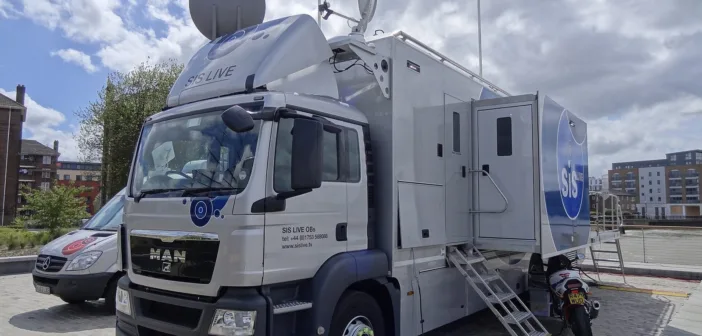
The distinction rests on who is served and on the direction of flow. A technician needs to converse: intercom. A presenter needs to hear the program and receive instructions without answering on air: IFB. In an outside broadcast truck, the three networks coexist and cross at the patch, an environment we visited in our article on the OB truck.
My take
IFB is one of those links you only notice the day it fails, and on that day a presenter with no talkback is left alone in the world, live. The care it deserves comes down to two points: a genuinely clean mix-minus, without a crumb of the presenter’s own mic, and a crisp interruption that is heard without making anyone jump. The rest is gallery discipline, a well-set talkback key beats the finest earpiece on the market.