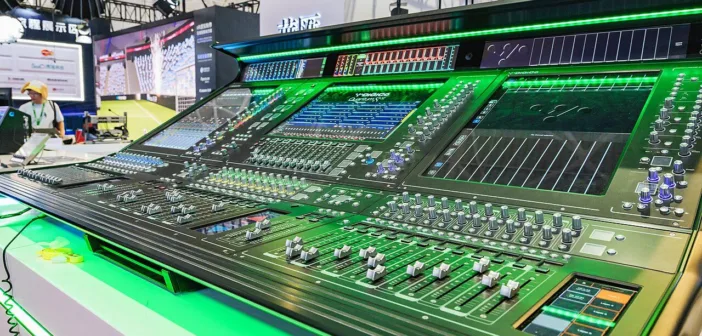
In a production, the sound the audience hears is only part of the job. The other part is everything that lets the crew talk to each other while the show is live: director, audio engineer, camera operators, control room, presenters. That communication network is the intercom. It is never seen, never heard on air, and yet it is often the first link that tips a live show into chaos when it fails. Here is how it is put together.
Why intercom is critical
A live control room, an OB truck, a TV floor or a radio studio bring together people who must coordinate to the second, often without seeing one another. Intercom gives them dedicated channels to talk continuously, monitor specific feeds and take cues from the director. Its quality is measured by reliability and latency: an intercom that crackles, lags or drops out jeopardises the entire production chain.
The analog party-line: the historic foundation
The oldest and most widespread system is the party-line: a shared bus on which everyone talks and listens, much like a shared telephone line. It comes in two main variants, 2-wire (two conductors carrying audio and power) and 4-wire (separate send and receive paths, cleaner and free of stray sidetone). The names Clear-Com and RTS were long synonymous with party-line. Simple, robust and inexpensive, it still makes sense for small crews, but it hits its limits fast: everyone hears everyone on the same channel.
The matrix: when everyone talks to whoever they want
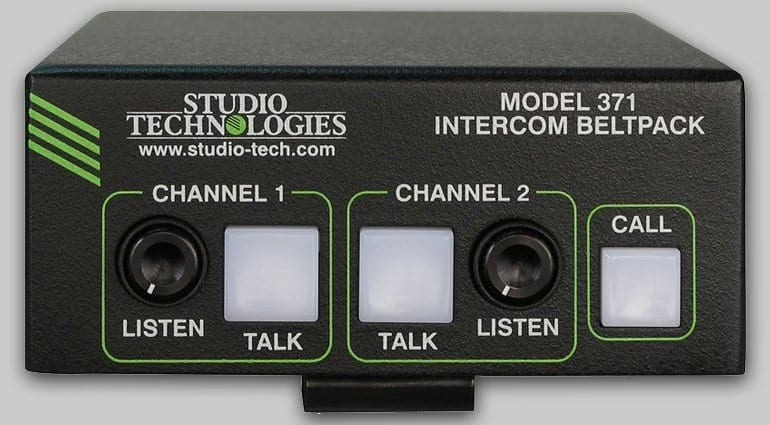
As soon as a production grows, you move to a matrix: a central router that connects each station to any other, point-to-point or in conference. Every user has a panel or beltpack with assignable keys: talk to the director, listen to program, join a group, isolate one contact. The matrix also handles program feeds and IFBs.
IFB — Interruptible Foldback — is the channel that sends a presenter their program feed while letting you interrupt it to talk in their ear. It is a special case of the mix-minus principle, whose logic we detailed in our guide on mix-minus: you send each person the whole program except their own voice, to avoid echo and feedback.
IP intercom and wireless
The big shift of recent years is the move to IP intercom. Modern systems carry their channels over the same networks as production audio, relying on the AES67 standard and on Dante or ST 2110 infrastructure. That lets you extend a system across multiple sites, link remote studios and share cabling. We described these networks in our guide on audio over IP, and recent radio consoles now integrate this logic natively.
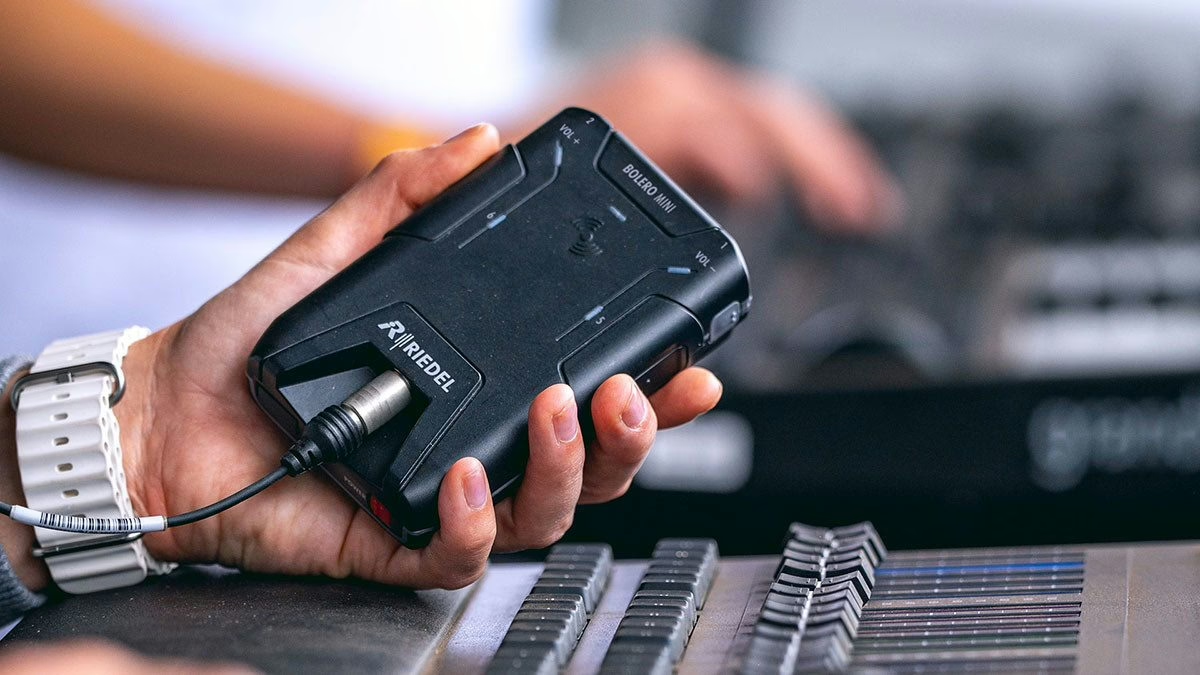
In parallel, wireless has become standard on floors and stages. Wireless beltpacks — the DECT and proprietary families — offer roaming between antennas, full-duplex operation and fine-grained group management. They integrate into the matrix like any wired station, sparing the camera operator or stage manager from dragging a cable.
Party-line or matrix: how to choose
The choice between party-line and matrix is not a matter of budget but of organisation. A party-line works when the crew is small and everyone needs to hear everyone: a small shoot, a radio studio with two or three stations, a team working in a closed loop. As soon as roles specialise — a director who must talk to camera, then to audio, then to the presenter, without each hearing the others — the matrix becomes necessary. It lets you build groups, isolate conversations and dedicate channels to each role.
In practice, big productions combine the two: a matrix for the overall structure, with party-lines attached for sub-teams. A TV floor or an OB truck almost always runs on this hybrid model, where the intercom operator becomes a job in its own right, alongside the audio engineer or the mixer. Sizing — the number of ports, channels and beltpacks — is planned upstream, at the same time as the patch and cabling plan.
Planning your comms properly
A few field principles make the difference. Name your channels clearly and post the comms plan: live, nobody has time to guess which key to talk on. Watch latency, especially on IP and wireless systems: beyond a few tens of milliseconds, conversation becomes painful. Mind sidetone (hearing your own voice in the headset) and feedback loops when an open mic picks up an intercom speaker. Finally, fold intercom into the wider chain: monitoring, on-air processing and loudness are designed together.
Our take
Having run control rooms and led technical operations in live events, I can say it plainly: intercom is what breaks first and what gets budgeted last. That is a classic mistake. A clear comms plan, well-named channels and reliable gear are worth, on a live day, all the gadgets in the world. The move to IP is a genuine step forward — sharing, reach, flexibility — but it shifts the problem onto the network: an IP intercom is only as robust as the infrastructure carrying it. Look after the network as much as the stations, and always keep an analog fallback within reach. It is the kind of detail that is never noticed on air, precisely because it was done well.