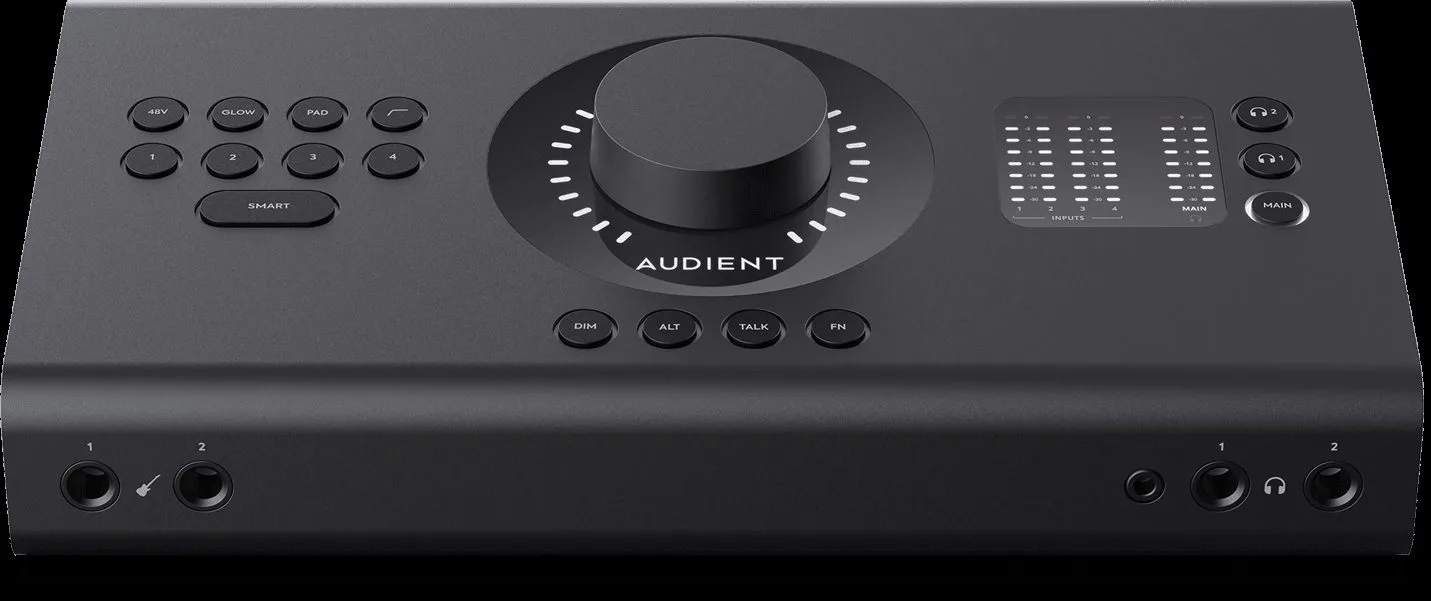
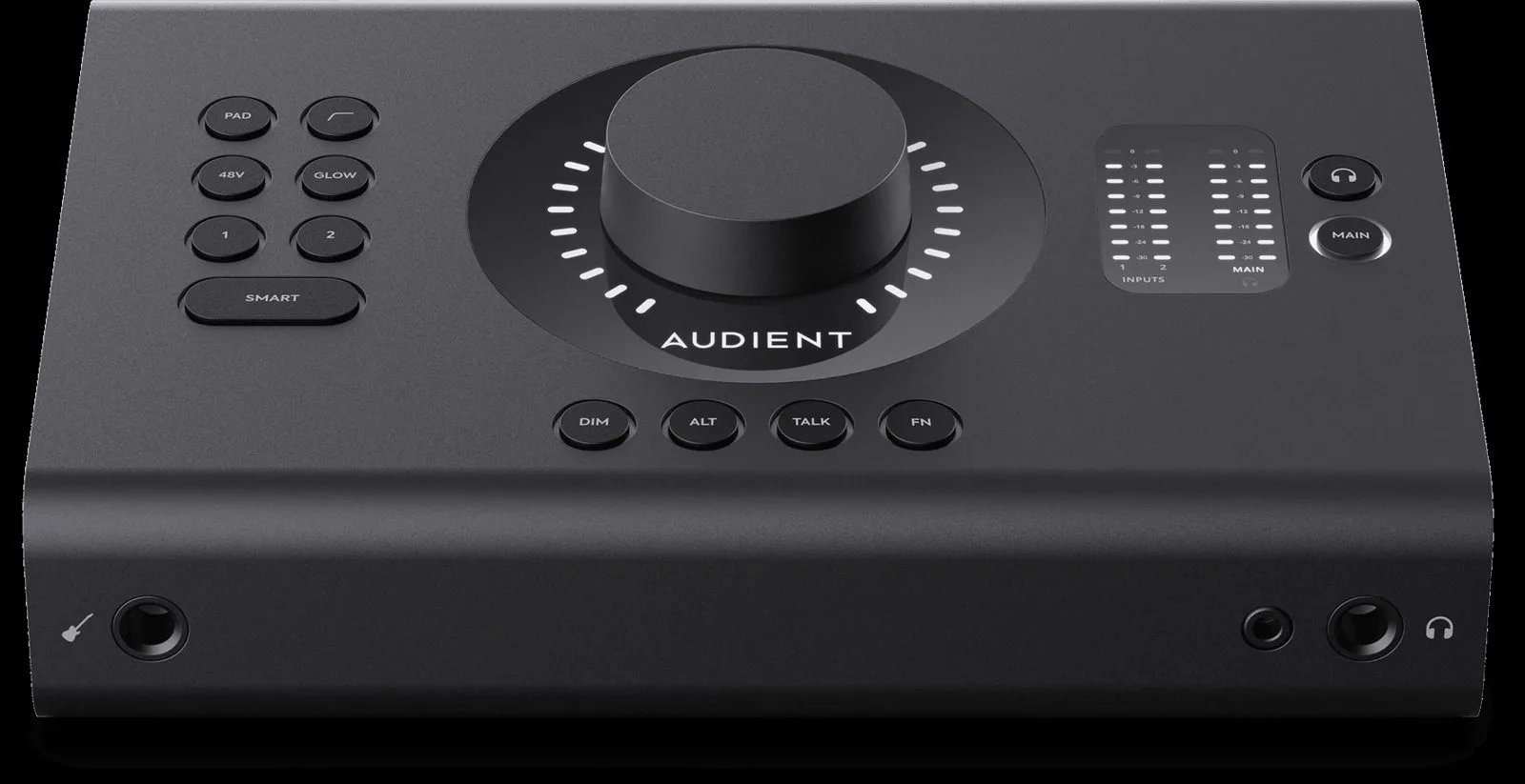
Audient’s iD range had gone a long time without a real overhaul, coasting since the move to USB-C. The British maker has now caught up in one move, launching a full third generation called iD MK3 — and it frames the range not as a spec bump but as a new hardware platform. Four desktop interfaces make up the line, the iD1, iD2, iD2+ and iD4+, replacing the iD4, iD14, iD24 and iD44 respectively.
A platform with onboard DSP
The real change lives inside the box. Every iD MK3 now carries a dedicated signal processor, which moves onto the interface the kind of work that used to run on your computer. Audient sells the idea as “Analogue Intelligence”: the DSP drives monitor correction and a set of effects while keeping the Class-A mic preamps inherited from its consoles. A Smart Gain feature, which sets input level automatically by analysing the source, rounds things out and clearly targets creators who want to plug a mic in without reaching for a screwdriver.
RoomTune: room correction on every output
The headline is RoomTune. It is a monitor-correction system that measures your room’s response, then applies a compensation computed on the interface’s DSP. The clever part is its reach: correction works at system level, on everything coming out of your speakers — your DAW, yes, but also a browser or a reference player — not just the DAW feed. The measurement needs the RM1 reference mic, bundled with the iD2+ and iD4+ and sold separately at around 45 dollars for the iD1 and iD2. This is a trick you used to find mainly on monitor brands; seeing it land in a desktop interface at this price is a genuine shift for small, acoustically rough setups.
Analogue processing and routing
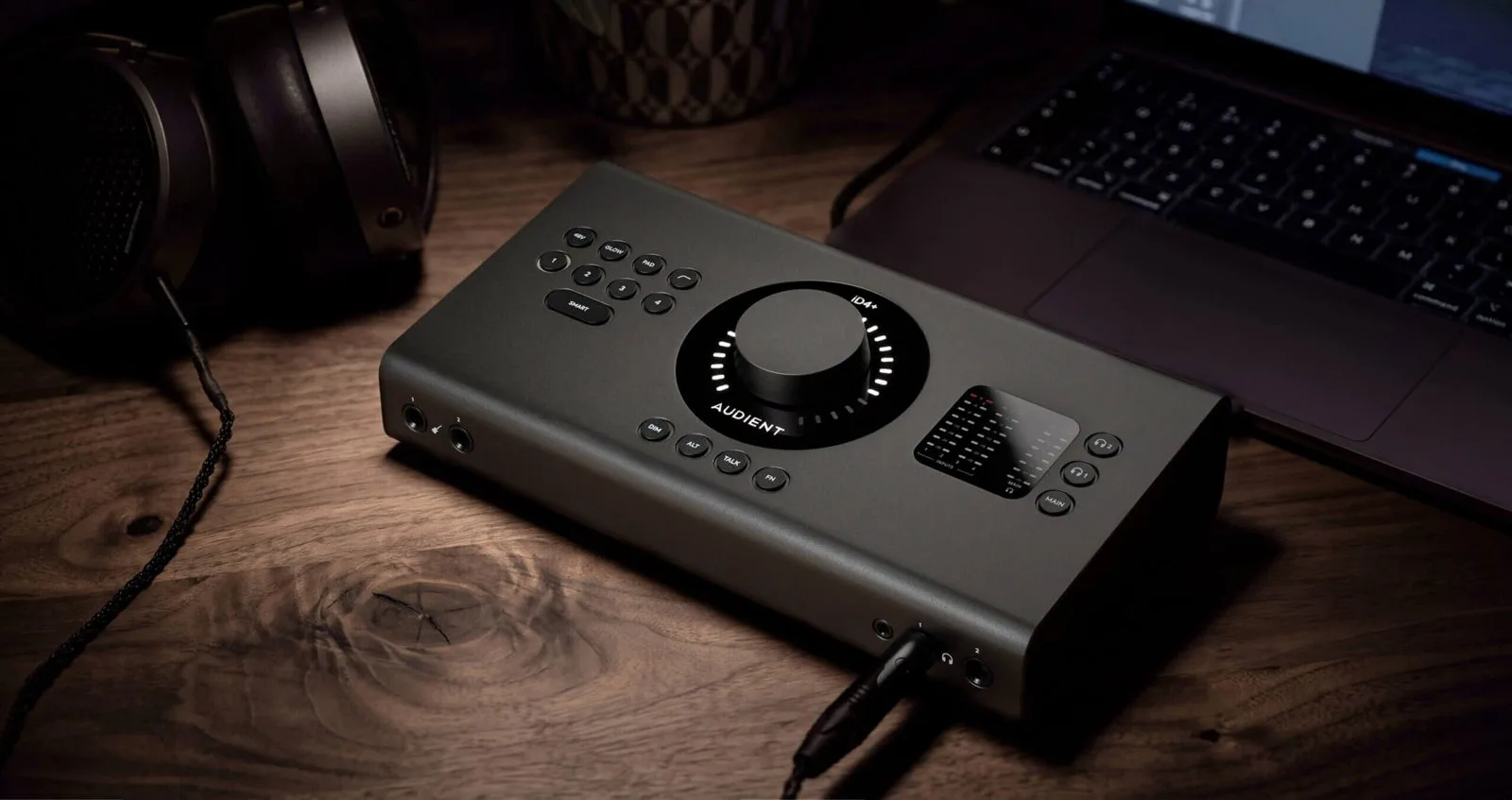
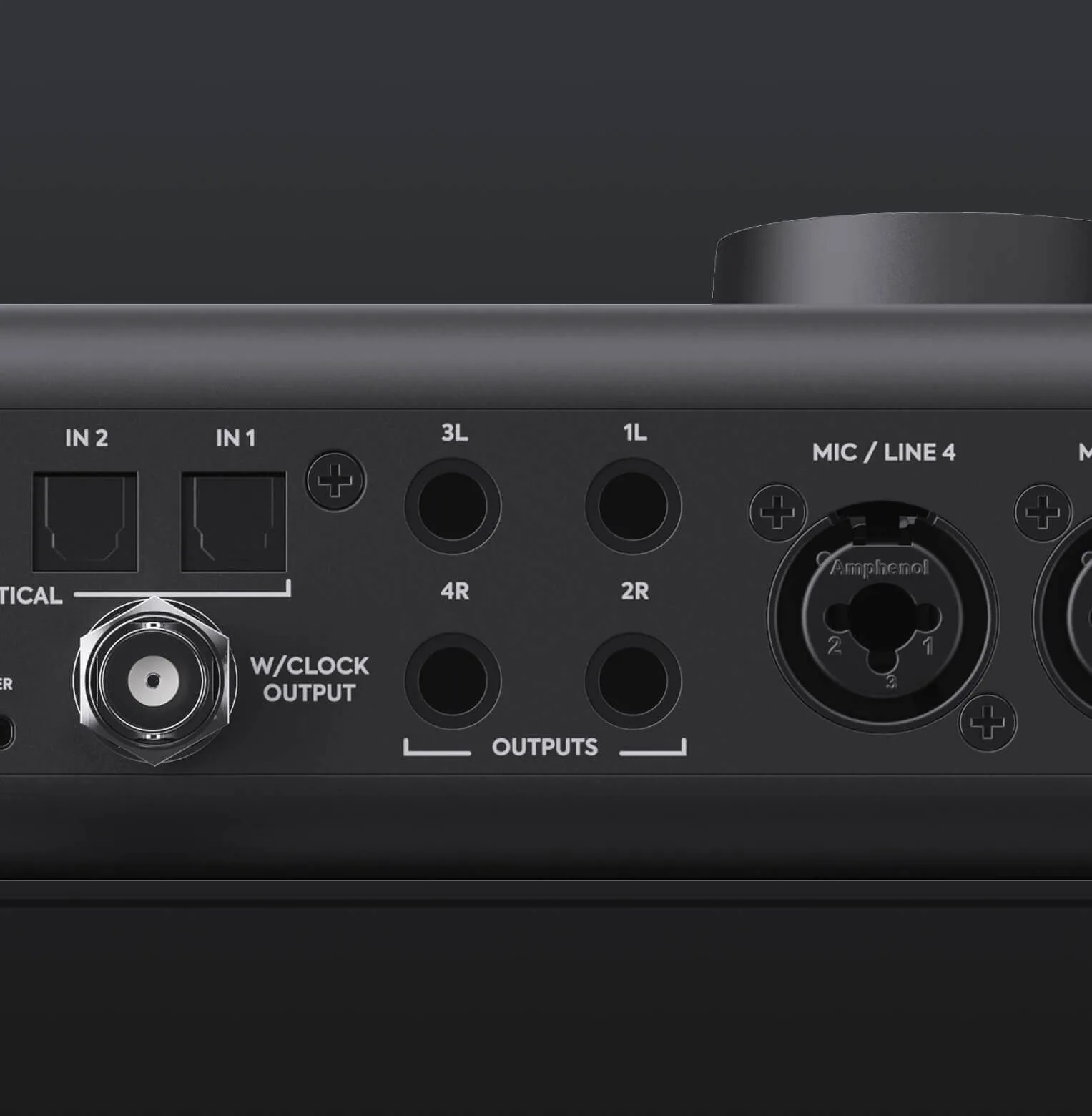
Beyond correction, the DSP doubles as a toolbox. Audient groups colour, dynamics and space processors under the names HMX, LIFT, GLOW and ORBIT, all reached from the iD Control software that runs the whole thing. On routing, the iD4+ carries over and updates the logic the brand is known for: insert an outboard unit over send/return, print that processing to the track, or bypass the preamps entirely to feed the converters from a console. Nothing revolutionary on paper, but the flexibility that built the previous iD units’ reputation is here and expanded. If you want a higher-end reference converter, the RME ADI-2/4 Pro EX plays in another price bracket, but the iD4+ is aimed squarely at the creator who wants the essentials without the outlay.
Range and pricing
The series spans four tiers, from a two-in travel unit to a reference interface for a serious home studio:
| Model | Replaces | RM1 mic | Price (approx.) |
|---|---|---|---|
| iD1 | iD4 | optional | $199 |
| iD2 | iD14 | optional | $299 |
| iD2+ | iD24 | included | $499 |
| iD4+ | iD44 | included | $699 |
The iD2, iD2+ and iD4+ ship now through the brand’s dealers. The entry-level iD1 is due in the first quarter of 2027. Every interface connects over USB-C, is bus-powered and runs on Windows and macOS. If you are building a compact monitoring setup alongside it, a correction-equipped monitor like the IK Multimedia iLoud Micro Monitor 2 is a natural fit for this kind of desk.
My take
The iD MK3 does the right thing: it moves the intelligence into the box instead of leaving it in a plug-in you forget to open. Onboard room correction is the feature that matters, because it tackles the most neglected link in a home studio — the room itself. The open question is how clean and transparent the RoomTune filter really is, since over-aggressive correction can do more harm than good. But the positioning is spot on, Audient’s Class-A preamps have never let anyone down, and a full iD4+ under 700 dollars with the measurement mic in the box is a proposition worth auditioning before you buy anything else in this bracket.
Frequently asked questions
Do you need the RM1 mic to use RoomTune?
Yes. RoomTune relies on a measurement taken with the RM1 reference mic. It ships with the iD2+ and iD4+ as standard. For the iD1 and iD2 it is an optional extra at around 45 dollars, which you should budget for if room correction is the draw.
Does correction apply only to my DAW’s output?
No, and that is the point. RoomTune works at system level, across all monitoring outputs. A browser, a media player or a reference track gets the same compensation as your session.
Which models are available right away?
The iD2, iD2+ and iD4+ are on sale from launch. The more affordable iD1 is announced for the first quarter of 2027.
Are the preamps the same as on the older iD units?
Audient keeps its Class-A, console-derived mic preamp architecture, but the conversion stage and the onboard DSP are new. That hardware foundation is what justifies calling it a new platform rather than a revision.
How does it connect to a computer?
The whole range uses a USB-C port with bus power, and stays compatible with Windows and macOS with no external supply.