Spitfire Audio and BT are no strangers : the American producer and electronic pioneer already delivered Phobos and Polaris for the London developer. With Phoenix, the pair go back to work and aim wider : a hybrid synthesizer that blends sampling and synthesis for cinematic sound design and modern scoring, where a detuned pad or a granular texture does as much work as a melody.
Six engines, two chains per voice
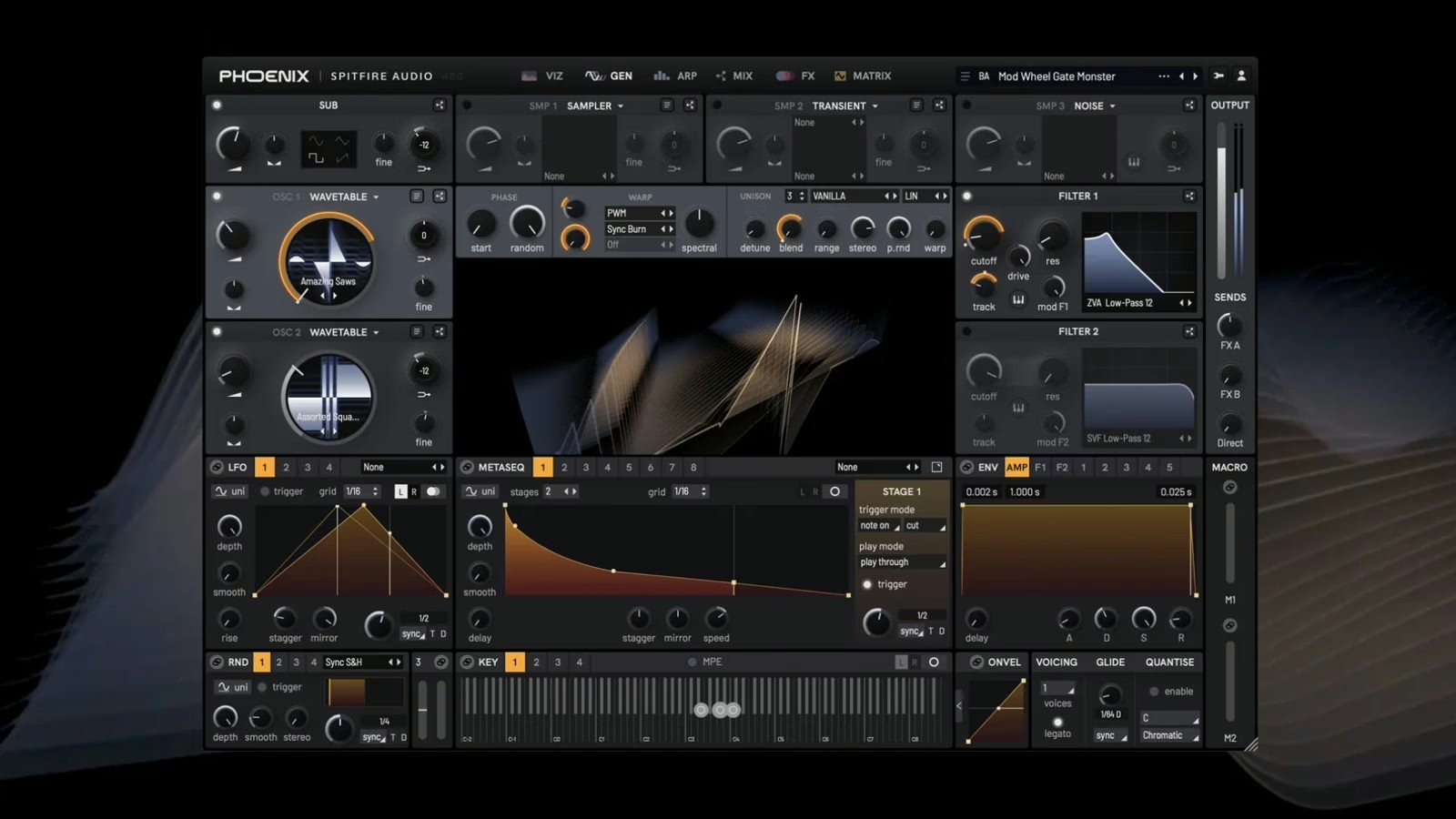
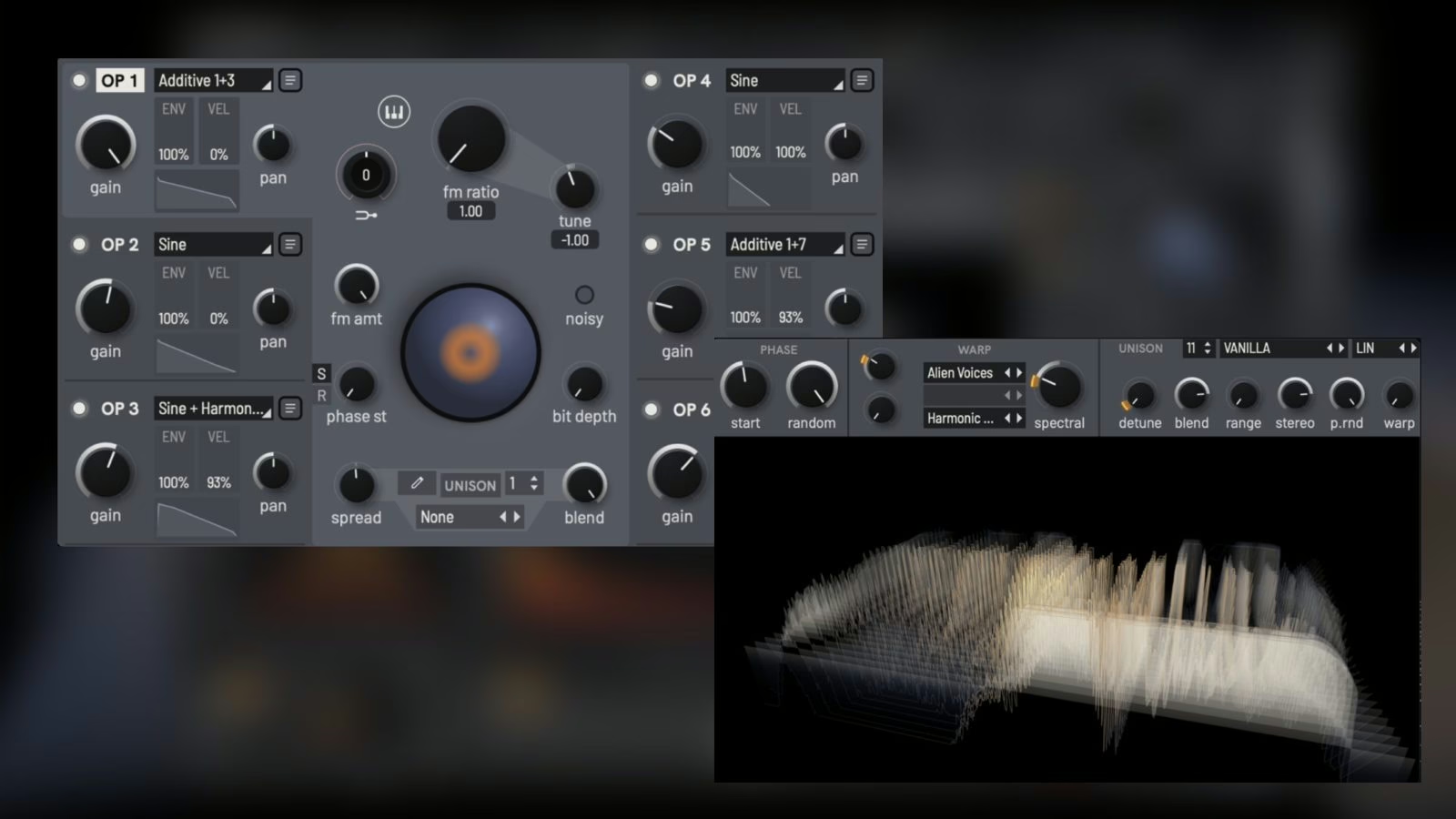
At the core of Phoenix is a fully stereo, multi-engine architecture : 16 voices of polyphony, each with two independent synthesis chains, one per channel, to shape sound in stereo from the source. Inside, six engines coexist :
- Spectral wavetables — 80+ warp modes and modal resynthesis ;
- 6-operator FM — 34 algorithms, up to 48 operators and 8-voice unison ;
- Sampler — to replay the library and your own material ;
- 2-operator FM dedicated to transients ;
- Sub — the low end that holds the bottom ;
- Complex noise — a complex noise generator.
Every engine accepts cross-modulation options, enough to make wavetables, FM and noise talk to each other without leaving the instrument. That’s where Phoenix breaks from a "classic" synth : you don’t pick a synthesis mode, you combine them.
"New Primitives": BT’s signature
BT sums up his approach with a phrase : New Primitives, a way of thinking about synthesis built on operations and architectures that go beyond conventional approaches and presets. In practice, he mined his personal archive to build the sampler library : multisamples of vintage synths, period samplers, cassette and vinyl. Spitfire adds its in-house orchestral recordings — strings, brass, woodwinds, choirs, guitars, pianos, tuned percussion — for a total of 40GB of sound and 552 presets.
That hybrid DNA fits the history of electronic sound : ever since the shift from analog to computer-based music, the most interesting instruments have been the ones that refuse to choose between the sample and the synthesizer. If stacking engines sounds abstract, our explainers on FM synthesis, wavetable synthesis and sampling help place what Phoenix brings under one hood.
Sprawling modulation
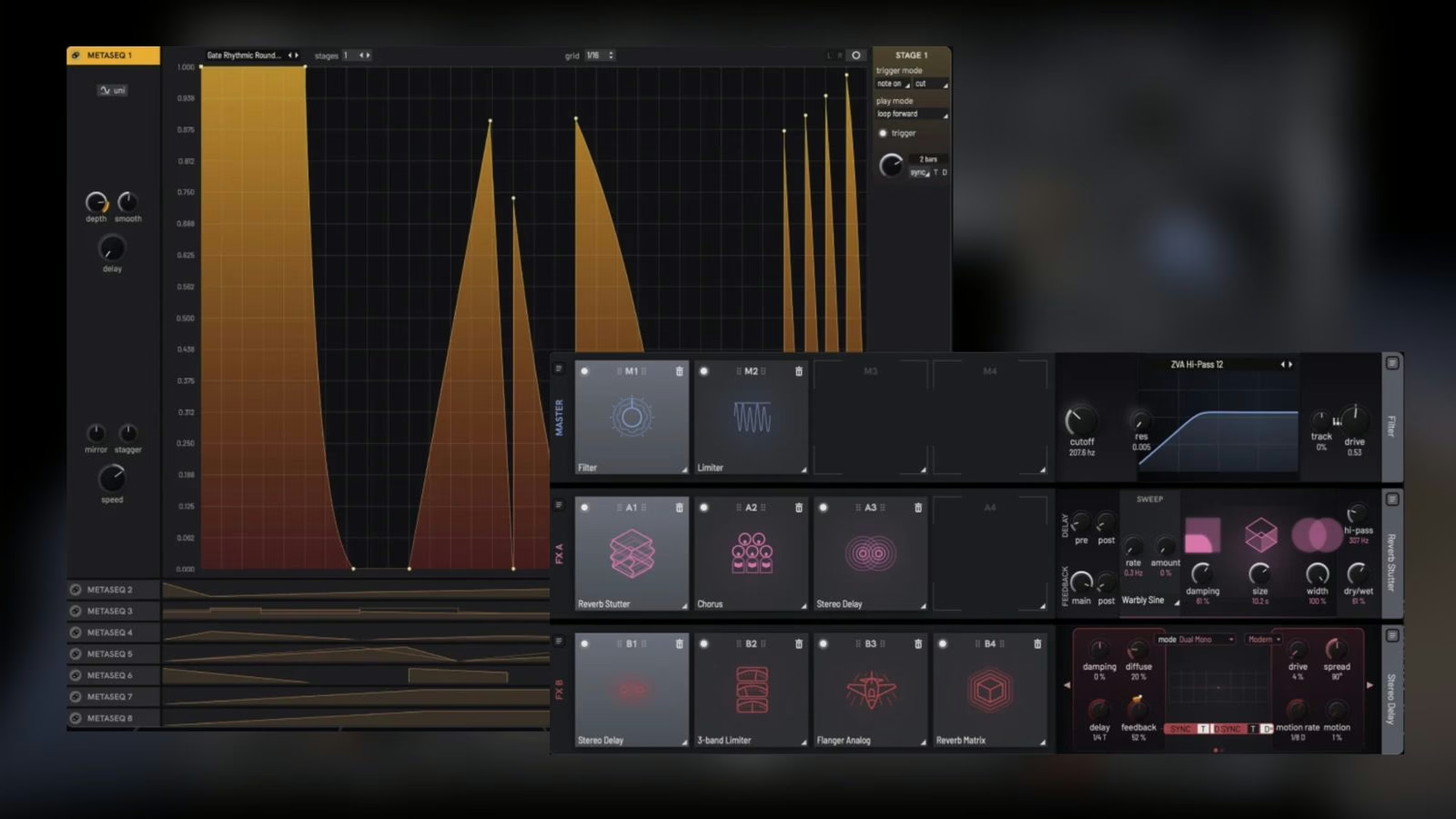
Where Phoenix could really pull ahead is modulation. There are eight multi-segment Metasequencers, four random generators paired with 636 handmade rhythm patterns, a probability arpeggiator derived from BT’s StutterEdit, and a modulation matrix with no slot limit. Add 37 high-end multi-FX — spectral smearing, granular reverbs, vinyl emulation, shimmer — and full MPE support, and you get an instrument built for motion rather than the static pad.
On integration, Phoenix runs as VST3, AU and AAX, on macOS (native Apple Silicon and Intel) and Windows. Nothing exotic : it drops into any session without breaking the flow. For anyone who loves sample-plus-synthesis hybrids, it joins a lively family alongside the Arturia MiniFreak 5.0, which now takes your own samples and wavetables.
Price and availability
Phoenix is available from September 29, 2026, at an intro price of £199 / €239 (regular £249 / €299). Spitfire plans demos at ADE, October 21–25. At that price, and with BT’s stamp on it, the instrument positions itself as a serious entry into hybrid sound design rather than a niche toy.
My take
Six synthesis engines and a modulation matrix with no limit is the kind of spec sheet that can tip into overkill : it all comes down to the ergonomics and the quality of the presets to make that power playable right away. The good news is that Spitfire knows how to dress its instruments, and BT’s material — old synths, cassette, vinyl — stands a strong chance of having character from the first notes. The intro price makes the bet low-risk. For a composer chasing textures that move rather than another analog emulation, Phoenix clearly earns a listen.