Almost all electronic music and a big share of today’s production rest on one simple move: take a recorded sound and replay it differently. That’s sampling. Behind the obvious principle sits a precise mechanism — mapping, envelopes, loops, slicing, time-stretch — that’s worth understanding so you stop fighting your sampler and start actually using it.
What a sample really is
A sample is simply an audio recording: a piano note, a snare hit, a drum loop, a vocal phrase. The sampler is the instrument that plays that file back and lets you trigger it, transform it and play it across a keyboard or a grid of pads. That’s the fundamental difference from a synthesiser: a synth generates sound from oscillators, a sampler replays a sound that already exists. The two worlds do meet — many modern virtual instruments are just samplers in disguise, with multi-gigabyte libraries.
Mapping: spreading a sound across the keyboard
When you load a sample and play it higher or lower on the keyboard, the sampler simply reads it faster or slower — which raises or lowers its pitch, but also shortens or lengthens it. Transpose too far and the result turns unnatural: the classic “Chipmunk” effect going up, or a cavernous mush going down.
To avoid that, we use multisampling: you record the same instrument at several pitches and spread those samples across key zones. Each note then plays the nearest sample, transposed by only a few semitones. You often add velocity layers too: hit softly and you trigger the quietly-played take, hit hard and you get the loud one. It’s that patient work that separates a believable piano library from a toy.
Envelopes, loops and polyphony
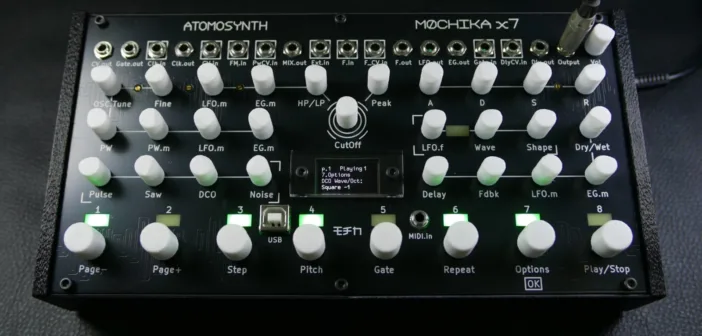
Once the sound is mapped, the sampler shapes it much like a synth would. An amplitude envelope (attack, decay, sustain, release) decides how each note starts and stops: an instant attack for a sharp hit, a long release to let it ring. You can route that modulation logic exactly as on a synth, which is also what MIDI and CV/Gate let you do once you leave the computer.
For sustained sounds the loop is essential: rather than record thirty seconds of pad, you loop a steady portion of the sample for as long as the key is held. The whole art is placing the loop points on zero crossings and over a stretch with even timbre, or you’ll hear a click or a pulse on every pass.
Chopping a break: the slice, the raw material of groove
The other big way to sample isn’t about playing notes but about slicing a loop. You take a drum break, the sampler detects the transients — the attack of each hit — and drops a slice point on each. Every slice is then assigned to a pad. From there anything goes: replay the break out of order, change its tempo without touching its pitch, swap a hit, add silences. That’s the founding mechanism of hip-hop, jungle and house, and it’s also what makes a step sequencer so powerful once paired with a sampler: the slices become steps.
Two slicing strategies coexist. Slicing to transients follows the music and respects the original playing. Slicing to the grid (say one slice per sixteenth) imposes an even lattice, more mechanical but perfect for clean re-sequencing.
Time-stretch and pitch-shift: separating tempo from pitch
Historically, changing a sample’s tempo also changed its pitch — the two were tied together by playback speed. Time-stretch algorithms broke that link: they let you speed up or slow down a sound without transposing it, and conversely transpose it without changing its length (pitch-shift). That’s what lets you lock any loop to a track’s tempo.
But nothing is free. Pushed hard, these algorithms leave artefacts: a metallic edge, a “smeary” reverb, a loss of punch on transients. Every sampler offers several modes (one for rhythmic material, one for textures, another for voices), and picking the right mode matters more than the stretch amount itself. The grain of those algorithms has, in fact, become an aesthetic in its own right, much like that of wavetable synthesis or granular processing.
My take
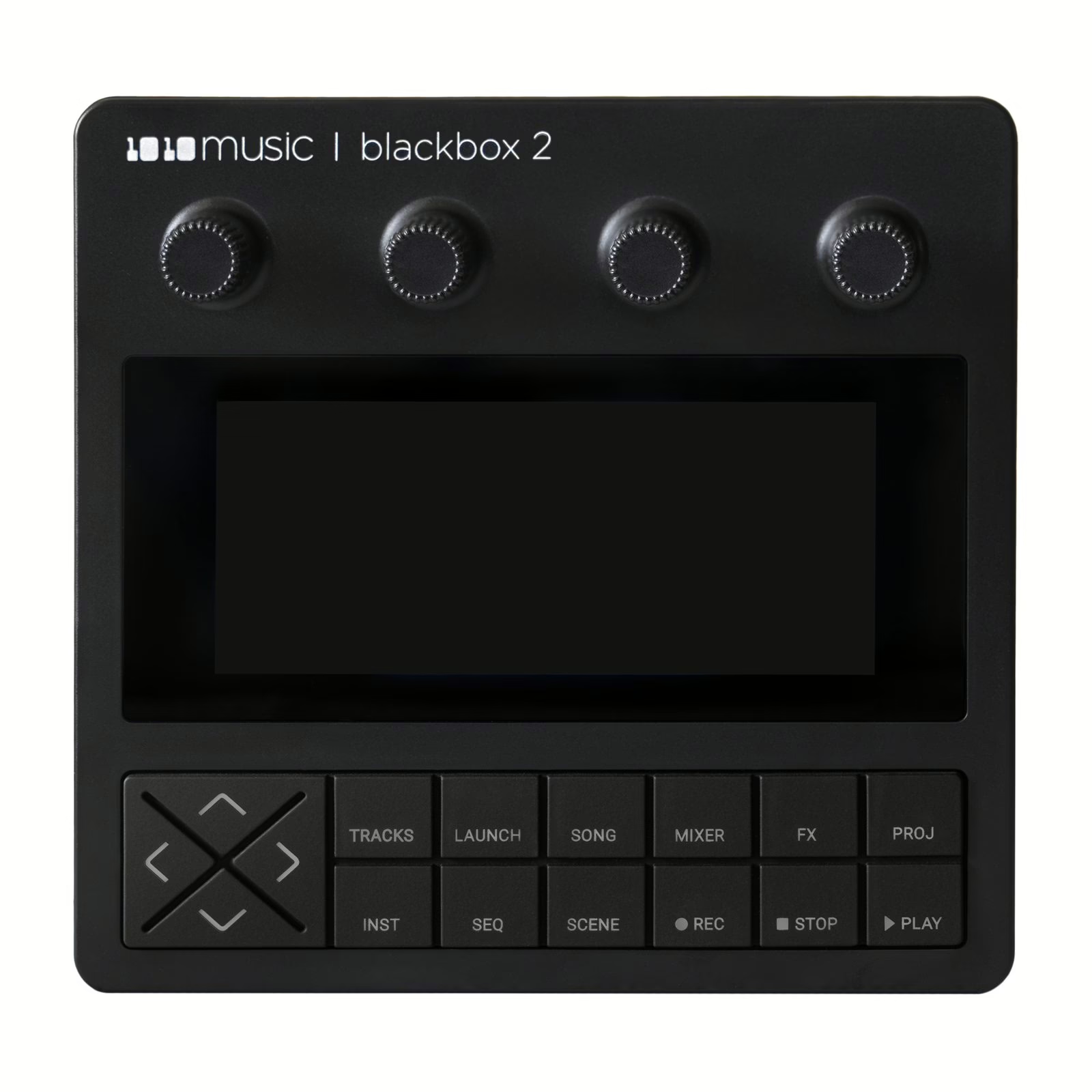
I’ve watched sampling evolve from the days when a few seconds of memory cost a fortune and you looped by hand, by ear, hunting for the right zero crossing, to today’s pocket samplers that do in a second what used to take an afternoon. The real craft has moved: it’s no longer in the technical constraint, but in the choice of material and in placement. A chop that grooves isn’t about the time-stretch algorithm — it’s the micro-shift you leave or fix, the silence you dare to keep between two slices. The machine can now do everything cleanly; it’s up to you to decide what should stay dirty.