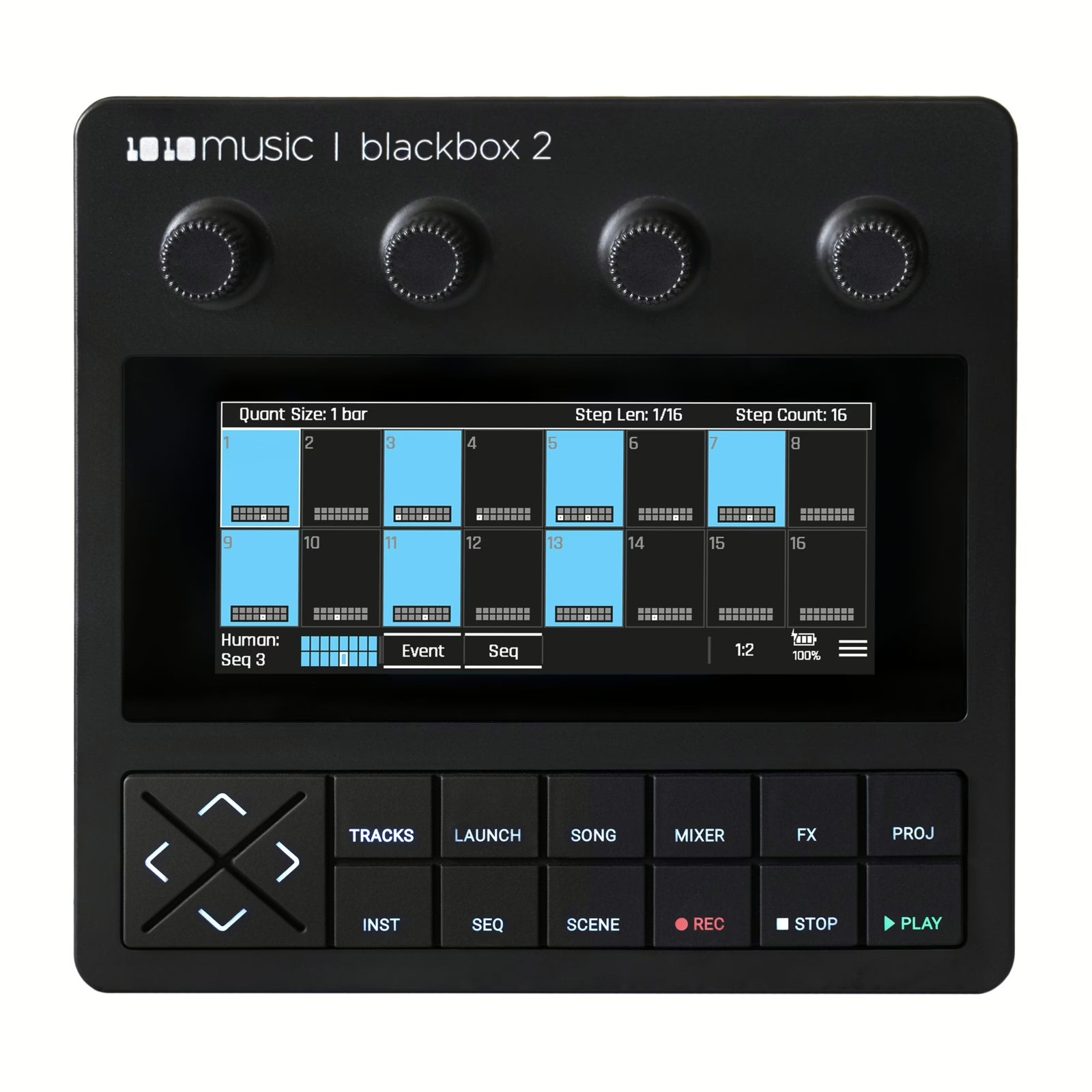
Nine years after a first model that became a cult favourite among mobile producers and gigging musicians, 1010music isn’t settling for a facelift: the Texan company started from a blank sheet. The blackbox 2 keeps the pocketable cartridge silhouette, but everything that matters underneath has changed. A CPU twice as fast, a 4-inch colour touchscreen, an internal battery and a new granular engine: it ships immediately at $649 (around £579).
A pocket box rebuilt from scratch
The original blackbox nailed one simple idea: a full, standalone sampler with no computer and no software, small enough to hold in one hand. The blackbox 2 pushes that logic much further. The cramped monochrome readout gives way to a high-resolution 4-inch colour touchscreen, topped by four encoders and flanked by dedicated shortcuts for tracks, instruments, sequencer, mixer, FX and playback. You go from a device you learned to tame to one you actually drive.
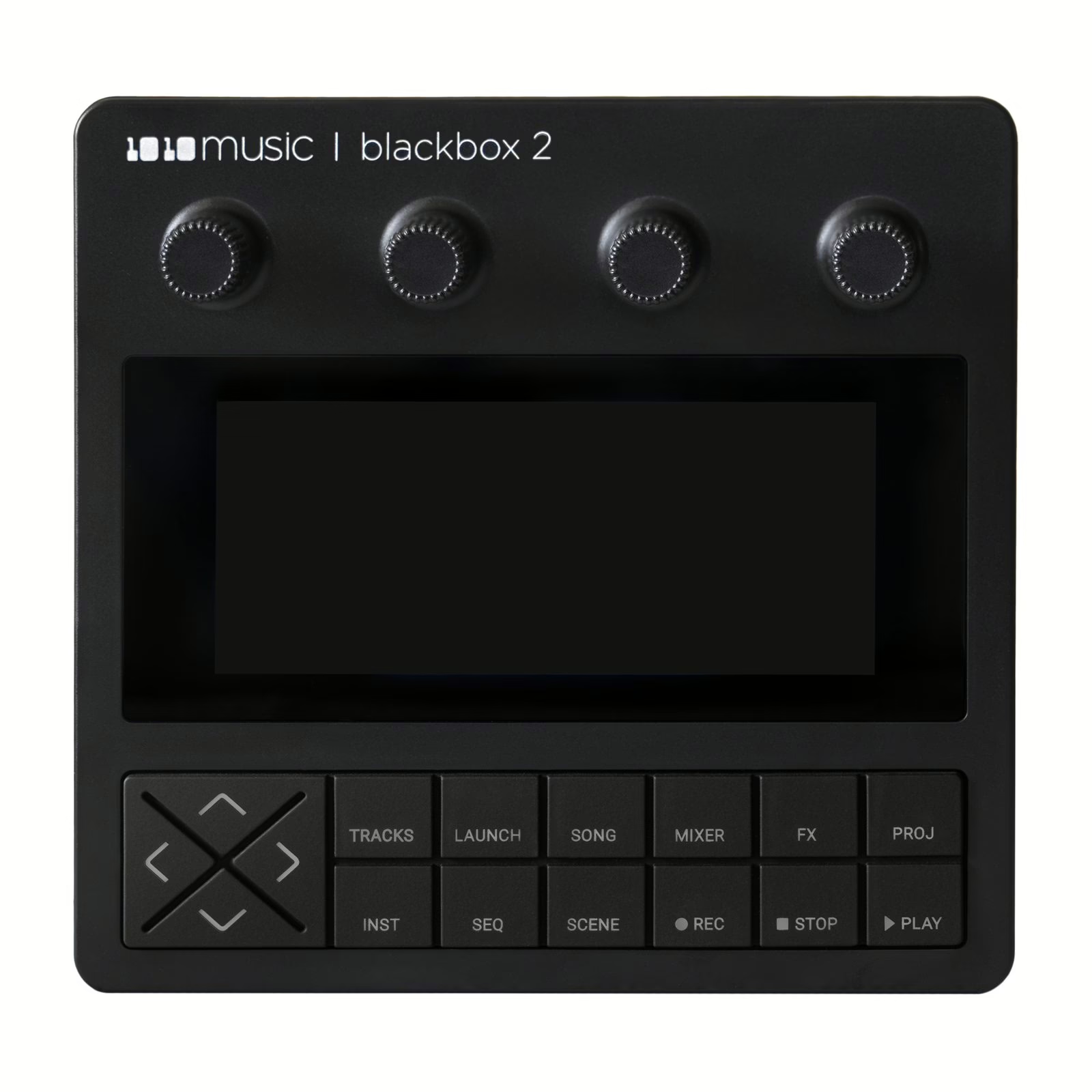
The most requested change hides inside: a rechargeable battery delivers roughly three hours of runtime. That may read as a footnote on a spec sheet; in practice it turns the blackbox 2 into a genuine portable sketchpad, on a train, on the sofa or backstage, with no power lead to drag around. Conversion stays at 24-bit in and out, in a chassis 22 cm wide weighing about 600 grams.
The Shredder engine and six track types
The heart of the instrument is still its pad grid, but each slot can now host one of six engines: one-shot, loop, slicer, multisample, external source and, above all, the new Shredder, which blends granular synthesis with rhythmic slicing. That’s the real creative payload of this version: stretch a breath into a pad, granulate a vocal, make a field recording shimmer without ever leaving the box.
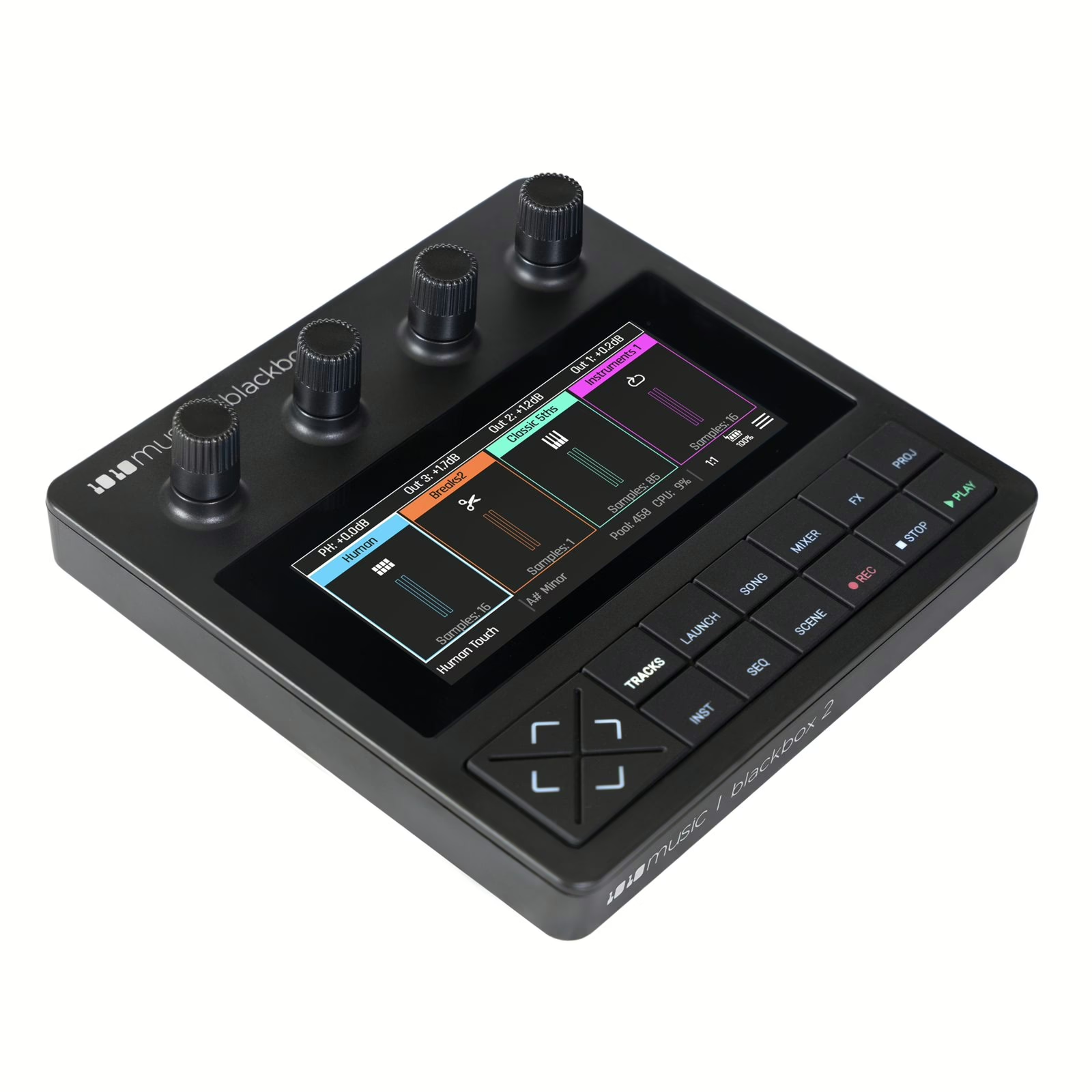
Around it, 1010music has sweated the performance details. A DJ-style FX section (filter, delay, EQ, gate, repeater) is played with a finger on an XY pad, the step sequencer moves from grid to piano roll and handles probability, and automated multisampling maps an external synth key by key without eating your afternoon. Internal resampling with layering finally lets you build dense textures right inside the machine.
I/O and studio-meets-stage integration
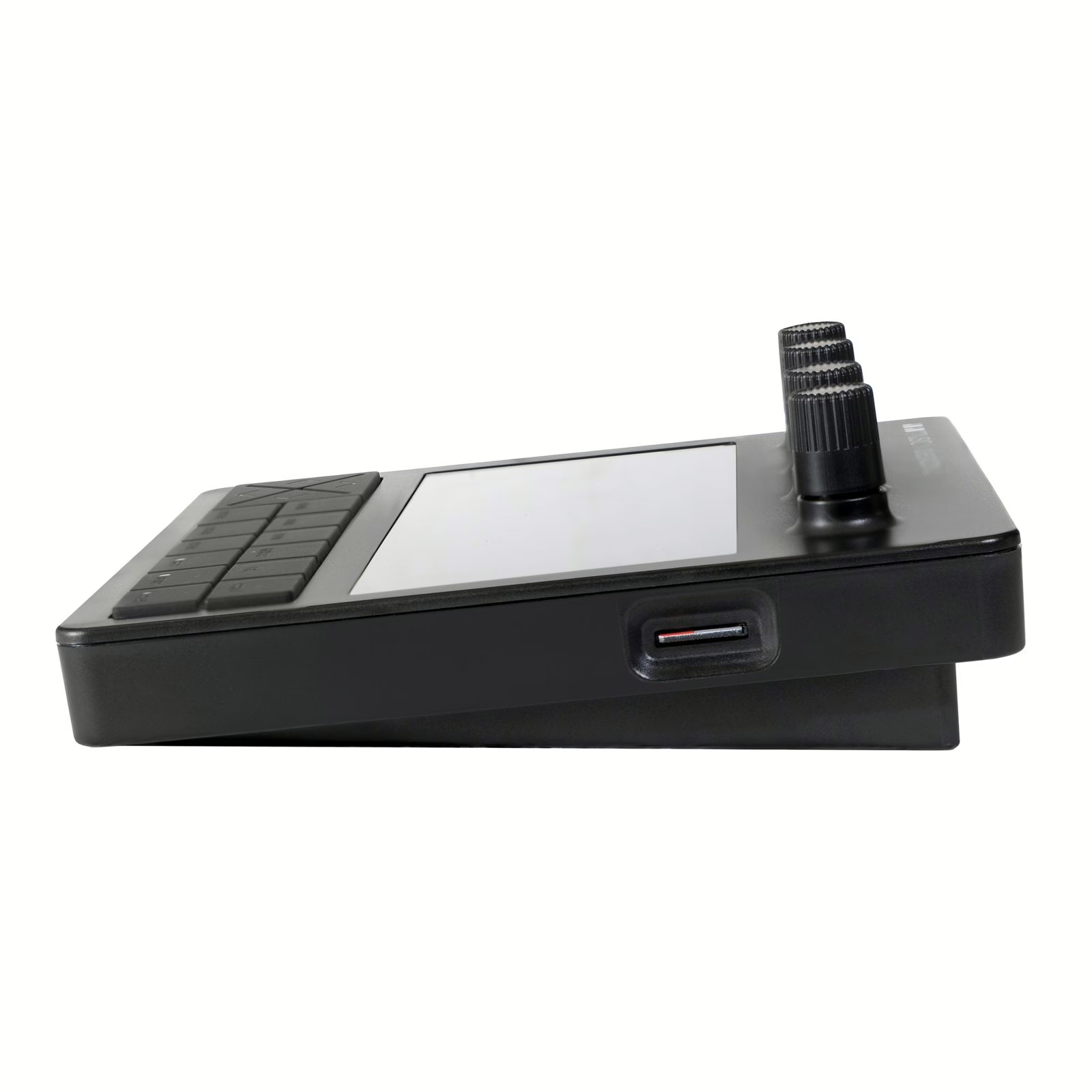
The rear panel confirms the step up. Two USB-C ports, one host and one device, open the door to multichannel audio and MIDI to a computer or tablet: the blackbox 2 becomes a full interface within a set. There’s a stereo input, three stereo outputs, a headphone jack and a microSD slot whose capacity is no longer the limiting factor, thanks to WAV sample streaming straight from the card.
That technical detail says a lot about the product’s philosophy: the blackbox 2 targets both the musician building a hybrid live rig, wedged between a groovebox and a laptop, and the sound designer who wants three hours of battery to capture and mangle sounds in the field.
Price, availability and positioning
The blackbox 2 sells for $649 (around £579) and ships now after a spring pre-order window. At that price it no longer plays in the entry-level sampler bracket: it goes head to head with the most accomplished compact grooveboxes. On that turf you inevitably think of mobile-studio machines like the Yamaha SEQTRAK 2.0, with a different approach: here, everything starts from the sample.
It’s worth noting that the Shredder engine echoes what recently landed on the bigger Bento via its firmware 1.5: 1010music is clearly unifying its ecosystem around granulation and touch control.
My take
I’m wary of “season two” products that just bolt on a new screen and a logo. This isn’t one of them. The battery and the doubled horsepower fix the two real frustrations of the first model, and the granular engine finally gives a musical, not merely marketing, reason to buy in again. The one caveat is price: at this level, the blackbox 2 has to be judged as a main instrument, not a sidekick. To my ears, it now has the shoulders for it.