A drum machine that plays on its own, a synth unspooling a hypnotic bassline, a modular looping forever without a hand ever touching a keyboard: behind those images sits almost always the same tool, the step sequencer. It is one of the oldest building blocks in electronic music, and yet one of the most misunderstood the moment you go beyond simply switching steps on. Here is how it really works, and how to get more out of it than a mechanical loop.
What is a step sequencer?
A step sequencer slices time into a grid of equal steps — most often sixteen per bar — and fires an event on every active step. Unlike a linear sequencer, where you record a performance in real time, here you program a figure by turning steps on or off, a bit like ticking boxes. Each step can trigger a note, a snare hit, a chord, a modulation. The sequencer reads that grid back in a loop, at the chosen tempo, and it is this steady repetition that underpins the electronic groove.
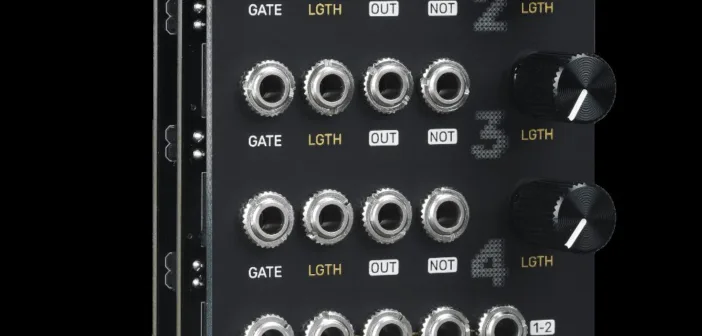
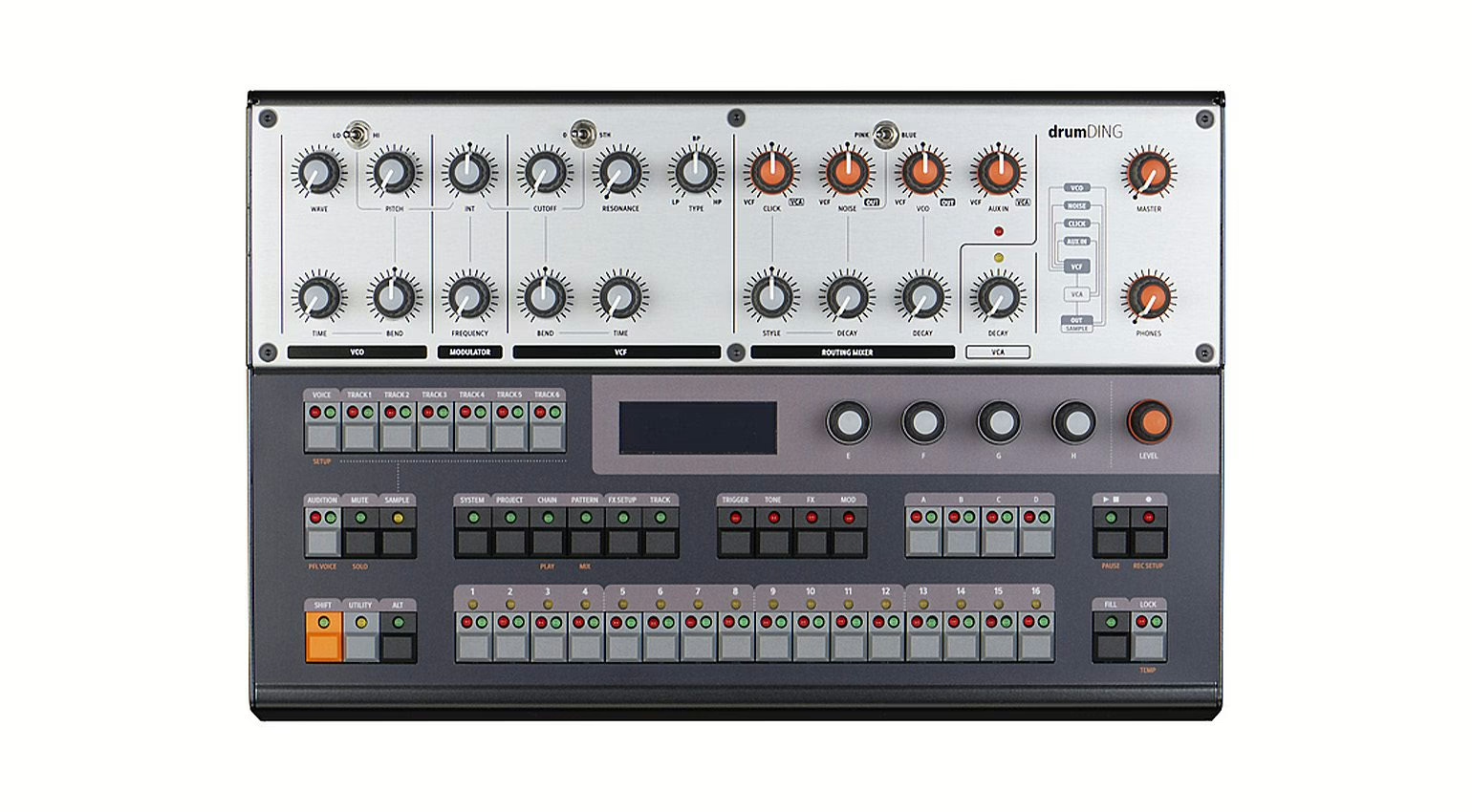
The historic model is the drum machine with lit buttons: a row of steps, one track per instrument. But the principle now runs through grooveboxes, synths with onboard sequencers, Eurorack modules and every DAW, where the piano roll is never anything but a step grid in disguise.
The anatomy of a step
People often think a step is just “on” or “off”. In reality, a good sequencer attaches several parameters to each step, and that is where everything happens.
- Pitch: the note played when the step is active. On a melodic sequencer, each step carries its own value.
- Velocity: how hard the trigger hits. Alternating strong and weak steps is what separates a living loop from a flat, robotic one.
- Accent: a binary emphasis inherited from old machines that pushes a step forward — the soul of an acid bassline groove, for instance.
- Gate length: how long the note is held. Short gates give a staccato, spiky feel; long gates a flowing legato.
- Slide (or glide): tying one step to the next with a portamento, essential to the rubbery phrasing of synth bass.
Mastering those four or five per-step dimensions, rather than piling up active steps, is the first real jump in quality. A well-articulated eight-step figure beats sixteen identical steps.
Resolution, length and polyrhythm
Resolution sets the rhythmic value of a step: at a sixteenth note, sixteen steps fill one bar; at an eighth, they fill two. Many machines let you change that resolution, or even bring in triplets to escape the straight grid.
The length of the sequence does not have to be sixteen steps. Set one track to fifteen steps and another to sixteen, and the two drift apart on every pass before realigning: that is polyrhythm, an endless source of shifting patterns from otherwise very simple sequences. Sequencers that allow an independent length per track open up a huge playground, where a single-length sequencer stays neatly square.
Breaking the loop: swing, probability and micro-timing
A perfectly even grid sounds, by design, mechanical. Three tools let you humanise it or, conversely, make it deliberately unstable.
Swing (or shuffle) slightly delays the even-numbered steps to create that ternary sway that lets a groove breathe — the secret of house or hip-hop feel. Micro-timing goes further, nudging a specific step a few milliseconds early or late, to sit a snare just behind the beat, say.
Probability assigns a step a chance of firing: set a hi-hat to 60% and it stops playing every time, which breaks the repetition and mimics a player who varies. Combined with ratchets (the rapid re-trigger of a single step, like a roll) and parameter locks — storing a different synthesis value on each step, popularised by certain groove machines — probability turns a plain sequencer into an almost living variation generator.
Driving the rest of the studio: MIDI and CV/Gate
A sequencer makes no sound: it sends orders. To a software instrument or a modern synth it speaks MIDI; to an analogue synth or a Eurorack system it sends a control voltage (CV) for pitch and a pulse (Gate) for the trigger. Understanding that distinction is essential the moment you want several machines to talk to each other: the sequencer is the conductor, and its clock accuracy decides how tightly the whole rig locks together.
In practice: building a pattern that holds up
A few field reflexes beat a long theory. Start with the rhythmic foundation — kick and snare — before dressing it up. Leave steps empty: silence shapes a groove as much as notes do. Vary velocities on the first pass rather than after the fact. If the loop bores you after four bars, bring in an odd length or a little probability before adding notes. And keep in mind that an analogue drum machine or a standalone groovebox will impose its limits: it is often those constraints — a fixed step count, a given resolution — that force out ideas an unlimited sequencer would never have suggested.
To my mind, that is the whole beauty of step programming: it is not a transcription tool, it is an instrument in its own right. You do not play a sequencer the way you play a keyboard, but you do play it. The best machines — from a well-thought-out controller-sequencer to dedicated modules — are the ones that invite you to bend the grid rather than fill it. Once that clicks, you stop programming steps and start sculpting time. To dig into what actually makes the sounds you sequence, our guide to subtractive synthesis rounds out the picture.