The standalone DJ system is no longer a curiosity: it’s a category in its own right, where the laptop disappears in favor of a single unit that handles playback, mixing, effects and library management. With the Prime 4 G2, Denon updates the centerpiece of its range and folds in ideas straight out of modern electronic instrument design.
The original Prime 4 set the template: four decks, a big screen, real independence from software. This second generation isn’t just a facelift; it swaps engines and opens a new playground for performance.
Four times the processing power
Under the hood, Denon quotes an eight-core ARM processor backed by 4GB of RAM — four times the processing power of the original Prime 4. That headroom isn’t for show: it drives faster library navigation, four simultaneous decks and, above all, onboard stem rendering, with no upstream computer required.
MPCe pads arrive on a DJ rig
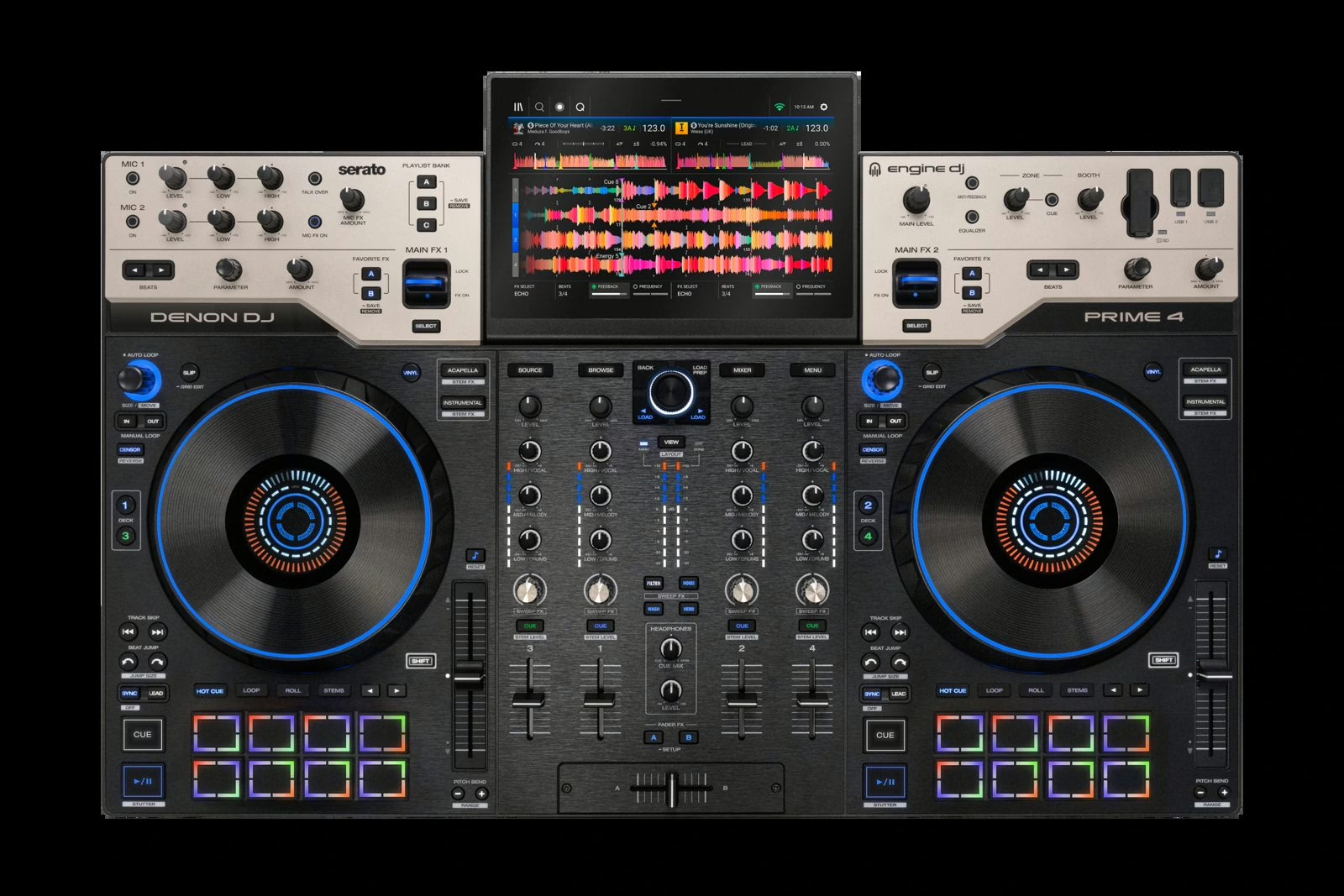
This is the most visible change. The Prime 4 G2 packs sixteen MPCe pads, sensitive to velocity and pressure, with 3D sensing. Each pad layers several functions and parameters at once: Hot Cue triggering, Stems manipulation, Rolls, FX and lighting control. Denon calls them multi-zone pads — a way of saying that a single pad responds differently depending on where and how hard you strike it.
The idea comes straight from the groovebox world, where that kind of expressive control is standard. Bringing it to a DJ rig changes the nature of the gesture: you no longer just fire a cue, you shape it.
Stems rendered onboard, no laptop
Stem separation — isolating a track’s vocals, drums, bass or instruments on the fly — has become the headline feature of recent years. The Prime 4 G2 renders it onboard, either by prepping tracks ahead of time on a computer or in real time on the unit itself. Denon adds dedicated Instrumental and Acapella buttons, stem-specific pad modes, per-stem FX and per-stem level EQ. That’s enough to take a track apart and rebuild it without ever leaving the hardware.
Screen, jog wheels and connectivity
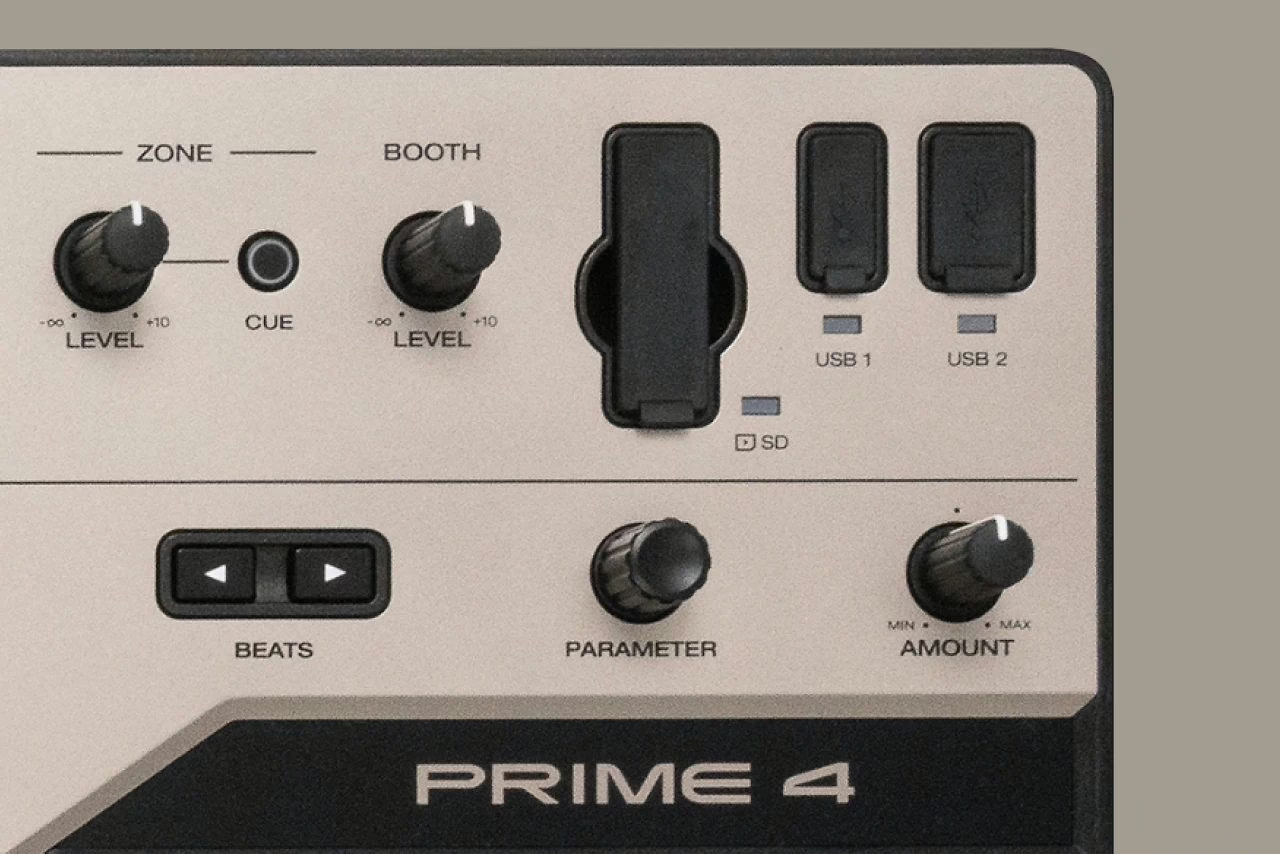
The rest of the spec sheet holds up. The 10.1-inch HD touchscreen remains the nerve center, backed by full-size 8-inch jog wheels with displays that show track and stem information. On the audio side, Denon cites an ESS ES9017S 32-bit DAC and dynamic range up to 119 dB on the balanced XLR outputs (Main, Booth, Zone), with two mic inputs on XLR/jack combo connectors.
Connectivity covers the bases: playback from USB drive, SD card or optional internal SATA drive, Bluetooth audio, and Wi-Fi streaming from Apple Music, Amazon Music Unlimited, Beatport, TIDAL and SoundCloud Go+. Denon adds a 3-pin DMX output and onboard Engine Lighting to run a light show without an external dongle. Finally, the OmniSource architecture promises smooth switching between saved media and software such as Serato DJ Pro, djay and VirtualDJ, with support due to arrive later.
Our take
I’ve spent enough time behind a booth to know that a device which removes the laptop from a set solves as many problems as it creates — provided it’s reliable. What stands out here isn’t the effects arms race, it’s the coherence: onboard stems, expressive pads, integrated lighting control. Denon isn’t trying to copy the established competition; it’s offering a complete ecosystem to those who want to travel light without giving up depth. At roughly $2,600 / £2,300, it sits firmly at the high end, but that’s consistent with what it carries.
Price and availability
The Prime 4 G2 is announced as available from early September 2026, at around $2,599 / £2,299. It sits at the top of Denon’s standalone range, in a market where hardware DJ culture is still very much alive, right down to hybrid controllers.
Frequently asked questions
What actually changes versus the original Prime 4?
An eight-core ARM processor with 4GB of RAM (four times the power), multi-zone MPCe pads, onboard stem rendering, 8-inch jog wheels with displays and a built-in DMX output. This is a platform change, not a simple refresh.
Do you need a computer to use stems?
No. The Prime 4 G2 renders stems onboard, either by prepping tracks in advance or in real time on the unit. The computer stays optional.
What playback sources does it accept?
USB drive, SD card, optional internal SATA drive, Bluetooth audio, and Wi-Fi streaming from Apple Music, Amazon Music Unlimited, Beatport, TIDAL and SoundCloud Go+.
Can it drive lighting without extra hardware?
Yes. A 3-pin DMX output and the Engine Lighting engine are built in, with a dedicated lighting pad mode; the external dongle is no longer required.
Is it compatible with DJ software?
Denon cites an OmniSource architecture that lets you switch between saved media and software such as Serato DJ Pro, djay and VirtualDJ, with software support rolling out after launch.