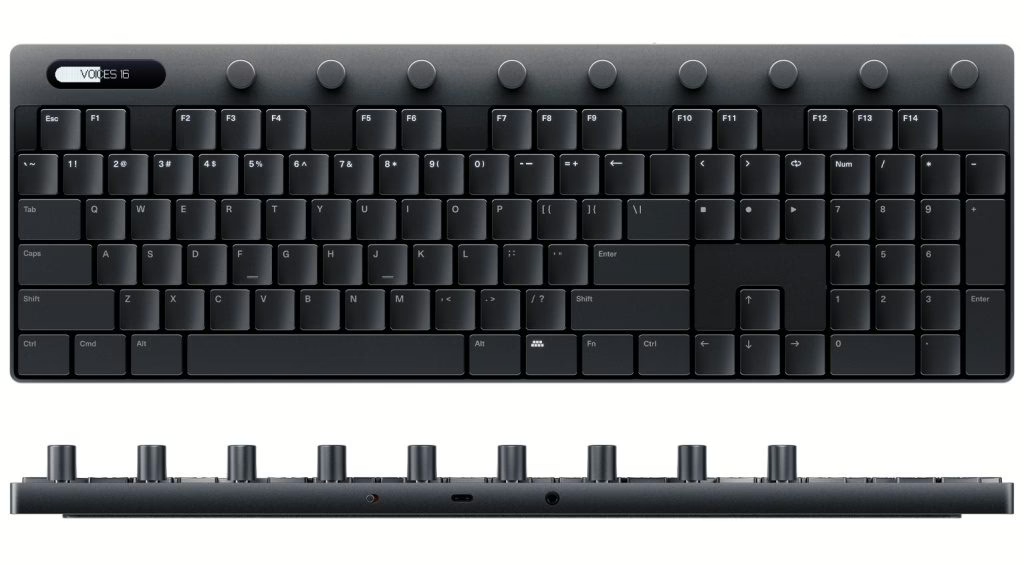
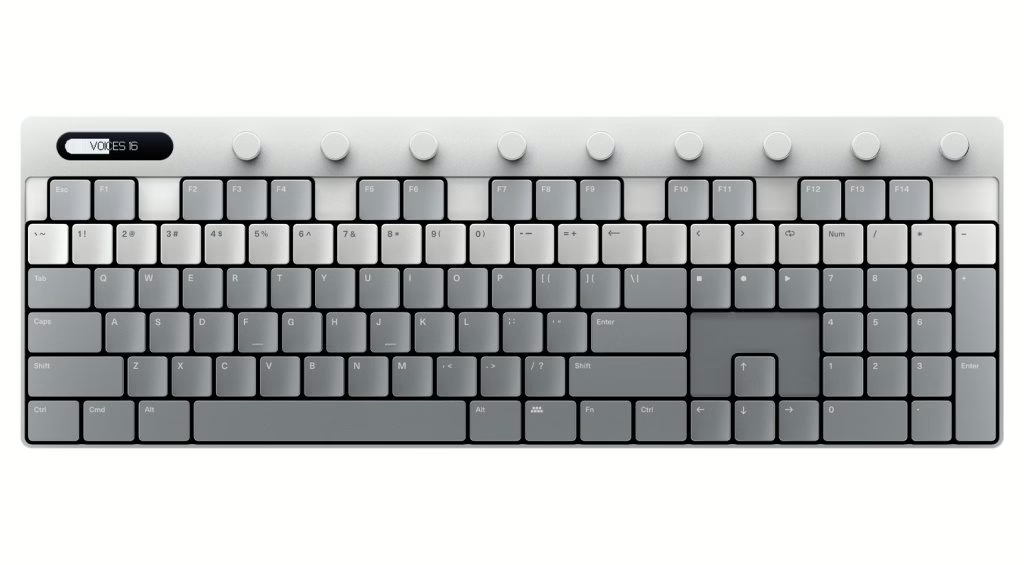
Some products appear on nobody’s roadmap, and Polyend Keys is one of them. The Polish maker, best known for its Tracker and Play grooveboxes, showed it as a prototype at Gamescom: a proper mechanical computer keyboard you can happily type on all day, whose number row and function keys double as a three-octave piano. The pitch is a single sentence long: play and record a melody on the same device you answer email with, without parking a dedicated controller on an already-cramped desk.
A computer keyboard that also plays
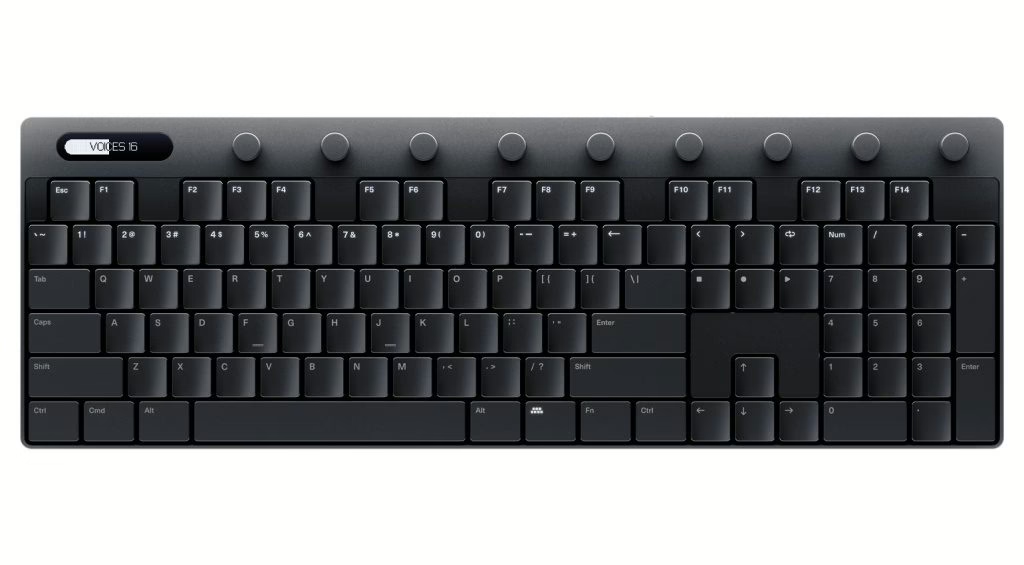
The concept is smarter than it looks. Everyone has tried banging out a few notes on a DAW’s typing keyboard, where A, S, D become fake white keys and the row above stands in for the black ones, and the result falls apart the moment you want more than a scale. Polyend takes that frustration and flips it: instead of a software workaround, Keys builds the musical keyboard into the hardware. The relevant keys get clear white-and-grey markings that spell out three readable octaves at a glance. You stay on a real computer keyboard, but you can trigger notes, track a bassline or drive a synth without switching devices.
What Polyend packed in
Under the everyday-accessory looks sits the spec sheet of a high-end mechanical keyboard crossed with a serious controller:
- low-profile Kailh mechanical switches, hot-swappable, so any key can be changed without soldering;
- backlit keys and a small built-in display that shows the state of the controls;
- nine rotary encoders, freely assignable to MIDI CC for a DAW or hardware, or to system tasks such as volume, scrolling and brightness;
- full connectivity: USB-C for data and charging, wireless Bluetooth MIDI, and a TRS MIDI output for external gear;
- a rechargeable battery for standalone use as a controller, no computer required;
- open-source firmware that Polyend openly invites you to hack for new layouts, sequencers and custom controllers.
Polyend lists two finishes, black and silver, and notes that velocity sensitivity and aftertouch are still “in development.” That is the tricky bit: a mechanical keyboard is not built to shade a keystroke the way a stage keybed does, and that is exactly where the instrument’s musical credibility will be won or lost.
Why the format makes sense
The MIDI controller market has rarely been busier, and readers feel it: the return of the Behringer BCR32 proved how much hands-on control still sells. Keys plays a different game: it targets the mobile producer working on a laptop on a train or a sofa, for whom firing up a soft synth and driving it from the computer keyboard is daily life. For them, Keys removes the double clutter of a typing board plus a controller while keeping a genuine mechanical feel for the rest of the day.
It will not replace a weighted master keyboard for performance, any more than an arranger keyboard replaces a stage piano. But to capture an idea, program a pattern or trigger samples, three marked octaves under the fingers are often enough, and the open firmware hints at uses Polyend has not even listed.
A prototype, and a bet to confirm
I have worked through every studio and live-rig layout, and desk space is the thing that always runs out first. A keyboard that hands some of it back while staying playable strikes me as genuinely useful rather than a novelty. That said, it is a prototype: no price, no date, and no final verdict on Bluetooth latency or on that velocity still “in development.” Those three points will decide whether Keys becomes a production tool or a desk curiosity. Polyend has the chops to ship a finished object; we will wait to get our hands on one before calling it.
Keys was shown at Gamescom in Cologne. Polyend promises more details soon; the official product page will land on the maker’s site.