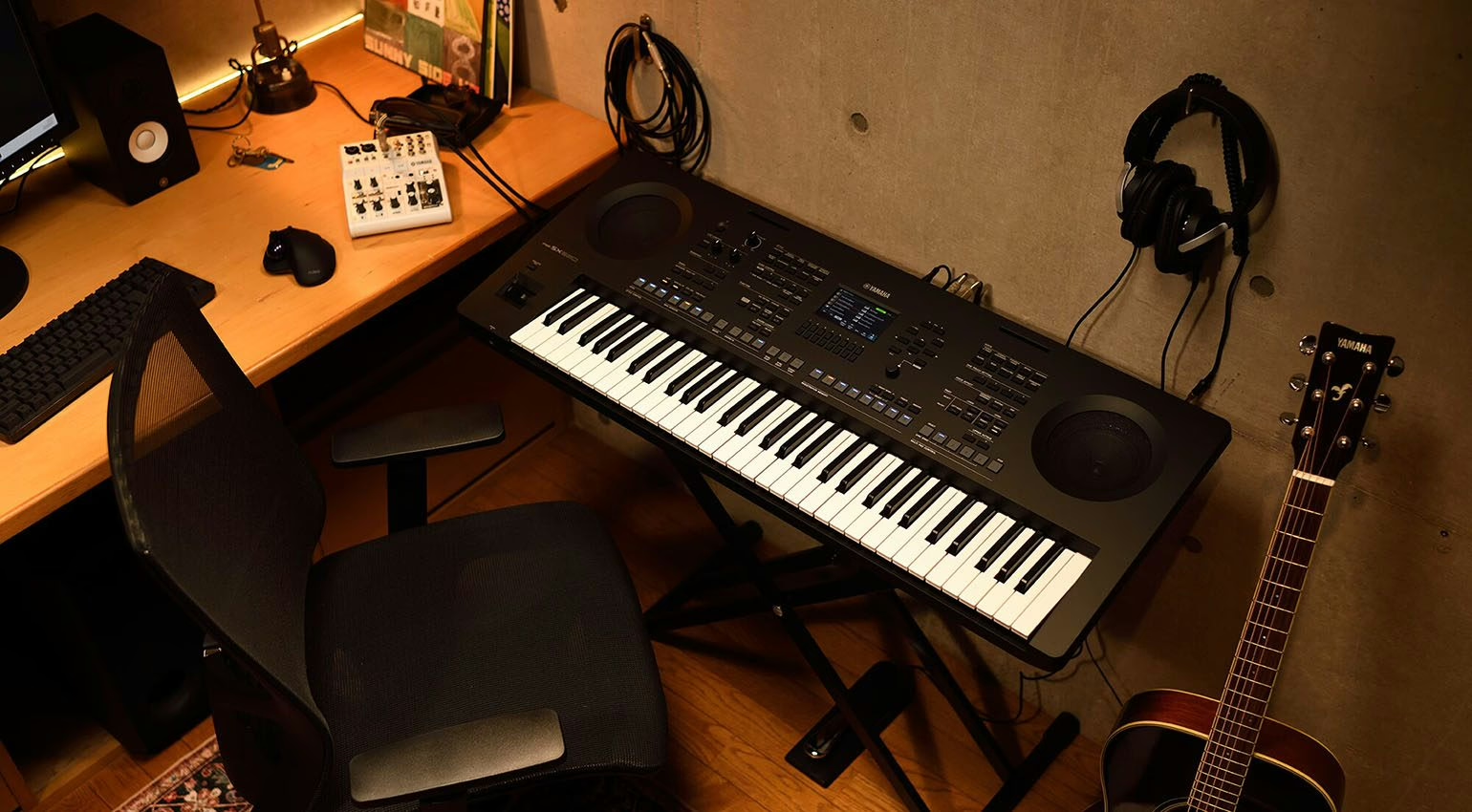
Six years after the PSR-SX600, Yamaha is refreshing the foundation of its professional arranger range. The PSR-SX620 keeps the 61-key format and the mid-range slot of its predecessor, but almost everything else moves on: a panel redesigned around a joystick, a much larger sound set, four times the expansion memory and a price tag of roughly $1,199. It is not a revolution — it is an overdue update, and it lands exactly where the line needed it.
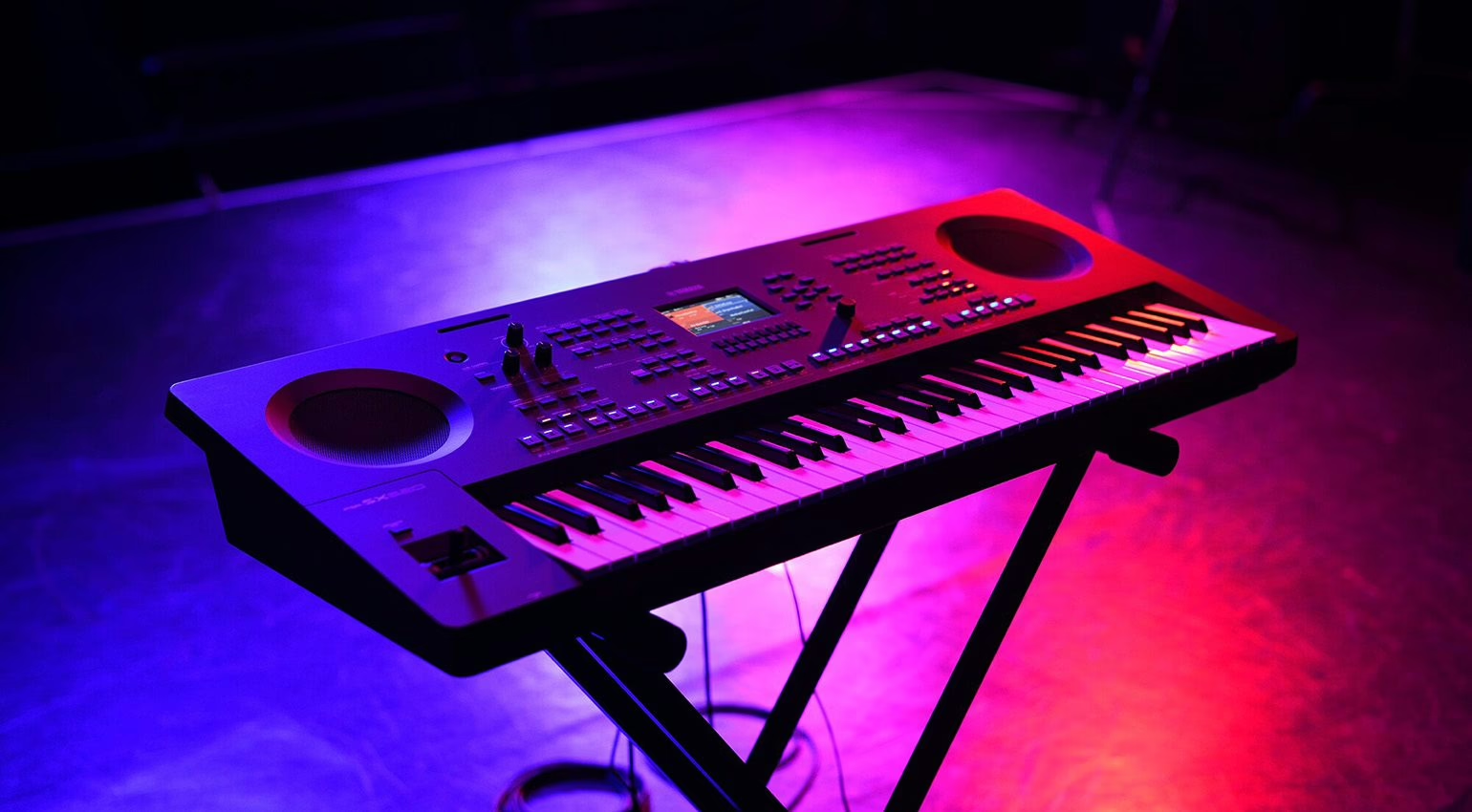
A new entry point to the PSR-SX series
The PSR-SX series sits at the heart of Yamaha’s arranger range, between the beginner-focused PSR-E models and the flagship Genos. The PSR-SX600 had held the entry slot since 2020; the PSR-SX620 now takes over as the way into the PSR-SX world. It is still a 61-key, non-weighted keyboard built for auto-accompaniment and real-time playing, but Yamaha has clearly pushed it closer to the ergonomics of its bigger siblings rather than just tweaking the spec sheet.
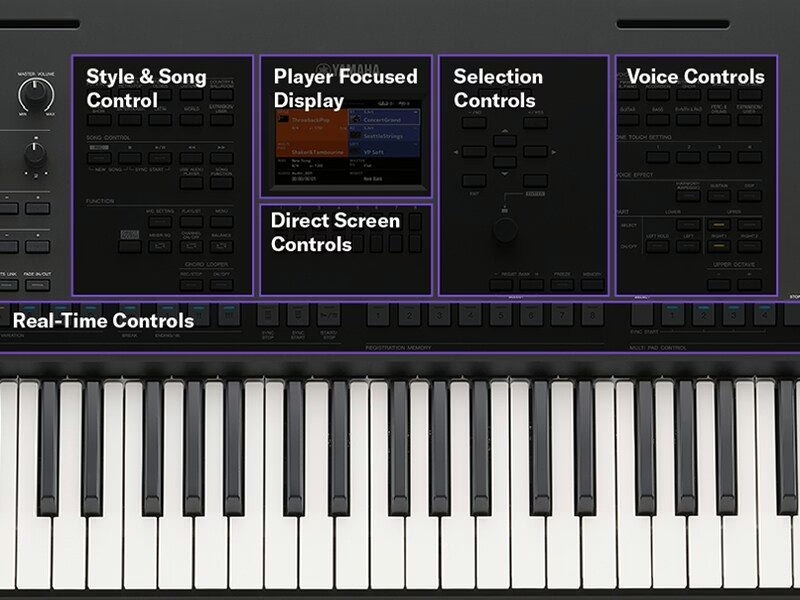
The most visible change is the front panel. Yamaha drops the SX600’s inherited layout for a reorganised interface with a joystick for pitch bend and modulation, plus two assignable Live Control knobs that give hands-on access to playing parameters — filter, reverb, the level of a style part, and so on. That is precisely the kind of control the previous generation lacked, and it changes how you play an arranger on stage: you shape the sound without diving into menus.
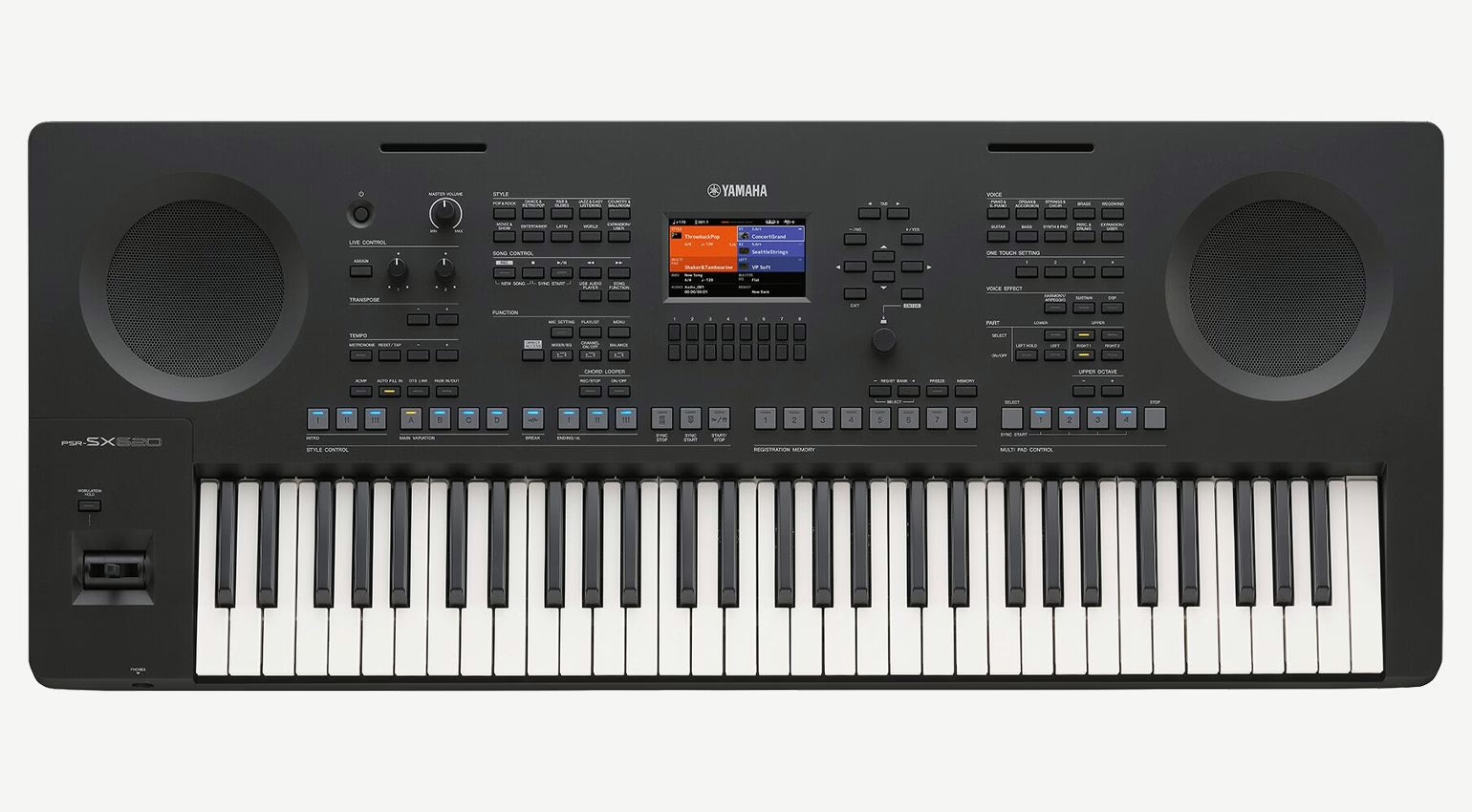
Over 1,000 voices and memory that finally breathes
On the sound side, the PSR-SX620 carries 1,002 voices and 51 drum and SFX kits, backed by 450 auto-accompaniment styles. You get Yamaha’s familiar approach of lightweight Super Articulation voices and styles spanning a wide range of genres, from pop and Latin to world music. It is not a Genos-sized library, but it is a coherent set that works straight out of the box, on stage or at home.
The real step forward for advanced users is elsewhere: expansion-pack memory jumps from 100 MB to 380 MB. That is nearly four times the space, and it genuinely opens the door to Yamaha Expansion Packs — regional sounds, specialised styles, extra voices — without constantly juggling two banks. Processing runs through nine insert-effect blocks (322 presets, 30 user slots), rounded out by send and master effects: reverb, chorus, DSP, a master compressor and EQ, plus a per-part EQ. That is enough to shape the sound without leaning on outboard.
Chord Looper, Multi Pads and a recorder: the arranger as a workshop
Yamaha has trickled down several features that used to define pricier arrangers. The Chord Looper captures a chord progression in real time and loops it back: lay down your changes, then keep both hands free to improvise on top. The Multi Pads trigger melodic or rhythmic phrases and accept imported WAV samples, turning the keyboard into a compact performance tool. Finally, the built-in audio recorder captures a performance directly, and Bluetooth audio lets you stream an external source through the instrument’s speakers — handy for playing along to a backing track or learning a song.
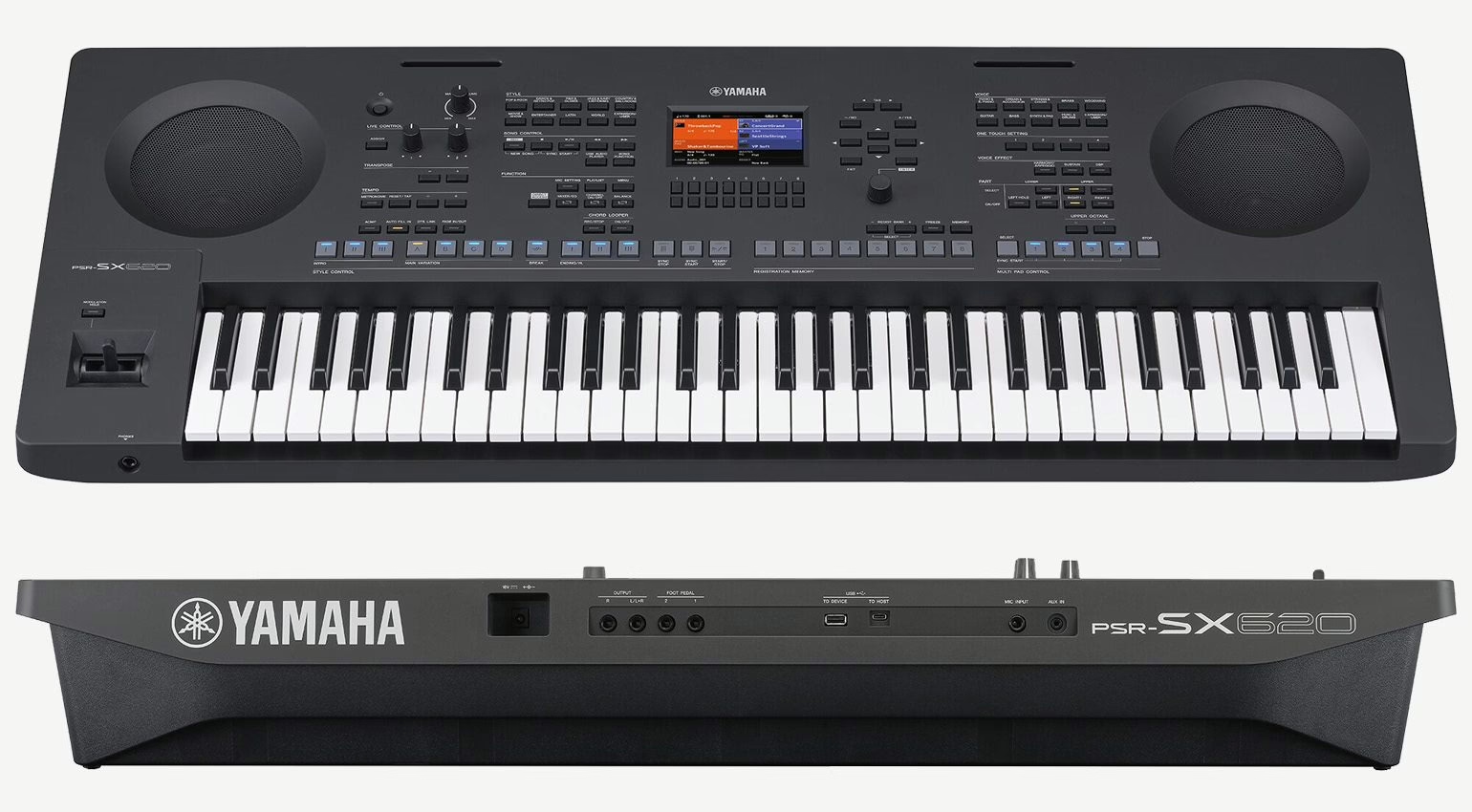
Here are the key specs at a glance:
| Feature | Yamaha PSR-SX620 |
|---|---|
| Keyboard | 61 keys (non-weighted) |
| Voices / kits | 1,002 voices, 51 drum and SFX kits |
| Styles | 450 accompaniment styles |
| Expansion memory | 380 MB (up from 100 MB on the SX600) |
| Effects | 9 insert blocks (322 presets), send/master, master compressor and EQ |
| Controls | Joystick, 2 assignable Live Control knobs |
| Performance | Chord Looper, Multi Pads (WAV import), audio recorder |
| Connectivity | Bluetooth audio, USB |
| Street price | around $1,199 |
Our take
I have never been an arranger player — my ground is front-of-house and the studio — but I have seen enough of these keyboards backstage and on function gigs to know what really matters: reliable outputs, a panel you can read under stage lighting, and playing controls you can reach without taking your eyes off the keys. From that angle, the arrival of the joystick and the assignable Live Controls matters more than the bigger voice count. An arranger is played in front of an audience, often solo: the real added value is not a thousand extra sounds, it is being able to shape three or four of them live, with your fingertips. Yamaha got that part right.
Then there is positioning. At this price, the PSR-SX620 is not aimed at the absolute beginner — the PSR-E range covers that — but at the organist, the entertainer or the pop-and-function player who wants a complete, self-contained instrument without stepping up to a Genos. The PSR-SX600 held that role for six years; its successor is well equipped to do at least as well. If you play master keyboards or controllers rather than arrangers, look instead at the new pad controllers or expressive keyboards such as the Haken Slim 21; but for a genuine standalone arranger workstation, the SX620 ticks the right boxes. Full specs are on the official Yamaha page.