MOOER has made a name for multi-effects that give a lot for a little. With the VE200, the brand applies that recipe to the stage voice: a floor-format vocal effects processor built for singers, singer-songwriters and streamers, bundling pitch correction, harmonies, effects and stage tools into a compact box priced around €199.
Everything for the voice, live
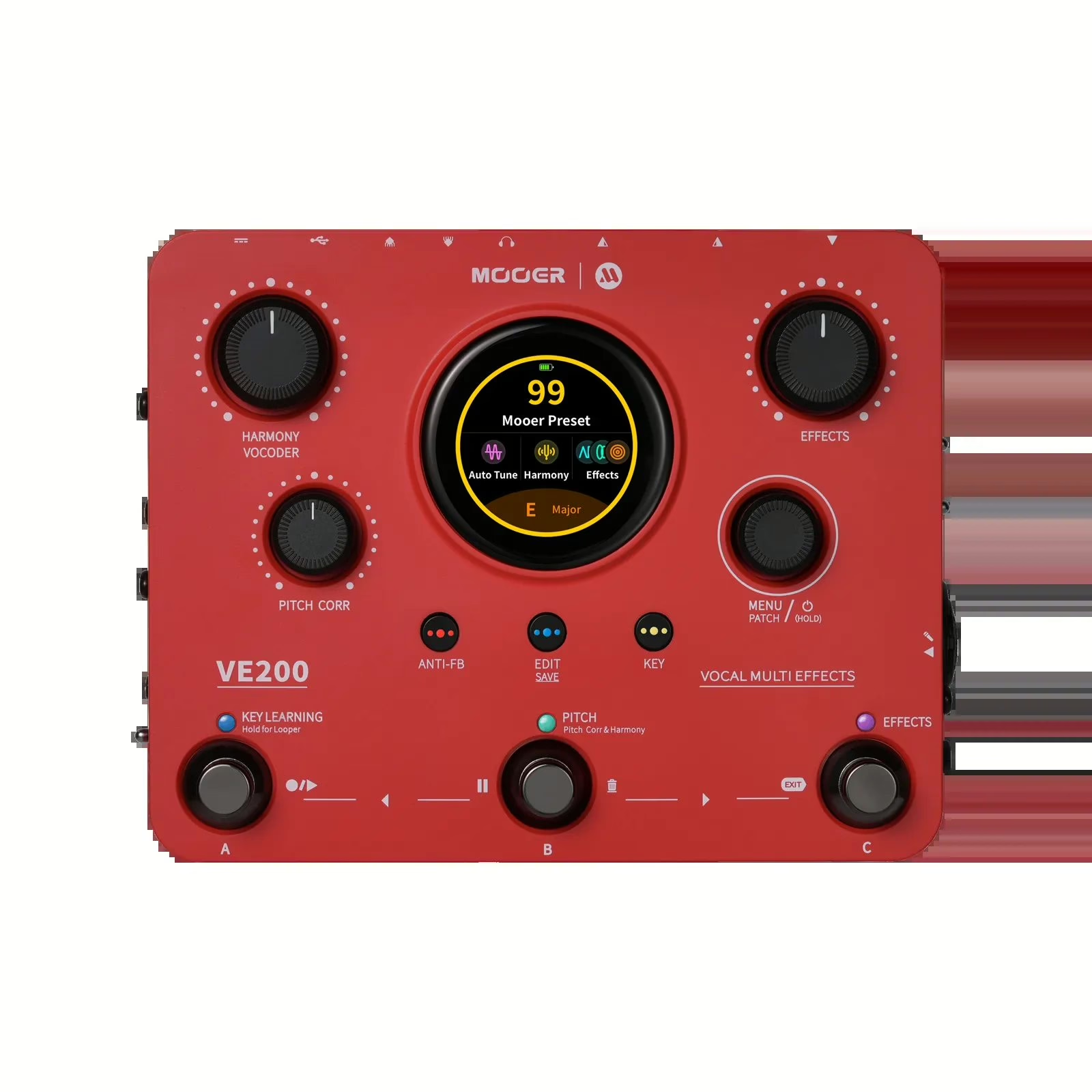
The effects list is dense for the size. There is pitch correction, harmonies up to ten intervals, a three-style vocoder, a compressor, a mic low-cut filter and a five-band vocal EQ. For colour, the VE200 lines up six modulations (chorus, flanger, phaser, tremolo, rotary, panner), five delay types and five reverbs. Each processing chain recalls per song section, and the unit stores around a hundred presets. You drive it with your feet through three footswitches and by hand with dedicated knobs (Harmony/Vocoder, Pitch Corr, Effects) and a central colour display.
Anti-feedback and key detection
Two features reveal genuine stage thinking. First, a three-stage anti-feedback driven by a dedicated button: handy when you sing in front of the speakers and need to claw back level without ringing out. Second, automatic key detection — via the mic, the guitar or a Bluetooth source — to lock correction and harmonies to the song with no manual programming. Both sit at the heart of live sound, from gain before feedback to choosing a stage vocal mic.
The AI angle: stem separation
This is the VE200’s “intelligent” pitch: the StemLab feature, via the MOOER Cloud app, separates a track’s parts with AI. You isolate or remove a voice or an instrument to build a backing track or a practice base from an existing song. The integration stays simple, aimed at the solo artist who wants to assemble tracks without opening a DAW. It is less a gimmick than a way to close the loop between prep and stage.
Built for the stage and the livestream
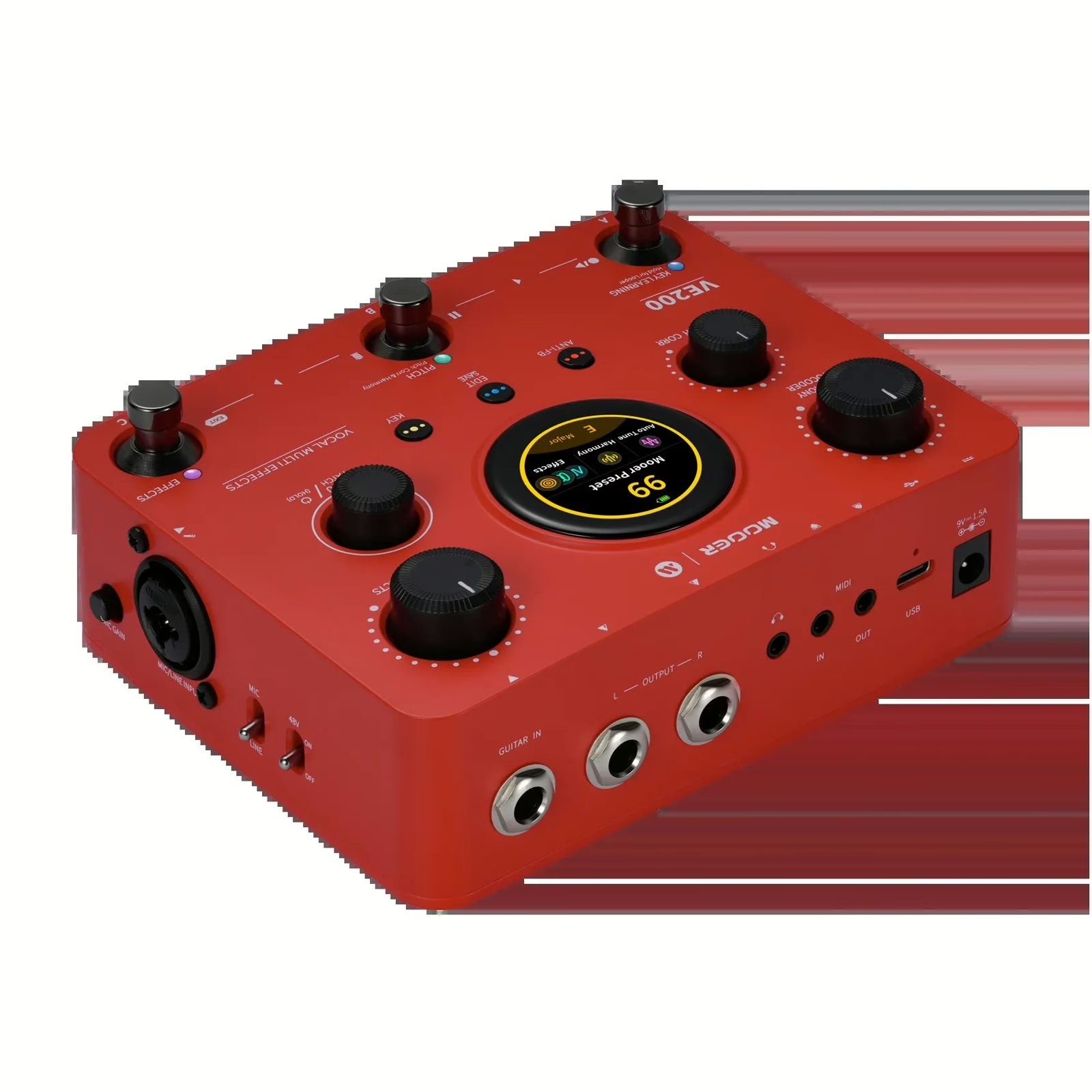
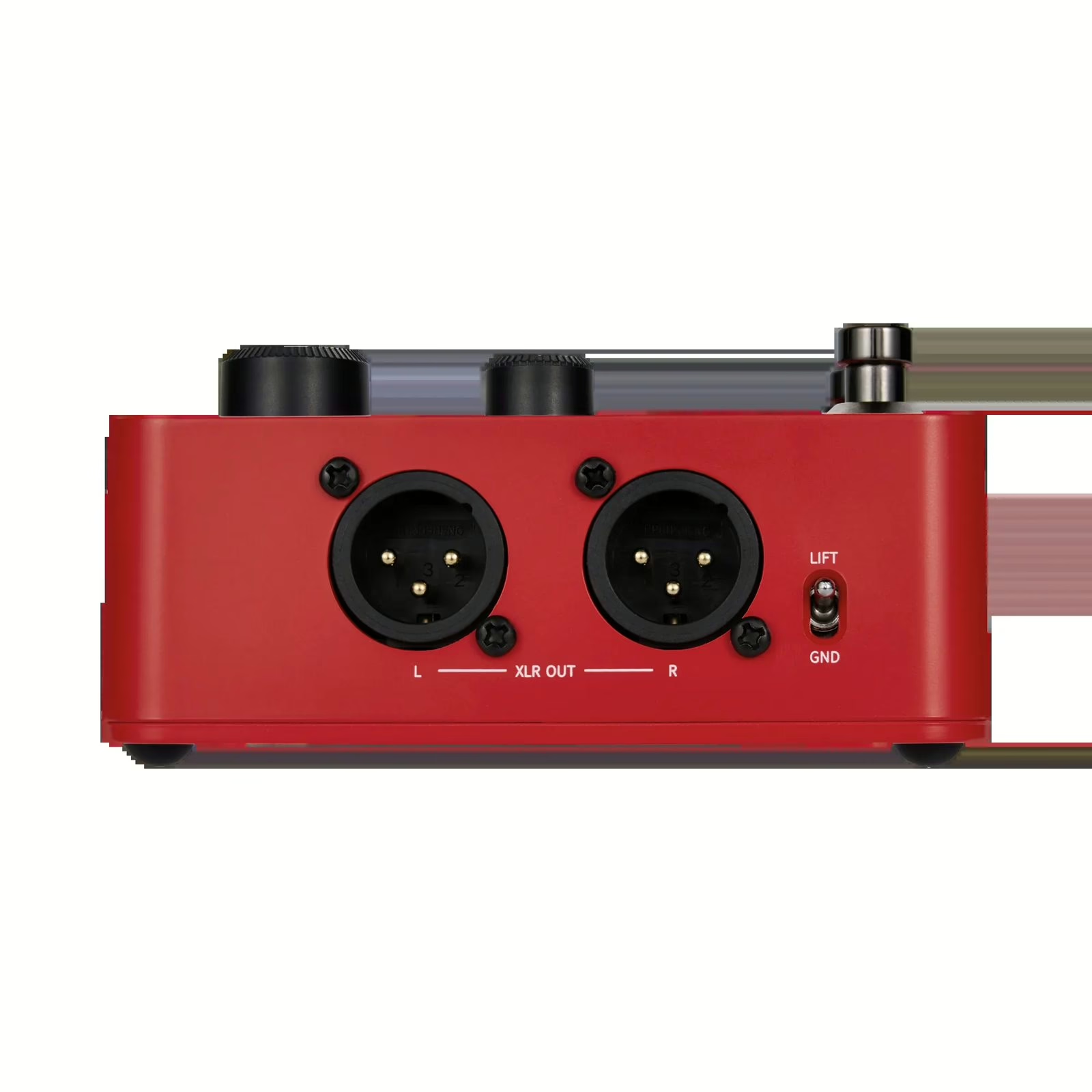
The I/O is generous. You get an XLR mic/line input with 48 V phantom power and a gain control, a guitar input, line outputs on 6.35 mm jack and dual balanced XLR outputs with a ground lift, a headphone output, MIDI and a USB-C port that turns the VE200 into an audio interface for streaming straight from a phone or tablet. A rechargeable lithium battery gives several hours away from a socket, and conversion runs at 24-bit / 44.1 kHz. Enough to go from the power-free bar gig to the online live set without changing boxes.
Price and positioning
The VE200 lands around €199, which places it at the entry point for a stage vocal processor. At that price it is not aimed at the professional with a dedicated rack, but at the singer, duo or content creator who wants complete, portable, self-powered processing without assembling an effects chain.
My take
For €199, the feature list commands respect: correction, harmonies, vocoder, anti-feedback, looper, dual XLR and a battery — that is a lot of stage in a small box. AI stem separation is the kind of smart addition that speaks to the solo artist, provided it delivers on real songs — that is where the feature will be judged. The real thing to watch is the quality of the pitch and harmony algorithms, where TC-Helicon set the bar high: a corrector you can hear working does the voice no favours. If MOOER holds that level at this price, the VE200 becomes an entry point that is hard to ignore for anyone singing on stage or online.
Frequently asked questions
Does the MOOER VE200 run on battery?
Yes. It has a rechargeable lithium battery giving several hours of use, handy for playing away from a socket, in rehearsal or outdoors. It can also run on its mains adapter.
What is the StemLab feature for?
StemLab, via the MOOER Cloud app, separates a track’s parts with AI. It lets you isolate or remove a voice or an instrument to build a backing track or a practice base from an existing song.
Can it be used for online streaming?
Yes. The USB-C port makes the VE200 an audio interface for a computer or, in OTG mode, a smartphone or tablet. You can stream a processed voice straight to live platforms.
Does it handle guitar too?
It has a guitar input alongside the mic input, for the singer-songwriter who accompanies themselves. Processing stays voice-focused, but the guitar can enter the same unit and come out through the main outputs.