Feedback is not bad luck: it is a loop you can measure and push back. Here is how to win gain before feedback on stage, from speaker placement to ringing out the system, without turning your mix into a squeal.
Feedback is a loop that runs away
Feedback comes from a simple loop: a mic picks up a speaker, that sound comes back out amplified, returns to the mic, and out again. As long as the loop gain stays below unity at every frequency, the system is stable. The moment one frequency reaches a loop gain above zero decibels, it sustains itself and you hear that rising howl. Feedback almost always latches onto one precise frequency, where the mic, the room, the speakers and the EQ add up to a peak.
That is good news: since the phenomenon is physical and localised, you treat it with method, not luck. The goal even has a name, gain before feedback (often GBF): the headroom you have before the first frequency rings. The whole craft is pushing that threshold as high as you can.
Placement is the first battle
Before touching a single EQ band, fix the geometry. Every decibel won on placement is a decibel you will not have to chase elsewhere. Three principles handle most of the work:
- Get the mic closer to the source. Doubling the mouth-to-mic distance loses roughly six decibels of useful level, and hands that much margin to feedback. A singer who works the mic close gains serious gain before feedback.
- Keep the front-of-house speakers ahead of the mics. A directional mic mostly rejects what comes from behind; put the PA in that rejection zone, never behind the line of mics.
- Aim the monitors into the mic’s least-sensitive axis. A cardioid rejects the rear, a supercardioid rejects the rear-sides: the wedge is placed according to that pattern, not at random.
Choosing and holding the mic
The mic is the first link in the loop, so the first lever. A dynamic model with a tight pattern, cardioid or supercardioid, almost always offers more gain before feedback than a large-diaphragm condenser on a loud stage. Directivity concentrates pickup on the source and closes the door to the rest. Our guide to choosing a live vocal mic covers these trade-offs.
Playing technique matters as much as the model. A performer who holds the mic at a constant, close distance stabilises the loop gain; a mic that drifts in and out swings that gain constantly and makes the system unpredictable. Watch the hand on the grille too: cupping a mic’s head changes its pattern and wrecks its rear rejection, throwing the door wide open to feedback.
Tuning the system: ringing out
Once the geometry is sound, you refine with EQ. The ringing-out method means slowly raising the gain to the edge of feedback, spotting the frequency that rings, notching it with a narrow filter, then repeating. Each removed frequency frees a few more decibels of margin. A parametric EQ with tight filters does more surgical work than a broad graphic, because it takes out just the peak without thinning the whole spectrum.
The discipline here is restraint: notch three or four well-chosen frequencies, not ten. Too many cuts and the voice goes hollow, without the margin gained to justify it. This loop tuning naturally follows on from tuning the PA system: a well-aligned system has a smoother response, so fewer peaks ready to ring.
Monitors: the wedge or the earpiece
Stage monitoring is often the first culprit. A wedge pushes level right in front of an open mic: the most feedback-prone setup there is. Two answers. First, keep wedges under control: only as much level as needed, dedicated EQ, aimed into the mic’s rejection axis. Second, go in-ear: by removing the monitor speaker, IEMs remove a whole branch of the loop and often deliver a dramatic gain-before-feedback boost. Our pick of the best in-ear monitors helps you make the jump.
Gain structure and open mics
The more mics open at once, the higher the overall loop gain: each doubling of open mics costs about three decibels of margin. The fix is one rule: only open what is making sound. Mute or pull down unused mics, and let an automatic mixing system handle multiple talkers when the context suits.
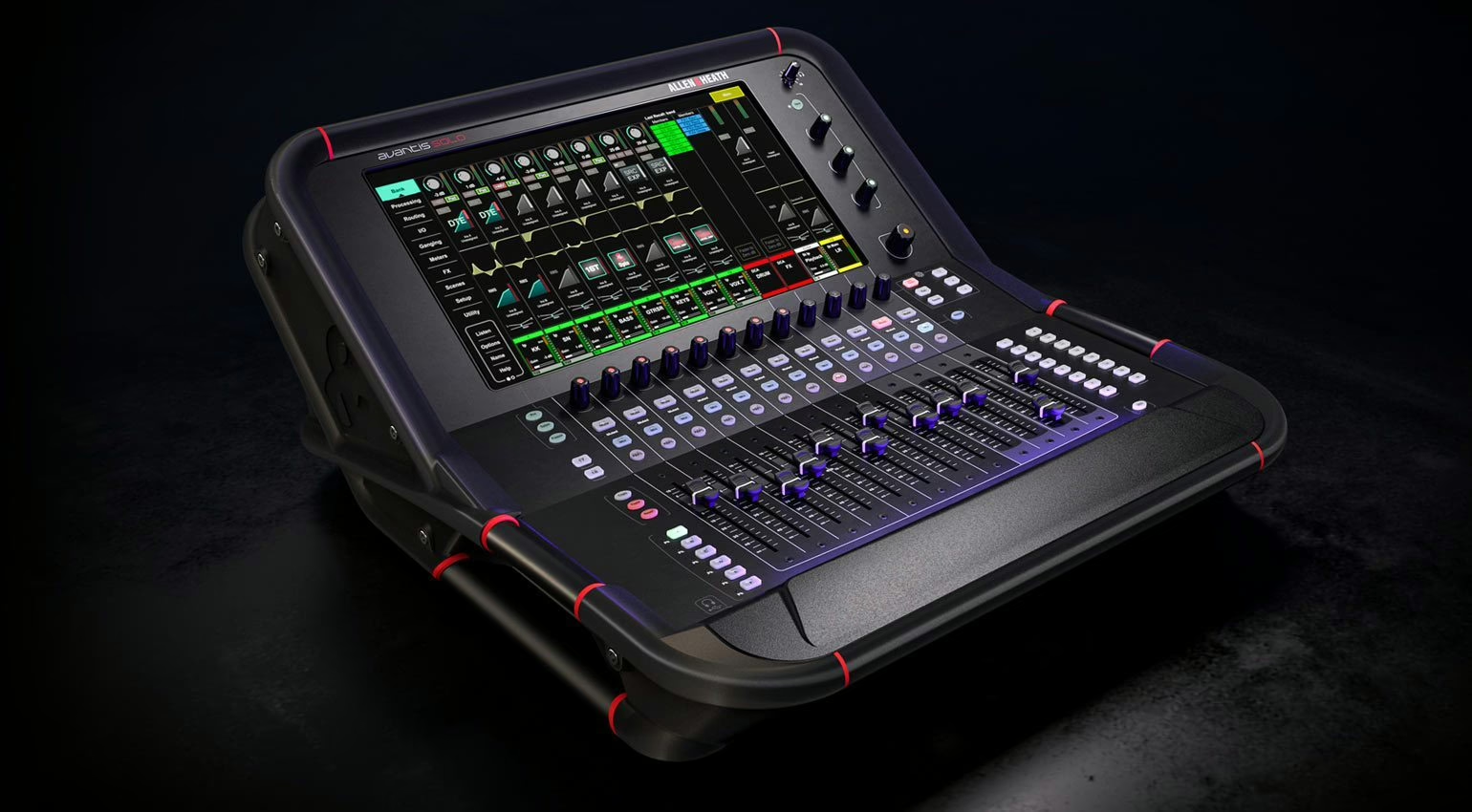
The console is your command post for all this. Organising groups, VCAs and mutes to close dormant sources in one move is part of the fight against feedback — a topic we cover in our guide to running a digital live console. A surface like the Allen & Heath Avantis, for instance, offers parametric EQ and notch filters on every channel, exactly what you need to tune the loop without spending all night on it.
My take
Gain before feedback is won with your feet first, not the EQ. Placing the speakers, getting the mic close, aiming the monitors: that is where most of it is decided, and it is free. Loop tuning then refines, sparingly. What really changes the game today is the earpiece: drop the wedge and you drop a feedback source in one move, with better stage comfort to boot. The squeal at the start of soundcheck is not a curse, just a system telling you where it has a peak — listen, fix it, and keep some margin for when the room fills up.