I spent enough years at front of house and running studio operations to watch the stage change. The floor wedge, screaming at the singer while dodging feedback, gave way to the little bubble of silence of an in-ear monitor. The gain in clarity is real, listening fatigue drops, and the main PA stops fighting the spill from the monitors. But an in-ear system is only as good as its final link: the earpiece in your ear. A high-end transmitter feeding a mediocre IEM is a fine preamp plugged into a bad microphone.
This selection is about the earpieces themselves — the IEMs you put in your ear — not the wireless systems (transmitter, belt pack, antennas) that feed them. That’s a deliberate choice: the driver defines what you hear, the transmission only carries it. If you’re at the wiring-and-tuning stage, our guide to setting up an in-ear monitor system and the one on setting monitor level and EQ cover the technical side. Here, we talk about what you buy and why.
I’ve sorted these seven models into three honest families, by ascending price. They don’t all do the same job with the same finesse: a $40 IEM and a thousand-dollar custom answer the same need — hearing yourself on stage — but not with the same isolation, resolution or long-set comfort. The point isn’t to sell you the most expensive one, but to tell you where each one sits.
Family 1 — The first stage budget
Two IEMs to discover personal monitoring without breaking the bank, or to kit out backing musicians. They do the job, with trade-offs you should know about going in.
KZ ZS10 Pro X
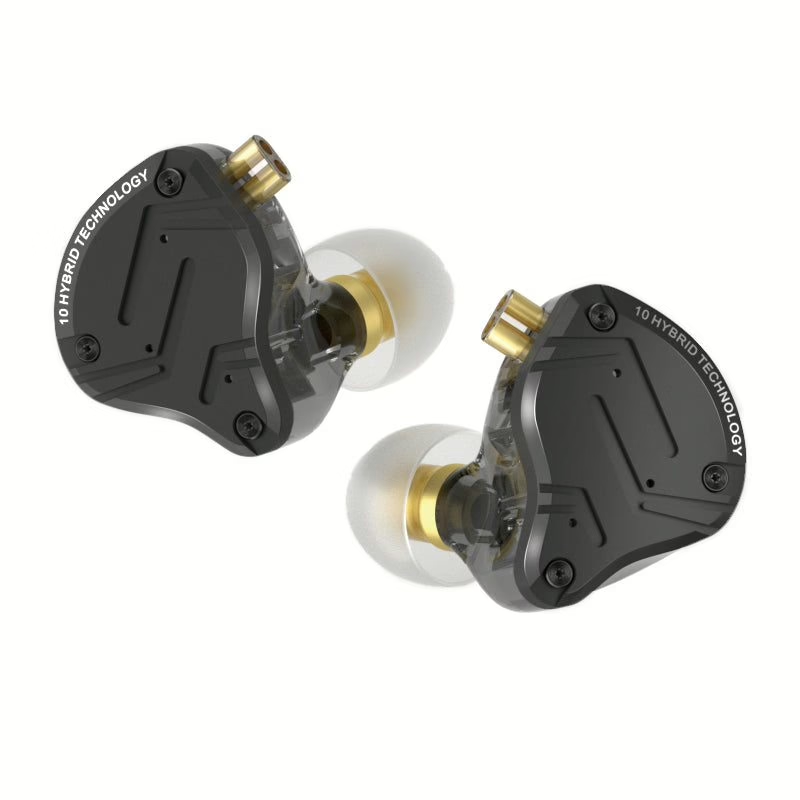
The price is hard to believe the first time: five drivers per ear — a 10 mm dynamic for the lows and four balanced armatures for the mids and highs — for what a set of cables costs. The ZS10 Pro X has become the gateway into the IEM world, a favourite of players who want to try the concept before investing. The resin shell with its alloy faceplate sits well in the ear, and the 2-pin cable is replaceable for next to nothing.
Let’s stay honest: this is only partly the same craft as an IEM designed for the stage. The tuning is pronounced — generous in the bass, bright up top — flattering to listen to, less neutral for monitoring, where you want the truth of the mix. Isolation is fine but no more, and there’s no real pro support behind it. It’s an excellent first step, not a touring tool.
In short — KZ · around $40 · hybrid 1 dynamic + 4 balanced armatures · 0.75 mm 2-pin connector, detachable cable · wired
View the product page for the KZ ZS10 Pro X
Mackie MP-220
Mackie built its name on value, and the MP-220 sits squarely in that tradition. Two dynamic drivers per ear, a claimed 40 dB of isolation among the best in this price bracket, a standard MMCX connector and a moulded shell that tucks cleanly under the ear: this is a genuine stage IEM, not a consumer earphone in disguise. The bass has body, which bassists and drummers appreciate.
Going all-dynamic has a consequence: you gain impact and manufacturing simplicity, but lose a little of the definition and separation a balanced armature brings up top. At this price, that’s a perfectly defensible trade-off. Just keep an eye on availability — it’s occasionally on backorder at the manufacturer, though it’s widely stocked through dealers.
In short — Mackie · $159.99 · dual dynamic driver · 20 Hz–20 kHz, 40 dB isolation, detachable MMCX · wired

View the product page for the Mackie MP-220
Family 2 — The stage workhorses
The heart of the matter: reliable universal-fit IEMs, proven night after night, that make up the real stage standard for the vast majority of players. This is where you find the best balance of budget, ruggedness and honest sound.
Shure SE215
If one model had to define the category, this would be it. The SE215 is the IEM that democratised personal monitoring: a single dynamic MicroDriver, up to 37 dB of isolation, a detachable MMCX cable that’s easy to replace, and a reliability proven on stages worldwide for over a decade. It’s the yardstick every other IEM is measured against.
Its single dynamic driver sets a limit: resolution and separation don’t rival the multi-armature models that follow. But for a first real stage IEM, it’s hard to go wrong — the signature is warm, the bass present, and Shure’s after-sales support genuinely exists. It’s the democratised equivalent of the monitoring need.
In short — Shure · around $99 / £99 · single dynamic MicroDriver · 22 Hz–17.5 kHz, up to 37 dB isolation, detachable MMCX · wired
View the product page for the Shure SE215
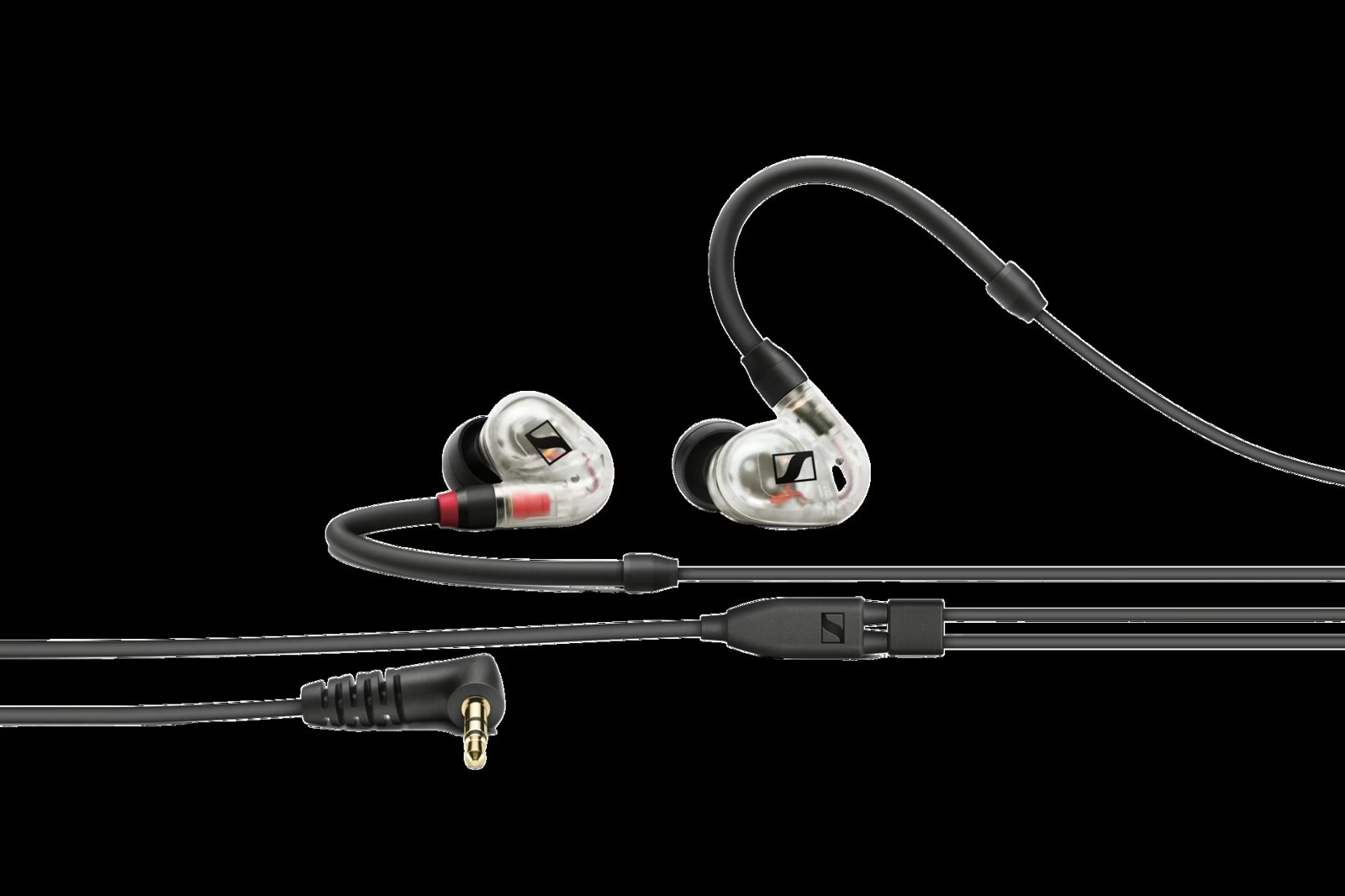
Sennheiser IE 100 PRO
This is the Shure’s direct rival, and the duel is close. Sennheiser also goes with a single dynamic driver, but a 10 mm broadband unit known for clean, distortion-free reproduction across the spectrum. The signature is more neutral, less coloured than the SE215’s — an asset when you want to hear your mix as it is, not prettied up. The cable detaches, and an optional Bluetooth module turns it into an everyday earphone too.
Passive isolation, rated around 26 dB, sits a notch below the Shure: on a very loud stage, that can matter. In exchange, many players find the Sennheiser fit more comfortable over time, including for smaller ear canals. Between this and the SE215, the call often comes down to a fitting session and whether you want a neutral or a warm signature.
In short — Sennheiser · around $99 / £129 · single 10 mm broadband dynamic driver · 26 dB isolation, detachable cable · optional Bluetooth module
View the product page for the Sennheiser IE 100 PRO
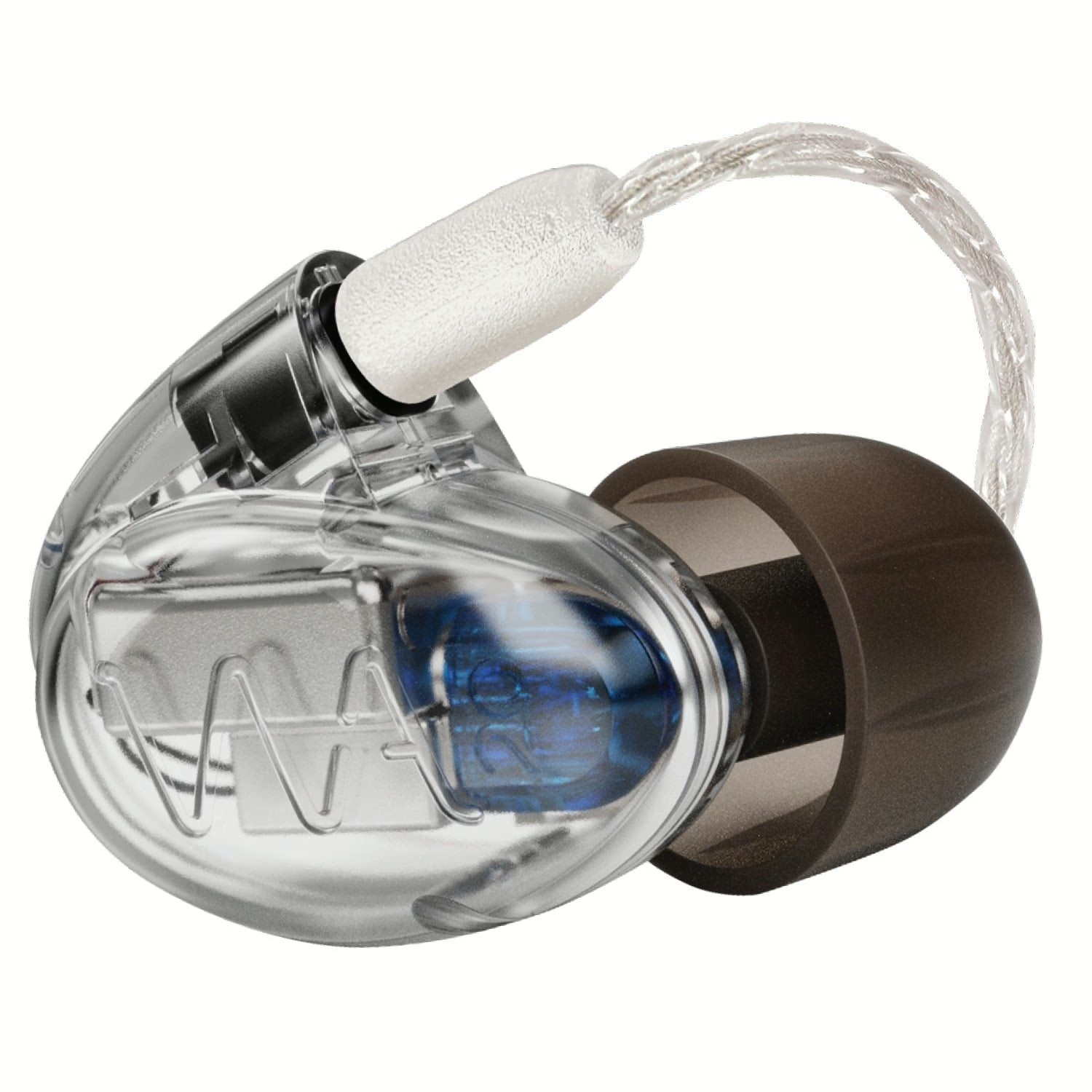
Westone Audio Pro X20
Westone has been making devices for the ear for decades, and it shows. The Pro X20 drops the dynamic driver for two balanced armatures with a two-way passive crossover: you gain precision, separation and control up top. The form factor is remarkably compact and light, nearly invisible once seated — real comfort for long sets. This is the step up from the single-driver workhorses.
Isolation, around 25 dB on average, is deliberately a touch less sealed: Westone favours a more natural relationship with the room, which some singers value so they don’t feel entirely cut off from the audience. At this price, the Pro X20 targets the player who gigs regularly and wants a serious universal IEM without going custom.
In short — Westone Audio · $329.99 · dual balanced armature, two-way passive crossover · 25 dB average isolation, detachable T2 cable · wired
View the product page for the Westone Audio Pro X20
Family 3 — High-end and pro custom
The end of the road. Here you invest in detail, maximum isolation and the comfort of a shell moulded to your ear. These are high-end cousins of the stage need: more than many players require, and exactly right for touring professionals.
64 Audio Nio
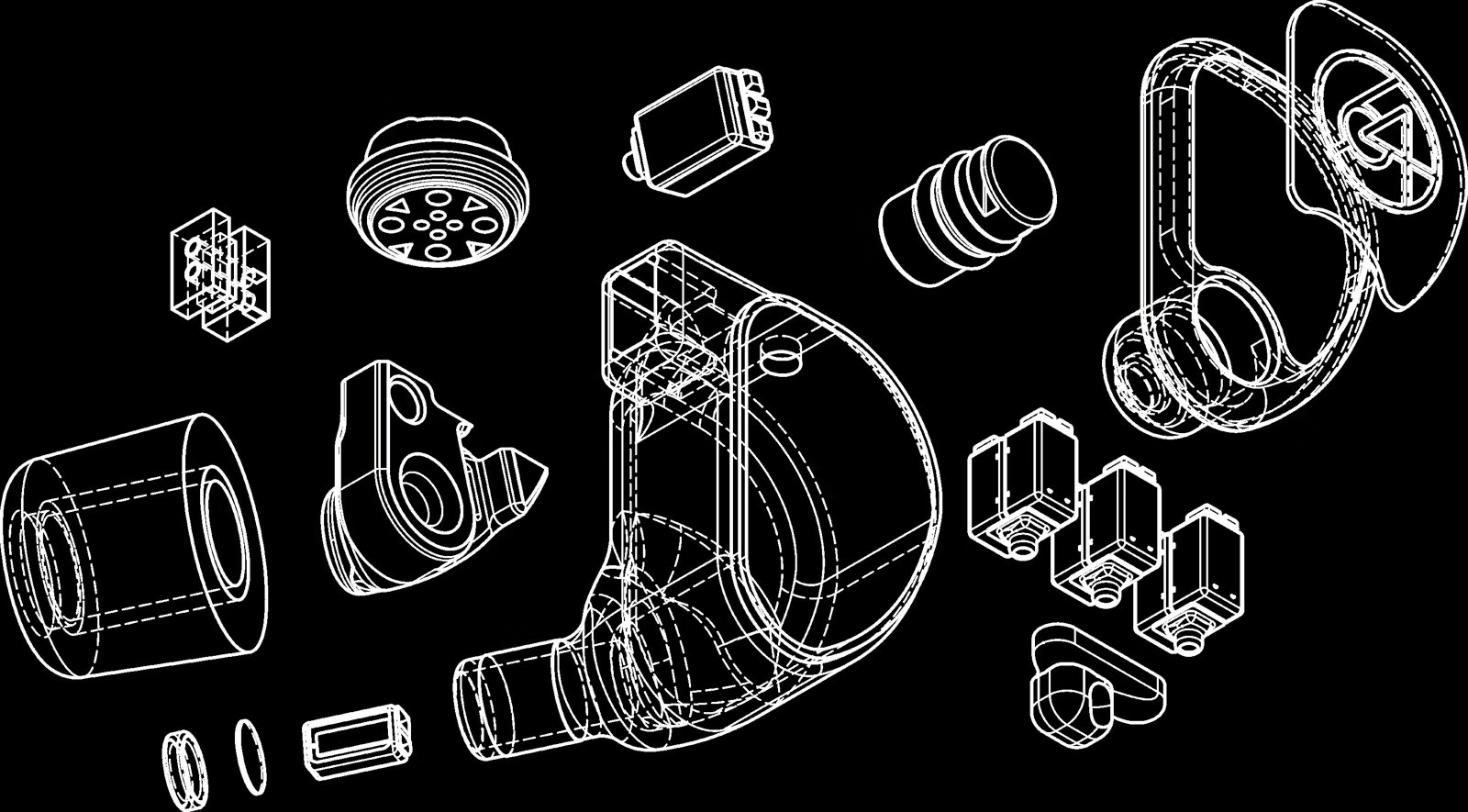
64 Audio is a high-end monitoring reference, used on the biggest tours. The Nio is their entry into the universal audiophile line: nine drivers per ear — a 9 mm dynamic backed by eight balanced armatures — a four-way crossover, and above all the in-house APEX and tia technologies. The interchangeable APEX modules deserve a mention: they vent pressure in the ear canal to cut listening fatigue over a long session, while tuning the level of isolation.
Let’s be clear about its status: at this price, and as a universal rather than moulded model, the Nio is a high-end cousin of the stage need more than a strictly utilitarian tool. It brings a richness and three-dimensionality the workhorses can’t reach, but diminishing returns are real. It’s the purchase of the demanding musician, or the engineer who wants a reliable, comfortable reference for long listening.
In short — 64 Audio · $1,699 · hybrid 9 drivers (1x 9 mm dynamic + 8 balanced armatures), 4-way crossover · tia, APEX and LID tech, interchangeable APEX modules · universal fit, wired
View the product page for the 64 Audio Nio
Ultimate Ears UE 7 Pro
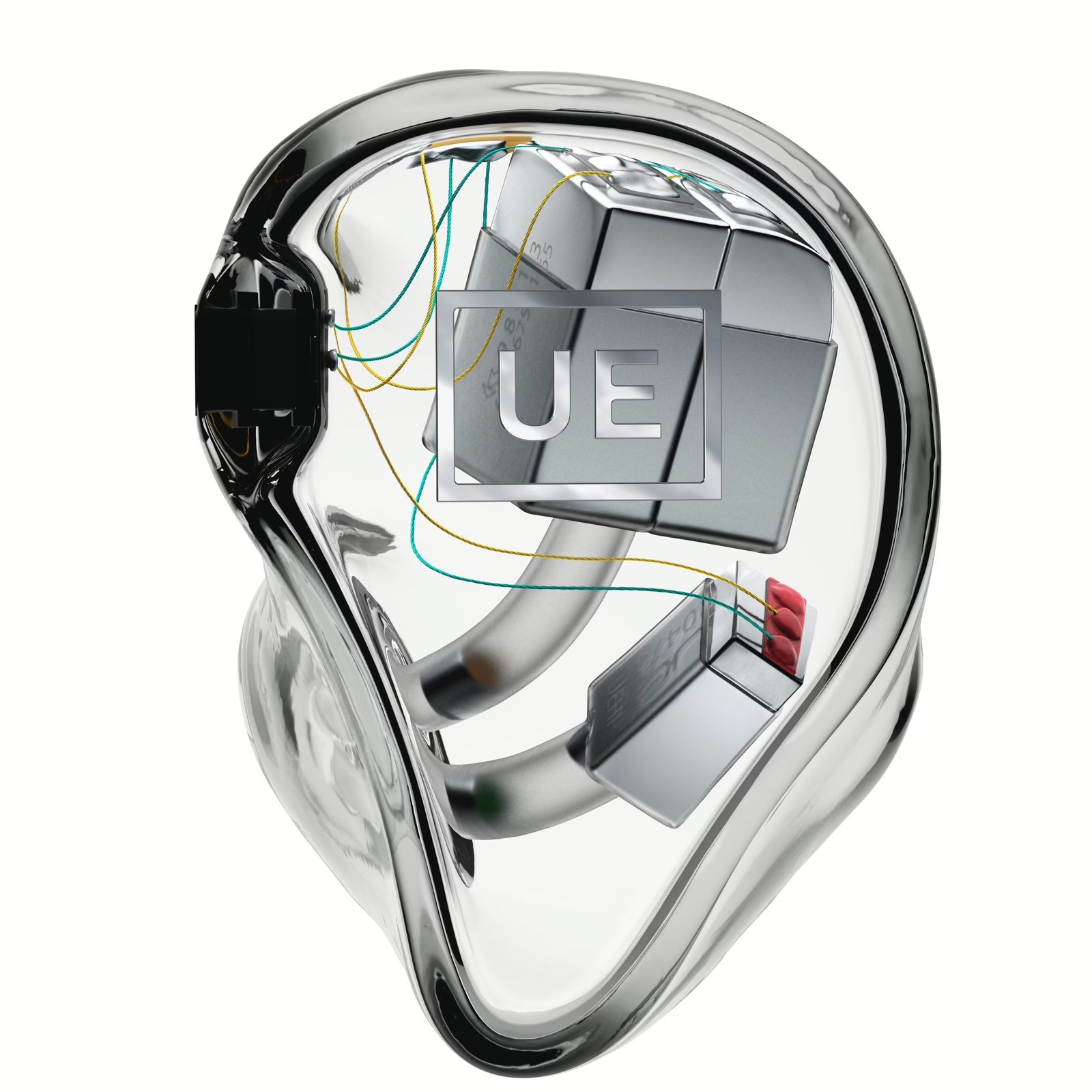
This is the stage need taken to its conclusion. The UE 7 Pro is custom: you go through ear impressions to get shells moulded to your anatomy. The payoff is twofold — acoustic isolation beyond anything a universal can offer, and comfort that lets you wear the IEM for hours without feeling it. Three balanced armatures (two dedicated to the lows, one to the mid-high) deliver a sound cut for singers and lead instrumentalists, with a present midrange and controlled bass.
Proven on stage for over a decade, the UE 7 Pro is the true professional equivalent of the monitoring need, when budget and commitment follow. The flip side of custom: the build time after impressions, and the fact that you can’t easily resell it since it fits your ears alone. For a player who gigs regularly and wants the best isolation-comfort-sound ratio, it’s the reference investment.
In short — Ultimate Ears Pro · from $999 · three balanced armatures (two low + one mid-high) · custom-moulded, ear impressions required, high acoustic isolation · wired
View the product page for the Ultimate Ears UE 7 Pro
The recap table
| Product | Brand | Indicative price | The job in a word |
|---|---|---|---|
| ZS10 Pro X | KZ | ~$40 | Discovery |
| MP-220 | Mackie | $159.99 | Value |
| SE215 | Shure | ~$99 | The standard |
| IE 100 PRO | Sennheiser | ~$99 | Neutral |
| Pro X20 | Westone Audio | $329.99 | Comfort |
| Nio | 64 Audio | $1,699 | Universal reference |
| UE 7 Pro | Ultimate Ears Pro | from $999 | Custom-moulded |
Which one should you choose?
To discover the concept risk-free, the KZ ZS10 Pro X is more than enough to understand why you never go back to the wedge. For a first real stage IEM that will hold up, the Shure SE215 remains the safest default, with the Sennheiser IE 100 PRO as the more neutral alternative — decide between them at a fitting and by your bass preference. The Mackie MP-220 slots in between if the budget is tight but the standards are real.
The player who gigs regularly will benefit from stepping up to the Westone Pro X20 for armature definition and comfort. And if you make your living on stage, the custom Ultimate Ears UE 7 Pro — or the high-end universal 64 Audio Nio if you’d rather skip the impressions — is the investment that lastingly changes your relationship with monitoring. One last note from the field: the best IEM in the world won’t fix a bad setting. We recently covered the Sony IER-M500, the $120 stage IEM that neatly illustrates this mid-tier segment; and the sound you hear always depends as much on managing gain before feedback and monitor EQ as on the driver in your ear.