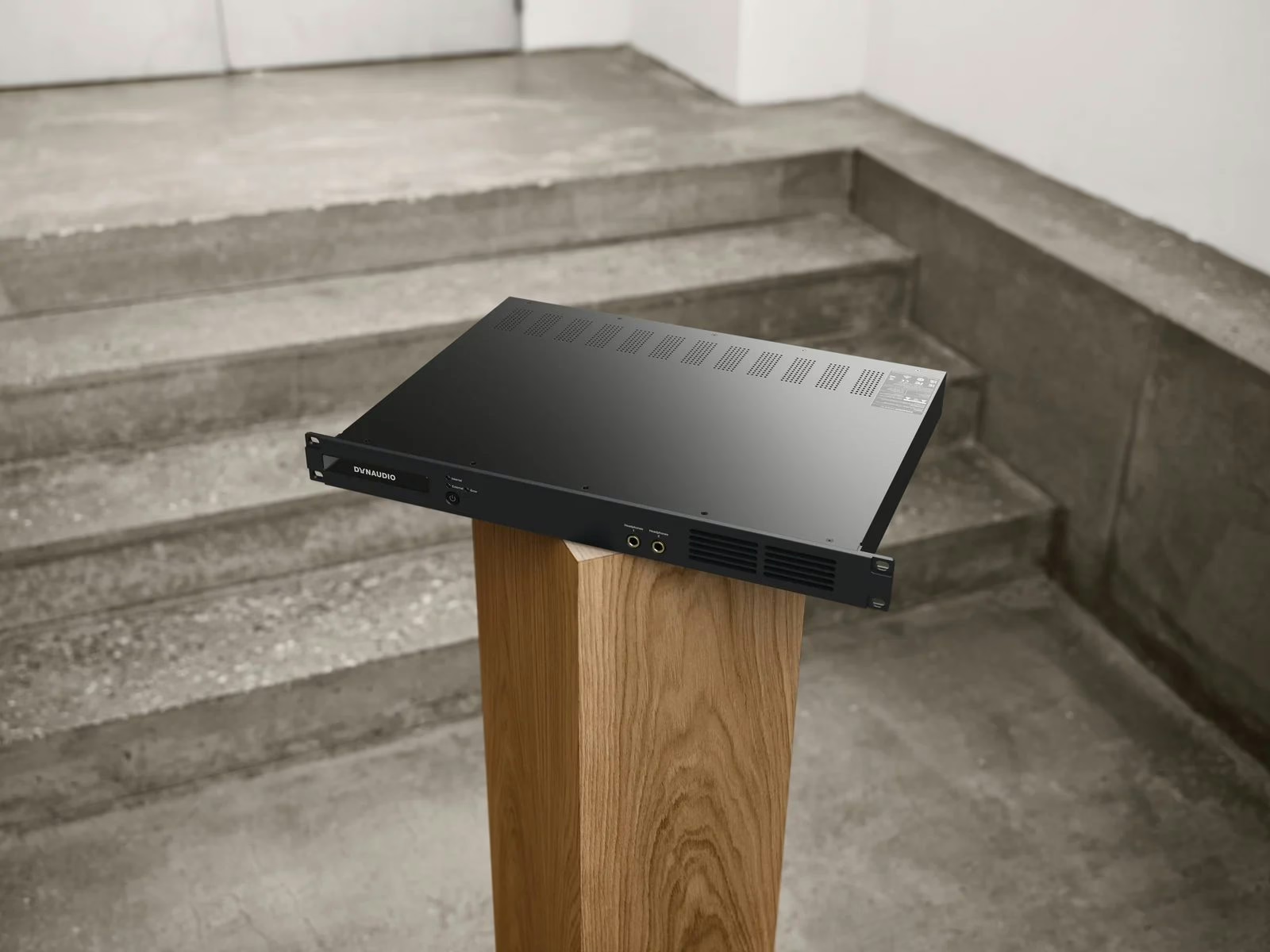
Nobody knows the output of a Dynaudio monitor better than Dynaudio. With the Control series, the Danish company goes after the other end of the chain: how you drive your listening. The Control 01, its bigger sibling Control 02 and the Control Link desktop remote pack everything a modern room splits across a monitor controller, a digital patchbay, a format converter and a room-correction engine into a single rack space.
One rack for the whole listening position
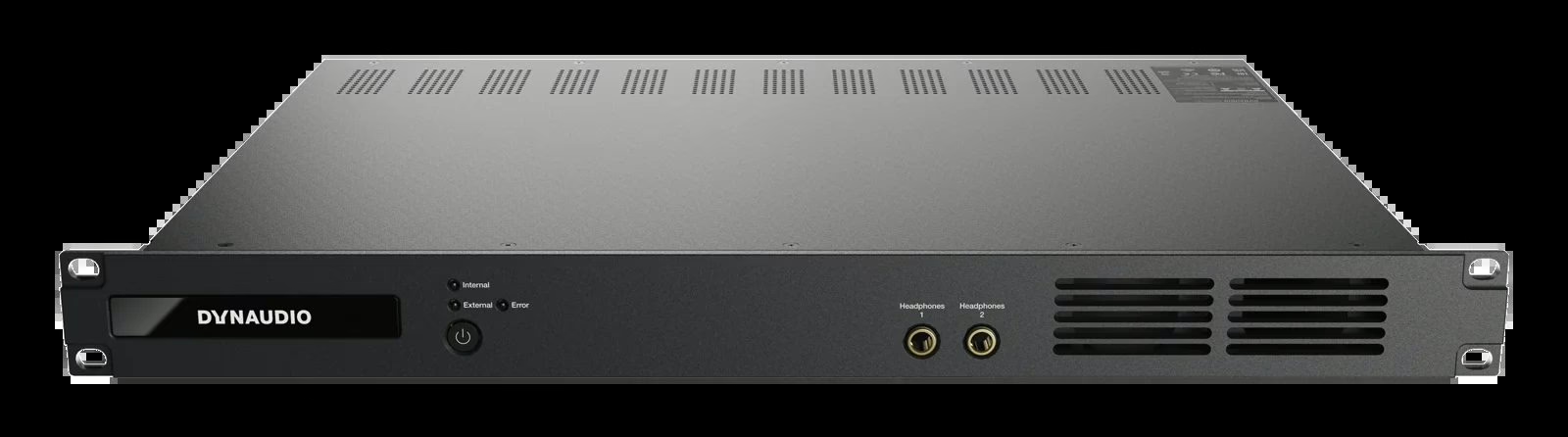
The Control 01 fits in a single rack unit yet stacks the roles: monitor controller, digital patchbay, format converter, headphone amp, room-EQ optimiser and audio router. The Control 02 adds eight analogue outputs and its own D/A conversion, so it can drive analogue-input monitors such as Dynaudio’s own LYD or BM series directly. Either way, the point is to replace a pile of boxes with one controllable unit sitting next to the engineer.
DAD under the hood
The real story is three letters: DAD, for Digital Audio Denmark. The Control series is the result of a long-standing collaboration with that high-end monitoring and interface specialist, whose gear already runs in countless mastering suites and Atmos dubbing stages. Control is driven by DAD’s DADman software with its PRO|MON and SPQ modules. In practice that means handling any listening layout from mono up to 128 immersive channels, each with its own EQ, gain and delay. For room correction Dynaudio quotes more than a thousand EQ bands, and Dolby Atmos layouts are covered up to 9.1.6.
I/O to spare
On connectivity the Control 01 does not hold back: 256 channels over Dante, another 256 across two Thunderbolt 3 ports, dual MADI on BNC, AES3 on DB25, optical ADAT and Word Clock. Two DAD expansion slots and a DADlink connection push the total to up to 984 configurable channels with no added latency. That makes it a hub able to feed a mix room, a broadcast truck or an immersive stage without a bottleneck. Two independent headphone outputs round out the front panel.
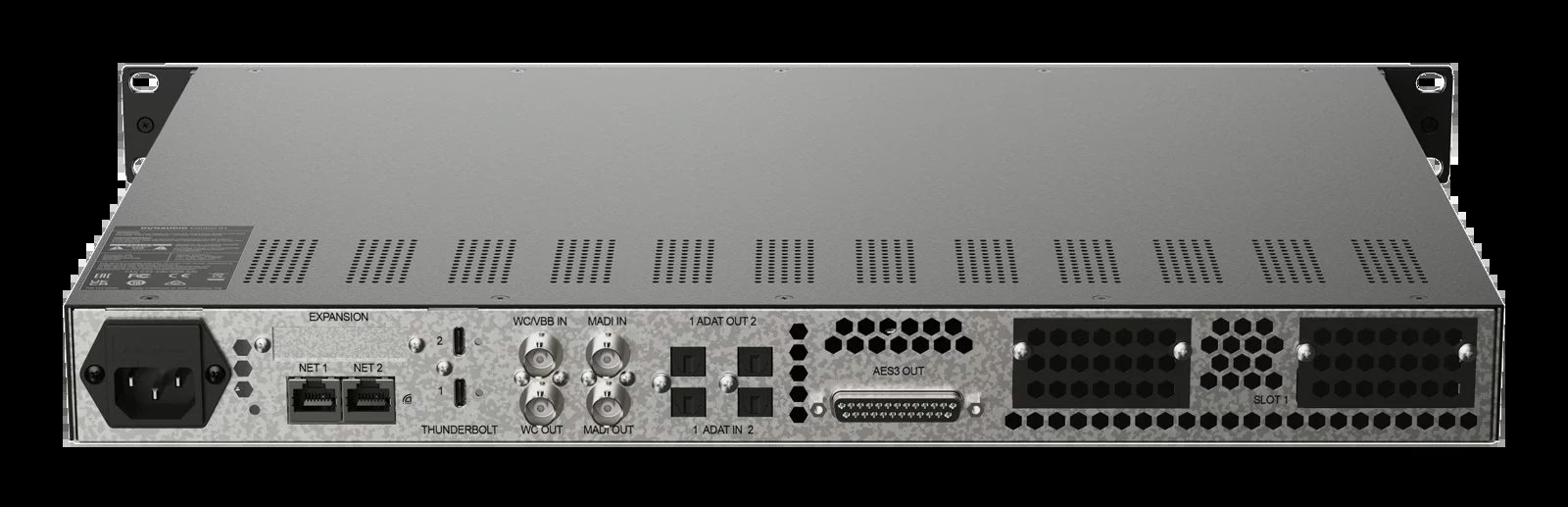
Managing those streams is a topic in itself: our primer on Dante audio-over-IP breaks down what sits behind those 256 network channels, and our guide to mixing in Dolby Atmos puts immersive monitoring in context.
Control Link: hands on the level
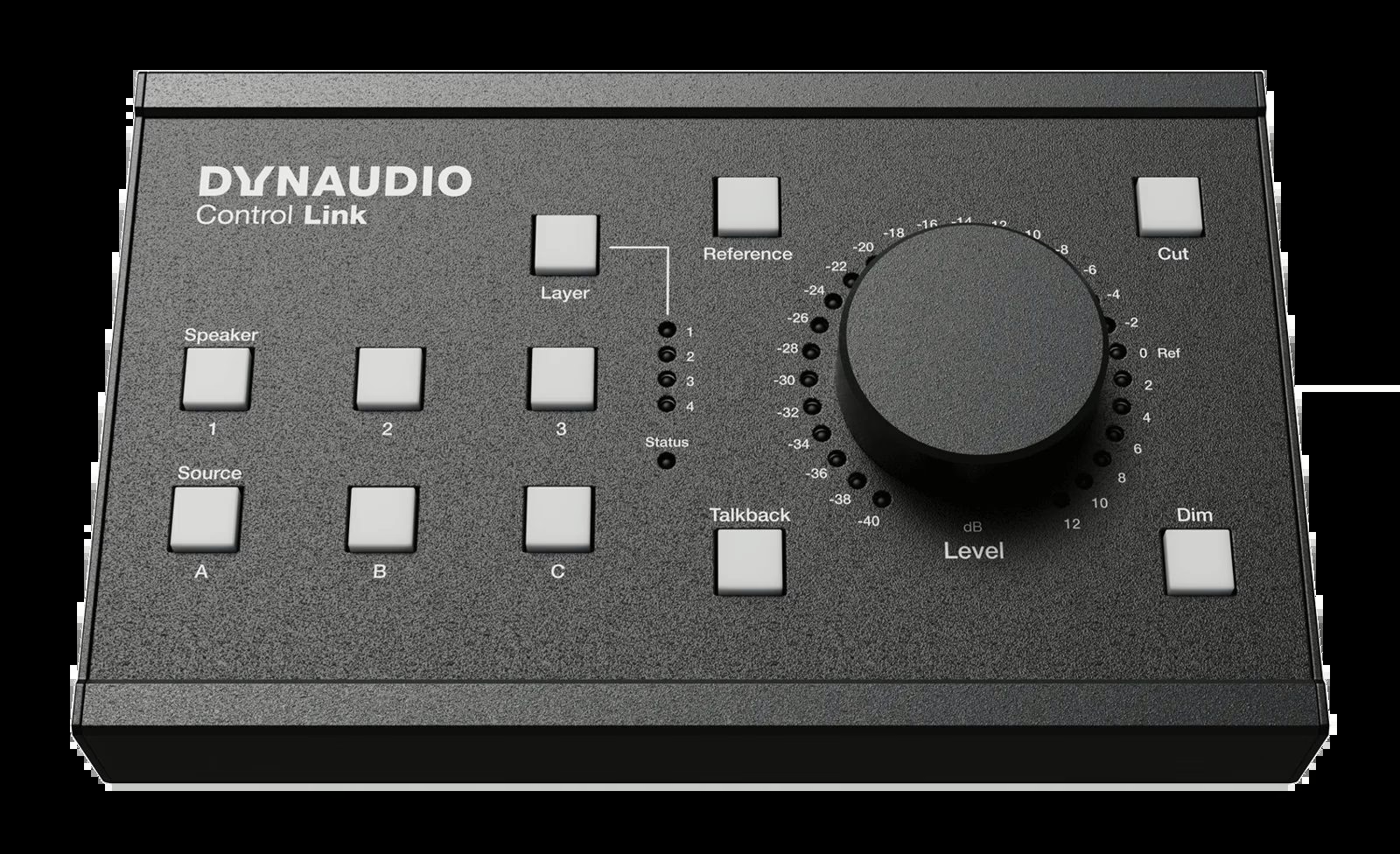
The processing lives in the rack, but the work happens at the desk. The Control Link remote adds a large, precise level dial and forty programmable keys: speaker switching, preset recall, source selection, downmix options, complex routings. These are the moves you repeat a thousand times a day and that need to fall under the hand without a thought. It is also what separates a real monitor controller from a plain volume knob.
Positioning and availability
The series sits firmly in professional territory. The Control 01 is announced at around €5,300, the Control 02 around €6,300 and the Control Link remote around €1,400. The Control 01 and Control Link are available now through Dynaudio Professional resellers, with the Control 02 following. At that price it is not aimed at the home studio but at rooms where immersive monitoring and routing have become everyday constraints.
| Model | Role | Key point | Indicative price |
|---|---|---|---|
| Control 01 | Monitor processor and router | Up to 984 channels, 128 immersive | ≈ €5,300 |
| Control 02 | Same + D/A conversion | 8 built-in analogue outputs | ≈ €6,300 |
| Control Link | Desktop remote | Level dial + 40 programmable keys | ≈ €1,400 |
My take
Handing the engine to DAD is the smartest call here: it is the reference for high-end monitoring and routing, and it drops the Control series straight into the big-room league rather than the accessory aisle. The “one rack, whole listening position” approach makes sense now that immersive layouts multiply channels and the network replaces the cable. The sticking point is price: at this level the Control 01 is not for the studio just starting out, but for one already juggling several speaker sets and an Atmos layout. For anyone living with those constraints, folding control, conversion and correction into a single dial-driven box is not a luxury — it is time saved every session.
Frequently asked questions
What is the difference between the Control 01 and Control 02?
Both share the same digital core and network I/O. The Control 02 adds eight analogue outputs and its own D/A conversion, letting it drive analogue-input monitors without an external converter. The Control 01 stays fully digital on output.
Do you have to buy the Control Link remote?
No — the processor can also be driven from the DADman software. But the Control Link brings physical control of level and monitor switching, which makes all the difference during a session. It is sold separately, around €1,400.
How many immersive channels does the Control series handle?
Up to 128, each with its own EQ, gain and delay, through DADman’s PRO|MON and SPQ modules. Dolby Atmos layouts are covered up to 9.1.6, enough for the vast majority of immersive mix rooms.
How do you reach the quoted 984 channels?
By combining the built-in interfaces (256 Dante channels, 256 over Thunderbolt, MADI, AES3, ADAT) with the two DAD expansion slots and a DADlink connection. That scaling adds no extra latency, which is essential for a monitoring hub.