The rotary mixer, long the preserve of house and disco purists, is a desirable object again. Behind a good share of the boutique models feeding that trend sits one British workshop: Union Audio, run by Andy Rigby-Jones. The company has just announced it is taking over production of the two.valve and four.valve, two valve rotary mixers previously sold under the MasterSounds name.
A handover without a hitch
The story is simple. MasterSounds, founded by Ryan Shaw in 2008, partnered with Union Audio back in 2016, and Union Audio built the mixers. With MasterSounds winding down, the workshop that already made these machines takes them over under its own name. The former Two Valve MK2 and Four Valve MK2 become the two.valve and four.valve, with the same specs and the same handmade UK build. Nothing changes in the sound; everything changes on the badge. For the buyer there is a double upside: continuity for a product many feared would disappear, and a single point of contact for both build and support.
What the valve is after
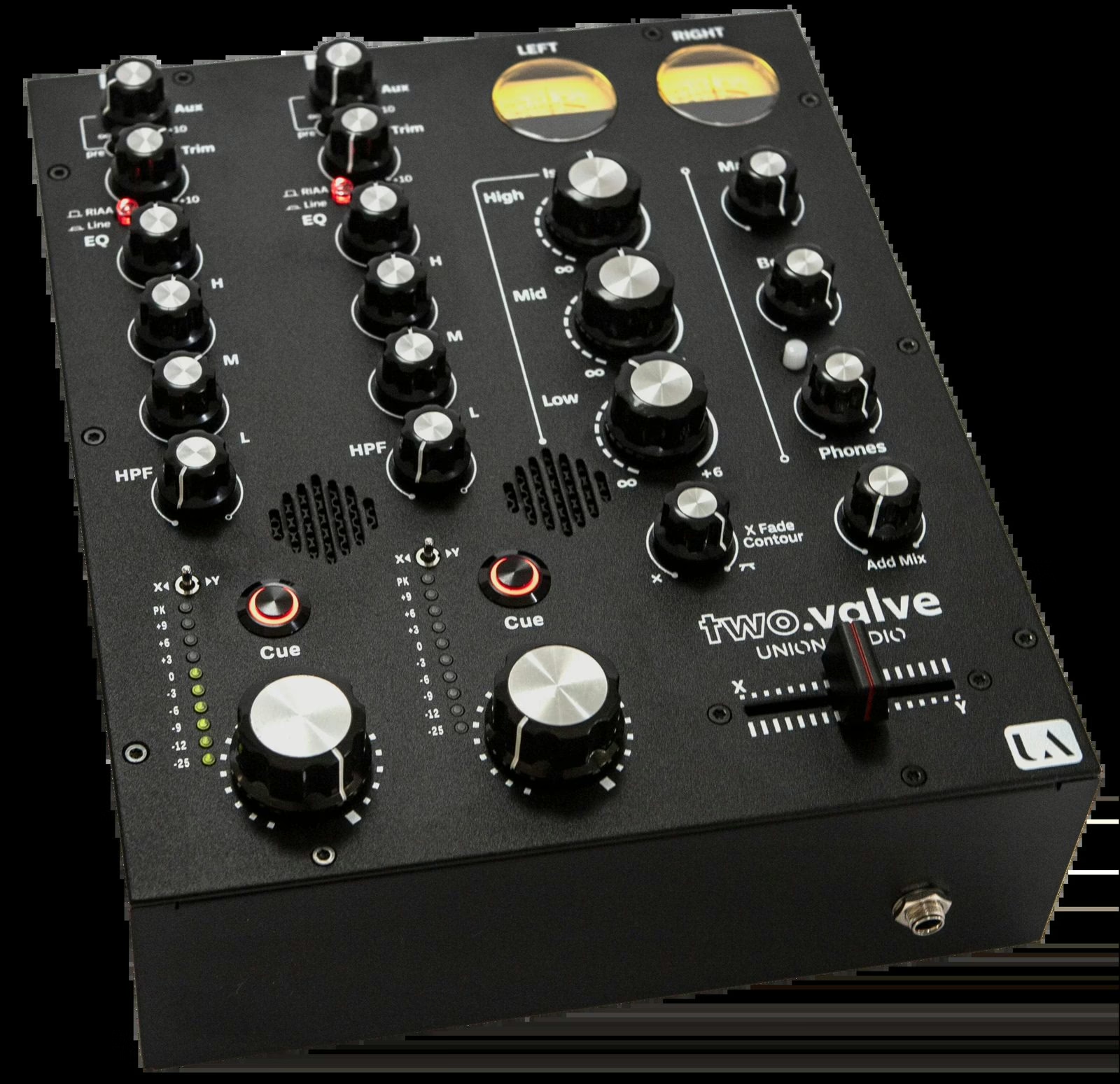
The name is honest: both mixers carry a valve stage and even show backlit VU meters that are as much about mood as metering. The goal is not clinical transparency but colour — a rounded low end and a gentle saturation when you push. Each channel has a three-band EQ, a high-pass filter, switchable phono (with RIAA) or line inputs and a pre/post aux send. The crossfader is an Innofader, the market reference for longevity and feel. This is firmly high-end club-mixer territory, built for mixing by ear and by hand rather than on a screen.
two.valve or four.valve: two or four channels
The two.valve is a compact two-channel unit, ideal for a two-deck vinyl set or a DJ who values simplicity. The four.valve steps up to four channels and adds a dedicated three-band isolator (low, mid, high), a separate Master and Booth section and Split cue monitoring. It is the one for more layered sets, multiple decks or adding a drum machine and an external source. Both keep the same sonic philosophy; only the channel count and the richness of the master section change.
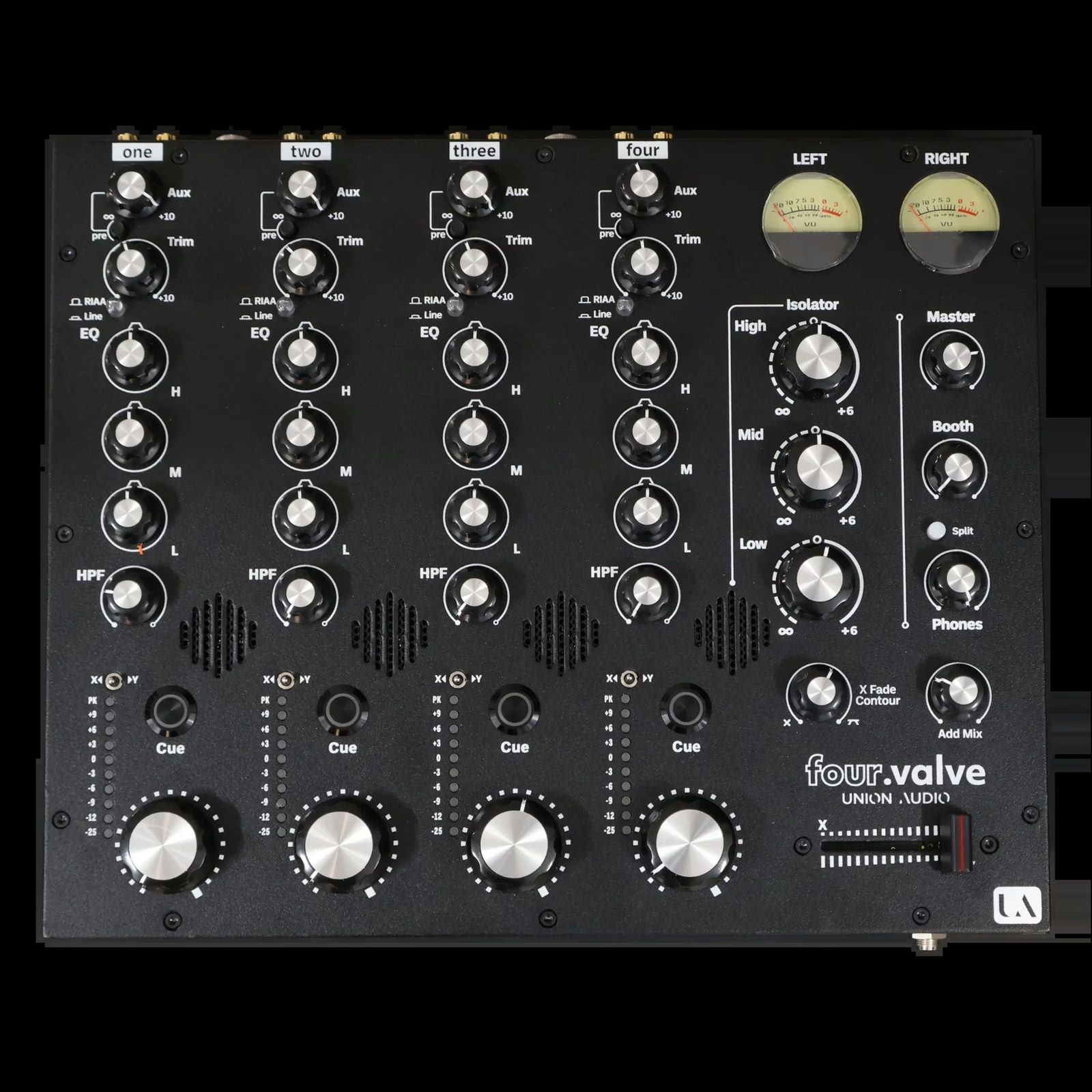
| Model | Channels | Key points | Indicative price |
|---|---|---|---|
| two.valve | 2 | Valve stage, 3-band EQ, Innofader | ≈ £1,475 (≈ €1,700) |
| four.valve | 4 | 3-band isolator, Master/Booth, Split | ≈ £1,975 (≈ €2,300) |
| Signature Series | 2 or 4 | Premium finish and components | ≈ £1,986 to £2,754 |
The Orbit range widens with the LE fx
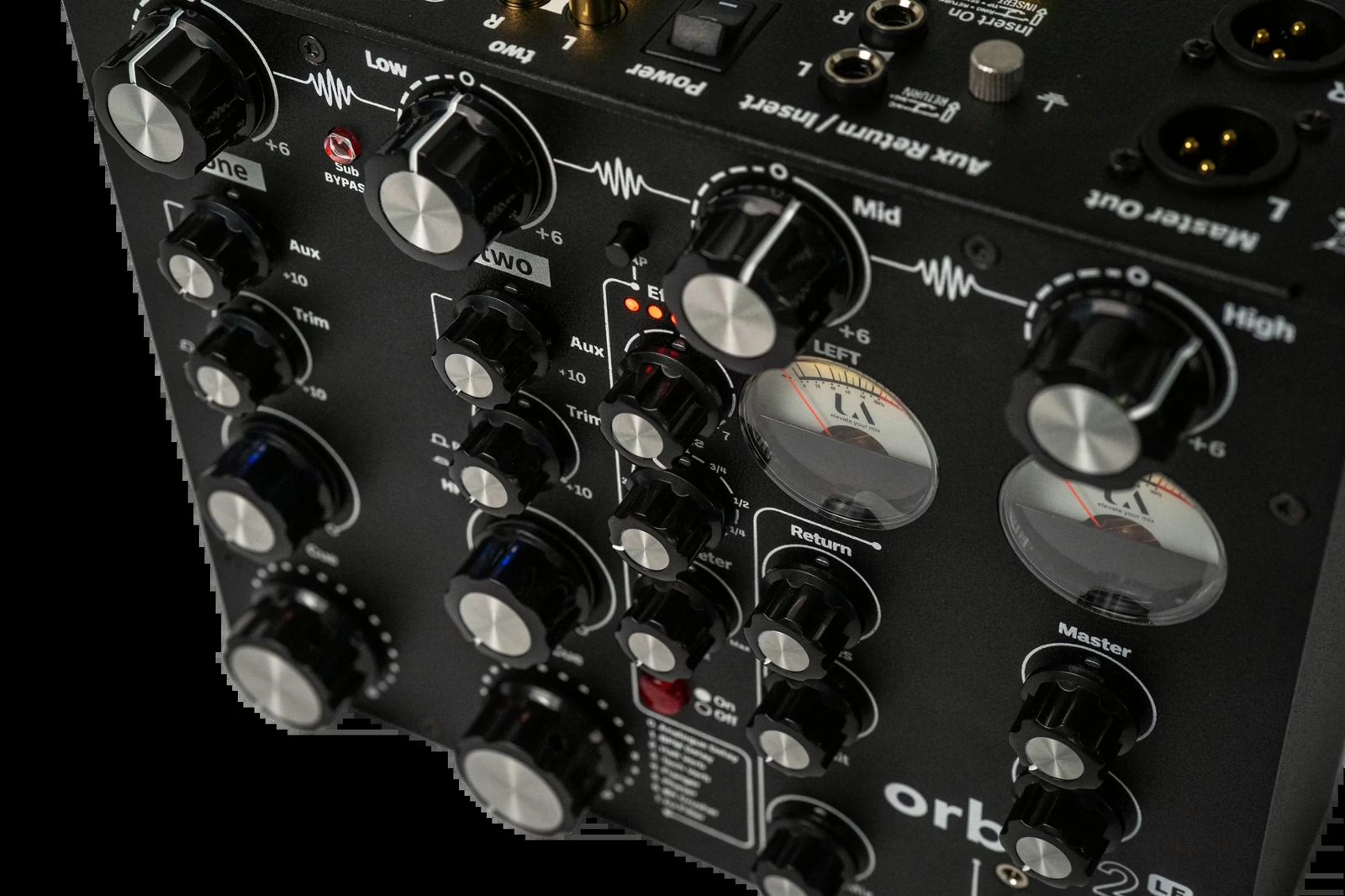
The same move plays out at the other end of the catalogue. Union Audio rounds out its Orbit range with the orbit.2 LE fx and orbit.4 LE fx, more affordable rotary mixers that this time build in an effects section, an aux return and insert, and a master output on XLR. You still get the in-house isolator and VU meters, but in a format and at a price aimed at the DJ who wants a taste of rotary without going straight to the pricier valve tier. The orbit.2 LE fx lands around £895 and the orbit.4 LE fx around £1,095, still built in Britain.
This renewed appetite for rotary controls sits in a wider context, somewhere between open nostalgia and genuine mixing comfort. We saw it with the return of the Rodec MX-180 sound as a phono preamp, and it goes hand in hand with the vinyl revival and turntables like the Reloop RP-2000 MK4.
My take
Good news for anyone who had been eyeing these machines: taking over a range you already built is the cleanest way to secure its future, with no drop in quality or service. The valve is a matter of taste, and you should not ask it for studio-mixer neutrality — that was never the brief. Here you pay for colour, for an ergonomics tuned to hands-on mixing, and for a handmade build you feel under your fingers. The really interesting move is the Orbit LE fx: seeing rotary-plus-effects drop under the £1,000 mark opens the door to DJs who dreamed of it but could not stretch to a valve model. The open question is how long the trend holds before it becomes ordinary.
Frequently asked questions
Are the two.valve and four.valve different from the old MasterSounds?
No. They are the same machines as the Two Valve MK2 and Four Valve MK2, with the same specs and the same UK build. Only the brand name changes: Union Audio, which already made them, now sells them under its own banner.
What is the difference between a valve stage and an isolator EQ?
The valve colours the whole mixer’s signal, mostly in the low end, and adds gentle saturation as levels rise. The isolator is a very effective three-band EQ that lets you cut low, mid or high outright — a transition tool. The four.valve combines both.
What are the Orbit LE fx models for?
They are more affordable rotary mixers that build in an effects section, an aux return and insert, and an XLR master output. They target the DJ who wants rotary ergonomics and onboard effects without moving to the pricier valve format.
Are these mixers built for vinyl?
Partly: each channel takes a phono input with RIAA correction or a switchable line input, suiting both turntables and digital players. The rotary format and isolators are historically tied to house and disco vinyl mixing culture.