Fender means guitars and amps. Now it means MIDI controllers too. With the Motion 16 and Motion 32, the company unveils its first two pad surfaces built for production and stage alike — and it isn’t cutting corners: both units feature polyphonic aftertouch on every pad, a rarity at this price point.
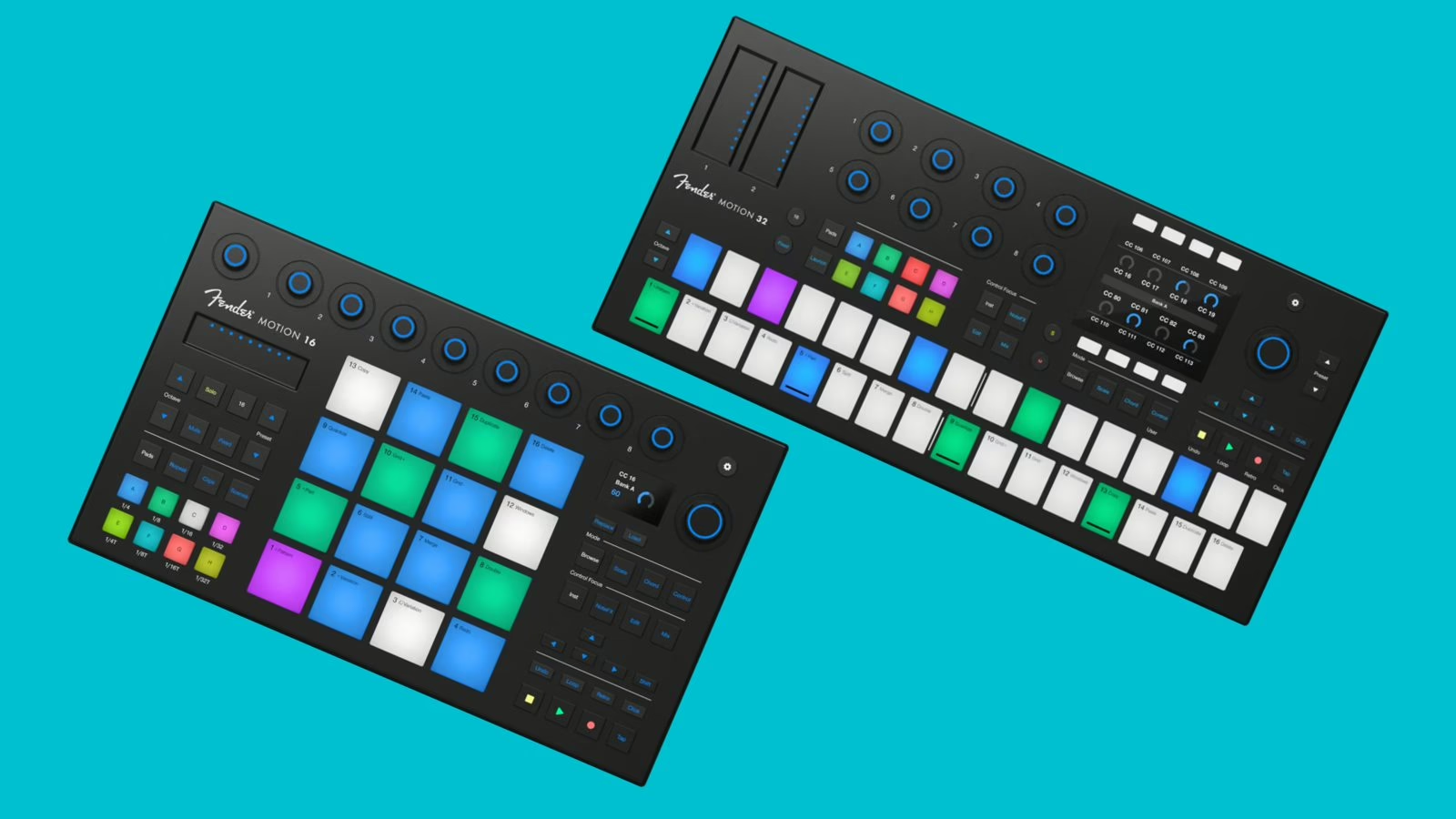
Two controllers, one expressive idea
The goal is straightforward: pads you can actually play, not just binary triggers. The headline feature is the pads themselves. Fender didn’t build them alone — they’re made by FATAR, the Italian keybed maker behind a huge chunk of the master keyboards on the market. It’s the first time FATAR has applied its craft to pads, and the promise shows: velocity sensitivity, RGB backlighting, and above all that polyphonic aftertouch, which lets you shape each note independently once a pad is pressed.
In practice, you can hold a chord and push the brightness or depth of a single voice without touching the others. On a synth pad or a granular texture, that gesture is a game-changer: you move from a frozen trigger to real articulation.
Motion 16: compact and workflow-first
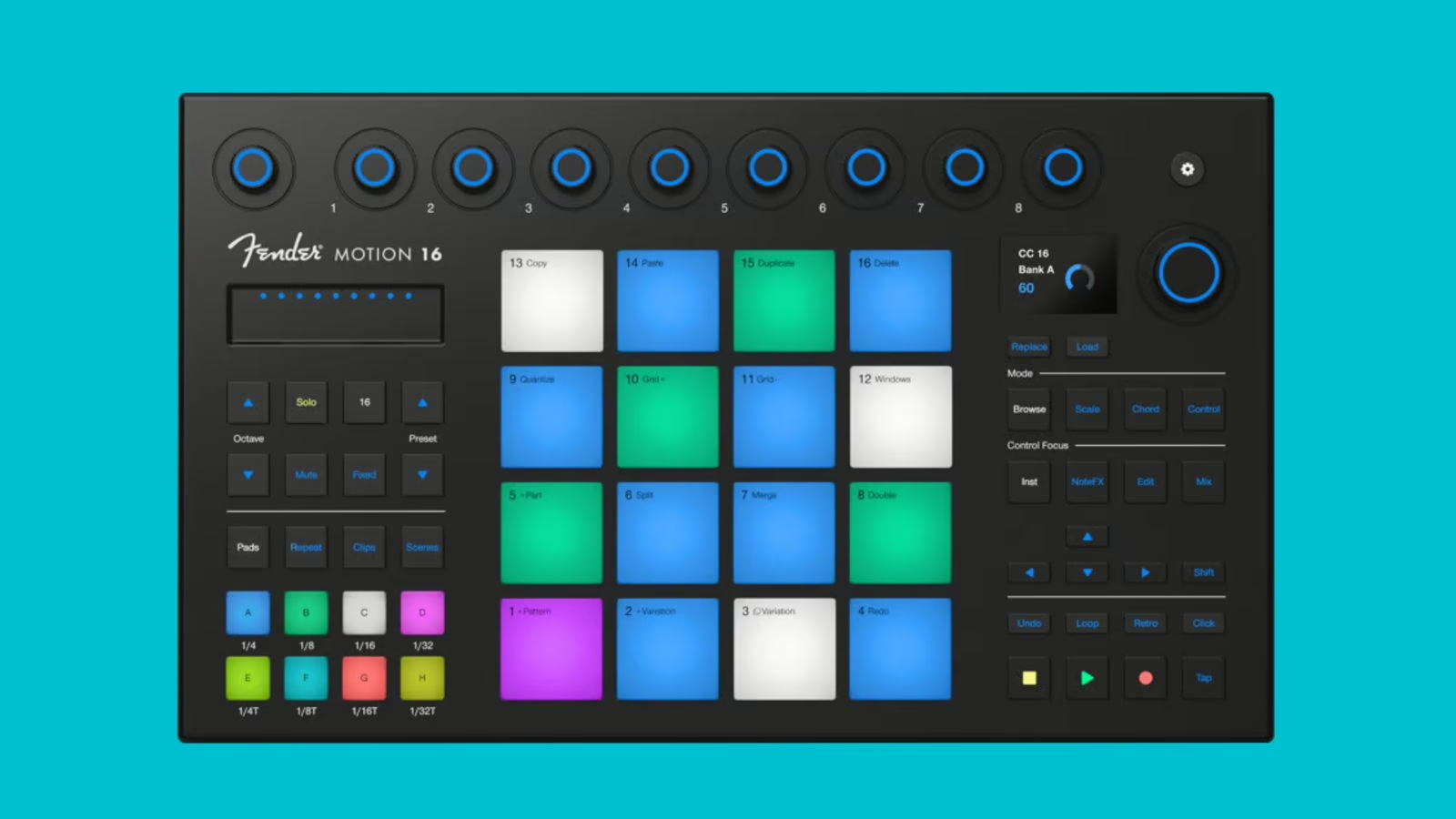
The Motion 16 uses the classic 4×4 grid, surrounded by nine illuminated touch encoders, a color display and a side touch strip dedicated to pitch, modulation and effects. It’s the tighter surface, made to drive a session, fire samples and sculpt parameters without leaving the screen.
Motion 32: a pad grid you play like a keyboard
The Motion 32 doubles down with 32 pads laid out as a genuine keyboard, plus touch pitch and mod wheels. This one is an instrument in its own right, inviting you to play melodic lines and chords as you would on a stage keyboard — but with the dynamics and aftertouch of a pad surface.
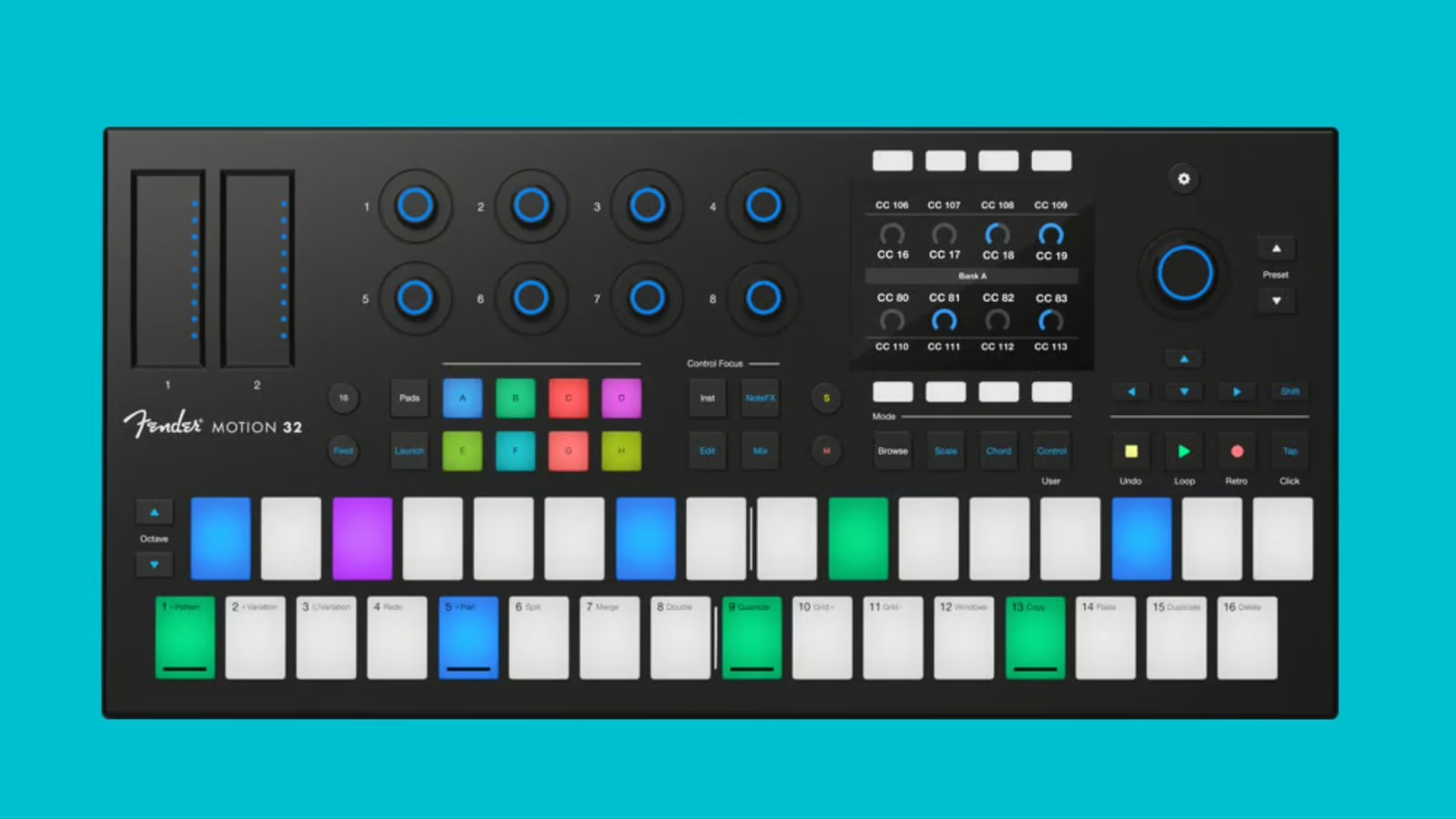
Both models share the same set of playing aids, especially welcome if you’re not a trained pianist:
- Smart Scale: locks the pads to a scale so you only ever hit the right notes.
- Smart Chords: fires full chords from a single pad.
- Over 30 iconic chord progressions ready to go for quickly laying down a harmonic bed.
The real story: the Fender Studio ecosystem
These controllers didn’t appear out of nowhere. Fender now owns PreSonus, and the Motion units are clearly the spiritual successors to the Atom surfaces. Above all, they’re built to talk closely to Fender Studio Pro, the in-house DAW born from the Studio One acquisition: dedicated navigation buttons, an “Add” function to spin up tracks and instruments on the fly, optimized mapping. Fender is methodically assembling a full ecosystem — instruments, software, control surfaces — where the brand had long stuck to instrument hardware.
No lock-in worries, though: both Motions work as plain generic MIDI controllers with any DAW, from Live to Logic to Bitwig. The Studio Pro integration is a bonus, not a requirement.
| Model | Pads | Controls | Street price |
|---|---|---|---|
| Motion 16 | 16 RGB pads, polyphonic aftertouch (FATAR) | 9 touch encoders, color display, touch strip | $269.99 / €279 |
| Motion 32 | 32 RGB pads, polyphonic aftertouch (FATAR), keyboard layout | Mappable touch encoders, touch pitch/mod wheels | $329.99 / €349 |
My take
Polyphonic aftertouch on pads is still a luxury usually reserved for far pricier surfaces. Seeing it land around $270 to $330, with the build credibility a FATAR badge implies, is the real selling point here — more than the Fender logo. I’m more cautious about the pull toward the in-house ecosystem: a control surface earns its keep through versatility, and thankfully that box is ticked. The open questions are the actual feel of the pads and the finesse of the aftertouch, two areas where the devil always hides in the details. If Fender delivered on its promise, these could be a great gateway to more expressive playing.
See also our recent coverage of surfaces and instruments: the Novation Launch Control XL 3 update, the Teenage Engineering EP-40 Riddim groovebox and the 1010music blackbox 2 sampler.