Arturia keeps carving its software range into single-purpose instruments. After pianos, organs and strings, the French brand turns to the low end with Pure SUB, a synth that doesn’t try to do everything—it designs bass, and nothing else. Simple on paper, but the architecture is anything but.
A synth built for one job: the bottom of the spectrum
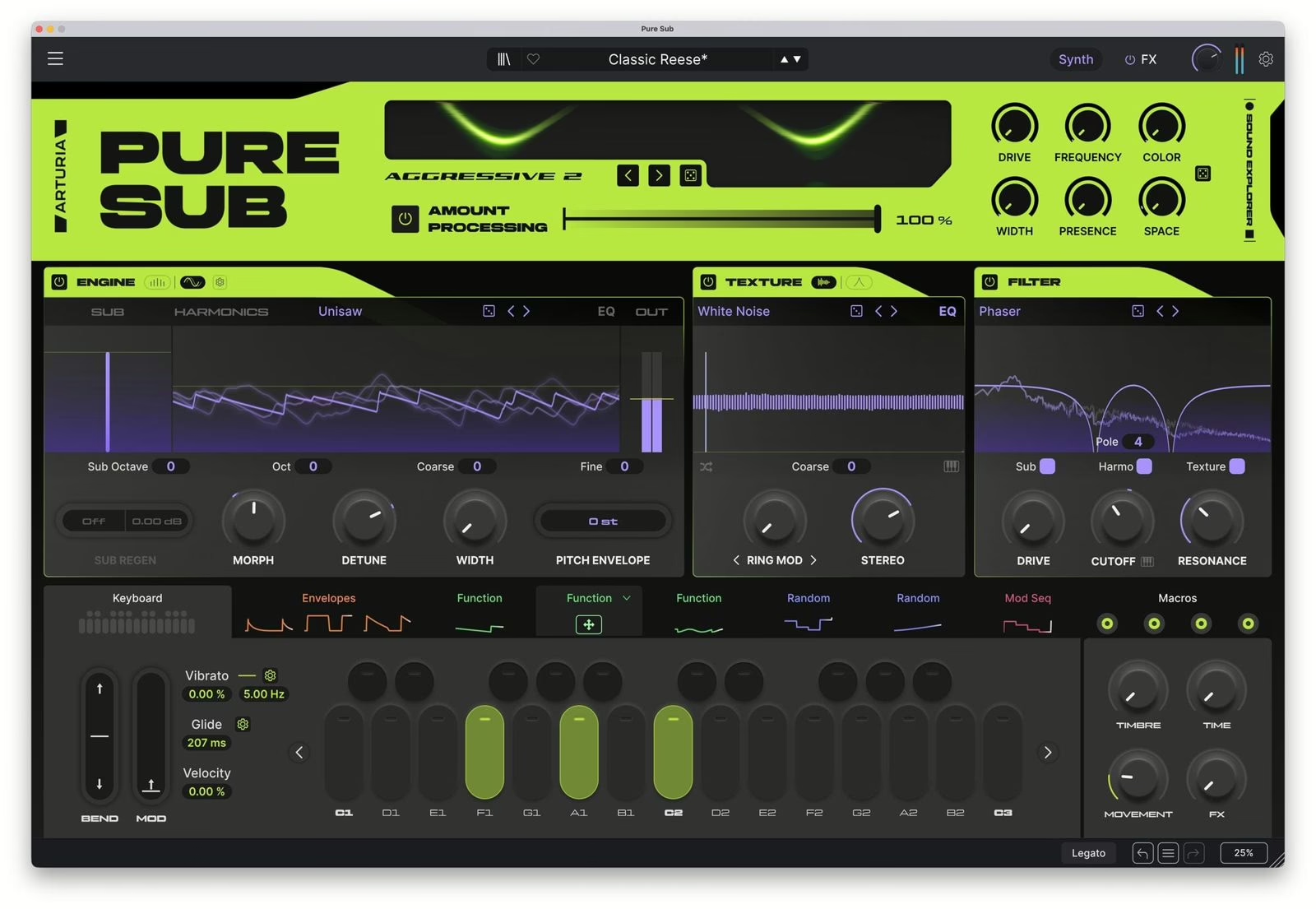
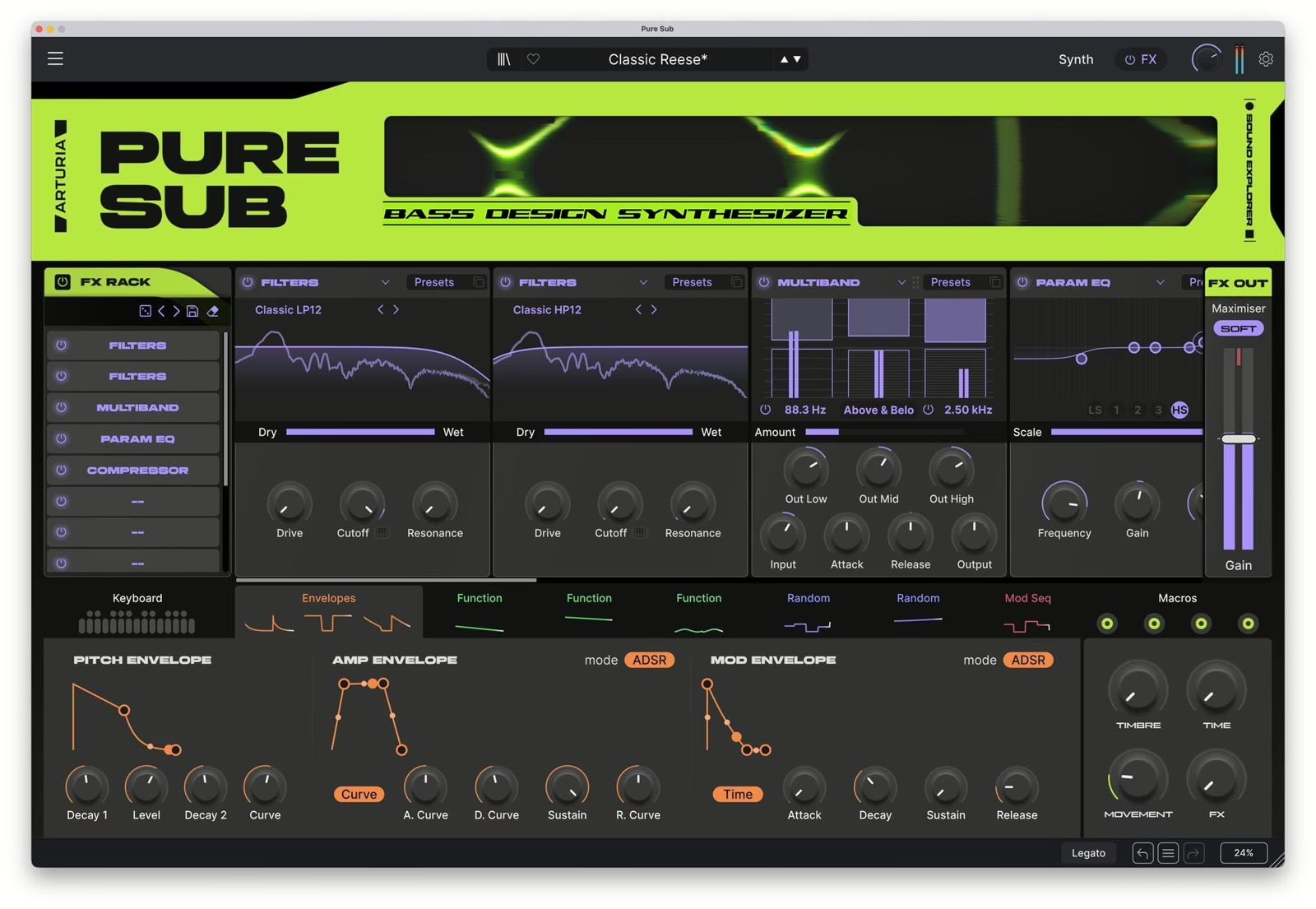
Pure SUB is a monophonic instrument that breaks bass design into three independent stages: Sub, Harmonics and Texture. Each is shaped on its own before the three merge at the filter, where the bass takes its final form. That layered logic mirrors exactly how you build low end in electronic production: a clean fundamental at the bottom, body and character in the middle, a little grit or movement on top.
The target is explicit: deep 808s, sine subs, saturated Reese basses, noisy sound-design textures. This is closer to a bass designer than a general-purpose synth you’d play pads on. The upside of that focus is real: every control serves the low end, without the clutter of a do-it-all instrument.
Sub: the fundamental, controlled to the semitone
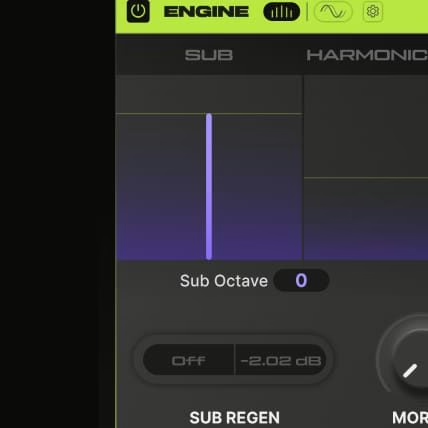
The first layer handles the sub-bass from 0 to -2 octaves, with dedicated level, phase and pitch. A sub-regeneration feature restores a clean fundamental at any point in the chain: distort and mangle all you want above it, the bottom stays put. It’s the kind of detail that separates a tool built by people who actually mix bass from one that just piles up features.
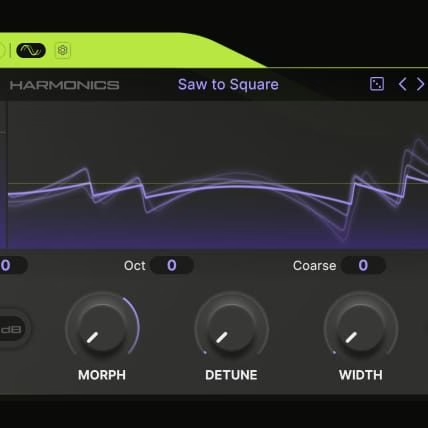
Harmonics: additive and wavetable for character
The tonal core runs on two engines. An additive engine, with preset shapes or an editor to morph up to eight custom waveforms. And a wavetable engine, with factory tables and custom imports. Both share morph, detune, width and octave controls. If you want to understand what a wavetable really builds, we broke it down in our wavetable synthesis explainer.
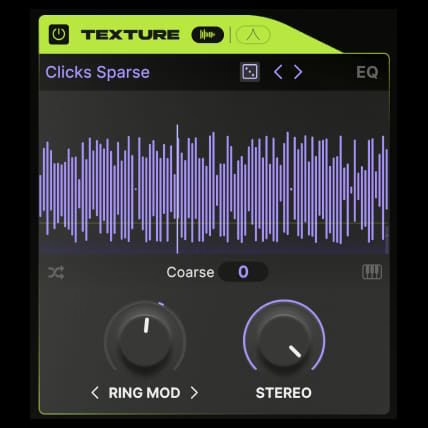
Texture: noise and a Corroder to dirty things up just enough
The third layer adds substance: a multi-texture noise oscillator (white, pink, crackling…) with field-recording import, plus a Corroder module blending ring modulation, amplitude modulation and distortion. This is where you add the grain or aggression that lets a bass cut through a busy mix instead of vanishing under the kick.
The Sub Processor and effects: the final shaping
Once the three layers are summed, a dedicated Sub Processor offers six parameters (drive, filter frequency, color, stereo width, presence, space) to turn raw material into finished low end. Add a multimode filter with unusual modes (reverb, ripple, cluster alongside the classics), a four-slot multi-FX engine and a maximizer with soft or hard modes.
| Spec | Pure SUB |
|---|---|
| Architecture | 3 layers: Sub, Harmonics, Texture |
| Harmonics engines | Additive + wavetable |
| Polyphony | Monophonic (bass-focused) |
| Modulation | 3 envelopes, 3 function generators, 2 randoms, mod sequencer, MPE |
| Presets | 300 production-ready sounds |
| Formats | VST, VST3, AU, AAX — macOS (native Apple Silicon) and Windows |
| Price | $/€49 intro (then $/€79), through September 15 |
My take
I’ve been all-in-the-box for a long time, and bass is exactly where the ITB approach won outright: nothing forces you to patch an analogue synth just to lay down a solid sub anymore. What I keep from Pure SUB isn’t the long feature list—it’s the fundamental regeneration and the Sub Processor: two ideas that fix a genuine mixing problem, the low end falling apart the moment you distort it. At $/€49, a mono instrument this focused only makes sense if you produce electronic bass regularly—but for that crowd, it’s a work tool, not a toy.
In the same software vein, compare it with the dual-engine approach of Cherry Audio Memorymode 2, or set it against a radical hardware instrument like the SOMA Enigma. Full details are on Arturia’s site.