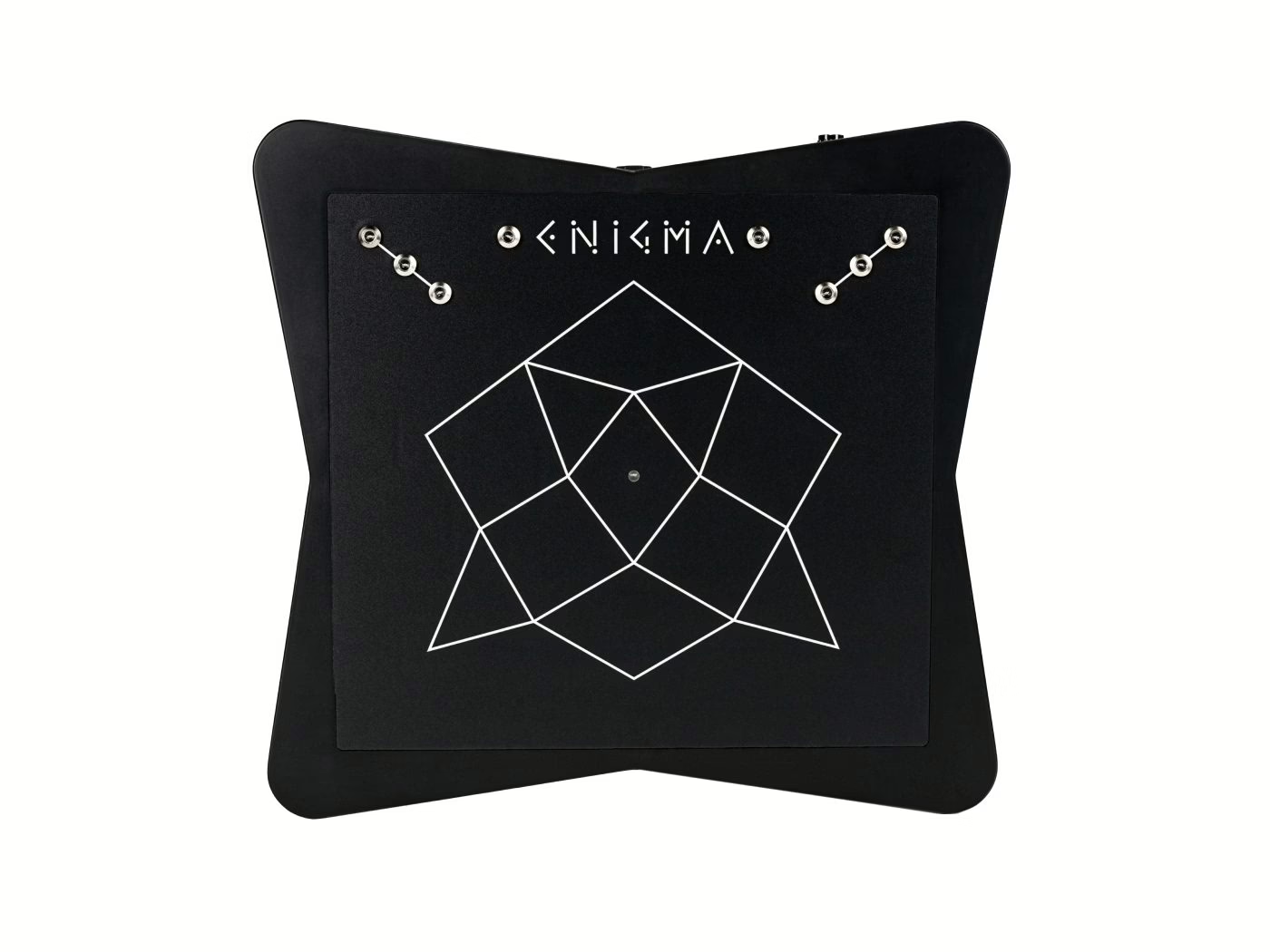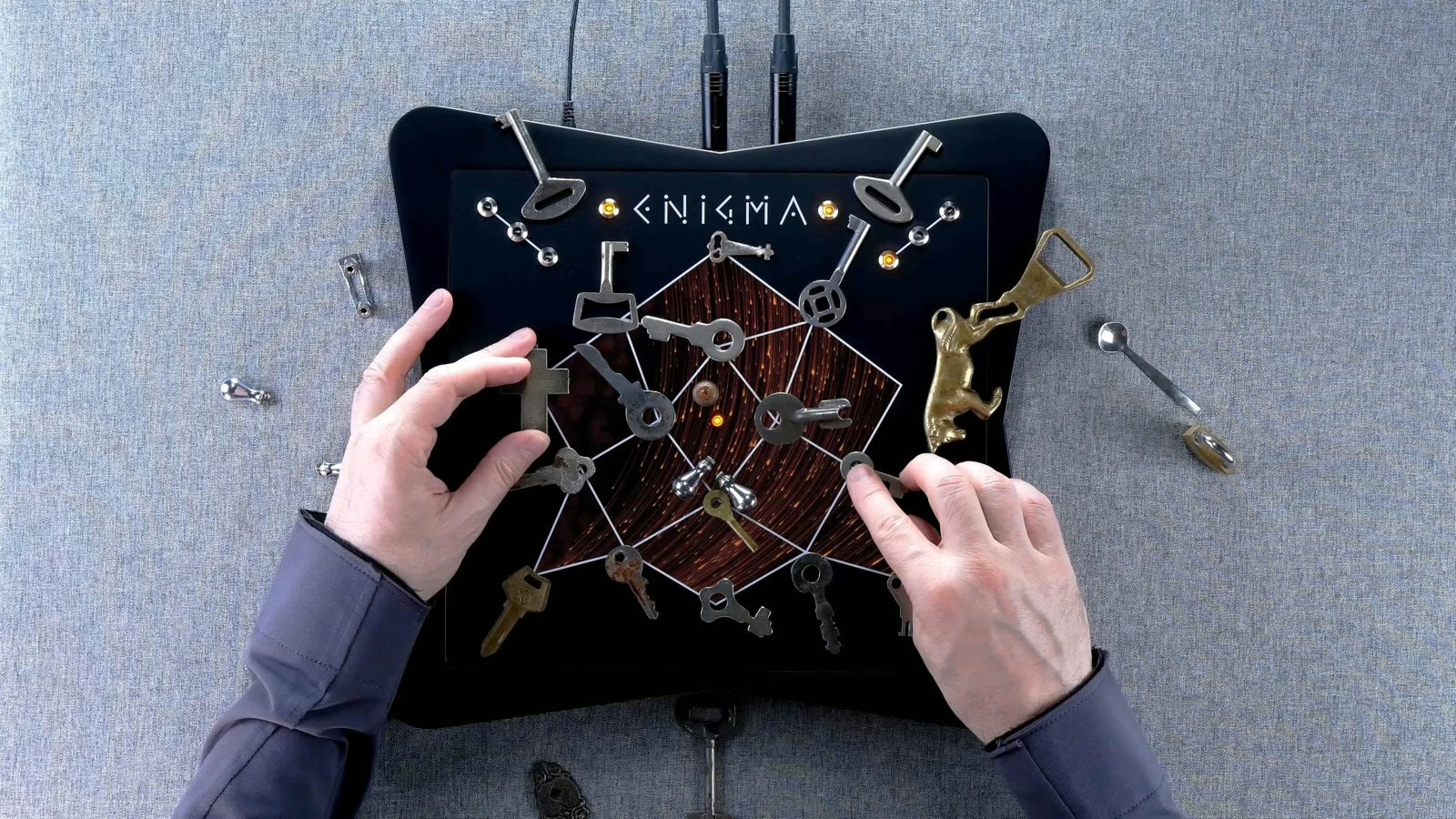
It was only a matter of time before SOMA Laboratory, Vlad Kreimer’s workshop, took the logic of its instruments all the way. After the Lyra, the Pulsar-23 and the Enner, here comes the Enigma: a synthesizer with no keyboard, no pads, no ribbons and no sequencer in the usual sense. You play it by placing metallic objects — coins, screws, gears, tools, scraps of metal — on a sensing surface, then moving them around. First seen as a prototype at a trade show, it is now in production and shipping.
An instrument you play with your bare hands
The idea fits in a sentence, and that is what makes it disorienting: the Enigma’s surface is a sensing field that reacts to the presence, position and movement of metal, even a few millimetres above the plate. Drop a coin and it becomes a source; slide it a fraction of a millimetre and the sound shifts. Stack several objects, play with their shapes, edges and mass, and each one shapes the texture. You do not press a note, you compose a position, a little like laying stones in a game of go.
That makes the Enigma a deeply gestural instrument. The response is continuous and unquantized: no semitones, no grid, just a gesture and its immediate sonic result. It is exactly the kind of playground where SOMA’s philosophy lives — machines built for exploration and the happy accident rather than the faithful recall of a preset.
How the surface reads metal
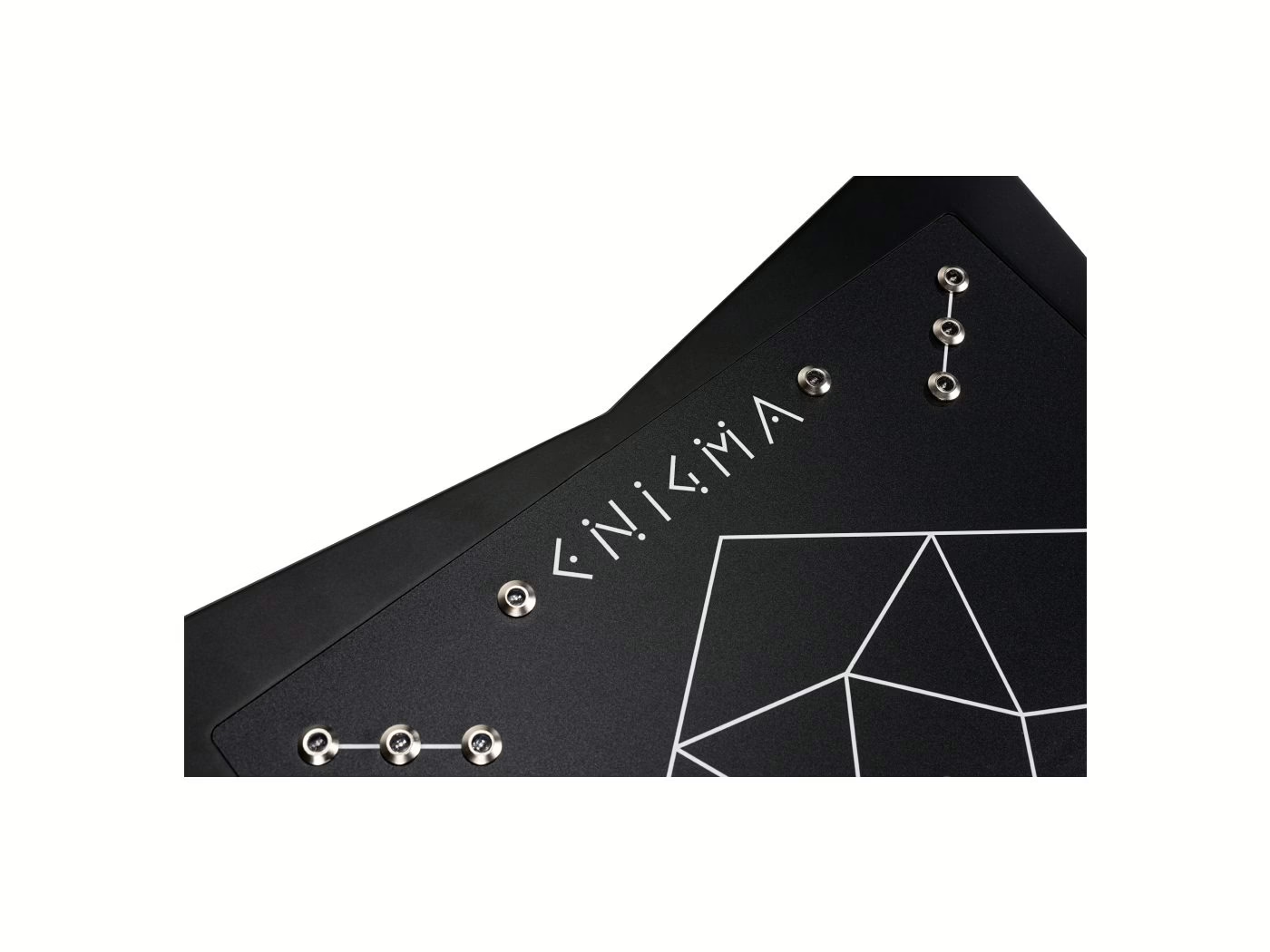
At the heart of the Enigma is an interface developed in-house by SOMA: a plate that detects conductive objects resting on it or hovering just above. Sensitivity is high enough that a tiny move changes the signal, which allows very fine playing — hand vibrato, glissandi, slow morphing of a pad. The plate is protected by an industrial, scratch-resistant film: SOMA claims hours of heavy trade-show use with sharp-edged objects without marking the surface, a detail that matters for an instrument you will literally scrape with hardware.
The sonic result spans a wide range: drones and atmospheric pads, grainy textures, metallic percussion, rhythmic loops once you organize objects over time. It sits close in spirit to an experimental semi-modular — that same urge to patch, try and listen — but without the keyboard. Anyone who enjoys that terrain will find kindred spirits among compact semi-modulars or expressive controllers like the Haken Slim 21.
The key facts
| Point | Detail |
|---|---|
| Principle | Synthesis driven by the position and movement of metallic objects |
| Interface | Sensing surface reacting up to roughly 20 mm above the plate |
| Playing | Continuous and unquantized: direct gesture, no note grid |
| Sync | MIDI and CV clock, MIDI note control |
| Price | 680 EUR list, first batches already shipping |
Integration: neither gimmick nor lone oddity
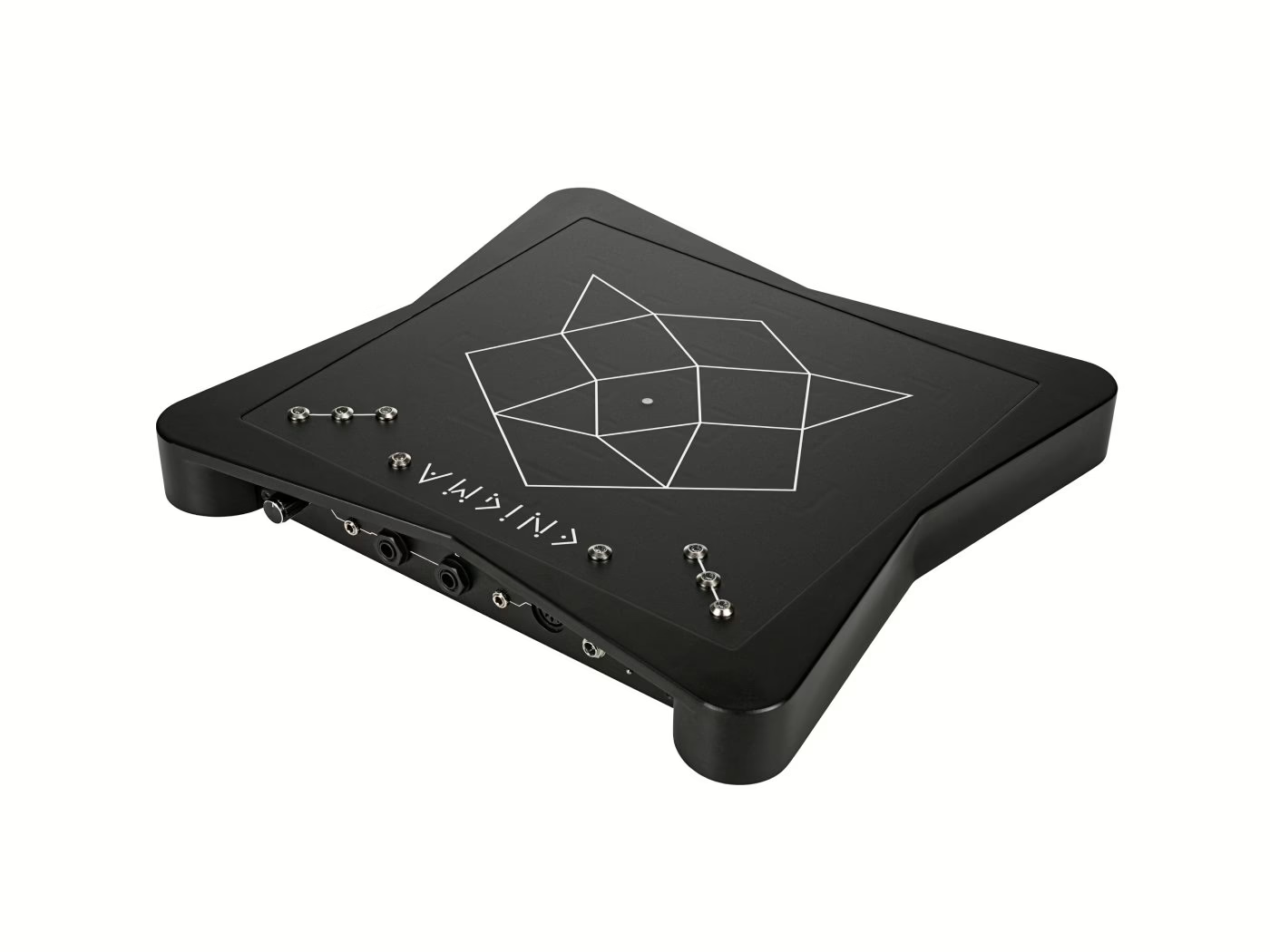
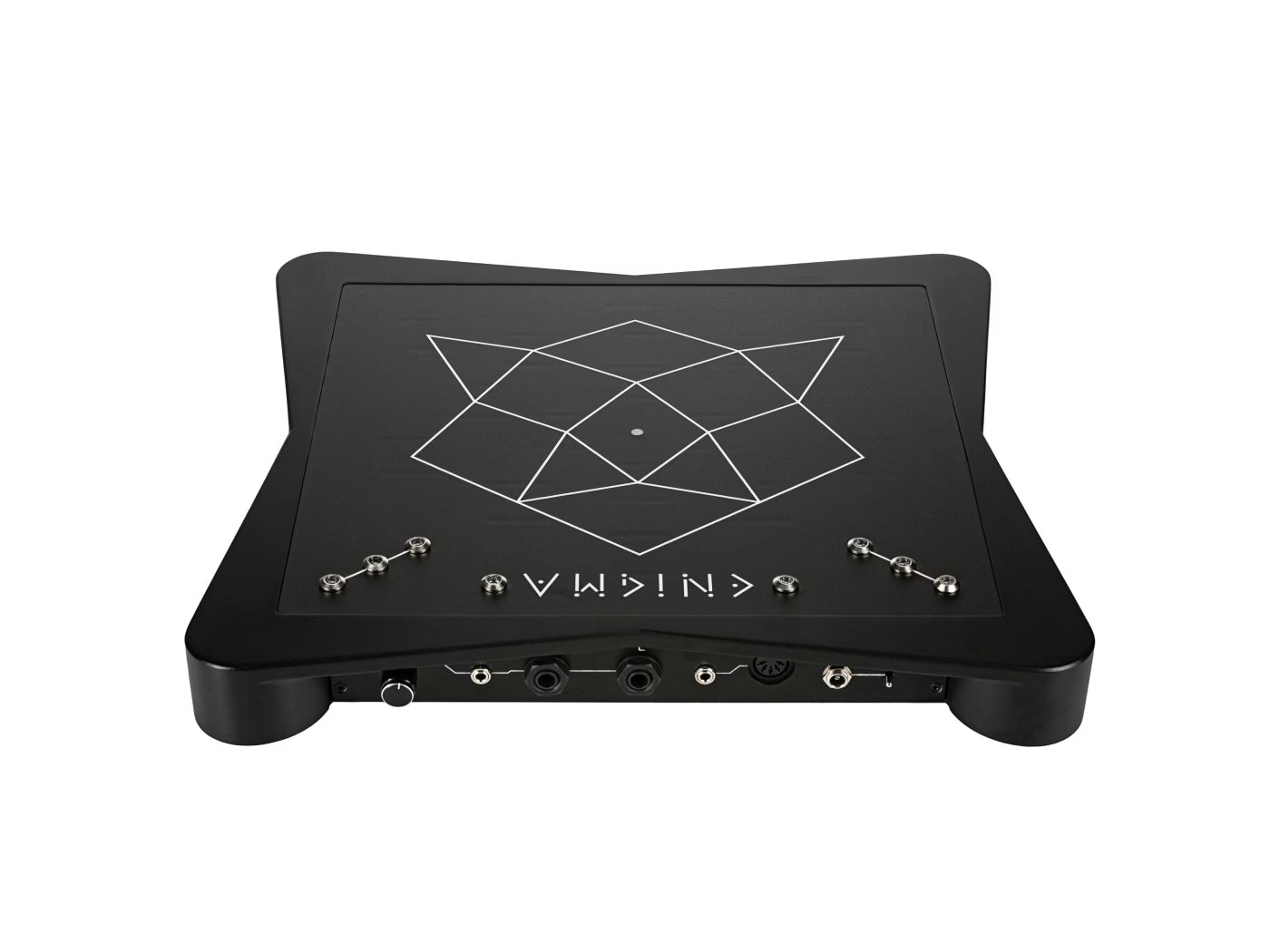
You could dismiss it as a trade-show curiosity. That would be a misreading of the spec sheet. The Enigma carries MIDI and CV clock sync and accepts MIDI note control, so it locks to a sequencer, a modular rig or a DAW and takes its place in a real studio or stage setup. That is what lifts it above the art-object bracket and into production tool territory — a source of textures and rhythms you trigger and reframe inside a track.
I am among those who believe fully in-the-box work is perfectly viable and that the analog dogma is long dead. Yet an instrument like the Enigma is a reminder of something computers still struggle to offer: a physical gesture that is rich, unpredictable and just slippery enough to surprise you. It is not about analog warmth or a filter curve, it is about the interface. And on that front, dropping a handful of screws onto a sensing plate says a great deal about what hardware can still invent.
Price and availability
The Enigma lists at around 680 EUR, after an initial reduced-price run reserved for friends and early backers. It is now in production and shipping. For such a singular, small-batch object, the positioning sits in line with the rest of the SOMA catalogue. Full specs are on the manufacturer’s product page.
That leaves the real question, the one no datasheet settles: what will you do with it? The Enigma is not judged on paper, it is judged in use, once you realize a well-placed pinch of washers beats a long lecture on synthesis. That is rare, and it is precious.