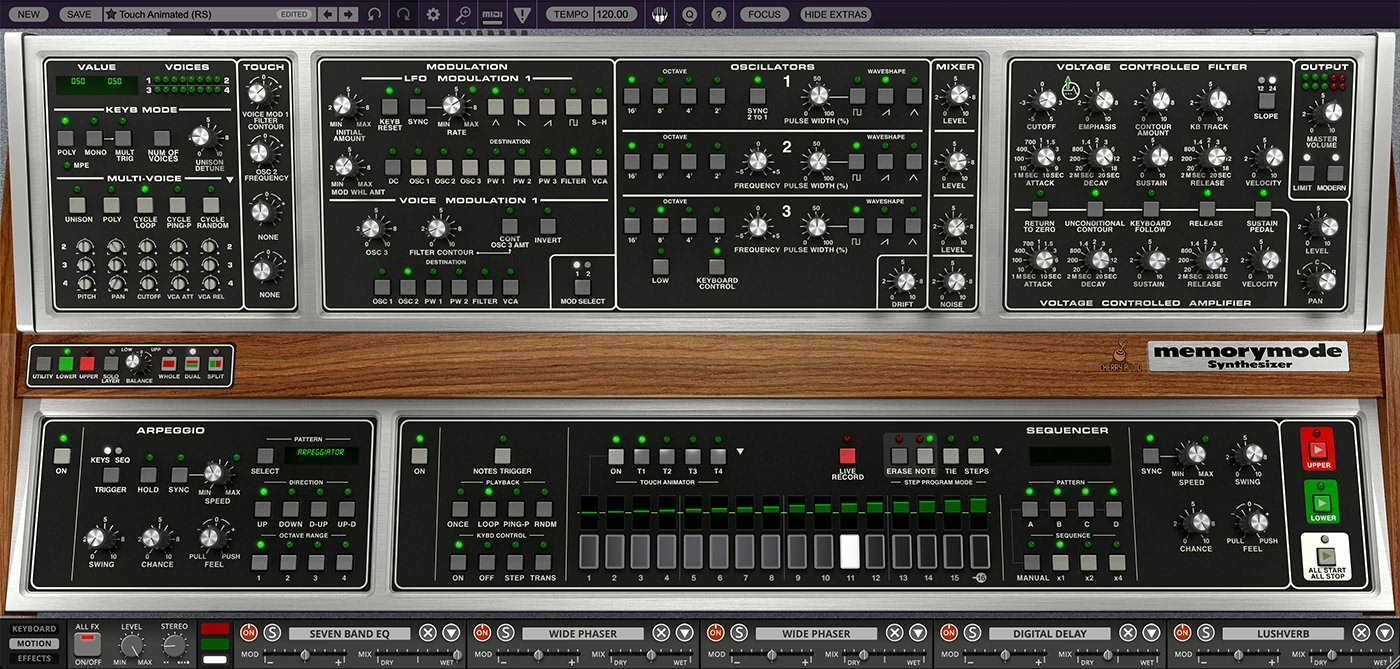
The 1982 Memorymoog always had a split reputation: a machine capable of a huge sound, six voices each built on three oscillators, but famously unstable and hard to keep in tune. Memorymode 2 is Cherry Audio’s software take that keeps the grain and drops the instability, while adding things the original hardware never could: two full layers, modern modulation and a built-in effects chain.
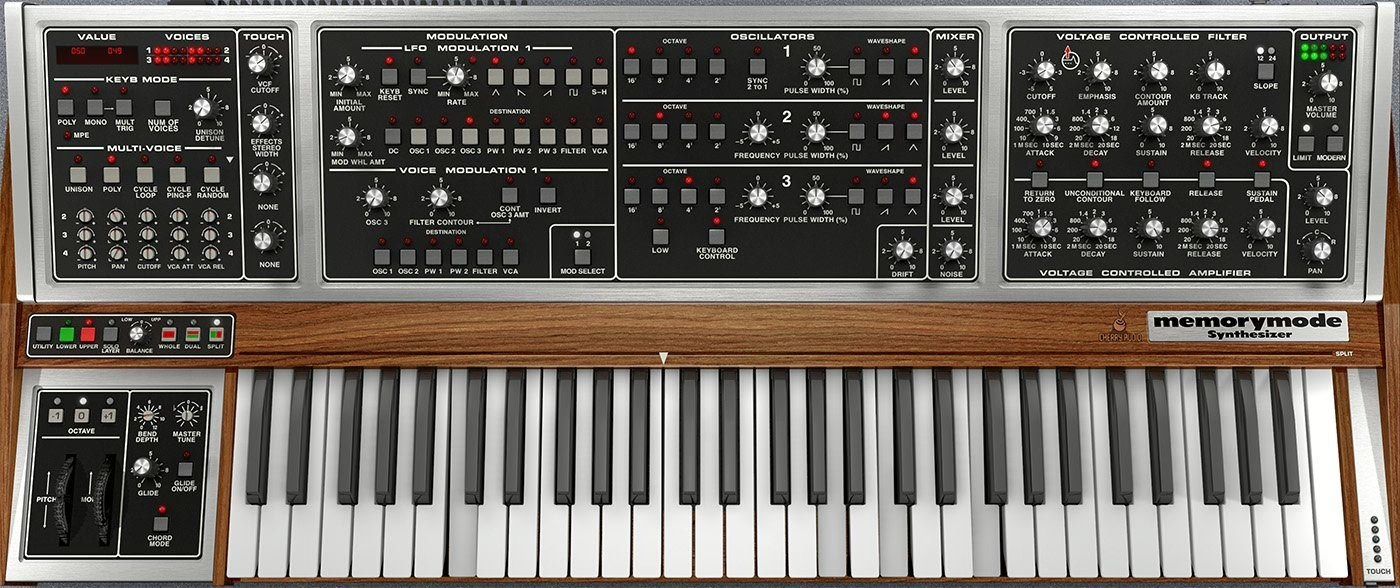
A Memorymoog, “six Minimoogs in one box”
Vintage-synth fans know the shorthand: the Memorymoog is roughly six Minimoogs stacked and made polyphonic. Three oscillators per voice, a Moog ladder filter, an architecture built for power rather than finesse. Cherry Audio says it modeled a specific unit once owned by keyboardist Chick Corea, and that signature is the sonic reference for the emulation.
Where the first Memorymode already nailed that character, version 2 no longer merely imitates the instrument — it extends it. You stay in the language of an analog polysynth, but with the flexibility of a 2026 plugin.
What version 2 actually changes
The structural change is the dual-layer architecture. Every preset now holds two complete 16-voice synthesizers that you can stack to thicken a patch, split across the keyboard, or detune against each other for massive pads. In unison mode each layer can pile up to 48 voices onto a single note — low ends and pads do not want for body.
Cherry Audio also reworked its analog modeling. Oscillators and filter gain depth, a new “modern” filter setting delivers richer lows and more sparkling highs than the original, and an emphasis-compensation switch keeps the volume steady as you push resonance. Expanded MPE support, finally, opens the keyboard to per-note expression — unthinkable on the 1982 machine.
Oscillators and filter
Each voice lines up three oscillators (ramp, triangle, variable-width pulse), with sync and a noise source. The filter recreates the Moog ladder with two selectable slopes, 12 or 24 dB per octave. Nothing revolutionary on paper — that’s the point: it stays true to the instrument’s logic. The difference is in the quality of the modeling, and that’s the ground Cherry Audio built its name on.
Modulation, sequencer and arpeggiator
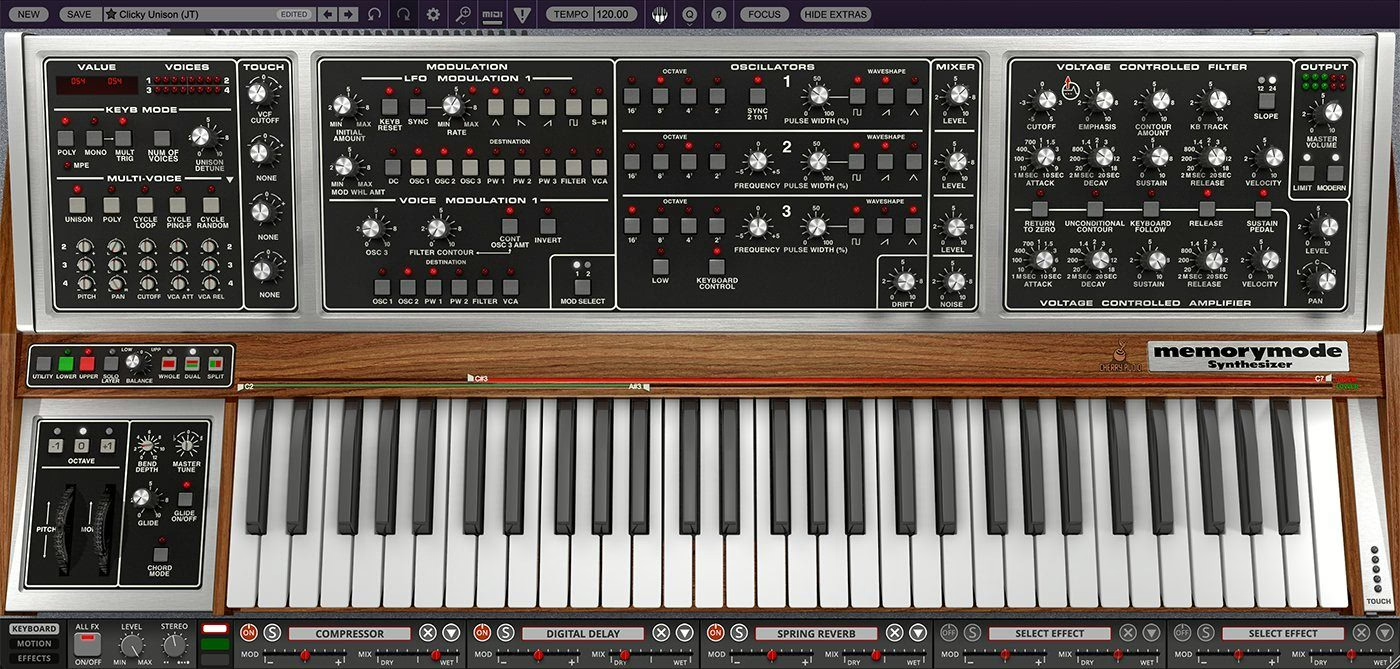
Per layer you get two ADSR envelopes, two tempo-syncable LFOs with seven waveforms, and two voice-modulation panels reaching six destinations. On top sits a four-slot Touch modulation matrix opening onto 52 destinations, enough to turn a static patch into a living sound. Rhythmically, a 16 x 4 polyphonic step sequencer with humanize and a transposable arpeggiator (Arp, Leap, Order, Random) round things out. The Touch Animator, a 16-step, 4-pattern modulation sequencer, animates the timbre over time without reaching for DAW automation.
Effects, presets and compatibility
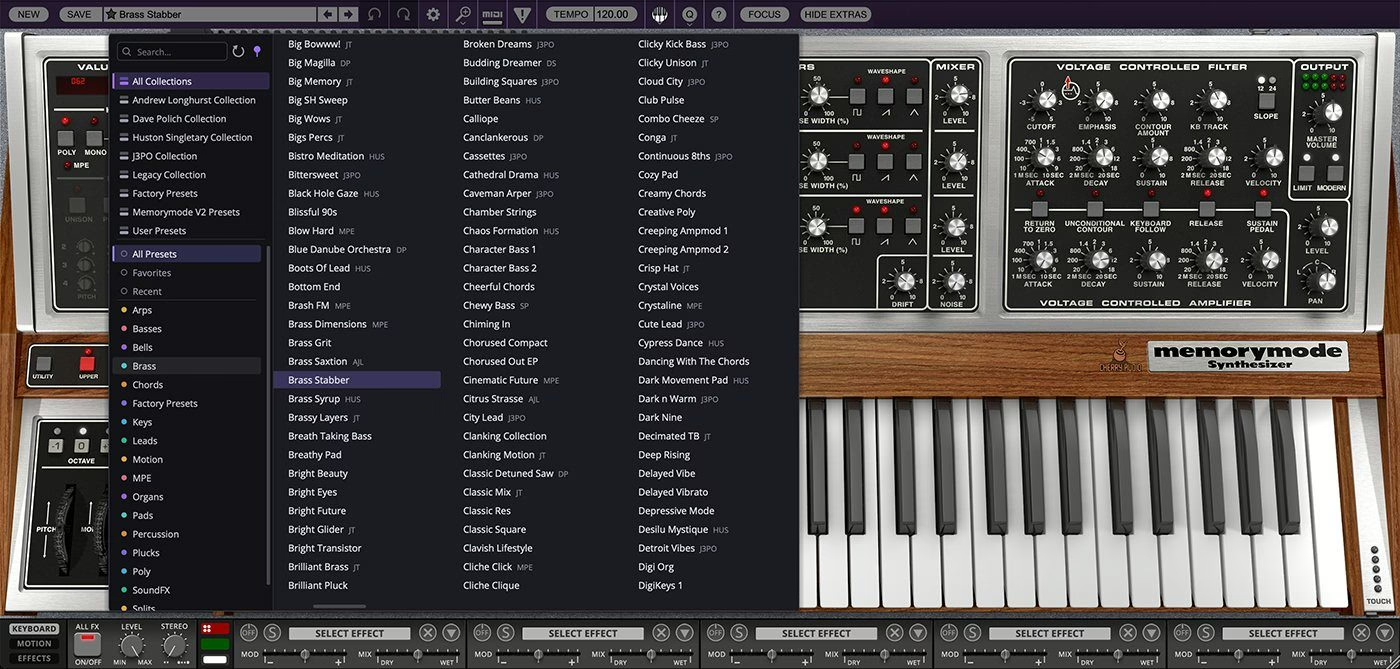
Memorymode 2 packs 22 effects across three independent chains: delays, reverbs, chorus, flanger, phaser, tape echo, rotary, lo-fi, ring modulator, EQ and more — enough to finish a sound without leaving the plugin. The starting library tops 800 presets, including 100 exact recreations of the original Memorymoog factory patches, and all version 1 sounds carry over.
One detail hardware owners will appreciate: Memorymode 2 can import Tape Data and read SysEx banks straight from a physical Memorymoog. The plugin ships as AU, VST, VST3, AAX and standalone, on macOS and Windows, with native Apple Silicon support.
| Spec | Memorymode 2 |
|---|---|
| Voices | 16 per layer, two layers, up to 48 in unison |
| Oscillators | 3 per voice, sync and noise |
| Filter | Moog ladder, 12 or 24 dB/oct |
| Sequencer | 16 x 4 polyphonic step + arpeggiator |
| Effects | 22 effects over 3 chains |
| Presets | 800+, including 100 recreated factory patches |
| Formats | AU, VST, VST3, AAX, standalone (macOS/Windows) |
Price, availability and our take
Memorymode 2 is out now at $69, with the upgrade from version 1 at $39. A 30-day demo lets you try before you buy.
I’ve seen enough analog-polysynth “clones” to be skeptical by default, but Cherry Audio sits in a category of its own: the developer understands that a good emulation isn’t judged by how many knobs it copies, but by how the sound sits in a mix. Here, the dual layer isn’t marketing filler — it’s exactly what the Memorymoog needed to move from vintage curiosity to daily production tool. As a long-time all-in-the-box convert, I have no trouble recommending this kind of plugin: for $69 you get a sound the temperamental, wildly expensive original only delivers after long tuning sessions.
So the real question isn’t “does it sound like a Memorymoog?” — Cherry Audio owns that ground — but “what do you do with it?”. With two engines, touch modulation and built-in effects, Memorymode 2 has plenty of answers.
More on recent virtual synths: our pieces on Xfer Records Serum 2 and discoDSP Corona 7, plus our deep dive into wavetable synthesis. Official product page on Cherry Audio’s site.