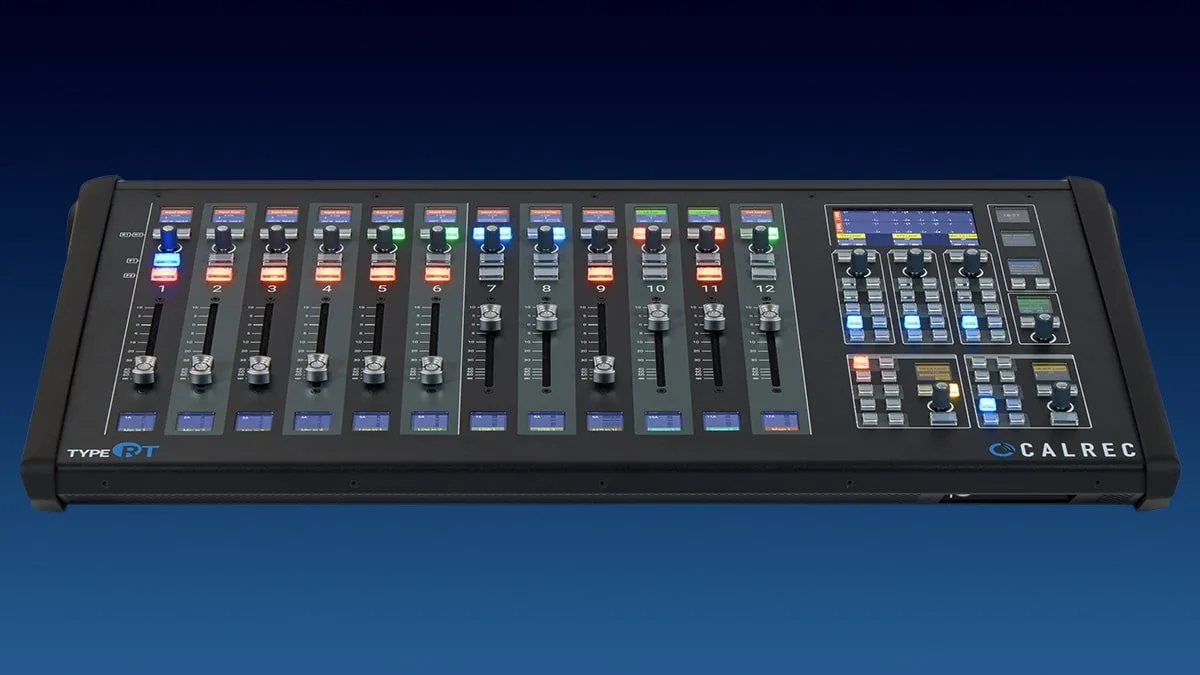
Calrec does not build consoles for home studios: the British maker has equipped OB trucks, major radio stations and TV galleries for decades. With the Type RT, shown at IBC and about to make its U.S. debut at NAB Show New York, it reaches for a wider field: an all-in-one, compact broadcast console built for those who want house-grade reliability without deploying a full infrastructure.
Everything in one surface
The Type RT’s principle fits in one word: integration. DSP, control processing, I/O, monitoring and USB audio are all built into the surface. Calrec calls it its most compact all-in-one console yet, offered in three sizes of 6, 12 or 18 motorised faders. The chassis is fanless, and therefore silent — hardly a detail once a studio mic shares the room with the console. You plug in, power up and mix: no mandatory separate I/O rack, no remote engine to cable.

Native ST 2110
Behind its compact looks, the Type RT is fluent in audio-over-IP. It is natively SMPTE ST 2110 compatible, with Dante and MADI as options, built around an Ethernet backbone. In other words it slots into a modern broadcast chain with no translator, alongside standardised video and audio flows. New to these standards? Our overview of audio-over-IP and our guide to PTP clocking explain why network timing is the real battleground. For interconnection, the Type RT leans on the same ecosystem as the brand’s recently unveiled Apex M6 modular I/O platform.
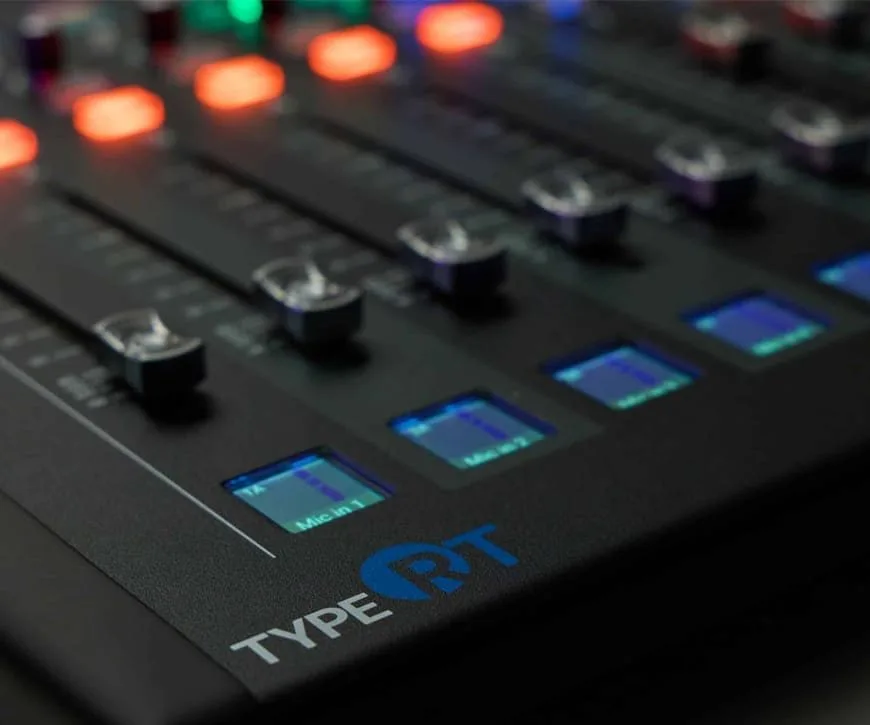
A gateway into the Calrec world
Calrec clearly positions the Type RT as an entry point: the confidence of proven broadcast audio performance in a straightforward, affordable unit. The target is broad — sports venues, radio, local TV, professional podcast studios, houses of worship. And the console does not stand alone: through True Control 2.0, one surface can drive several processing cores, and the Type RT works alongside larger models such as the Calrec Argo. That is the house logic: start compact, grow without changing ecosystem.
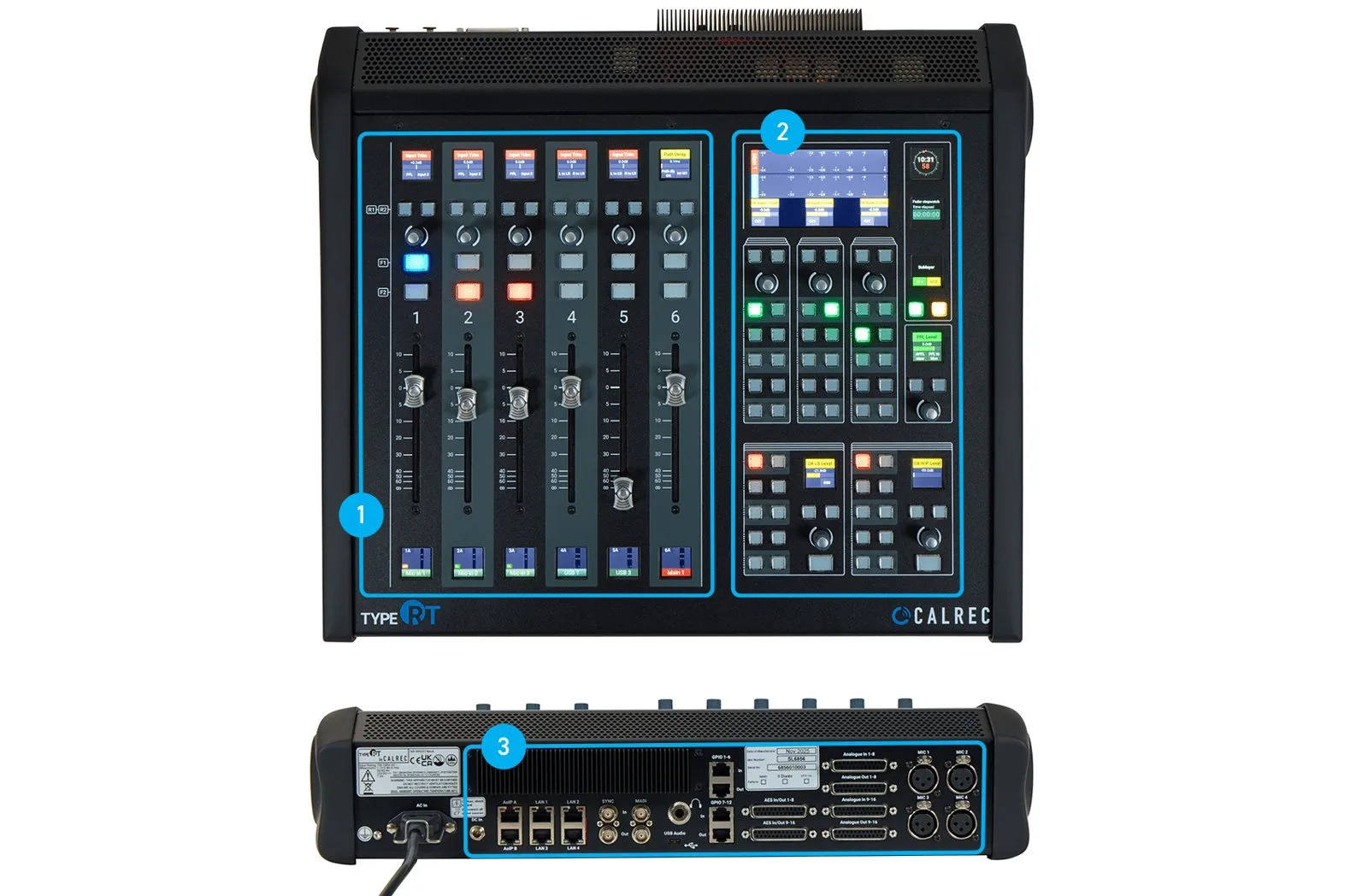
The specs that matter
| Item | Detail |
|---|---|
| Sizes | 6, 12 or 18 motorised faders |
| Integration | built-in DSP, I/O, monitoring and USB audio |
| Network | native ST 2110, Dante and MADI optional |
| Cooling | fanless, silent |
| Control | True Control 2.0 (multi-core control) |
| Target | sports, radio, local TV, pro podcast, houses of worship |
The console makes its U.S. debut at NAB Show New York (Javits Center); details are on Calrec’s website.
My take
Calrec moving down-range without cheapening its network DNA makes real sense. The Type RT aims well: plenty of small operations want the ruggedness and ST 2110 flow of a big name but have neither the room nor the budget for a full system. Fitting everything into the surface, minus the fan, answers exactly that — a podcast studio or a local radio gains a serious console without a dedicated machine room. The real question will be the actual price once the network options are ticked. But the idea of entering Calrec through a compact console, then growing within the same ecosystem, is shrewd.