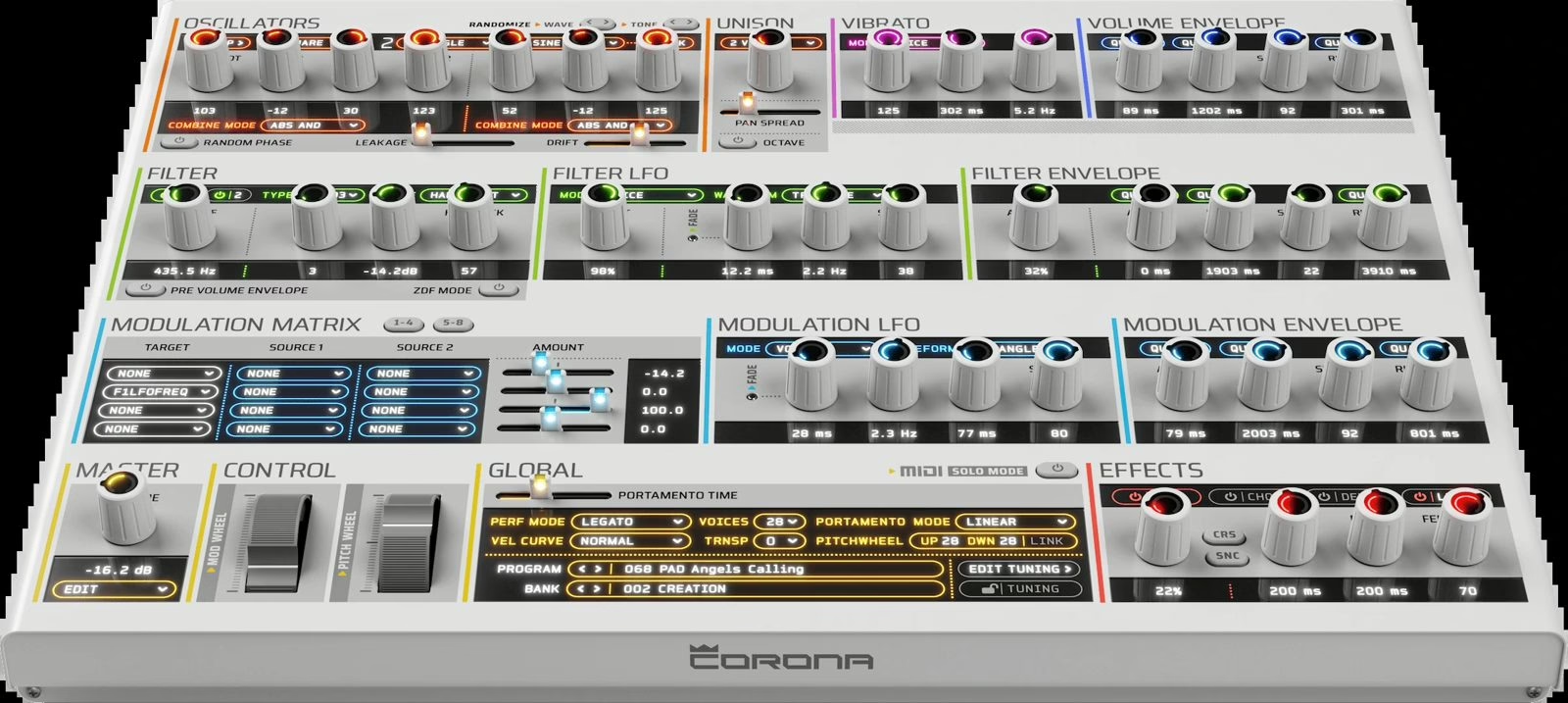
discoDSP isn’t the loudest name on the market, and that’s part of what makes this release worth a look. The developer has just shipped Corona 7, a major overhaul of its hybrid soft synth that blends virtual-analog synthesis with wavetable playback. The feature list runs long — full MPE, a unison mode borrowed from the legendary JP-8000, an arpeggiator turned sequencer, 8x oversampling — and, crucially, the update is free for anyone who already owns Corona 6. In a corner of the industry that happily charges for every version bump, that deserves a mention.
A VA + wave hybrid with twenty years behind it
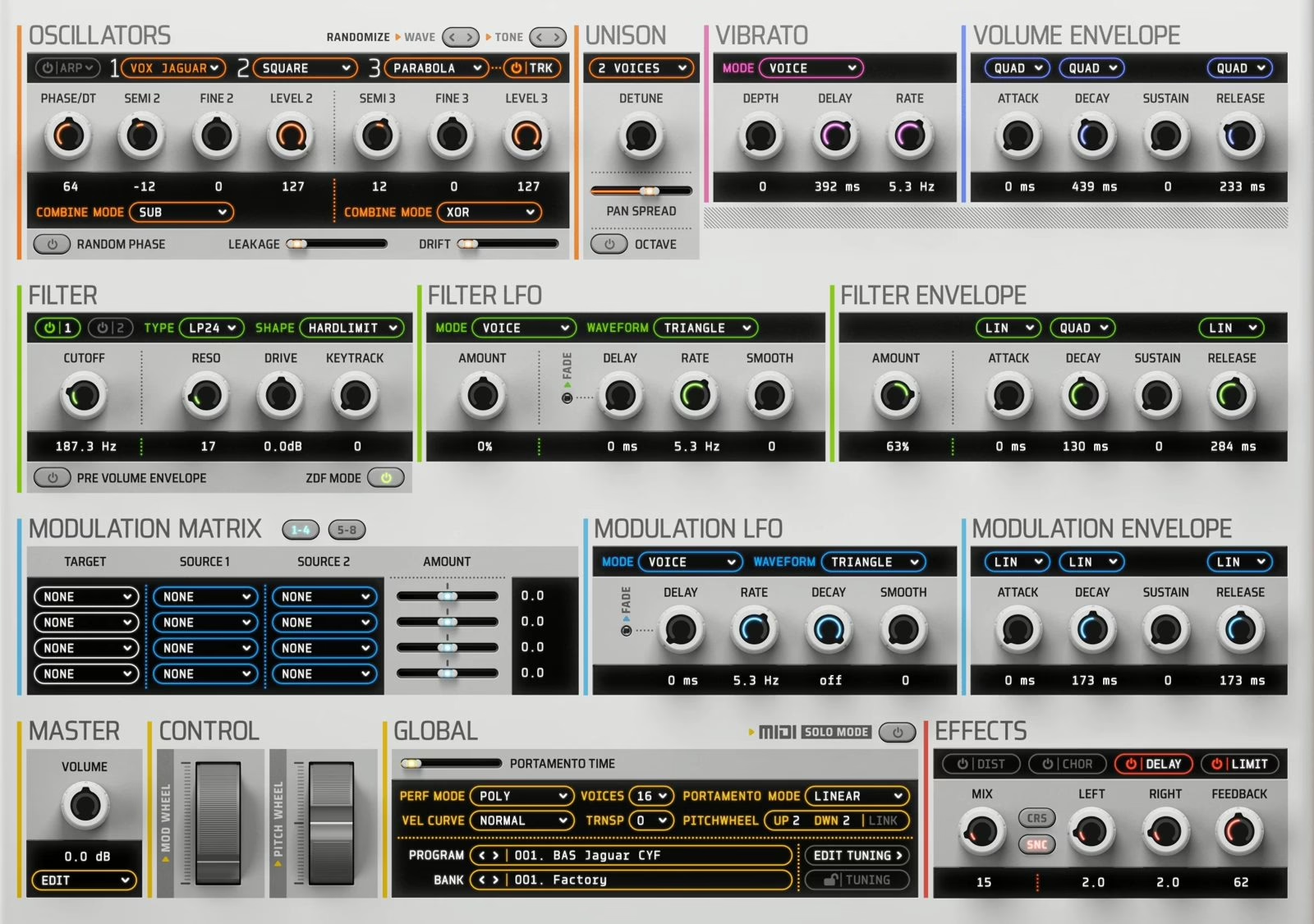
Corona is no newcomer. The synth has been kicking around DAWs since the mid-2000s, and the recipe hasn’t fundamentally changed: three oscillators that switch between analog modeling and wavetable playback, sixteen combine modes to marry them, two zero-delay feedback filters, three envelopes, two LFOs and an eight-destination modulation matrix. There’s a built-in effects section and, historically, SoundFont import — the detail that long made Corona a sample player in synth’s clothing.
That architecture sits halfway between a classic subtractive synth and a sound-design instrument. Nothing revolutionary on paper, but a coherent whole, light on CPU, and maintained year after year. It’s exactly the kind of tool that ages well: no chasing gimmick features, an interface you grasp in ten minutes, and a sound that holds up in a mix.
What version 7 actually brings
The v7 is more than a fresh coat of paint. The additions land on playability, modulation and render quality — the three axes that genuinely matter on a production synth.
MPE at last, and well integrated
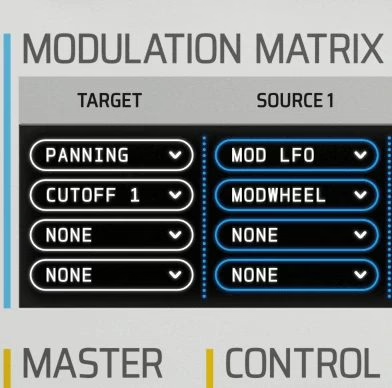
This is the flagship feature. Corona 7 now accepts MPE (MIDI Polyphonic Expression): every note carries its own pitch bend, pressure and timbre axis, and all three streams arrive straight into the modulation matrix as sources. In practice, a Seaboard, LinnStrument or Osmose can sweep the filter cutoff on one note while another stays put — the kind of expressive playing that plain MIDI makes a chore. MPE zone, mode and pitch-bend-range settings live in the MIDI menu. The implementation is clean: you don’t bodge it, you route it.
Super 7+: the JP-8000 supersaw, built in
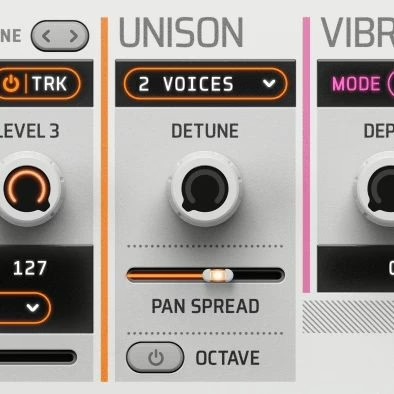
The new Super 7+ unison mode openly nods to the Roland JP-8000’s famous supersaw, that stack of detuned sawtooths that defined trance leads and big-room anthems. Done right, this kind of generator delivers instantly fat pads and leads without hand-stacking seven voices. It’s an expected addition on a VA that also has one eye on electronic music.
An arpeggiator that becomes a sequencer
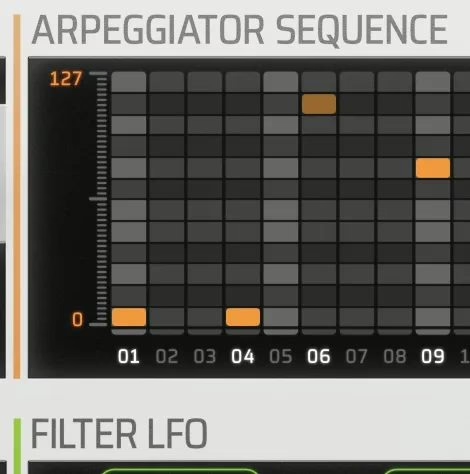
The 32-step arpeggiator gains a sequencer mode with step recording and MIDI export. The distinction matters: you’re no longer just generating a pattern from a held chord, you can compose a sequence, capture it and export it as a MIDI file to rework elsewhere. For sketching a bassline or a lead motif inside the instrument, that’s time saved.
8x oversampling and playing comfort
On the audio-quality front, Corona 7 packs an 8x oversampling engine with a reworked decimator, paired with a Draft Playback mode that eases the CPU load while you work and reserves the high-quality render for export. There’s also live modulation display across the whole panel — handy for seeing what’s moving — and an Effects Lock that keeps the effects section across preset changes. Small things, but small things that smooth the workflow.
Price, formats and availability
| Item | Detail |
|---|---|
| Price | 149 € (free for Corona 6 owners) |
| Formats | VST3, AU, AAX |
| Platforms | macOS (native Apple Silicon + Intel), Windows, Linux |
| v7 additions | MPE, Super 7+, sequencer, 8x oversampling, Effects Lock |
Native Linux support, still rare among commercial developers, is worth flagging: it puts Corona in the small club of synths you can run on a studio machine under a free distro without an emulation layer.
My take
I’m wary of synths that push a major version every six months to justify an invoice. Corona does the opposite: patient development, additions that answer real playing needs, and an update policy that respects existing customers. MPE routed properly into the matrix is what separates a gimmick from an expressive tool — and here it’s done seriously. This isn’t the synth that’ll make you drop your desert-island instrument, but it’s exactly the sort of reliable, affordable building block that made going fully in-the-box viable. At 149 €, free for the faithful, there’s very little to fault.
For more on the principles at play, our feature on FM synthesis covers a different route to timbre, while our East Coast vs West Coast synthesis comparison places the traditions Corona draws on. And if plugins that resurrect cult machines are your thing, see Twisted Electrons’ vMEGAfm port. Product page and free trial at discoDSP’s site.