Some synths chase clinical cleanliness; others wear their grit as a badge of honour. Twisted Electrons’ MEGAfm sits firmly in the second camp. Built around the Yamaha sound chips that powered the Sega Mega Drive, this hardware FM synth earned a devoted following among fans of aggressive, metallic, video-game-flavoured tones. With the vMEGAfm, Twisted Electrons brings that instrument into your DAW and onto the iPad, explicitly modelling the now-discontinued first generation of the hardware.
From Yamaha chip to software emulation
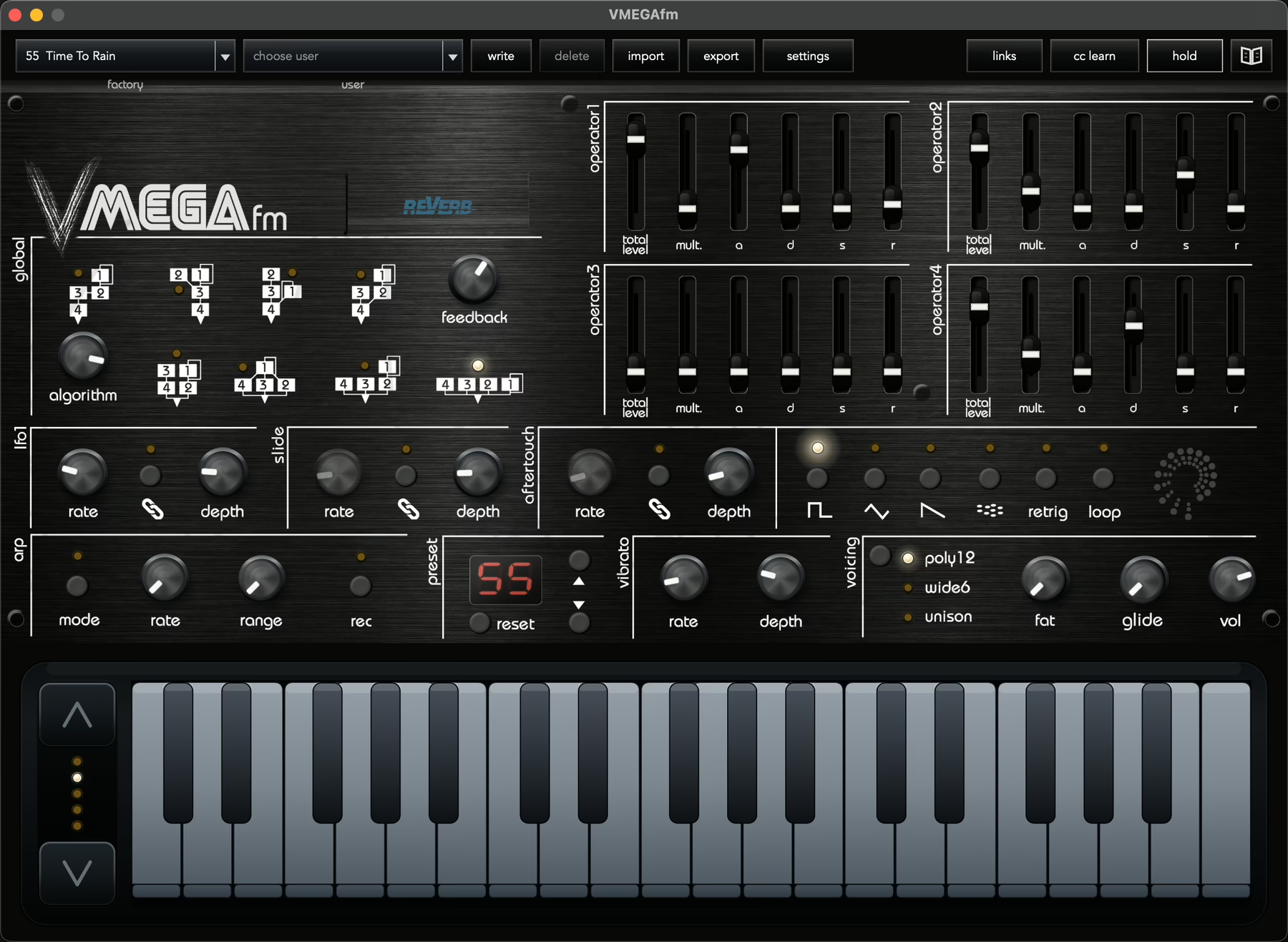
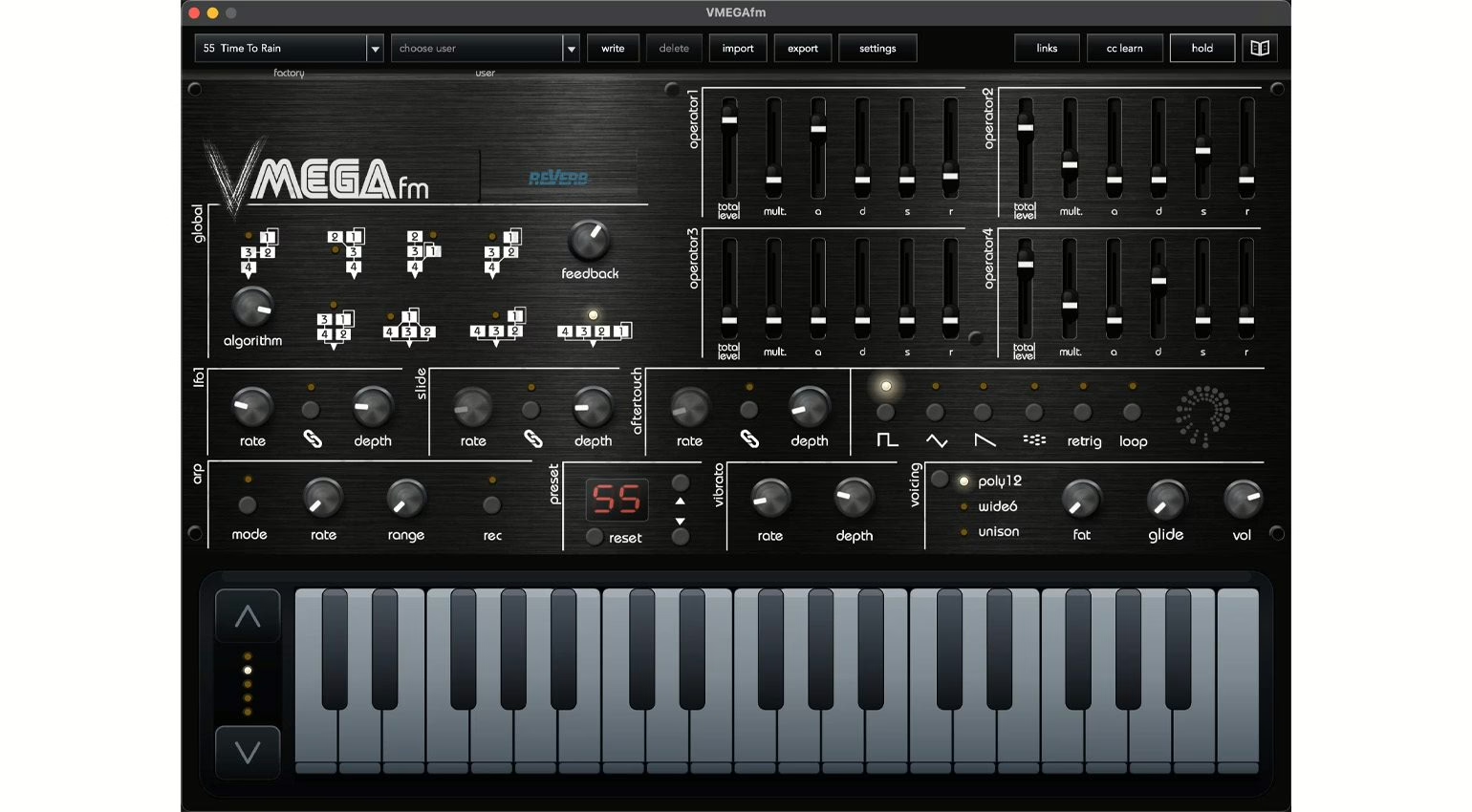
At the heart of it sits four-operator FM synthesis. Where most recent FM instruments try to smooth and modernise the process, the vMEGAfm leans into its 8/16-bit heritage: the plugin runs the original MEGAfm firmware and reproduces the behaviour of its Yamaha engine, the very one that defined the sound of Mega Drive-era games and music. You get the eight classic algorithms, the eight ways of wiring the operators together, from near-additive organ stacks to biting cascaded modulation structures.
Each operator has its own envelope and is edited directly, with no menu diving: Twisted Electrons opted for clearly visible sliders to set levels and ratios, which makes FM sound design far less intimidating than usual. That matters, because FM long carried a reputation for arcane difficulty, inherited from the stingy interface of the DX7. Here, you can see what you’re doing.
Twelve voices, three modes and a modulation matrix
The vMEGAfm is twelve-voice polyphonic, split across three play modes that dramatically change its character. Classic poly mode gives you all twelve notes; “wide” mode pairs voices to thicken each note and widen the stereo image at the cost of polyphony; unison mode stacks everything for massive basses and leads. That flexibility makes the plugin as much a pad machine as an acid-bass or cutting-lead generator.
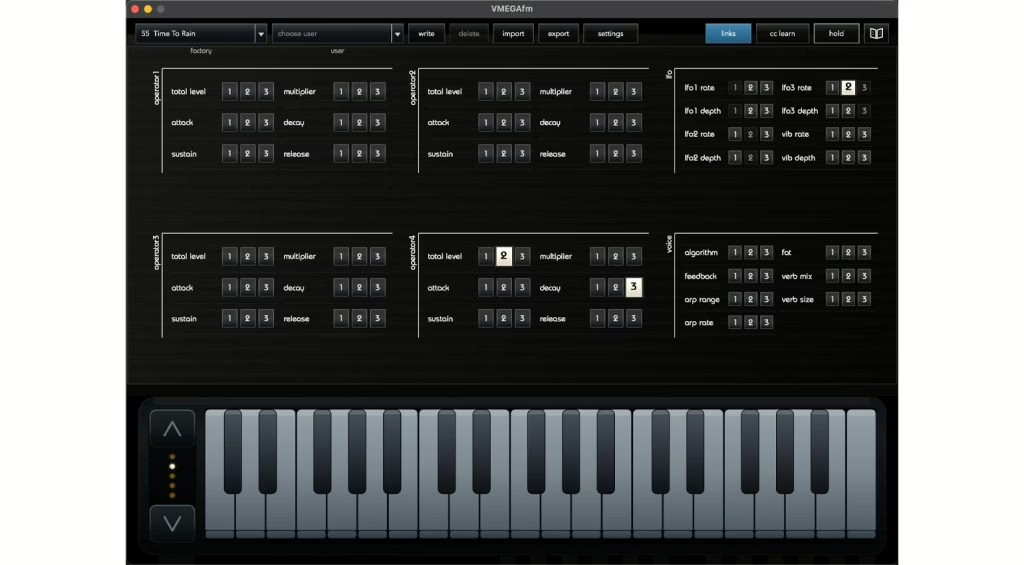
For modulation, three LFOs route freely through a matrix, opening the door to moving textures and evolving timbres. An arpeggiator and an SH-style step sequencer round things out: this is clearly an instrument built for playing and tweaking, not just preset-loading. There are around a hundred of those on board to gauge the grain.
The detail that changes everything: the modelled output stage
What sets this emulation apart from many others is the attention paid to the Mark I hardware’s analog output stage. The sound of old FM chips doesn’t come from the digital maths alone: it owes an enormous amount to the conversion and electronics that follow, with their imperfections, their noise floor, their gentle compression. By modelling that analog path, Twisted Electrons targets the grain rather than the perfect spec sheet. That’s exactly what I want from a serious emulation: not a screenshot of the front panel, but a rendering of what happens at the end of the chain, where character actually lives.
Formats and pricing
| Item | Detail |
|---|---|
| Synthesis | 4-operator FM, 8 algorithms, Yamaha YM2612-style engine |
| Polyphony | 12 voices, poly / wide / unison modes |
| Modulation | 3 LFOs on a matrix, arpeggiator, step sequencer |
| Formats | macOS (VST3/AU), Windows (VST3), iPadOS (AUv3), standalone |
| Desktop price | €39.99 (intro, until 31 August 2026), then €49.99 |
| iPad price | €9.99 (down from €14.99) |
The iPad version works as a standalone app and as an AUv3 plugin, loadable in GarageBand, Logic Pro for iPad, AUM and other compatible hosts. That means you can carry a gritty FM engine in an ultra-light rig, which is no small thing for a sound this distinctive.
My take
This is a release that ticks my boxes. I’ve long argued that an all-in-the-box studio is perfectly viable, provided the software brings real character rather than lukewarm neutrality. The vMEGAfm isn’t trying to beat a high-end FM instrument on finesse: it owns a grain, an identity, a history tied to video-game chips, and it does so for the price of a lunch. For anyone producing nervy electro, synthwave or anything that benefits from sounding a little dirty, it’s an ideal way into FM synthesis without the price of admission of the original hardware. It follows the run of notable software reissues of recent weeks, like the Audio Damage AD-202, proof that hardware nostalgia is turning into genuinely well-designed tools. If FM still intimidates you, take a look at our roundup of free virtual synths and our piece on the East Coast and West Coast schools of synthesis to place FM in context.