The Roland MC-202 never had the aura of its big sister the TB-303, nor the plain simplicity of the SH-101 it shares a voice with. Released in 1983, this “little silver box” crammed an analog monosynth and a tiny CV/Gate sequencer into a pocket format: brilliant on paper, a nightmare to program on its miniature buttons. Four decades on, Audio Damage turns it into a plugin, the AD-202, that keeps the tone and ditches the ergonomics.
A monosynth faithful to the little silver box
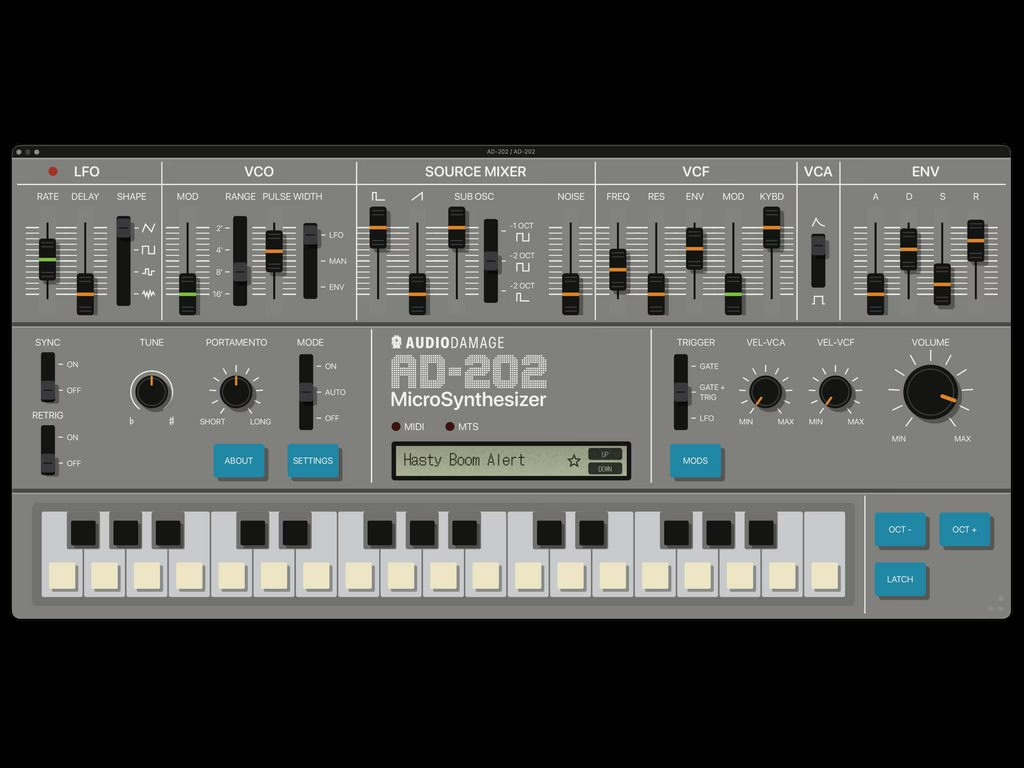
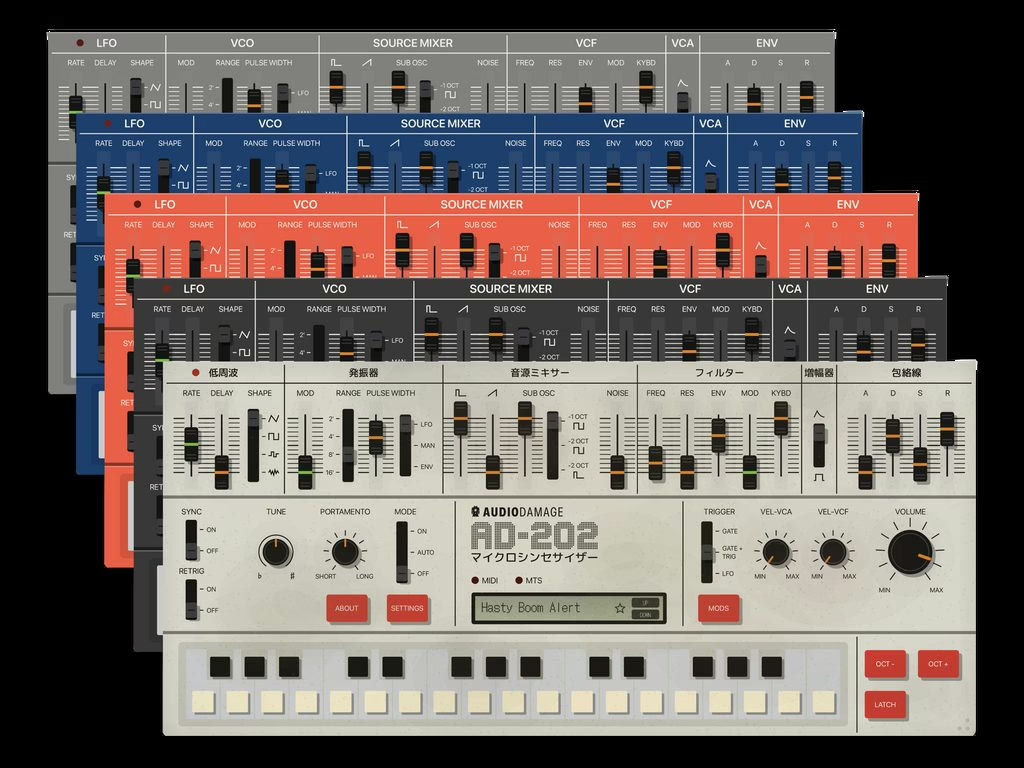
The heart of the AD-202 stays deliberately lean, in the early-1980s monosynth tradition: one oscillator, one envelope, one LFO, and not much else. The oscillator offers four footages (16′, 8′, 4′, 2′), a PolyBLEP sawtooth and pulse that stay clean up high, a sub-oscillator divider one or two octaves down, and noise. Pulse width tracks the LFO or the envelope.
Downstream sits the 24 dB-per-octave, four-pole ladder low-pass with a Drive control, a tanh nonlinearity in the feedback path, and gain compensation so the level doesn’t collapse as resonance climbs. Cutoff can be swept by the envelope, the LFO, keyboard tracking and velocity. It’s exactly the original vocabulary: round, acid the moment you push resonance, built for bass lines and biting leads.
What the plugin adds to the original hardware
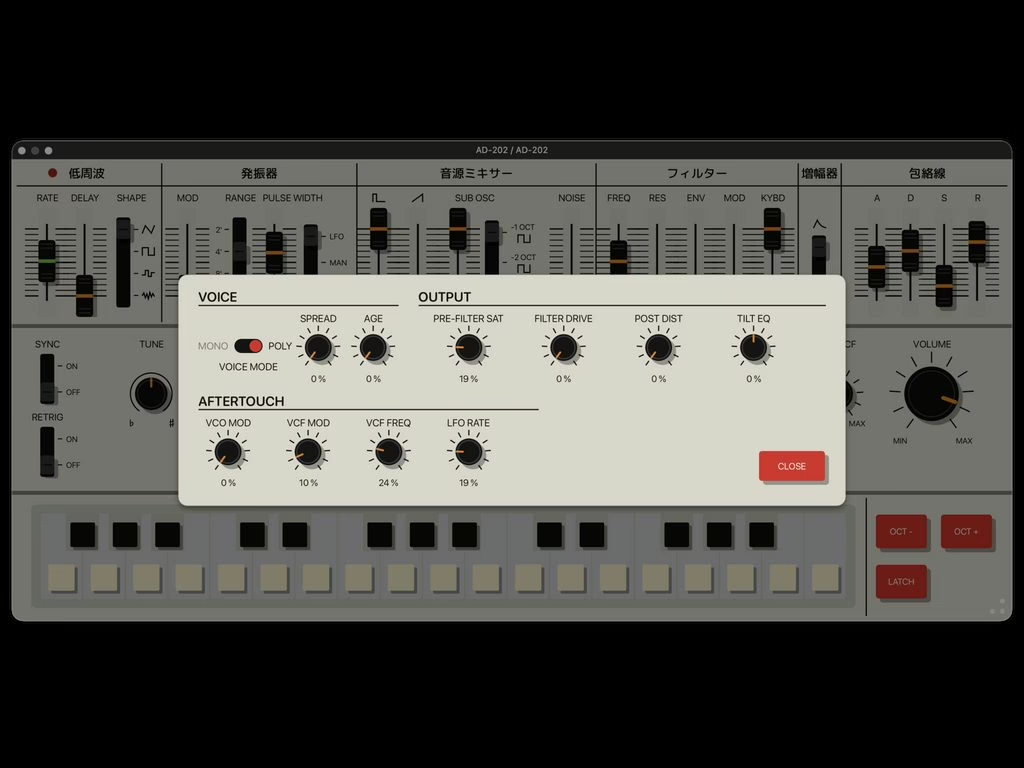
Audio Damage didn’t stop at a straight port. The AD-202 plays mono or in eight voices with a stereo spread that opens the sound up instantly. An Age parameter adds per-voice analog drift — that faint tuning wander of an aging circuit that makes the whole thing feel alive. The LFO can start with a delay, for vibrato that blooms in rather than being there from the attack.
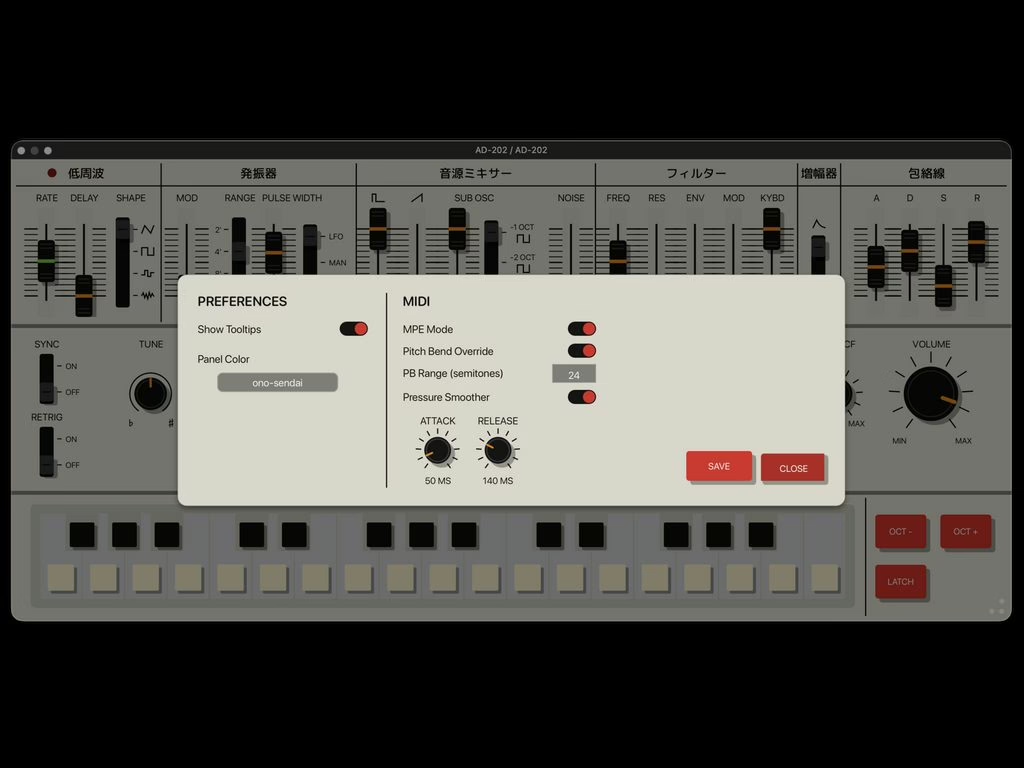
More importantly, the plugin goes further than the hardware ever could: full MPE (per-note pitch bend and pressure), MTS-ESP microtuning with continuous retuning, post-VCA distortion, and a bipolar output tilt EQ that tips the spectrum from lows to highs in a single move. Velocity routes to amp and filter. This is a vintage monosynth that finally welcomes modern playing gestures.
One choice will spark debate: the AD-202 has no sequencer. Where the MC-202 was first and foremost a sequencing machine, Audio Damage hands that job to your DAW’s sequencer or an external controller.
My take: it’s the right call. The real MC-202 charm was never step-entry on calculator buttons — it was the grain of the oscillator and the way the filter sang. Let the DAW handle sequencing, keep the sound, then add eight voices and MPE: that’s exactly what a plugin should do with a cult machine, rather than aping its constraints out of misplaced nostalgia.
Formats, platforms and price
The AD-202 slots into just about every environment, from the studio to an iPad rig:
| Platform | Formats |
|---|---|
| Windows 10+ | CLAP, VST3, AAX |
| macOS 10.13+ | CLAP, VST3, AU, AAX |
| Linux (Ubuntu 20+) | CLAP, VST3, LV2 |
| iOS 12+ | AUv3 |
No DRM, no subscription, no dongle: a perpetual license, like the rest of the developer’s catalog. It’s listed at $49, with a $39 early-bird price for first buyers, available from Audio Damage’s website.
For anyone who loves these Roland emulations, the AD-202 joins a well-stocked family: the Jun Murakami Synth-80 reviving the MKS-80, the physical-modeling reFX Rippler, and the Audio Damage Tessera resonator from the same team. And if your budget is zero, our round-up of free software synths is a solid place to start.