Most of us know reFX for Nexus, the preset rompler that became a staple of commercial production. With Rippler, the company heads in a completely different direction: this is a physical modeling synthesizer that recreates the acoustic behavior of strings, tubes, membranes and bells, then shapes it with the familiar tools of subtractive synthesis. An unexpected move, and a promising one on paper.
From free RipplerX to commercial Rippler
Rippler didn’t come out of nowhere. It’s the commercial evolution of RipplerX, a free, open-source plugin whose surprisingly capable modal engine had already won over a small following. reFX took the concept, beefed it up and productized it: a new interface, two synthesis layers, a substantial preset library and full pro-format support. It’s the same playbook other developers have used to turn a free project into a finished product — we saw it recently with the open-source Dusk Audio Sunset Circuits plugin.
Two layers, modal and subtractive
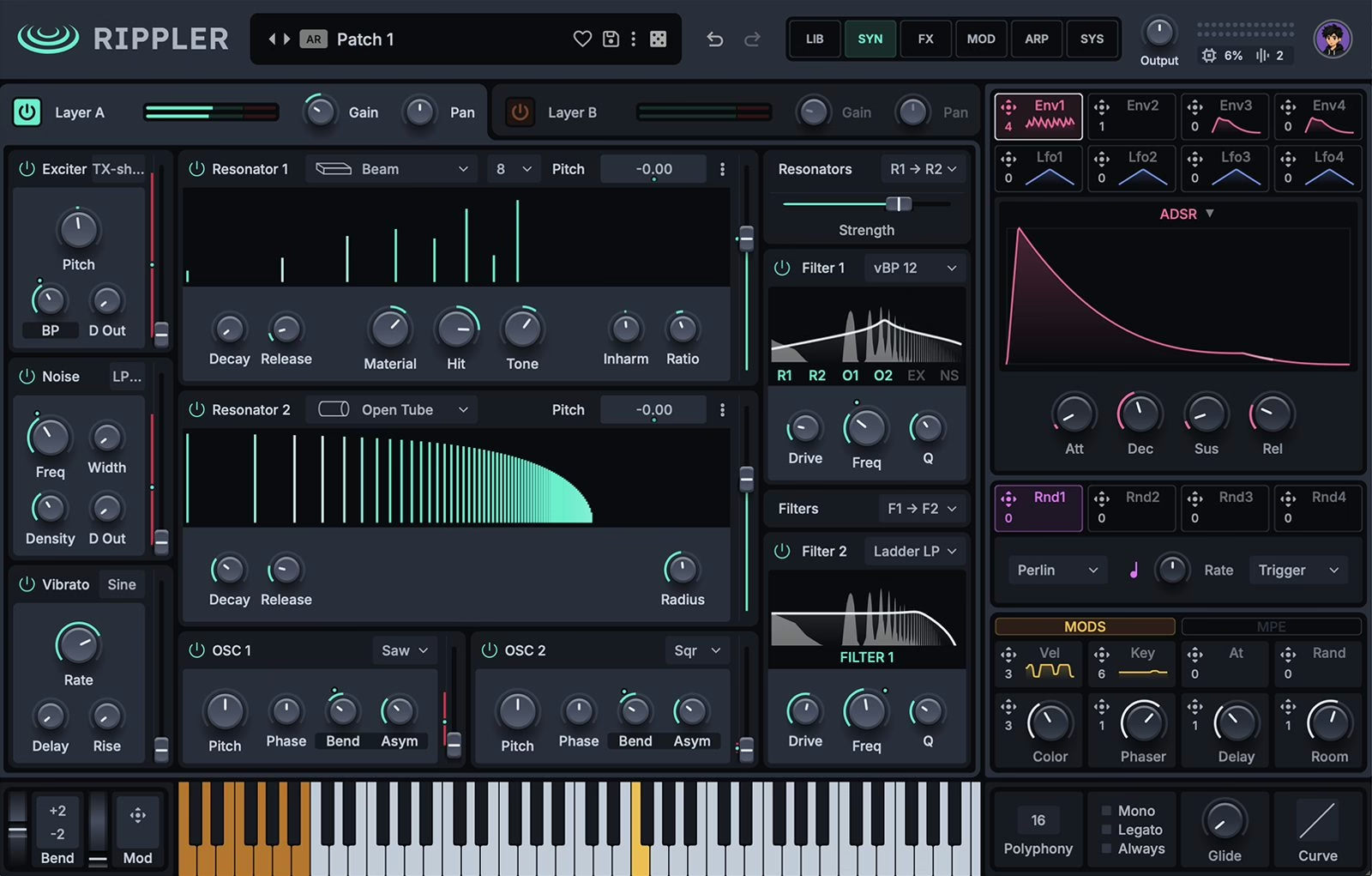
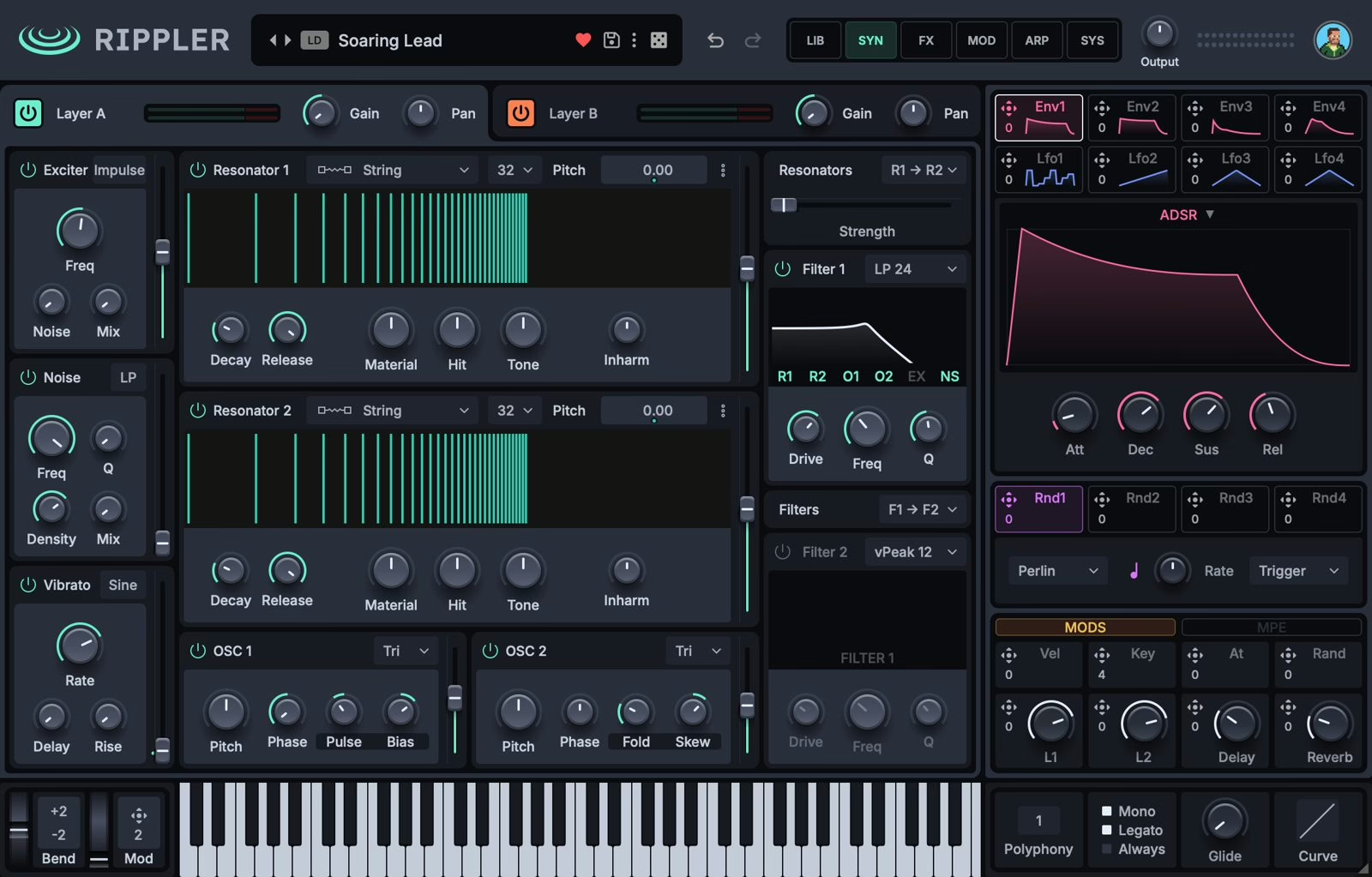
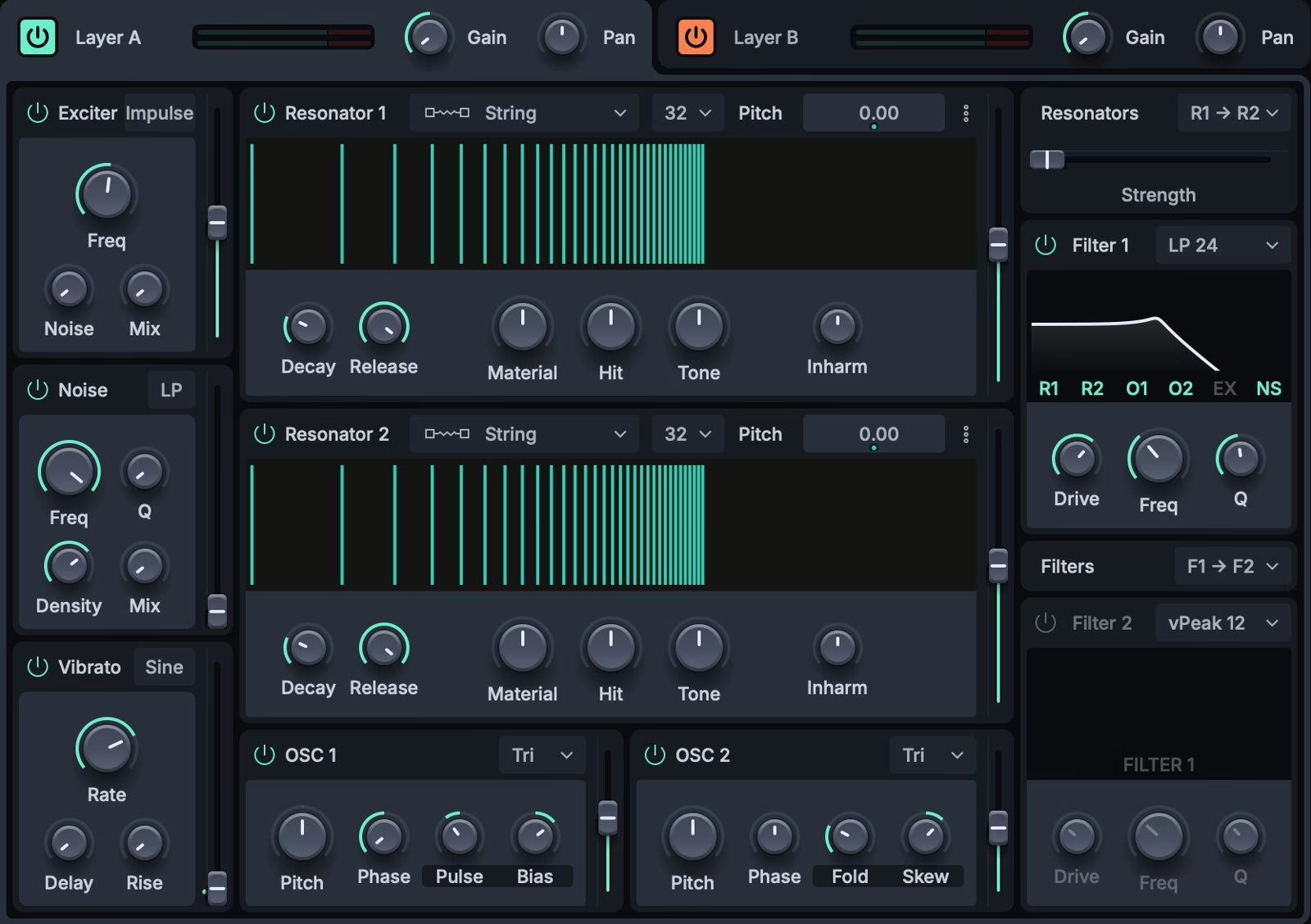
At the heart of Rippler sits its dual independent-layer architecture. Each layer blends a modal modeling engine — with bi-directional energy coupling between resonators — and a more traditional subtractive section: two oscillators, two filters. The two layers can be routed in parallel or in series, opening the door to evolving textures where one resonator excites the other. That’s what sets it apart from a plain wavetable synth: the sound feels alive because it’s computed from a physical model, not replayed from a sample.
Twelve resonators, from marimba to membrane
Rippler ships with twelve pre-tuned resonator models, each mapped to a real or imagined acoustic structure:
- String, beam and squared shape
- Membrane, drumhead and djembe
- Bell, vibraphone and marimba
- Plate, open tube and closed tube
Each model responds differently to the exciter — Rippler offers 32 exciter samples — and to how you play. You move from a believable pizzicato to inharmonic metallic pads while keeping an organic consistency that purely subtractive synths struggle to reach. Full MPE and aftertouch support really pays off here: on an expressive controller, the sound material tracks your gesture.
Effects, modulation and micro-tuning
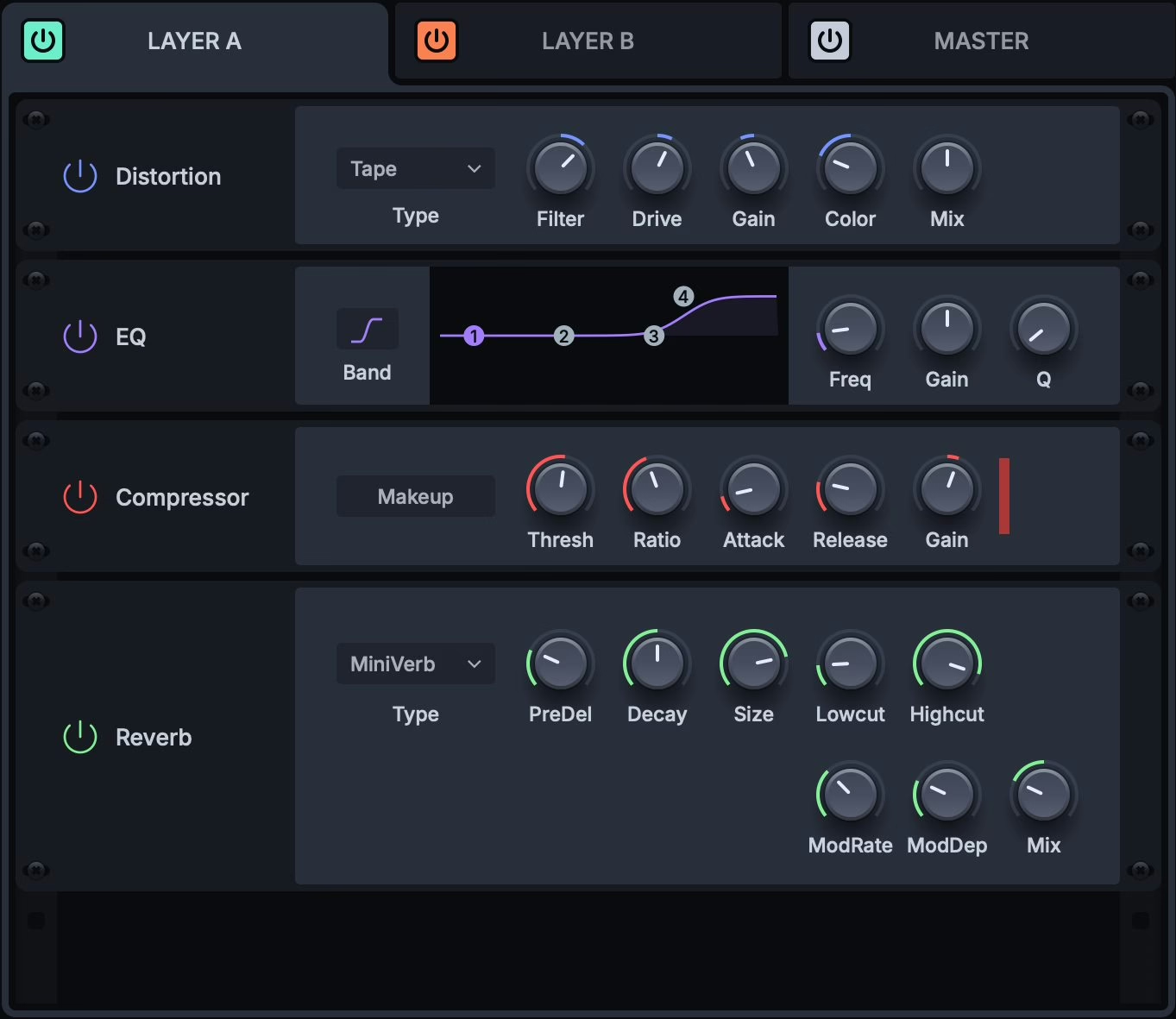
reFX didn’t skimp on processing. There are thirteen effects on the master bus and twelve per layer, arranged in fully modular chains you can reorder at will. Modulation is just as open: every parameter can be driven by multiple sources — envelopes, 64 LFO shapes — with custom response curves via Mod Mapping. Producers who care about intonation will appreciate Scala file and MTS support for micro-tuning, plus an audio sidechain input to excite the resonators with an external signal.
Price, formats and availability
Rippler is available now in VST3, AU and AAX, on macOS 10.13 and later (native Apple Silicon) as well as Windows 10/11. The disk footprint is tiny — around 50 MB — and it all fits inside 441 factory presets. As for price, reFX is running a $99 intro offer, up from $129 afterwards, with a 30-day free trial so you can make up your mind with no strings attached.
| Feature | Detail |
|---|---|
| Synthesis | Modal + subtractive modeling, two layers |
| Resonators | 12 pre-tuned models, 32 exciters |
| Effects | 13 on master, 12 per layer (modular chains) |
| Formats | VST3, AU, AAX — MPE and aftertouch |
| Content | 441 presets, 64 LFOs, Scala/MTS micro-tuning |
| Price | $99 (intro), then $129 |
My take
I’ve watched plenty of synths promise to “reinvent” sound; most are just marketing wrapped around a familiar architecture. Rippler plays a genuinely interesting card, and I say this as an early adopter of the in-the-box workflow: physical modeling is one of the rare areas where going fully software delivers something classic analog hardware simply can’t. You’re not imitating an old amp or a transistor filter here — you’re computing acoustic behavior that no circuit can freeze in place. The fact that reFX started from an open-source project and pushed it to this level of polish is reassuring: the concept was road-tested, not cobbled together for a launch. The open question, in real use, is whether the twelve models have enough character not to blur together once they hit the effects — the usual trap of modeling synths. At $99 with a free trial, that question settles itself: load it into your DAW and play for two minutes.
If you like virtual instruments that do more than re-emulate a classic, Rippler is worth a look — in a different vein, think of projects like the Jun Murakami Synth-80 emulation, proof that the software scene has never been this creative. You can try the demo on reFX’s website.