Dusk Audio has just packed six vintage synths into one free, open-source plugin. A good moment to sort the best free software synthesizers of 2026: faithful emulations of a specific machine, modern do-it-all instruments and featherweight classics. Every one playable without spending a cent, with the caveats that matter.
Ever since the shift from analogue hardware to computer-based production — a change I watched unfold from the technical-direction chair of a studio — one thing has stayed true: the best way to learn a synth is to have one in front of you right now. Today, the price of entry is zero. The release of Sunset Circuits — six vintage machines packed into a single free, open-source plugin — is a good excuse to take stock. But let’s be honest: “free” does not mean “equivalent”. Some of these synths emulate a specific machine, exactly as Sunset Circuits does; others are generalists doing a broader job; others still are lightweights you keep around for their sheer efficiency. Here are eight safe bets, grouped by family, and what each one actually does.
In the spirit of Sunset Circuits: emulating a specific machine
This is where free genuinely rivals paid: recreating the behaviour of a legendary synth. These three do exactly the same job as our anchor — each on its own classic.
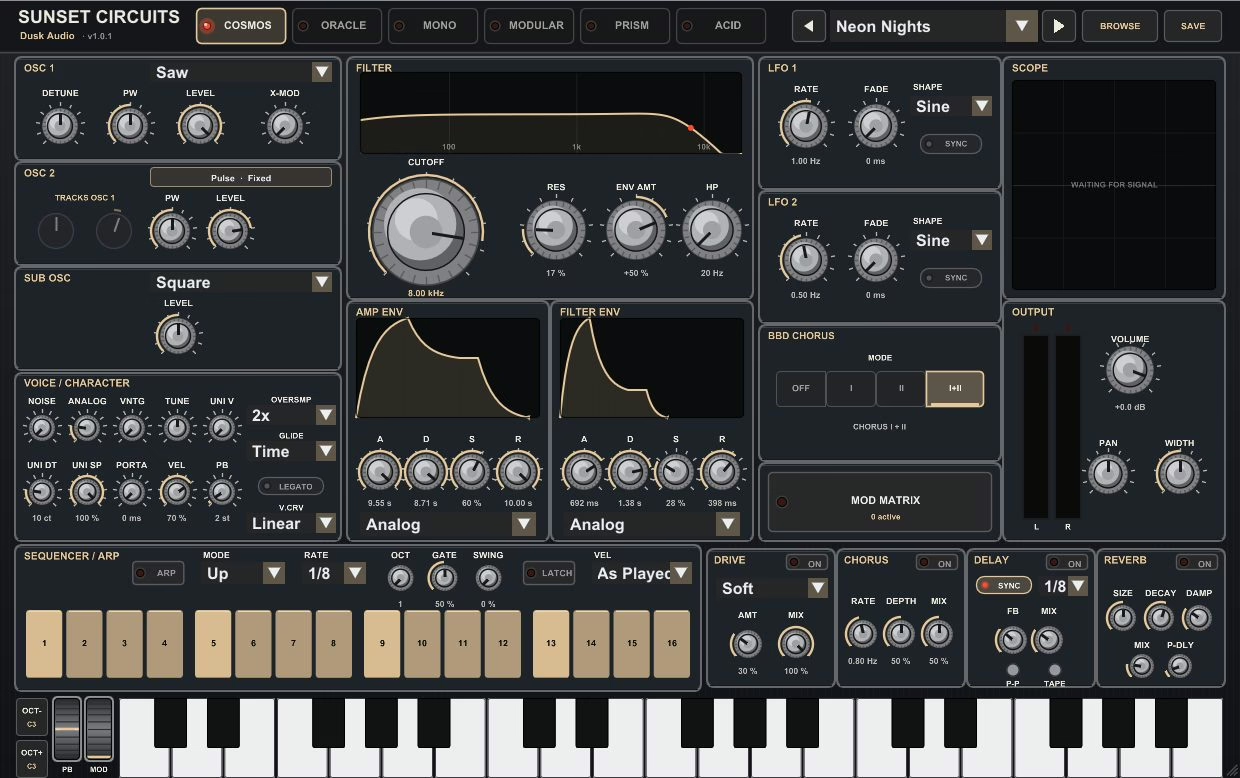
Dusk Audio Sunset Circuits — six vintage synths in one
The anchor of this round-up stacks six distinct engines into one interface: Cosmos (a DCO poly with bucket-brigade chorus), Oracle (analogue poly), Mono (a mono lead with ring mod and hard sync), Modular (a semi-modular with spring reverb), Prism (four-operator FM) and Acid (a bass box with step sequencer). They share a common modulation engine, a host-synced arpeggiator/sequencer and a built-in effects chain. The feat isn’t only sonic: it’s 100% free and open source, with no account and no feature locks. To explore several vintage flavours without installing five separate plugins, nothing beats it.
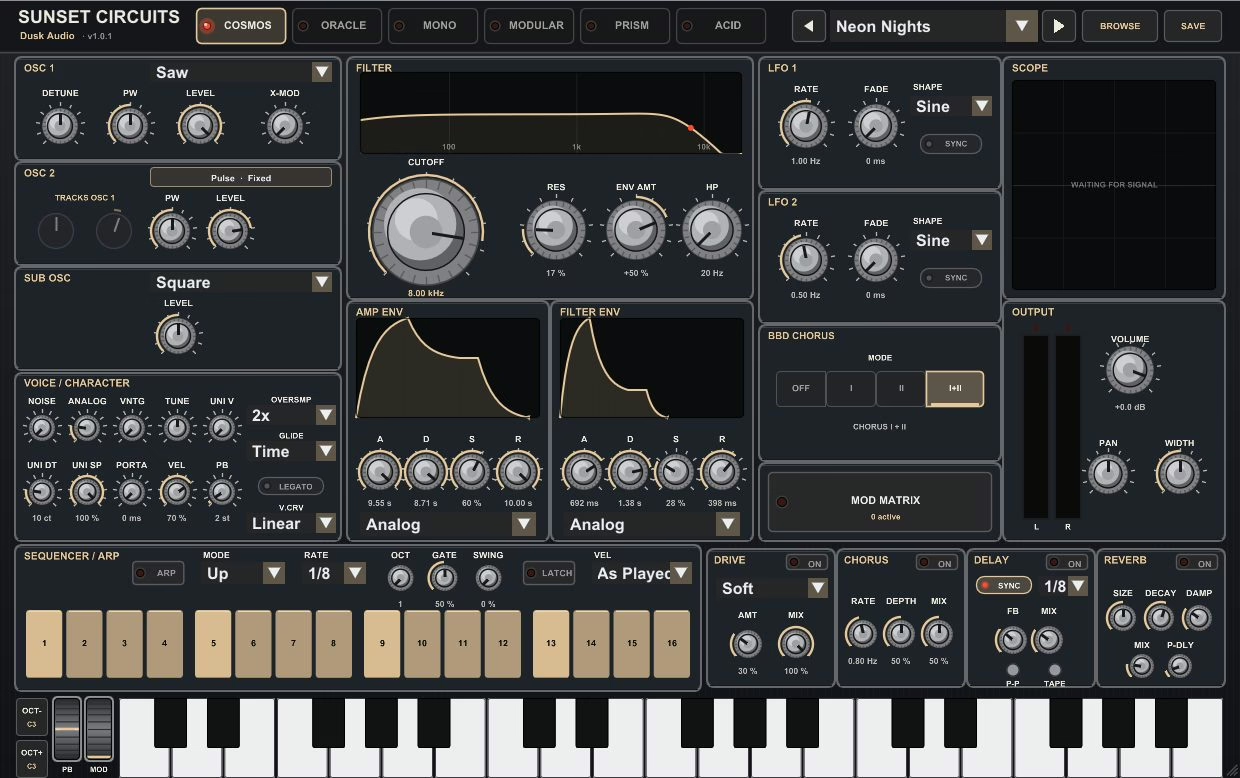
In brief: Dusk Audio · free, open source · VST3/CLAP/LV2/AU, macOS/Windows/Linux · official page.
Dexed — the Yamaha DX7, effectively for free
If one machine deserves a free emulation, it’s the DX7. Dexed reproduces Yamaha’s six-operator FM, with all 144 parameters editable and automatable from a single panel. Better still, it’s SysEx-compatible: it loads original DX7/TX7 cartridge banks and even works as an editor-librarian for a real DX7 over MIDI. Those 1980s bells, slap basses and glassy digital pads are yours for nothing. It’s austere and demanding — FM won’t be tamed in two minutes — but this is the real engine, not an approximation.
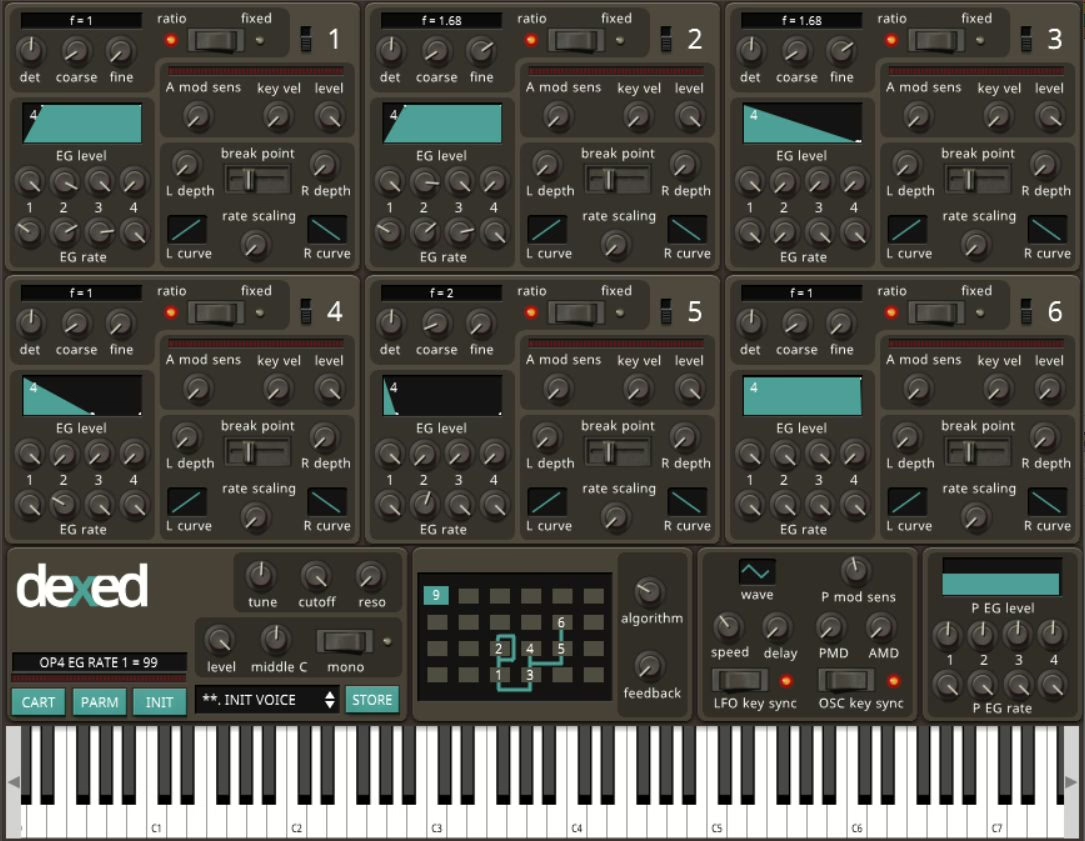
In brief: Digital Suburban · free, open source (GPL) · VST/VST3/AU/CLAP/LV2 and standalone, macOS/Windows/Linux · official page.
discoDSP OB-Xd — the Oberheim OB-X without the price tag
OB-Xd carries over the voice architecture, filter character and envelope behaviour of the 1979 Oberheim OB-X, while lifting the hardware’s limits: wide unison (up to sixteen detuned voices per note), an “analog mode” that reintroduces drift, MPE and microtuning. For thick Oberheim pads and round basses, it’s a free reference. One point of honesty, though: the version 3 build is free to download but licensed for non-commercial use, with 2x/4x oversampling disabled; professional use and top quality require the registered version (around $49). For learning, home production and training your ear, the free build is more than enough.
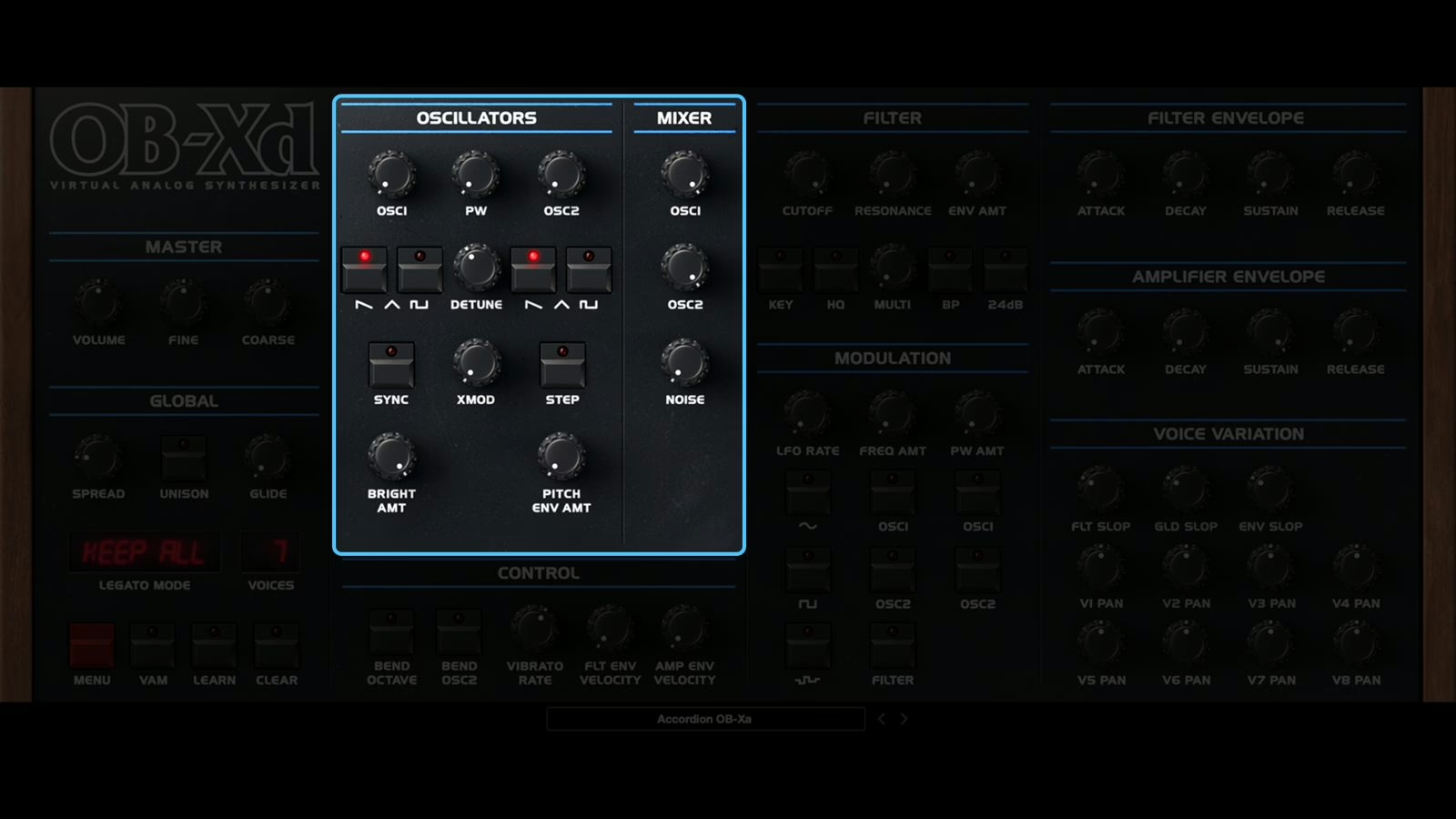
In brief: discoDSP · free (non-commercial build; registered version ~$49 for pro use) · VST/VST3/AU/AAX/LV2, standalone and iOS, Windows/macOS/Linux · official page.
The modern all-rounders
Here the job changes. These three aren’t trying to imitate an old machine; they want to be the synth that covers everything, from sound design to bespoke patches. Deeper, more powerful — and sometimes more intimidating — than the emulations above, but just as free.
Surge XT — the most complete, for nothing
Surge XT is arguably the most accomplished free synth from any developer. It’s hybrid, with two “scenes”, three oscillators per scene across a dozen algorithms (classic, wavetable, FM, physical-modelling), a deep filter and modulation section, plus MPE, microtuning (Scala/MTS-ESP) and OSC. It ships with more than 2,800 factory patches and 700 wavetables. That this level of polish is maintained by a community and given away remains a small miracle of the open-source ecosystem.
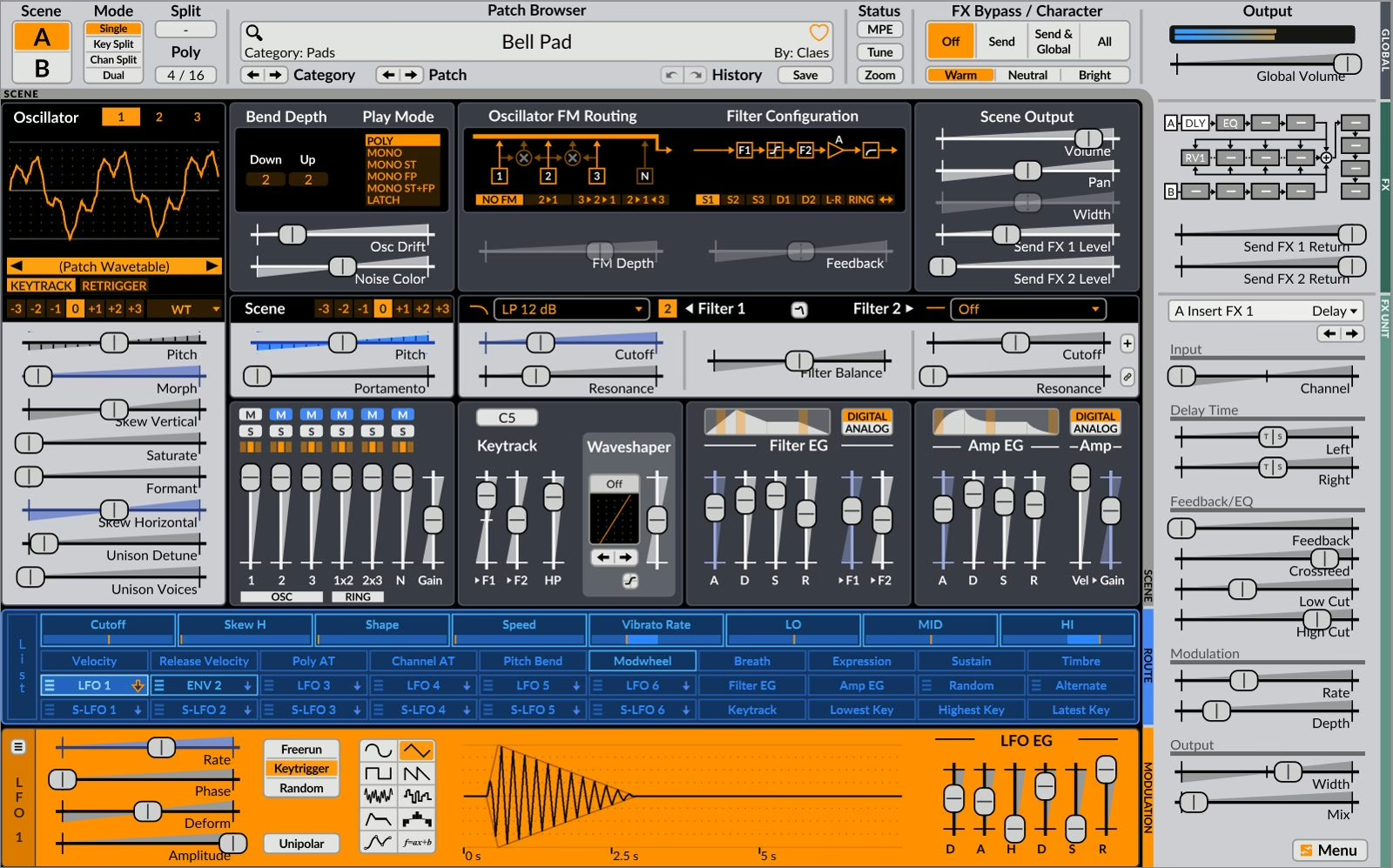
In brief: Surge Synth Team · free, open source · VST3/AU/CLAP/LV2, Windows/macOS/Linux · version 1.3.4 · official page.
Vital — the modern wavetable with an animated UI
Vital is a spectral-warping wavetable synth: you stretch, shift and skew harmonics in real time, with a 60fps animated interface that makes synthesis legible at a glance. Drag-and-drop modulation, dual filters, text/sample-to-wavetable conversion: it’s an ideal tool for contemporary sound design. The honest nuance: the engine is identical across all tiers; the free Basic version simply ships with fewer presets and wavetables than the paid Plus and Pro tiers. You’re not paying for the synth, you’re paying for content — and nothing stops you from building your own.
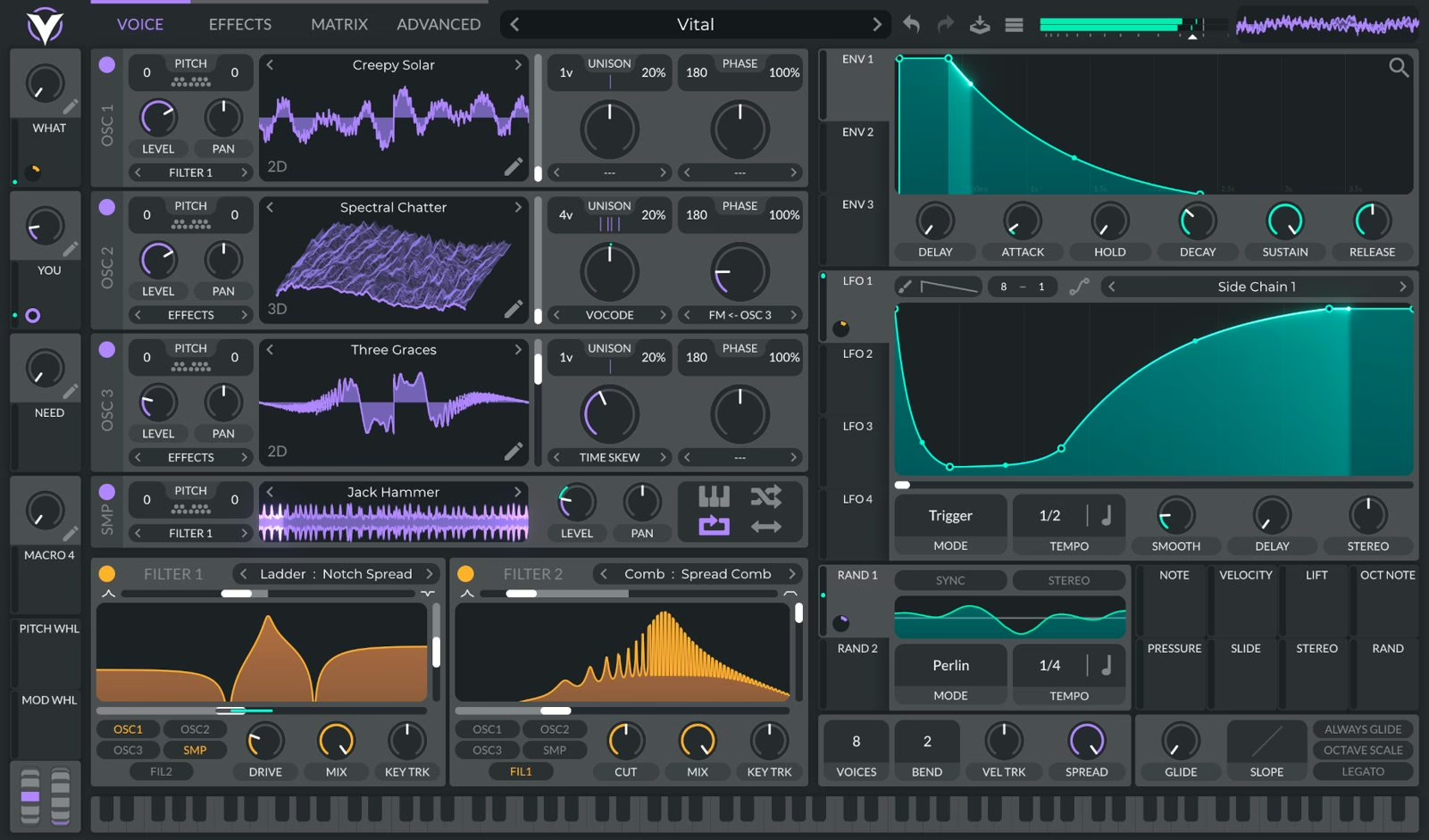
In brief: Vital Audio · free (Basic); paid Plus/Pro tiers · VST/VST3/AU/LV2, Windows/macOS/Linux · official page.
Odin 2 — every kind of synthesis in one box
Odin 2 is a free, open-source semi-modular synth, 24-voice polyphonic, whose three oscillator slots accept almost every form of synthesis: analogue, wavetable, vector, chiptune, FM, phase-mod, noise, plus draw-your-own oscillators. Add well-regarded filter emulations (Moog-style Ladder, Korg-35, SEM), a large modulation matrix and five effects, and you get a playground spanning vintage to noise. It’s the pick for the curious who want to explore without being locked into a single school of synthesis.
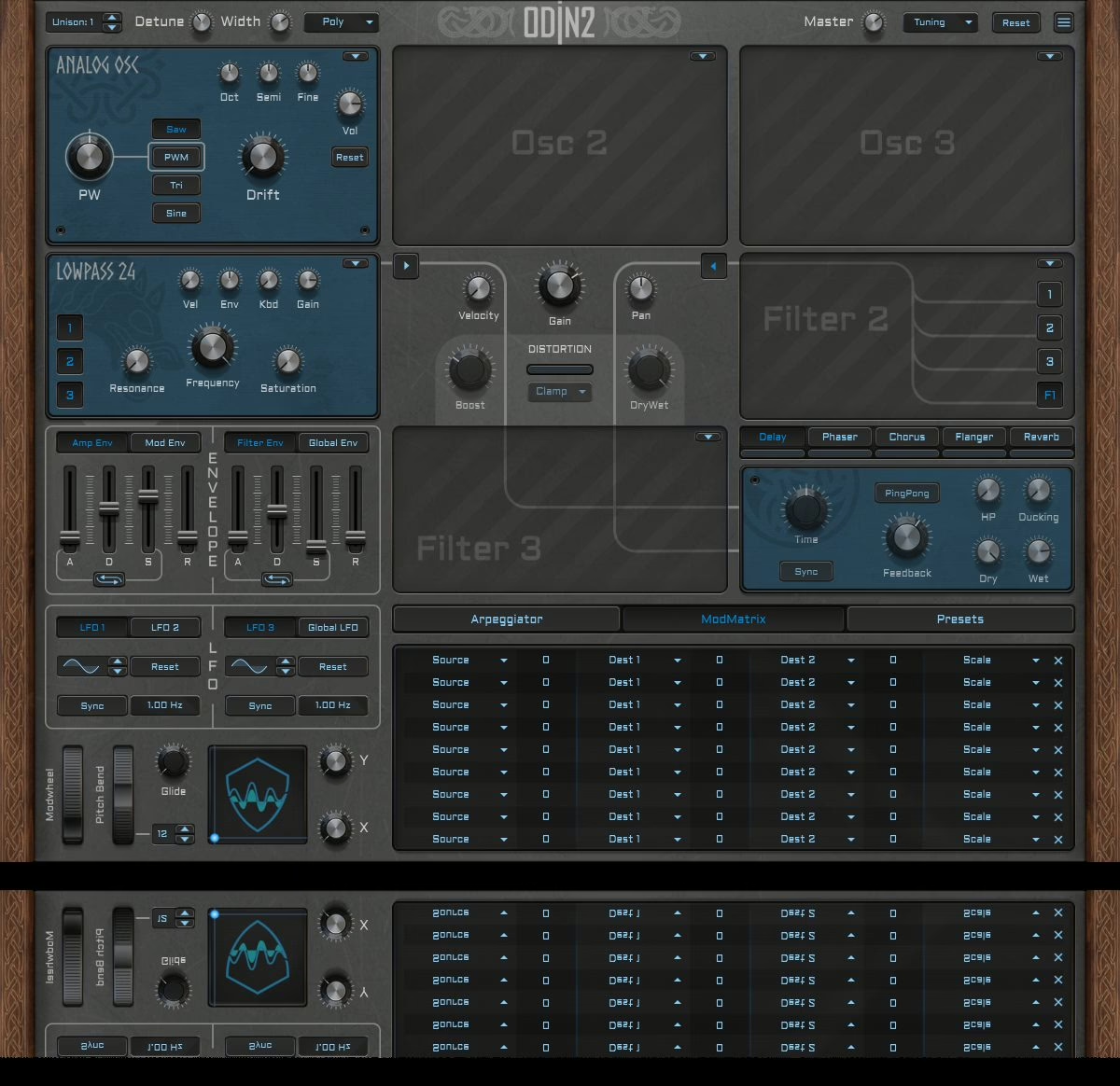
In brief: TheWaveWarden · free, open source (GPL) · VST3/AU/CLAP/LV2, Windows/macOS/Linux · version 2.4 · official page.
The unkillable lightweights
Less deep than the all-rounders above, but instant, CPU-light and perfect to keep open on a track at all times. Two survivors — one of them with a compatibility caveat you need to know.
Synth1 — the free legend, with a few years on the clock
Very likely the most downloaded free VST in history. Synth1, loosely modelled on the Clavia Nord Lead 2, offers two oscillators plus a sub, FM, ring mod, sync, a multimode filter, an arpeggiator and 32 voices — all for a laughably small CPU footprint. Its other strength is the tens of thousands of presets that circulate for free. The caveat, in full honesty: the project is no longer maintained. The Windows build dates from 2014 (VST2 only), the Mac (Audio Unit) build from 2021; there is no VST3 and no native Apple Silicon version. On a host that has dropped VST2 you’ll need a bridge or a compatible DAW. It remains a masterclass in subtractive synthesis — and the very concrete reason it keeps showing up in your searches.
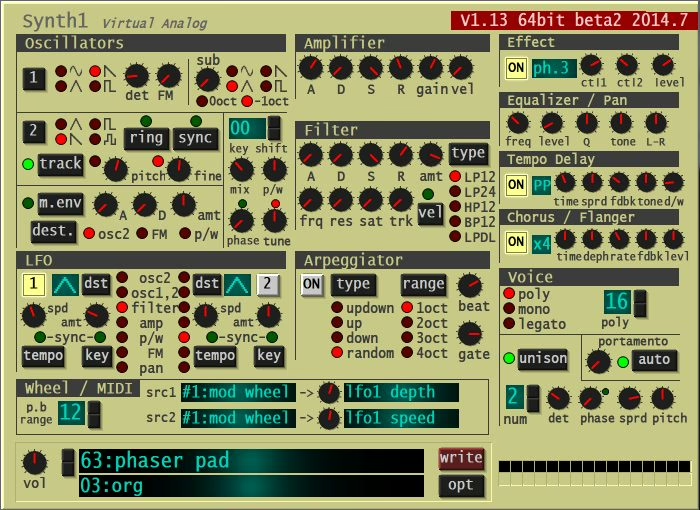
In brief: Ichiro Toda · free · VST2 (Windows) / Audio Unit (macOS) — old, unmaintained project · official page.
TAL-NoiseMaker — the ideal first synth, still up to date
The perfect counterpoint to Synth1: the same lightness, but actively maintained and in modern formats. TAL-NoiseMaker is a virtual analogue with three oscillators plus a sub, a genuinely musical self-oscillating multimode filter, two LFOs and an effects section with a Juno-style chorus. One window, everything visible, a generous factory bank: it’s the synth I recommend to beginners, and the one a seasoned user keeps to pull up a clean sound in three seconds. Proof that a single good free filter can carry a whole production.
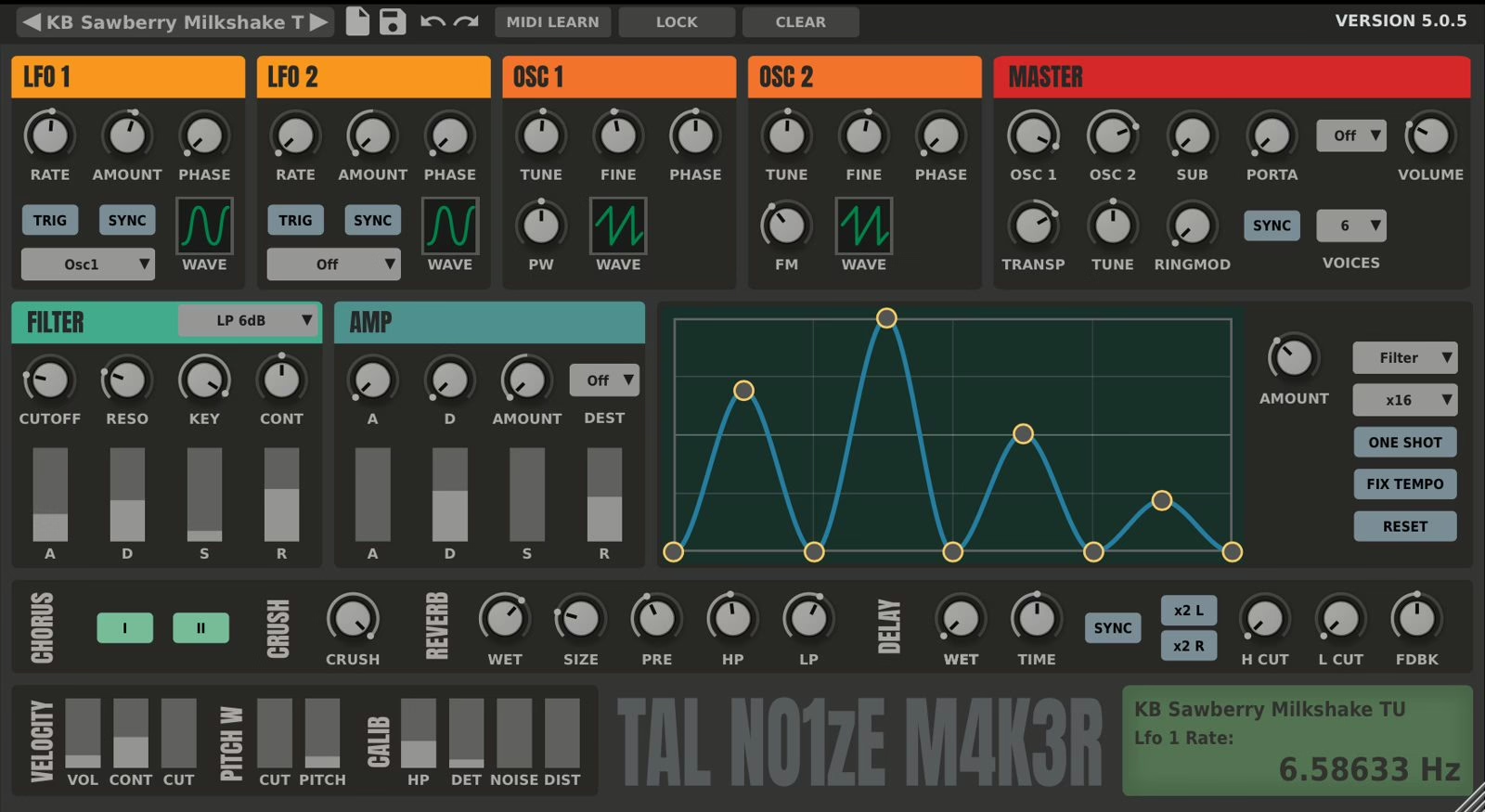
In brief: Togu Audio Line · free · VST/VST3/AU/AAX/CLAP, Windows/macOS/Linux · version 5.0.6 · official page.
| Product | Developer | Price | The job in a word |
|---|---|---|---|
| Sunset Circuits | Dusk Audio | Free, open source | Six vintages in one |
| Dexed | Digital Suburban | Free, open source | DX7 FM |
| OB-Xd | discoDSP | Free (pro ~$49) | Oberheim OB-X |
| Surge XT | Surge Synth Team | Free, open source | The most complete |
| Vital | Vital Audio | Free (Basic) | Modern wavetable |
| Odin 2 | TheWaveWarden | Free, open source | Every synthesis type |
| Synth1 | Ichiro Toda | Free | The lightweight legend |
| TAL-NoiseMaker | Togu Audio Line | Free | Ideal first synth |
Which one should you pick?
The deciding factor isn’t price — they’re all free — but intent. If you want the character of a specific machine, go straight to the emulations: Sunset Circuits for a vintage tour, Dexed for DX7 FM, OB-Xd for the Oberheim. If you want one synth that does everything, Surge XT is the most complete for free, Vital the most at home in modern sound design, Odin 2 the most adventurous. And if you value lightness and immediacy, TAL-NoiseMaker is the maintained, faultless choice, while Synth1 remains a legend — provided you accept its compatibility limits. My advice: start with TAL-NoiseMaker or Sunset Circuits to get going, then add Surge XT or Vital the day you want to dig deeper. For a more targeted need, our selection of synths for a real wall of saws complements this list nicely.