New soft synths land every week, but few pack this much ground into a single window — and fewer still do it for free, with the source code out in the open. Sunset Circuits, the newcomer from Dusk Audio, stacks six distinct synthesis engines, each built around a specific sonic archetype, and hands them over at no cost. That is worth a look — provided the substance holds up.
Six engines, one interface
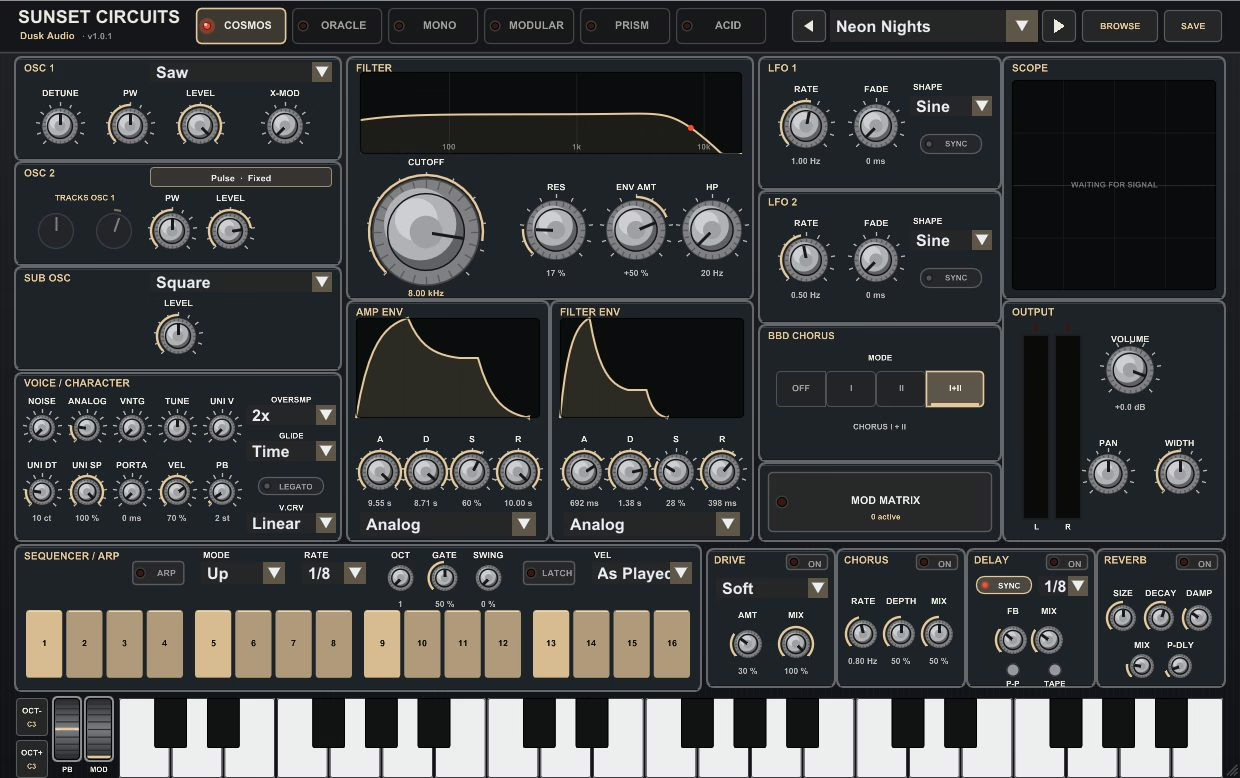
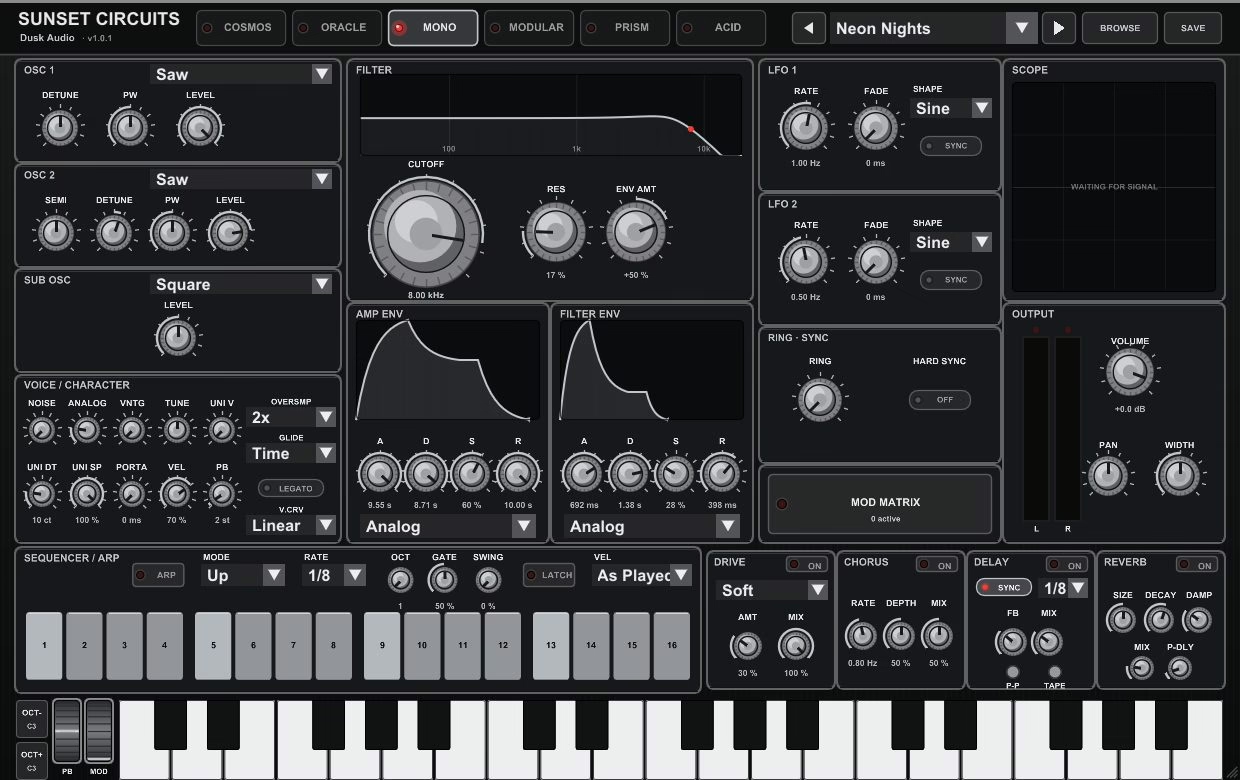
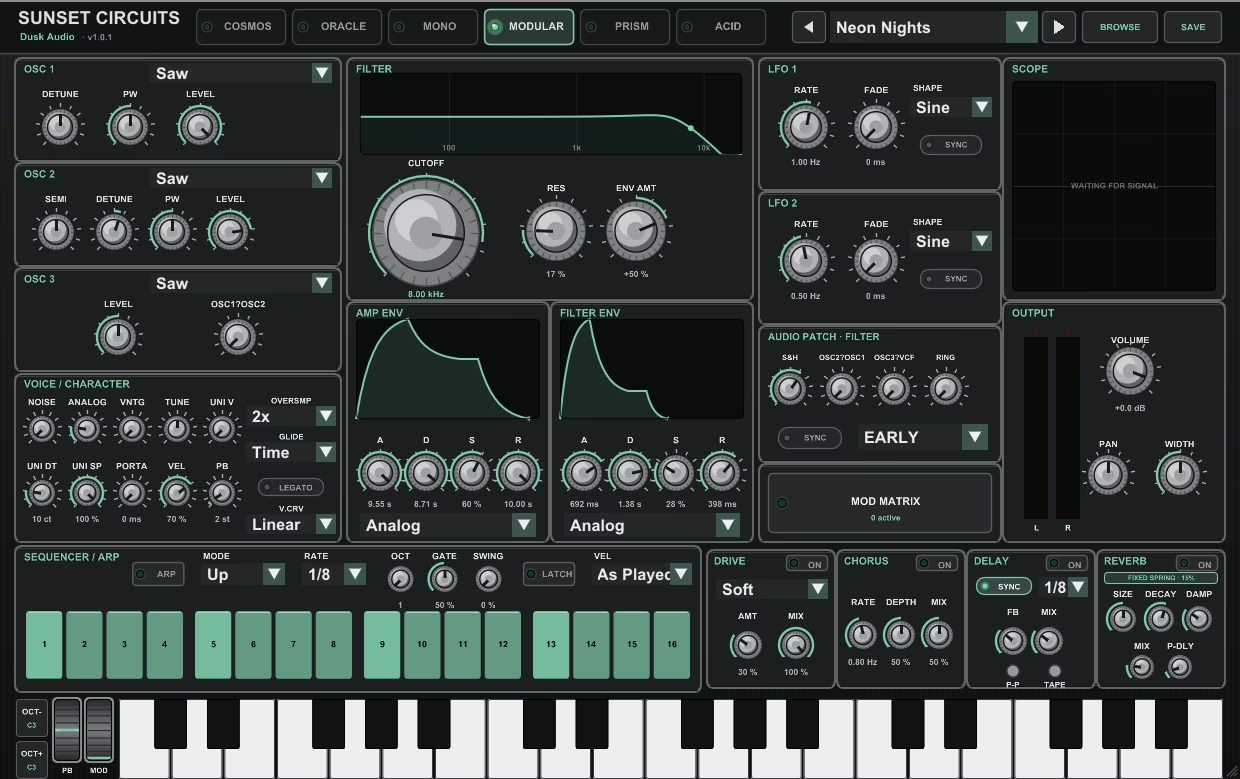
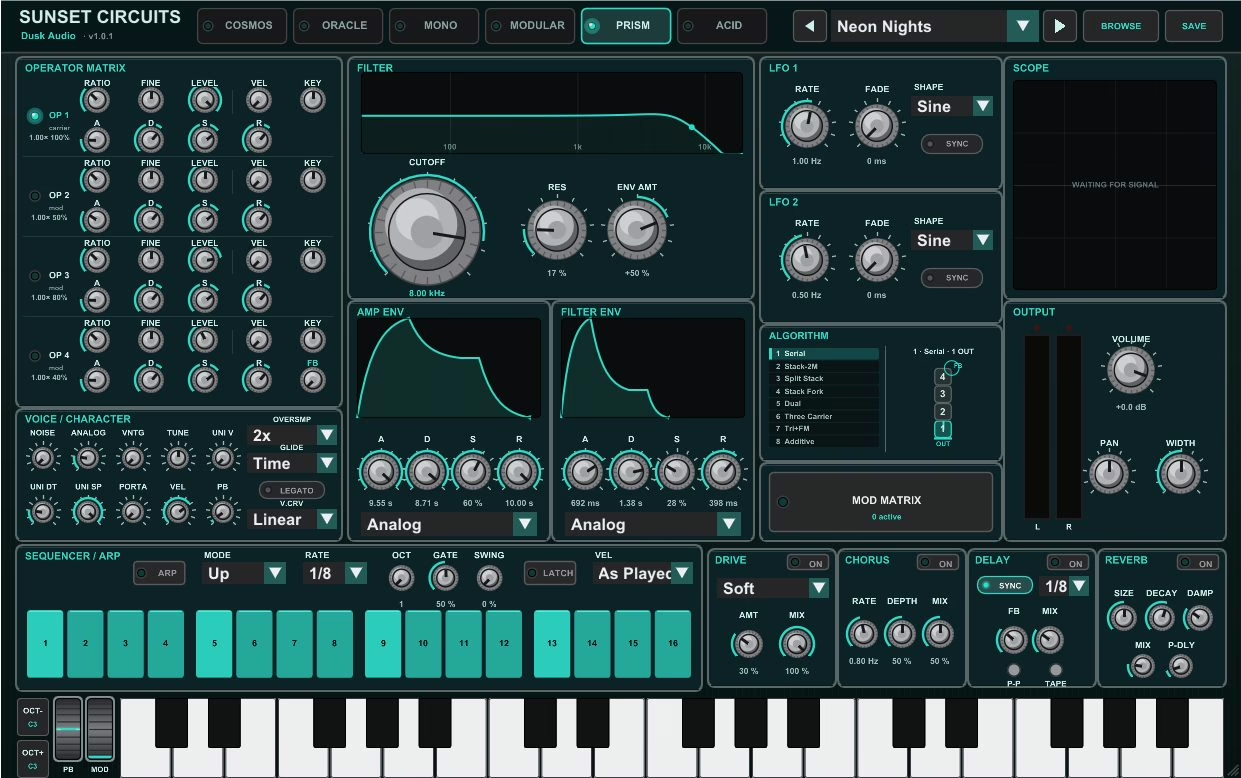
Sunset Circuits isn’t a do-everything synth buried in endless menus. It’s a collection of six specialised instruments you pick with a single click, each with its own panel colour and its own logic. The spread is deliberately wide, from polyphonic analogue to FM.
| Engine | Type | Sweet spot |
|---|---|---|
| Cosmos | Six-voice DCO poly with built-in bucket-brigade chorus | Warm pads, wide textures |
| Oracle | Five-voice analogue, self-oscillating filter and poly-mod | Pitched attacks, inharmonic bells |
| Mono | Two-oscillator mono plus sub, ring mod and hard sync | Aggressive bass and leads |
| Modular | Semi-modular, three oscillators, sample and hold, spring reverb | Drones, sequences |
| Prism | Four-operator FM, eight algorithms, per-operator envelopes | Electric pianos, bells, metallic brass |
| Acid | Diode-ladder bass box with accent, slide, 16-step sequencer | Acid lines, screaming bass |
That split is smarter than it looks. Rather than drowning you in a universal architecture, Dusk Audio hands you starting points that already have a character: you don’t build a sound from scratch, you begin with an engine that already sounds a certain way. The Acid engine, with its onboard sequencer and accent, is almost a complete instrument on its own.
What’s actually under the hood
A pile of engines is worthless without shaping tools. Sunset Circuits doesn’t just line up oscillators: every engine gets an eight-slot modulation matrix routing LFOs, envelopes, velocity and more to the parameters you choose. There’s a host-syncable arpeggiator and step sequencer, plus an in-house effects section — drive, chorus, tempo-syncable delay and reverb — to finish the tone without leaving the plugin.
On the signal-quality side, oversampling switches between 1x, 2x and 4x, letting you trade cleanliness against CPU load depending on context. The 54 factory presets mainly showcase the six engines, and a searchable user library takes over once you start saving your own patches. Nothing revolutionary line by line, but a coherent, complete package.
Free, open-source and genuinely cross-platform
This is where Sunset Circuits truly stands out. The plugin is free, released under the GPL, with its code on a public repository. More importantly, its format and OS coverage is exemplary: VST3, AU, LV2 and CLAP depending on platform, with macOS (Intel and Apple Silicon), Windows and Linux builds, ARM64 included. That serious Linux support — still too often ignored by developers — deserves a mention.
The open-source route isn’t just an ethical talking point: it opens the door to community fixes and long-term survival, where so many freeware plugins get abandoned at the first OS change. If you produce on a Linux machine or an older Intel Mac, a maintained, open multi-engine synth genuinely changes things. In the same spirit of open, affordable tools, see the recent Mach Devices MD-7, whose hardware and firmware are documented too.
My take
I lived through the shift from analogue to computer-based production first-hand, back when a single half-credible synth emulation cost as much as a rack unit. Watching six solid, open, free engines land on every platform at once is a reminder of how far the ground has levelled. A caveat: “free” is not a quality metric in itself, and I’m as wary of sloppy freeware as I am of overpriced plugins. But Sunset Circuits doesn’t feel like filler — each engine has a real personality, and the whole thing holds together.
Who it’s for, and what it’s really worth
Sunset Circuits is aimed first at anyone who wants a varied vintage palette without spending: beginners exploring several synthesis families, producers after a versatile idea box, Linux users hunting for serious instruments. One honest caveat: at launch, switching presets doesn’t reload the sound properly in the VST3 build, while the AU version behaves as expected — a teething issue that should get fixed quickly, precisely thanks to the open model.
To go wider on soft synths, see the multi-engine open-source approach and how other developers monetise similar ideas — two very different answers to the same question: what is a synth really worth once you set the price aside?